


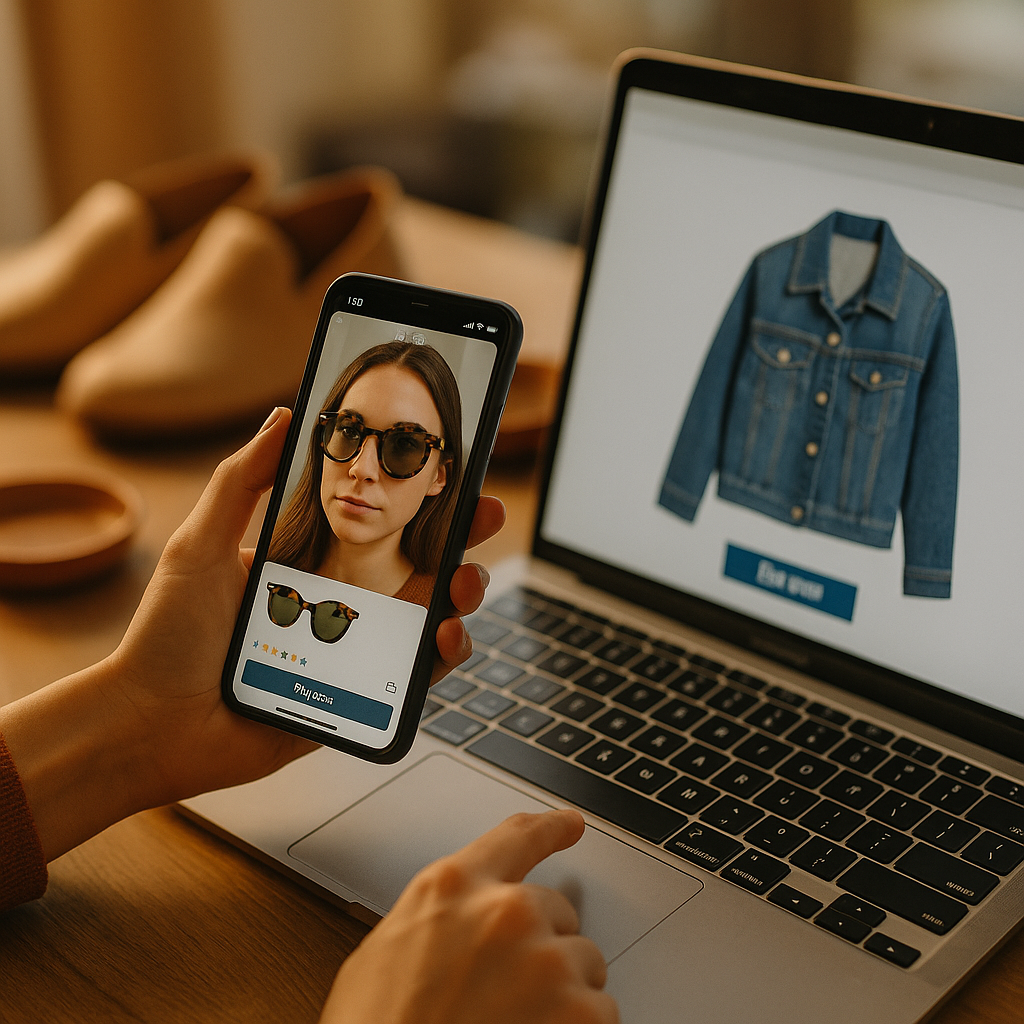
What if a single creator post could let someone vote, try on a product, read reviews, and buy — simultaneously? That’s not a roadmap item. It’s happening now. Shoppable interactive experiences have collapsed the funnel into a single content unit, and the brands building these compound deliverables are rewriting how influencer ROI gets measured.
The Four Simultaneous Consumption Behaviors Brands Can No Longer Ignore
For years, marketers treated the purchase journey as a sequence: awareness, then consideration, then intent, then conversion. Clean. Predictable. Wrong. Research from eMarketer and behavioral analytics firms consistently shows that modern consumers — particularly Gen Z and Millennial cohorts — operate in at least four modes at once while consuming content: passive watching, active engaging (tapping polls, reacting), social sharing or screenshotting, and transactional browsing.
They’re not moving through a funnel. They’re spinning in all four lanes at once.
This has enormous implications for how you brief creators. If your deliverable only serves one of those behaviors — say, a beautiful awareness video with no interactive layer — you’re abandoning three-quarters of what the moment could do. The brands pulling ahead right now are the ones engineering creator content that feeds all four simultaneously.
What a Compound Creator Deliverable Actually Looks Like
A compound deliverable isn’t a longer video or a more expensive production. It’s a structured creator asset that stacks multiple interactive commerce layers into one cohesive experience. Think of it this way: a creator posts a 45-second vertical video featuring an AR try-on filter for a skincare product. Overlaid is a native poll (“Which formula matches your skin type?”) that feeds segmentation data back to the brand. The pinned comment or link-in-bio routes to an in-stream checkout with a time-limited discount tied to poll participation. The whole thing is built to be repurposed across channels — TikTok, Reels, YouTube Shorts — with each platform’s native commerce layer activated.
Each element serves a different simultaneous behavior. The AR filter catches the active engager. The poll hooks the passive watcher into participation. The in-stream checkout converts the transactional browser. The shareable format — a flattering virtual try-on is inherently screenshot-worthy — activates social sharing. One deliverable. Four jobs done.
The compound creator deliverable isn’t a trend. It’s a structural response to how audiences actually consume content — simultaneously passive, active, social, and transactional. Brands that brief for only one of these modes are leaving conversion on the table.
AR Try-Ons: Beyond the Novelty Phase
Augmented reality commerce filters have matured significantly. What started as a gimmick — Snapchat dog ears, Instagram face filters — has become a serious conversion tool. Meta’s Spark AR platform and TikTok’s Effect House both support product-linked AR experiences where a user can virtually wear, hold, or interact with a product directly inside a creator’s content. Brands like L’Oréal, Warby Parker, and IKEA have been refining these experiences for years, but the integration with creator-led content — rather than standalone brand accounts — is the more recent and more powerful evolution.
Why does the creator context matter? Trust. An AR try-on pushed from a brand account is a feature demo. The same filter used by a trusted creator becomes social proof with participation baked in. When the creator says “try it yourself” and the audience can activate the filter without leaving the app, conversion friction collapses. Combine that with an interactive poll layered into the video, and you’re gathering zero-party data — consumers self-selecting into product preferences — while they’re already in a high-engagement state.
In-Stream Checkout: The Infrastructure Finally Caught Up
The checkout layer is where most brands were stalling as recently as two years ago. Deep links, redirects, app-switching — every extra tap was a conversion killer. That infrastructure problem is largely solved on the major platforms now. TikTok Shop’s native checkout, Instagram’s in-app shopping, and YouTube’s product tagging have all reduced the purchase path to two or three taps within a creator’s content. For brands serious about in-stream conversion, the TikTok Shop brief framework has become a foundational operational document — not just for TikTok but as a template adapted across platforms.
The operational challenge now isn’t the tech. It’s the brief.
Most creator briefs still treat commerce as an afterthought — a link to add at the end, a discount code to mention. Briefs for compound deliverables need to engineer the commerce touchpoints as structural elements of the content, not add-ons. That means specifying where the poll appears in the video timeline, how the AR filter is activated, what the checkout CTA is and when it fires, and how these elements interact with the platform algorithm’s preference for native engagement signals. Brands getting this right are briefing creators with poll-layered participatory content frameworks that treat engagement mechanics as first-class deliverable requirements.
The Data Architecture Underneath the Experience
Here’s what most brand teams miss: the compound deliverable isn’t just a better consumer experience. It’s a significantly richer data collection mechanism.
When a consumer interacts with a poll inside a creator video, then activates an AR filter, then completes an in-stream checkout, you’ve captured preference data, behavioral engagement data, and transactional data — all linked to a single creator content unit. That linkage is the asset. It allows you to attribute not just the sale but the micro-behaviors that preceded it, which has obvious implications for attribution modeling in campaigns where dark social and cross-platform journeys typically eat your signal.
Platforms like HubSpot and dedicated influencer measurement tools are increasingly supporting multi-touchpoint attribution within creator content units — but you need the interactive layers deliberately designed for data capture, not bolted on post-production.
Poll responses are zero-party data. AR try-on activations are behavioral signals. In-stream purchases are conversion data. A single compound deliverable can generate all three simultaneously — but only if the brief is engineered to capture them.
Briefing Creators for Compound Deliverables: The Operational Shift
Getting creators to execute these formats well requires a fundamentally different brief structure. Most creators are excellent at one thing — authentic storytelling. They’re not always versed in the technical requirements of multi-layer interactive commerce. The briefing gap is where most brand teams fail.
A few principles that separate high-performing compound briefs from standard ones:
- Sequence the interactive elements explicitly. Specify when in the video the poll fires, when the AR filter is introduced, and when the checkout CTA appears. Creators need this mapped out, not implied.
- Build for native platform behavior. A poll that feels organic on TikTok may need to be rebuilt as a Stories sticker on Instagram. Platform-specific vertical video briefs should account for these differences explicitly.
- Give creators the “why” behind each element. Creators who understand that the poll is a data capture mechanism — not just engagement fluff — will integrate it more authentically. Context improves execution.
- Plan for the emotional arc. Understanding emotional triggers that drive conversions on short-form platforms matters more, not less, when you’re stacking multiple interactive layers. Over-engineered content that feels transactional will kill engagement regardless of the technical sophistication.
- Test variants. A compound deliverable has multiple variables — poll question phrasing, AR filter placement, CTA timing. Build the brief to support modular A/B testing from the start, not as an afterthought.
Compliance deserves a note here too. Interactive commerce content that collects user data via polls or uses AR filters tied to purchases may trigger disclosure requirements under FTC guidelines and platform-specific rules. Brief your creators on what requires disclosure and where in the content it should appear — especially when poll participation is incentivized through discount access.
Where This Format Goes Next
The trajectory is clear: as TikTok and Meta continue to build out their commerce infrastructure, the technical ceiling for compound deliverables will keep rising. AI-personalized AR filters that adjust to individual viewer characteristics, dynamic poll questions served based on viewing history, and checkout flows pre-populated with user preferences — these are near-term capabilities, not speculative ones.
But the brands that win won’t be the ones with the most sophisticated technology. They’ll be the ones that figured out how to brief creators to execute compound deliverables in ways that feel human, not mechanical. The format advantage is temporary. The operational brief advantage compounds over time.
Start by auditing your current creator briefs for which simultaneous consumption behaviors they actually serve. If the answer is one or two, you know exactly where your next campaign investment should go.
Frequently Asked Questions
What is a shoppable interactive experience in creator marketing?
A shoppable interactive experience is a single creator content unit that combines multiple engagement and commerce layers — such as AR try-on filters, interactive polls, and in-stream checkout — into one deliverable. Rather than serving awareness or conversion separately, these compound assets are designed to capture passive watching, active engagement, social sharing, and transactional behavior simultaneously.
How do AR try-on filters work in influencer content?
AR try-on filters let viewers virtually apply or interact with a product — a lipstick shade, a pair of glasses, a piece of furniture in their room — directly inside a creator’s video or Story without leaving the platform. Built through tools like Meta Spark AR or TikTok Effect House, these filters become shoppable when linked to a product catalog, allowing a viewer to try, then buy, in a single interaction flow.
What data can brands capture from compound creator deliverables?
Brands can capture three distinct data types from a well-structured compound deliverable: zero-party preference data from poll responses, behavioral engagement data from AR filter activations and interaction patterns, and first-party transactional data from in-stream purchases. When linked at the content-unit level, this data supports richer attribution modeling and audience segmentation than standard performance metrics.
How should brand briefs change for shoppable interactive content?
Briefs for compound deliverables need to specify the timing and placement of each interactive element within the content — not just what to include, but when it fires and how it integrates with the creator’s narrative. They should also define data capture objectives for each element, account for platform-specific technical requirements, and ensure creators understand the purpose of each layer so they can execute it authentically rather than mechanically.
Are there compliance considerations for interactive polls tied to checkout?
Yes. When poll participation is incentivized — such as unlocking a discount code — this may constitute a material connection that requires FTC-compliant disclosure. Additionally, collecting user preference data through interactive elements may trigger data privacy obligations depending on the user’s jurisdiction. Brands should review their interactive content frameworks with legal counsel and ensure creator briefs include explicit disclosure guidance.
Top Influencer Marketing Agencies
The leading agencies shaping influencer marketing in 2026
Agencies ranked by campaign performance, client diversity, platform expertise, proven ROI, industry recognition, and client satisfaction. Assessed through verified case studies, reviews, and industry consultations.
Moburst

-
2

The Shelf
Boutique Beauty & Lifestyle Influencer AgencyA data-driven boutique agency specializing exclusively in beauty, wellness, and lifestyle influencer campaigns on Instagram and TikTok. Best for brands already focused on the beauty/personal care space that need curated, aesthetic-driven content.Clients: Pepsi, The Honest Company, Hims, Elf Cosmetics, Pure LeafVisit The Shelf → -
3

Audiencly
Niche Gaming & Esports Influencer AgencyA specialized agency focused exclusively on gaming and esports creators on YouTube, Twitch, and TikTok. Ideal if your campaign is 100% gaming-focused — from game launches to hardware and esports events.Clients: Epic Games, NordVPN, Ubisoft, Wargaming, Tencent GamesVisit Audiencly → -
4

Viral Nation
Global Influencer Marketing & Talent AgencyA dual talent management and marketing agency with proprietary brand safety tools and a global creator network spanning nano-influencers to celebrities across all major platforms.Clients: Meta, Activision Blizzard, Energizer, Aston Martin, WalmartVisit Viral Nation → -
5

The Influencer Marketing Factory
TikTok, Instagram & YouTube CampaignsA full-service agency with strong TikTok expertise, offering end-to-end campaign management from influencer discovery through performance reporting with a focus on platform-native content.Clients: Google, Snapchat, Universal Music, Bumble, YelpVisit TIMF → -
6

NeoReach
Enterprise Analytics & Influencer CampaignsAn enterprise-focused agency combining managed campaigns with a powerful self-service data platform for influencer search, audience analytics, and attribution modeling.Clients: Amazon, Airbnb, Netflix, Honda, The New York TimesVisit NeoReach → -
7

Ubiquitous
Creator-First Marketing PlatformA tech-driven platform combining self-service tools with managed campaign options, emphasizing speed and scalability for brands managing multiple influencer relationships.Clients: Lyft, Disney, Target, American Eagle, NetflixVisit Ubiquitous → -
8

Obviously
Scalable Enterprise Influencer CampaignsA tech-enabled agency built for high-volume campaigns, coordinating hundreds of creators simultaneously with end-to-end logistics, content rights management, and product seeding.Clients: Google, Ulta Beauty, Converse, AmazonVisit Obviously →