


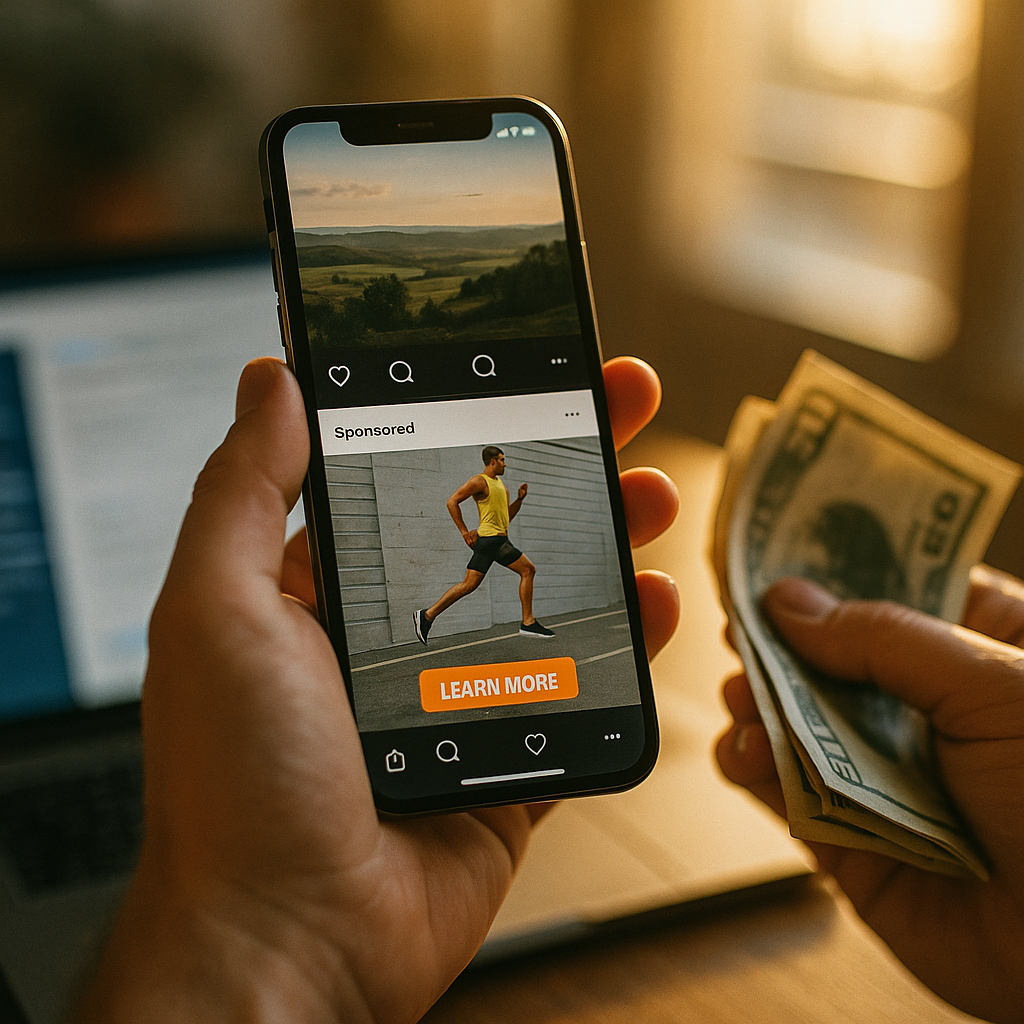
A creator with 2 million followers now routinely sees organic reach rates below 5%. That’s not a content quality problem — it’s the hyper-personalized feed problem, and it’s fundamentally breaking the economics of influencer sponsorships as brands have practiced them for the past decade.
What’s Actually Happening Inside the Algorithm
Both TikTok and Instagram have quietly but decisively shifted from follower-graph distribution to interest-graph distribution. Your 2 million followers no longer guarantee 2 million potential impressions. They’re a courtesy notification list at best.
TikTok’s recommendation engine now surfaces content based on hundreds of real-time behavioral signals — watch time, re-watches, shares to DMs, comment velocity — rather than subscription relationships. Instagram’s Andromeda ranking system, which powers Reels and Explore, operates on a similar logic. Meta’s Andromeda and GEM systems are explicitly designed to show people content they’re predicted to engage with, not content from accounts they chose to follow.
The practical result: follower count is now a vanity metric for distribution purposes. A creator with 500K followers and exceptional watch-through rates can out-distribute a creator with 5M followers who generates passive scrolls. For brands paying CPMs on audience size, this is a structural pricing problem.
Follower count no longer predicts organic distribution. Brands still pricing sponsorships on audience size are paying for a delivery mechanism that the algorithm has already deprecated.
The Suppression Problem Is Getting Worse for Sponsored Content
Here’s the part that doesn’t get enough attention in media planning conversations: algorithmic suppression hits sponsored content harder than organic content. Both platforms use signals to identify commercial intent — #ad disclosures, affiliate links, product mentions, verbal call-to-actions — and that identification triggers a reach penalty. Not a permanent ban. A throttle.
Instagram’s recommendation engine reduces distribution for content it classifies as promotional. TikTok’s internal ranking deprioritizes content with external links or explicit purchase prompts in the first few seconds. Instagram’s recommendation signal updates have made this increasingly granular — the system is now better at detecting implicit commercial intent, not just declared sponsorships.
This creates a compliance paradox. FTC disclosure requirements mandate that creators label sponsored content clearly. But clear labeling is precisely what triggers algorithmic suppression. Brands are caught between legal obligation and distribution reality.
If you want to understand how to write platform-specific briefs that thread this needle — maximizing distribution while maintaining disclosure compliance — that’s a tactical conversation worth having separately. The point here is that the suppression is real, measurable, and built into the system design.
What “Paid-First” Actually Means for Sponsorship Economics
The industry has been slow to absorb what paid-first distribution really means operationally. It doesn’t just mean spending more. It means the organic phase of a creator partnership — the window in which a post earns free impressions from followers and the algorithm — is now too short and too unreliable to anchor a campaign’s reach projections.
Smart brands are restructuring their influencer investment in three ways:
- Whitelisting as standard, not optional: Creator whitelisting — running paid ads from a creator’s handle rather than a brand’s — consistently outperforms brand ads on both platforms. The content looks organic. The targeting is paid. For a deeper look at how this works cross-platform, the creator whitelisting playbook for semantic targeting is a useful reference, though the mechanics differ by platform.
- Negotiating usage rights upfront: If you’re not securing 30-90 day paid amplification rights in the original contract, you’re leaving distribution leverage on the table. Creator fees need to include a usage rights premium — and that needs to be budgeted from the start.
- Shifting KPIs from impressions to actions: Organic impression guarantees are effectively unenforceable now. The only metrics worth holding creators accountable for are click-through rates, saves, shares, and where applicable, direct conversions. TikTok Shop conversion briefs are a useful model for how to structure performance accountability in a paid-first environment.
The Budget Allocation Shift Nobody Wants to Make
Here’s the uncomfortable math. If a creator post organically reaches 8% of followers, and you’ve paid $15,000 for a creator with 1M followers, you’re effectively paying for 80,000 organic impressions — a $187.50 CPM before any paid amplification. That’s not a social media buy. That’s a premium print rate for digital reach.
The rational response is to rebalance: pay less for creator fees, spend more on paid amplification behind the content that performs. Some brands are moving to a 60/40 split — 60% of the influencer marketing budget on creator fees and production, 40% on paid distribution. Others are going further, pushing to 50/50 or even inverting the ratio for performance-focused campaigns.
The TikTok vs Instagram budget allocation framework breaks down how this ratio should vary by platform, objective, and funnel stage. The short version: TikTok rewards paid amplification behind content that’s already showing organic traction signals; Instagram’s paid ecosystem integrates more directly with Advantage+ for automated optimization.
The brands winning in a paid-first environment aren’t spending more overall — they’re rebalancing creator fees against amplification budgets, and renegotiating contracts to reflect the new distribution reality.
TikTok Shop Changes the Equation (Partially)
TikTok Shop deserves a separate mention because it partially disrupts the organic reach problem through a different mechanism. Shop content — video with product links, live shopping — benefits from placement in the Shop tab and search results, which operate on different ranking logic than the main For You feed. This creates reach pathways that bypass the standard suppression dynamics.
That said, TikTok Shop isn’t a free distribution hack. It works best when brief design is optimized for checkout behavior, not just views. The TikTok Shop organic reach playbook outlines how to structure these integrations so the commerce layer amplifies rather than penalizes distribution. The key insight: product link placement timing and verbal CTA positioning both affect algorithmic scoring in Shop-adjacent placements.
Rethinking Creator Selection for a Suppressed Organic Environment
If organic reach is unreliable regardless of follower count, the selection criteria for creator partnerships needs to shift accordingly. Follower count should rank lower. Engagement rate quality — specifically saves, shares to DMs, and comment depth — should rank higher. But there’s a third factor that’s underweighted in most selection frameworks: a creator’s historical performance under paid amplification.
Not every creator’s content scales efficiently with paid spend behind it. Some content performs on organic discovery but doesn’t convert when served to cold audiences via paid. Testing a creator’s content in a small paid amplification window before committing to a large contract is a legitimate risk-mitigation strategy. Some agencies are now building this test-and-scale approach into their standard operating procedures — a small paid test on an initial micro-deliverable, with contract options for a larger rollout contingent on paid performance metrics.
For brands navigating creator partnerships at scale, this test-and-scale model also solves a quality control problem: it surfaces which creators can execute briefs that survive the transition from organic to paid without losing authenticity signals.
Also worth watching: algorithmic suppression of AI-generated content is adding another variable. Both platforms are actively downranking content that triggers AI-detection signals, which affects brands using AI-assisted creative production at scale. Authentic creator voice isn’t just a brand safety preference anymore — it’s an algorithmic distribution requirement.
Where This Is Heading
The trajectory is clear. Organic reach on TikTok and Instagram will continue to compress as both platforms optimize their ad revenue models. eMarketer and Statista have both documented the long-term decline in organic social reach across major platforms, and nothing in either company’s product roadmap suggests a reversal. Meta’s explicit business model depends on brands paying for reach that used to be free. TikTok’s advertising platform is maturing rapidly, and the company has strong incentives to migrate brand investment from organic-adjacent creator deals toward paid inventory.
The brands that will navigate this best are those that stop treating paid amplification as an optional add-on to influencer programs and start treating it as the primary distribution mechanism, with creator content as the creative asset that powers it. Meta’s business tools — particularly Advantage+ with creator content inputs — and TikTok’s Spark Ads are already structured to support this model. The infrastructure exists. The budget reallocation and contract restructuring are the work that remains.
Algorithmic suppression isn’t a bug to be fixed with better content. It’s a monetization feature. Build your sponsorship model accordingly.
Frequently Asked Questions
Why is organic reach declining for creators with large followings?
Both TikTok and Instagram have shifted from follower-graph distribution — showing your content to people who follow you — to interest-graph distribution, where content is served based on predicted engagement from behavioral signals like watch time, shares, and re-watches. This means follower count no longer reliably predicts how many people will see a post organically.
Does disclosing a sponsorship hurt reach on social platforms?
Yes, in practice. Both TikTok and Instagram use signals to identify commercial content — including FTC-required disclosures, affiliate links, and explicit purchase CTAs — and apply reach throttling to posts flagged as promotional. This creates a tension between legal compliance requirements and algorithmic distribution. Brands need to factor this suppression into reach projections and build paid amplification budgets accordingly.
What is creator whitelisting and why does it matter now?
Creator whitelisting allows brands to run paid ads from a creator’s social handle rather than the brand’s own account. The content retains the creator’s organic appearance and authenticity signals while being distributed via paid targeting. In a low-organic-reach environment, whitelisting is one of the most effective ways to scale distribution without losing the trust signals that make creator content perform better than standard brand ads.
How should brands restructure influencer contracts to reflect paid-first distribution?
Contracts should include explicit usage rights for paid amplification — typically for 30 to 90 days post-publication — with fees adjusted accordingly. Brands should also negotiate performance benchmarks based on actions (clicks, saves, conversions) rather than impressions, since organic impression delivery is now too variable to guarantee. Some brands are also building in test-and-scale clauses, where a small paid amplification test precedes commitment to a full campaign rollout.
What budget split between creator fees and paid amplification makes sense?
There’s no universal answer, but many performance-focused brands are moving toward a 50/50 or 60/40 split between creator fees and paid distribution budgets. For conversion-focused campaigns on TikTok Shop or Instagram with Advantage+, some brands are inverting the traditional ratio entirely, spending more on paid amplification than on creator production costs. The right balance depends on campaign objective, funnel stage, and how efficiently a specific creator’s content scales under paid spend.
Is TikTok Shop a viable workaround for organic reach suppression?
Partially. TikTok Shop placements — including the Shop tab and search results — operate on different ranking signals than the main For You feed, which creates additional reach pathways for commerce-enabled content. However, Shop content still requires careful brief design to optimize for checkout behavior and avoid triggering suppression signals. It’s a useful supplemental channel, not a complete substitute for paid amplification strategy.
Top Influencer Marketing Agencies
The leading agencies shaping influencer marketing in 2026
Agencies ranked by campaign performance, client diversity, platform expertise, proven ROI, industry recognition, and client satisfaction. Assessed through verified case studies, reviews, and industry consultations.
Moburst

-
2

The Shelf
Boutique Beauty & Lifestyle Influencer AgencyA data-driven boutique agency specializing exclusively in beauty, wellness, and lifestyle influencer campaigns on Instagram and TikTok. Best for brands already focused on the beauty/personal care space that need curated, aesthetic-driven content.Clients: Pepsi, The Honest Company, Hims, Elf Cosmetics, Pure LeafVisit The Shelf → -
3

Audiencly
Niche Gaming & Esports Influencer AgencyA specialized agency focused exclusively on gaming and esports creators on YouTube, Twitch, and TikTok. Ideal if your campaign is 100% gaming-focused — from game launches to hardware and esports events.Clients: Epic Games, NordVPN, Ubisoft, Wargaming, Tencent GamesVisit Audiencly → -
4

Viral Nation
Global Influencer Marketing & Talent AgencyA dual talent management and marketing agency with proprietary brand safety tools and a global creator network spanning nano-influencers to celebrities across all major platforms.Clients: Meta, Activision Blizzard, Energizer, Aston Martin, WalmartVisit Viral Nation → -
5

The Influencer Marketing Factory
TikTok, Instagram & YouTube CampaignsA full-service agency with strong TikTok expertise, offering end-to-end campaign management from influencer discovery through performance reporting with a focus on platform-native content.Clients: Google, Snapchat, Universal Music, Bumble, YelpVisit TIMF → -
6

NeoReach
Enterprise Analytics & Influencer CampaignsAn enterprise-focused agency combining managed campaigns with a powerful self-service data platform for influencer search, audience analytics, and attribution modeling.Clients: Amazon, Airbnb, Netflix, Honda, The New York TimesVisit NeoReach → -
7

Ubiquitous
Creator-First Marketing PlatformA tech-driven platform combining self-service tools with managed campaign options, emphasizing speed and scalability for brands managing multiple influencer relationships.Clients: Lyft, Disney, Target, American Eagle, NetflixVisit Ubiquitous → -
8

Obviously
Scalable Enterprise Influencer CampaignsA tech-enabled agency built for high-volume campaigns, coordinating hundreds of creators simultaneously with end-to-end logistics, content rights management, and product seeding.Clients: Google, Ulta Beauty, Converse, AmazonVisit Obviously →