


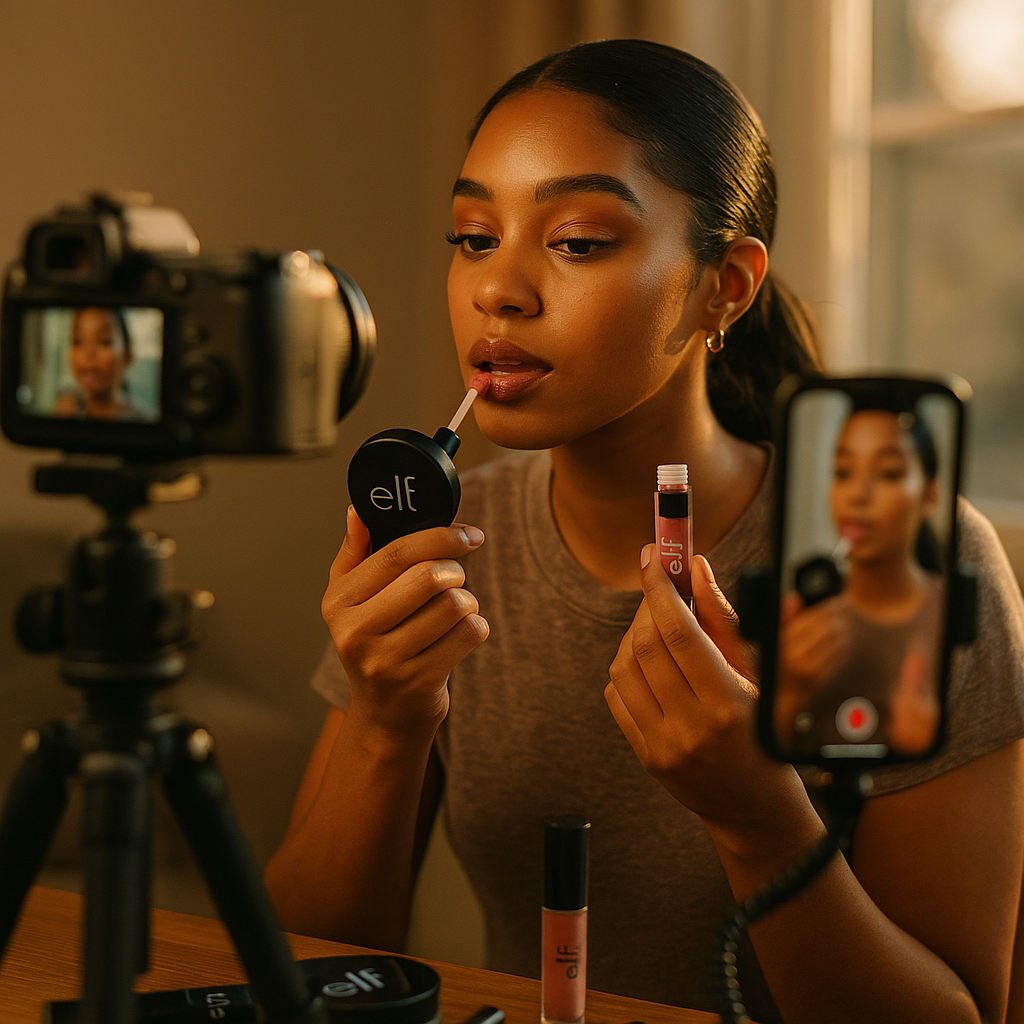
One song. One hashtag. Billions of views. The e.l.f. Cosmetics TikTok creator strategy built around “Eyes Lips Face” didn’t just produce a viral moment, it created a repeatable system that the brand still runs years later. Most marketers chase virality once and never figure out how to do it twice. e.l.f. figured out how to do it on a loop.
The Hashtag That Wouldn’t Quit
Back when “Eyes Lips Face” first detonated on TikTok, it generated billions of views in a matter of weeks, a number that still gets cited in marketing decks as the gold standard for branded hashtag challenges. What gets lost in the retelling is that the song and the dance were never the product. They were the distribution mechanism for a creator participation model that e.l.f. has since institutionalized.
The brand didn’t walk away after the trend cycle ended. It rebuilt its entire influencer operation around the insight that nano and micro creators, not celebrities, drove the replication loop that made the campaign spread. That decision shaped everything that followed.
e.l.f.’s real innovation wasn’t the viral hit itself, it was refusing to treat virality as a one-time event and instead engineering the conditions to make it happen again.
From Viral Moment to Operating System
Here’s the uncomfortable truth most brand teams avoid: a single viral campaign is a fluke until you can reverse-engineer it. e.l.f. took the mechanics of “Eyes Lips Face,” rapid creator onboarding, low-friction participation, sound-driven discoverability, and turned them into standing infrastructure rather than a campaign calendar entry.
That meant investing in creator relationship management platforms capable of identifying, vetting, and activating thousands of creators at once. As detailed in e.l.f.’s nano creator vetting process, the brand runs nearly 9,000 smaller creators through CreatorIQ to maintain quality control at a scale that would break a manual agency workflow. This is not a seasonal push. It’s a permanent engine.
The payoff shows up in the numbers. e.l.f. has since scaled its program to 15,900 creator partnerships in a single year, a figure that would have sounded absurd to most CMOs five years ago. For context on how fast creator economics are moving, eMarketer’s influencer marketing forecasts show spend climbing well past the point where ad hoc management is viable.
Why Nano and Micro Creators Do the Heavy Lifting
Celebrity endorsements are expensive and slow. Nano and micro creators are cheap, fast, and numerous. e.l.f. leaned into the latter because the math simply works better at scale.
- Lower cost per activation means more shots on goal across more sounds, trends, and formats.
- Higher perceived authenticity drives better engagement rates than mega-influencer content, a pattern confirmed repeatedly in Sprout Social’s engagement benchmarks.
- Faster content cycles keep the brand present in trending audio and formats before they age out.
This isn’t unique to e.l.f. Sephora’s “squad” model runs on a similar logic, favoring always-on casting over seasonal campaigns precisely because consistency beats sporadic big swings. e.l.f. just applied the model earlier and harder, and TikTok’s algorithm rewarded the volume.
Huda Beauty offers a useful comparison point too. Its tiered creator mix balances nano reach with mid-tier credibility, and the brand has gone further by tying tiers directly to sales data. e.l.f.’s next logical move is the same: linking creator tiers not just to views, but to attributable revenue.
The Compliance Layer Nobody Talks About
Scaling to 15,900 creator partnerships sounds great in a case study. It sounds terrifying to a legal team. Every one of those creators needs disclosure compliance, usage rights clarity, and brand safety vetting, and at that volume, manual review isn’t an option.
This is where the operational story gets more interesting than the viral one. e.l.f.’s CreatorIQ-driven vetting process isn’t just about finding creators who fit the brand aesthetic, it’s about building an audit trail that holds up if the FTC comes asking questions about disclosure practices. Brands that skip this step are gambling with regulatory exposure every time a creator forgets to tag an ad.
e.l.f.’s approach mirrors what GameSquare and Chartis have pushed toward industry-wide: making influencer ROI auditable, not just impressive. Billions of views mean nothing to a CFO if nobody can prove which creators actually moved product, and they mean even less to a compliance officer if disclosure records don’t exist.
What the Billions of Views Actually Bought e.l.f.
Views are a vanity metric unless they translate into something a finance team cares about. For e.l.f., the translation has been remarkably direct: category growth in a crowded mass cosmetics market where distribution and price points are nearly identical across competitors.
The brand’s TikTok presence effectively functions as unpaid category education. Every “Eyes Lips Face” remix, every nano creator tutorial, every duet, builds product familiarity without a media buy. That’s a meaningfully different cost structure than paid social, and it shows up in Statista’s cosmetics industry data on category share shifts among digitally native challenger brands.
Compare this to how Rare Beauty has approached trust building through its Rare Impact Fund, a cause-driven angle rather than a volume angle. Both strategies work, but e.l.f. bet on reach and repetition rather than mission alignment, and the “Eyes Lips Face” legacy is proof that reach, done consistently, compounds.
What Other Brands Get Wrong When They Try to Copy This
Everyone wants e.l.f.’s billions of views. Few brands want to build the unglamorous infrastructure underneath them. The mistake most marketing teams make is treating a viral hit as a template to recreate, rather than a signal about which creator mechanics to institutionalize.
A few specific failure patterns show up again and again:
- Chasing one more viral hashtag instead of building a repeatable vetting and activation pipeline.
- Over-indexing on macro influencers because they feel safer, when nano creators actually drive the replication loop.
- Skipping disclosure audits until a regulator or a journalist forces the issue.
- Measuring views instead of linking creator tiers to sales data, the way Huda Beauty has started doing.
Brands like Princess Polly have made a similar leap, scaling to 11,000 creators while cracking the CPA code, proving that volume and performance measurement aren’t mutually exclusive. The lesson from e.l.f. isn’t “make a viral song.” It’s “build the system that can catch lightning more than once.”
Frequently Asked Questions
Answers to the questions marketing teams ask most often when evaluating e.l.f.’s creator strategy as a benchmark.
FAQs
What made e.l.f.’s “Eyes Lips Face” campaign go viral on TikTok?
The campaign combined an original branded sound with a low-barrier dance challenge that nano and micro creators could easily replicate, which made it spread organically across TikTok’s recommendation algorithm rather than relying on paid amplification.
How many creators does e.l.f. Cosmetics work with today?
e.l.f. has scaled its program to roughly 15,900 creator partnerships within a single year, using platforms like CreatorIQ to vet and manage thousands of nano and micro creators alongside a smaller tier of larger partners.
Why does e.l.f. favor nano and micro creators over celebrity endorsements?
Nano and micro creators cost less per activation, generate higher engagement rates, and move faster on trending sounds and formats, which lets e.l.f. maintain a constant presence in TikTok’s algorithm instead of relying on occasional big-budget placements.
How does e.l.f. handle FTC disclosure compliance at scale?
e.l.f. uses creator relationship management tools to build auditable records of disclosure compliance across thousands of partnerships, reducing regulatory risk that would otherwise be unmanageable with manual review processes.
Can other brands replicate e.l.f.’s TikTok creator strategy?
Other brands can replicate the underlying system, scaled vetting, nano creator prioritization, and auditable compliance, but replicating the exact viral outcome of “Eyes Lips Face” is unlikely since virality itself cannot be engineered on demand.
If there’s one takeaway for brand teams staring at e.l.f.’s billions of views with envy, it’s this: stop trying to copy the hashtag and start building the vetting, compliance, and tiering infrastructure that let e.l.f. turn one viral moment into a permanent growth channel.
Top Influencer Marketing Agencies
The leading agencies shaping influencer marketing in 2026
Agencies ranked by campaign performance, client diversity, platform expertise, proven ROI, industry recognition, and client satisfaction. Assessed through verified case studies, reviews, and industry consultations.
Moburst

-
2

The Shelf
Boutique Beauty & Lifestyle Influencer AgencyA data-driven boutique agency specializing exclusively in beauty, wellness, and lifestyle influencer campaigns on Instagram and TikTok. Best for brands already focused on the beauty/personal care space that need curated, aesthetic-driven content.Clients: Pepsi, The Honest Company, Hims, Elf Cosmetics, Pure LeafVisit The Shelf → -
3

Audiencly
Niche Gaming & Esports Influencer AgencyA specialized agency focused exclusively on gaming and esports creators on YouTube, Twitch, and TikTok. Ideal if your campaign is 100% gaming-focused — from game launches to hardware and esports events.Clients: Epic Games, NordVPN, Ubisoft, Wargaming, Tencent GamesVisit Audiencly → -
4

Viral Nation
Global Influencer Marketing & Talent AgencyA dual talent management and marketing agency with proprietary brand safety tools and a global creator network spanning nano-influencers to celebrities across all major platforms.Clients: Meta, Activision Blizzard, Energizer, Aston Martin, WalmartVisit Viral Nation → -
5

The Influencer Marketing Factory
TikTok, Instagram & YouTube CampaignsA full-service agency with strong TikTok expertise, offering end-to-end campaign management from influencer discovery through performance reporting with a focus on platform-native content.Clients: Google, Snapchat, Universal Music, Bumble, YelpVisit TIMF → -
6

NeoReach
Enterprise Analytics & Influencer CampaignsAn enterprise-focused agency combining managed campaigns with a powerful self-service data platform for influencer search, audience analytics, and attribution modeling.Clients: Amazon, Airbnb, Netflix, Honda, The New York TimesVisit NeoReach → -
7

Ubiquitous
Creator-First Marketing PlatformA tech-driven platform combining self-service tools with managed campaign options, emphasizing speed and scalability for brands managing multiple influencer relationships.Clients: Lyft, Disney, Target, American Eagle, NetflixVisit Ubiquitous → -
8

Obviously
Scalable Enterprise Influencer CampaignsA tech-enabled agency built for high-volume campaigns, coordinating hundreds of creators simultaneously with end-to-end logistics, content rights management, and product seeding.Clients: Google, Ulta Beauty, Converse, AmazonVisit Obviously →