


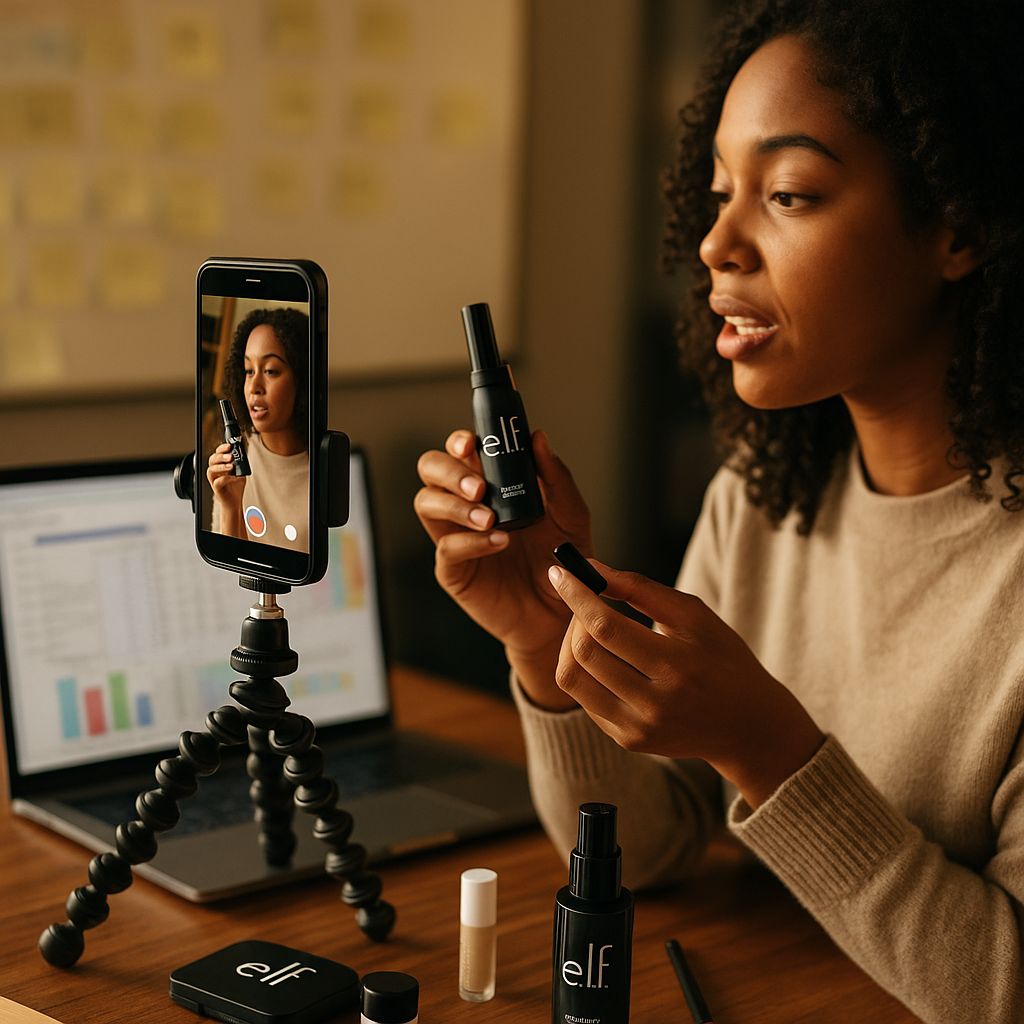
15,900 creator partnerships in a single year. That’s not a typo, and it’s not a fluke either. It’s the result of e.l.f. Beauty rebuilding its entire influencer operation from the ground up, trading a boutique roster of hand-picked ambassadors for a machine that recruits, onboards, and pays thousands of creators without collapsing under its own weight. If you’re still running influencer marketing like it’s 2019, this case study should make you nervous.
The Numbers Behind the Scale-Up
Start with the raw math. A brand moving from a few dozen creators to nearly 16,000 in twelve months isn’t just “scaling a program.” That’s a 500x or greater expansion, depending on where the baseline sat. Most CMOs would call that reckless. e.l.f. called it strategy, and the sales data backed them up.
The beauty brand has built a reputation as one of the sharpest operators in creator commerce, and this isn’t its first rodeo. Influencers Time has previously covered e.l.f.’s TikTok Shop playbook, which laid the groundwork for exactly this kind of volume play. The creator count didn’t happen in isolation. It happened because the commerce infrastructure was already primed to absorb thousands of small-scale content deals without a proportional spike in headcount.
Scaling from hundreds of creators to nearly 16,000 in a year only works if the cost-per-partnership drops as fast as the volume rises. Otherwise you’re just buying chaos at a bigger price tag.
Why Micro and Nano Creators Carried the Volume
You don’t get to five-figure creator counts by signing celebrities. e.l.f. leaned hard into micro and nano tiers, the creators with 1,000 to 50,000 followers who post authentically, cost a fraction of macro talent, and collectively move more units than a handful of glossy campaigns ever could.
This mirrors a broader shift in the industry. According to eMarketer, brands are increasingly reallocating budget toward high-volume micro-creator programs because the aggregate reach and trust signals outperform single big-name endorsements on a cost basis. e.l.f. didn’t invent this trend, but it executed it with unusual discipline.
The brand’s approach also echoes what we’ve seen in other case studies. Comfrt’s 600,000 creator TikTok Shop army proved that sheer volume, when paired with the right affiliate infrastructure, can outperform curated campaigns. e.l.f.’s 15,900 figure is smaller in absolute terms but arguably more impressive given the brand operates across multiple retail channels, not just TikTok Shop alone.
From Boutique to Battalion: What Actually Changed
Here’s the uncomfortable truth for a lot of marketing teams: you cannot scale creator partnerships by adding more people to manually review briefs and negotiate rates. The math doesn’t work. e.l.f. had to rebuild its recruitment and vetting funnel so that most of the volume could self-serve through affiliate platforms, automated approval criteria, and tiered commission structures.
Three structural shifts made this possible:
- Open application funnels. Instead of outbound scouting for every partner, e.l.f. built application flows where creators could opt in, submit content samples, and get auto-approved against brand-safety criteria.
- Commission-first compensation. Rather than flat fees for thousands of creators, the brand shifted toward performance-based payouts tied to actual sales, which kept costs proportional to results.
- Tiered content rights. Not every creator needed a full usage license or whitelisting agreement. e.l.f. segmented rights by tier, reserving the more expensive licensing terms for creators whose content actually drove paid media performance.
That last point connects directly to another piece we’ve covered: how e.l.f. Cosmetics turns UGC into paid ads with whitelisting. The brand doesn’t treat every piece of creator content the same way, and that discipline is part of what keeps a 15,900-partner program from becoming a legal and financial mess.
The Tech Stack That Made This Manageable
No brand runs 15,900 individual relationships through spreadsheets and email threads. That’s a fantasy. The operational backbone here almost certainly includes an affiliate or creator marketplace platform capable of automated contracting, payout processing, and content rights tracking at scale.
This is where a lot of brands underestimate the lift. Signing creators is the easy part. Paying them correctly, tracking which content is licensed for paid amplification, and staying compliant with disclosure rules across thousands of individual posts is where programs break down. Sprout Social’s research on influencer marketing operations consistently flags fragmented tooling as the number one bottleneck for brands trying to scale creator volume, and e.l.f.’s program only works because it solved for this early.
Other brands facing similar operational puzzles have found their own paths. Masterhooks scaled 12,000 creators into 20 million acquisitions using a similarly automated onboarding structure, which suggests this isn’t a beauty-industry quirk. It’s becoming the standard playbook for any brand serious about creator volume as a growth channel.
Risk and Compliance at 15,900 Partnerships
Here’s the question every general counsel should be asking: how do you maintain FTC disclosure compliance across nearly sixteen thousand individual creator relationships? You can’t manually audit every post. You need automated disclosure checks baked into the content submission process, plus clear contractual language that shifts some compliance responsibility onto the creator.
The FTC’s endorsement guidelines apply regardless of whether a creator has 500 followers or 5 million, and regulators have shown increasing willingness to pursue brands, not just individual creators, when disclosure rules get ignored at scale. A program this size without automated compliance checks is a lawsuit waiting to happen.
At five-figure creator counts, compliance can’t be a manual review step. It has to be a built-in gate that content can’t pass without meeting disclosure and brand-safety criteria automatically.
Brand safety extends beyond disclosure too. With thousands of creators posting on your behalf, one bad actor or off-brand comment thread can do real reputational damage. e.l.f.’s approach of tiering rights and reserving deeper vetting for creators eligible for paid amplification effectively narrows the surface area of risk. The nano and micro creators driving raw volume post organically, with lighter oversight, while the smaller pool tapped for whitelisting and paid media gets the closer scrutiny.
What Other Brands Can Steal From This Playbook
You don’t need e.l.f.’s budget to apply the logic here. The core lesson is that creator volume and operational complexity don’t have to scale at the same rate, if you design the system correctly from the start.
A few practical takeaways for brands eyeing similar growth:
- Build commission structures tied to sales before you scale headcount, not after. Fixed fees at high volume are a budget disaster waiting to happen.
- Segment creators by tier and reserve expensive rights agreements only for the content proven to perform in paid channels, similar to the approach detailed in Huda Beauty’s creator tier model.
- Automate disclosure and brand-safety checks before content goes live, not after complaints roll in.
- Choose platforms built for affiliate-style scale rather than trying to retrofit a boutique agency-management tool.
According to Statista, the global influencer marketing industry has continued its steady climb in market value year over year, and platforms like TikTok Shop’s ads ecosystem have made it easier than ever for brands to plug creator content directly into performance media. e.l.f. simply moved faster than most to exploit that infrastructure.
It’s also worth noting this isn’t purely a beauty-category phenomenon. Crocs turned TikTok Shop into a 52 million dollar creator channel using comparable volume logic, which tells us the playbook generalizes across product categories, not just cosmetics.
Concrete Takeaway
If your creator program still relies on manual vetting and flat fees, you’re capped long before you hit four figures in partnerships, let alone five. Build the commission structure, the tiered rights model, and the automated compliance gate first, then let the creator count grow on its own.
Frequently Asked Questions
How did e.l.f. Beauty scale to 15,900 creator partnerships in one year?
The brand shifted from manual, boutique-style creator outreach to an automated recruitment and payout system, leaning heavily on micro and nano creators with commission-based compensation instead of flat fees.
What tools does e.l.f. Beauty likely use to manage this many partnerships?
While specific vendor names aren’t publicly detailed, programs of this size typically rely on affiliate or creator marketplace platforms that automate contracting, content rights tracking, and performance-based payouts.
Can smaller brands replicate this creator scaling model?
Yes, though the scale should match budget and infrastructure. The underlying principles, commission-first pay, tiered content rights, and automated compliance checks, apply at almost any program size.
How does e.l.f. Beauty manage FTC compliance across thousands of creators?
Programs at this scale generally use automated disclosure checks built into content submission workflows, since manual review of every post becomes operationally impossible past a few hundred partners.
Why does e.l.f. Beauty focus on micro and nano creators instead of celebrities?
Micro and nano creators cost significantly less per partnership, post more authentically, and collectively generate more measurable sales impact than a small number of high-profile celebrity endorsements.
Frequently Asked Questions
How did e.l.f. Beauty scale to 15,900 creator partnerships in one year?
The brand shifted from manual, boutique-style creator outreach to an automated recruitment and payout system, leaning heavily on micro and nano creators with commission-based compensation instead of flat fees.
What tools does e.l.f. Beauty likely use to manage this many partnerships?
While specific vendor names aren’t publicly detailed, programs of this size typically rely on affiliate or creator marketplace platforms that automate contracting, content rights tracking, and performance-based payouts.
Can smaller brands replicate this creator scaling model?
Yes, though the scale should match budget and infrastructure. The underlying principles, commission-first pay, tiered content rights, and automated compliance checks, apply at almost any program size.
How does e.l.f. Beauty manage FTC compliance across thousands of creators?
Programs at this scale generally use automated disclosure checks built into content submission workflows, since manual review of every post becomes operationally impossible past a few hundred partners.
Why does e.l.f. Beauty focus on micro and nano creators instead of celebrities?
Micro and nano creators cost significantly less per partnership, post more authentically, and collectively generate more measurable sales impact than a small number of high-profile celebrity endorsements.
Top Influencer Marketing Agencies
The leading agencies shaping influencer marketing in 2026
Agencies ranked by campaign performance, client diversity, platform expertise, proven ROI, industry recognition, and client satisfaction. Assessed through verified case studies, reviews, and industry consultations.
Moburst

-
2

The Shelf
Boutique Beauty & Lifestyle Influencer AgencyA data-driven boutique agency specializing exclusively in beauty, wellness, and lifestyle influencer campaigns on Instagram and TikTok. Best for brands already focused on the beauty/personal care space that need curated, aesthetic-driven content.Clients: Pepsi, The Honest Company, Hims, Elf Cosmetics, Pure LeafVisit The Shelf → -
3

Audiencly
Niche Gaming & Esports Influencer AgencyA specialized agency focused exclusively on gaming and esports creators on YouTube, Twitch, and TikTok. Ideal if your campaign is 100% gaming-focused — from game launches to hardware and esports events.Clients: Epic Games, NordVPN, Ubisoft, Wargaming, Tencent GamesVisit Audiencly → -
4

Viral Nation
Global Influencer Marketing & Talent AgencyA dual talent management and marketing agency with proprietary brand safety tools and a global creator network spanning nano-influencers to celebrities across all major platforms.Clients: Meta, Activision Blizzard, Energizer, Aston Martin, WalmartVisit Viral Nation → -
5

The Influencer Marketing Factory
TikTok, Instagram & YouTube CampaignsA full-service agency with strong TikTok expertise, offering end-to-end campaign management from influencer discovery through performance reporting with a focus on platform-native content.Clients: Google, Snapchat, Universal Music, Bumble, YelpVisit TIMF → -
6

NeoReach
Enterprise Analytics & Influencer CampaignsAn enterprise-focused agency combining managed campaigns with a powerful self-service data platform for influencer search, audience analytics, and attribution modeling.Clients: Amazon, Airbnb, Netflix, Honda, The New York TimesVisit NeoReach → -
7

Ubiquitous
Creator-First Marketing PlatformA tech-driven platform combining self-service tools with managed campaign options, emphasizing speed and scalability for brands managing multiple influencer relationships.Clients: Lyft, Disney, Target, American Eagle, NetflixVisit Ubiquitous → -
8

Obviously
Scalable Enterprise Influencer CampaignsA tech-enabled agency built for high-volume campaigns, coordinating hundreds of creators simultaneously with end-to-end logistics, content rights management, and product seeding.Clients: Google, Ulta Beauty, Converse, AmazonVisit Obviously →