


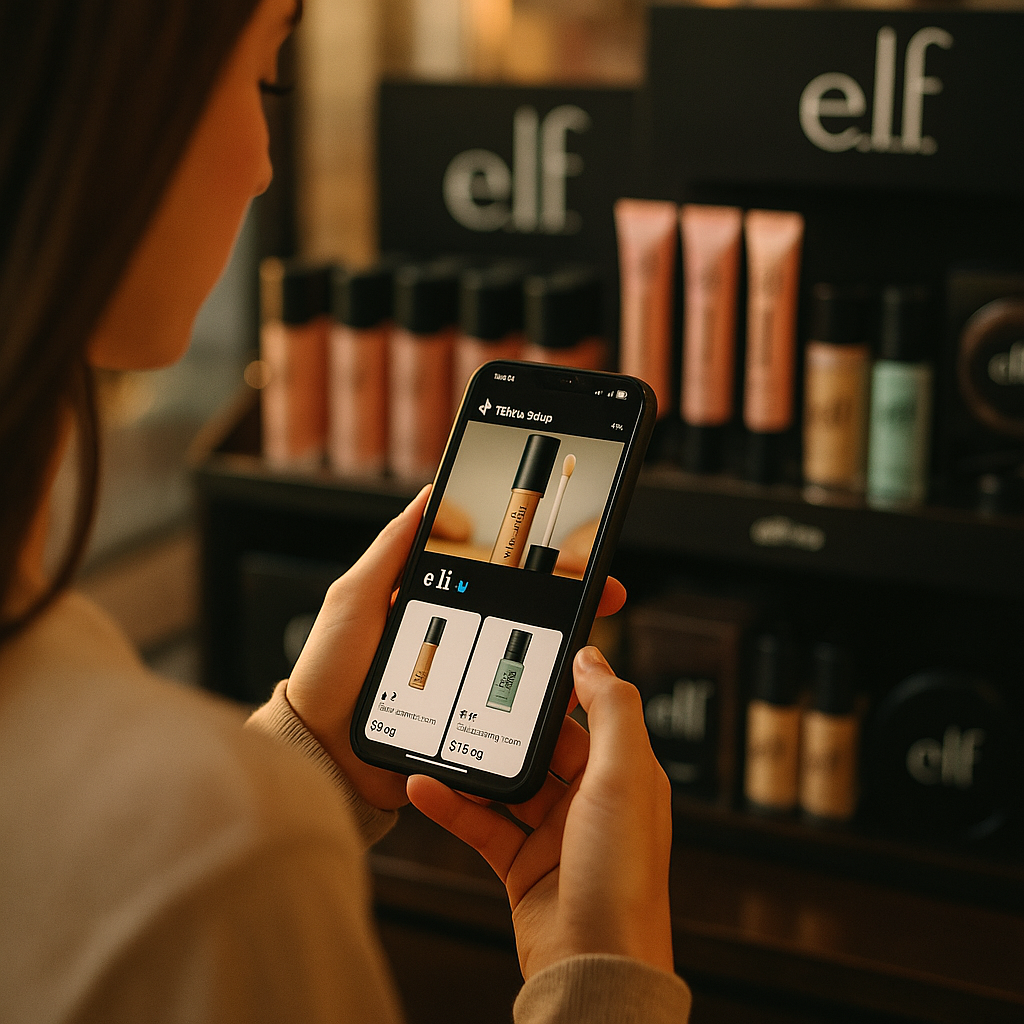
e.l.f. Beauty now pulls more revenue from TikTok Shop livestreams than most challenger brands make in total annual sales. What started as a scrappy experiment with a handful of affiliate creators has become a nine figure channel running on a repeatable operating system, not luck. If you’re still treating TikTok Shop as a side hustle for your social team, e.l.f.’s numbers should change that thinking fast.
This isn’t a story about a viral moment. It’s a story about infrastructure, incentive design, and a brand willing to rebuild its commerce stack around a single platform’s shopping behavior. Here’s how they did it, and what mid-market and enterprise brands can actually replicate.
Why TikTok Shop Became e.l.f.’s Secret Growth Engine
e.l.f. Beauty has always punched above its weight on social. Long before TikTok Shop existed, the brand built a reputation for fast trend response and a willingness to let creators, not corporate marketing, drive the narrative. That cultural fluency turned out to be the perfect foundation for live commerce.
When TikTok Shop rolled out live selling features more broadly, most beauty brands treated it as another QVC clone: a place to dump product demos and hope for impulse buys. e.l.f. treated it differently. They saw livestreams as a distribution layer for their existing affiliate creator network, not a new channel requiring a new strategy from scratch.
e.l.f. didn’t build a TikTok Shop strategy from zero. They plugged an already-thriving creator affiliate program into a live commerce format built for impulse buying, and let the two systems compound each other.
The result: a flywheel where creator-generated video content feeds livestream discovery, livestreams convert at rates traditional product listings can’t touch, and the sales data feeds back into which creators and products get amplified next.
The Operational Playbook Behind the Numbers
Nine figures in livestream revenue doesn’t happen because a few creators got lucky with the algorithm. It happens because someone built systems. Here’s what e.l.f. runs behind the scenes.
- Tiered creator commission structures. e.l.f. runs commission rates that scale with creator performance and exclusivity, giving top-performing livestream hosts meaningfully higher payouts than one-off affiliate posters.
- Dedicated livestream production calendars. Rather than leaving stream timing to individual creators, e.l.f.’s team coordinates drops, restocks, and flash pricing around known high-traffic windows on TikTok Shop.
- Rapid creative testing loops. Product hooks and demo scripts that underperform in one stream get killed or revised within days, not quarters.
- Cross-functional ownership. This isn’t run solely by the social team. Merchandising, supply chain, and paid media all touch the TikTok Shop calendar because inventory and ad spend need to move in sync with stream schedules.
That last point matters more than it sounds. A brand can have the best creators in the world, but if a livestream drives 40,000 units of demand and the warehouse can only fulfill 12,000, the channel becomes a liability instead of an asset. e.l.f.’s supply chain has had to flex around live commerce spikes the same way retailers flex around Black Friday.
Affiliate Creators, Not Just Paid Talent
A big part of e.l.f.’s edge is that most of the creators driving livestream sales aren’t traditional paid brand ambassadors. They’re affiliates earning commission on what they sell, which changes the incentive structure entirely. A creator paid a flat fee to post once has no reason to optimize their pitch. A creator earning commission on every unit sold has every reason to test hooks, restock urgency, and price framing until something converts.
This mirrors what e.l.f. has already proven in its broader user-generated content strategy. The brand has long turned organic creator content into paid social assets through whitelisting, a tactic covered in depth in e.l.f.’s UGC whitelisting approach. TikTok Shop livestreams are essentially the next evolution of that same philosophy: let the people closest to the customer do the selling, then amplify whatever works.
What Makes a Livestream Actually Convert?
Ask any brand that’s tried TikTok Shop live selling and failed, and you’ll hear the same complaint: views don’t equal sales. e.l.f.’s conversion advantage comes down to a few specific tactics that other beauty and CPG brands consistently underestimate.
First, urgency mechanics. Limited-time bundle pricing, flash discounts tied to stream duration, and visible countdown timers all push viewers from “watching” to “buying” faster than a static product page ever could.
Second, product selection discipline. Not every SKU belongs in a livestream. e.l.f. tends to favor lower-price-point, high-repeat-purchase items (think concealers and setting sprays over premium skincare sets) because they lower the psychological barrier to an impulse buy during a fast-moving stream.
Third, and this is the part brands skip: post-stream retargeting. Viewers who watched but didn’t buy get folded into TikTok’s ad ecosystem for follow-up creative, closing the loop between organic livestream reach and paid conversion.
The brands winning at TikTok Shop live commerce aren’t the ones with the biggest creator budgets. They’re the ones treating every stream as a data source that improves the next one.
The Category Isn’t Unique to Beauty
It’s tempting to write off e.l.f.’s success as a beauty-specific phenomenon, low price points, high repeat purchase, visually demonstrable products. But the underlying mechanics apply well beyond cosmetics. Other brands across categories are proving the same live commerce logic works in food and beverage, insurance, and even alcohol.
Feastables built a nano-creator taste test engine that outperformed legacy candy brands on the same platform, detailed in Feastables’ TikTok Shop strategy. A regional brewery used live selling to move inventory that traditional distribution couldn’t clear fast enough, a case worth reading in TikTok Shop live selling for beer. Even insurance, a category nobody associates with impulse buying, found a foothold through live-format lead generation, as covered in TikTok Shop livestreams for insurance leads.
The common thread isn’t the product category. It’s the willingness to rebuild internal processes, commission structures, supply chain flexibility, creative testing cadence, around a platform’s native shopping behavior rather than forcing an old playbook onto new inventory.
Risks Brands Need to Manage
Nine figures in revenue attracts scrutiny, and TikTok Shop live commerce carries real compliance and operational risk that brands can’t ignore.
- FTC disclosure compliance. Livestream affiliate selling still falls under standard endorsement disclosure rules. Brands need clear creator guidelines that align with FTC endorsement guidance, especially as commission-based selling blurs the line between organic recommendation and paid promotion.
- Inventory and fulfillment risk. A successful livestream can generate demand spikes that outpace fulfillment capacity within minutes. Brands need real-time inventory visibility tied directly to the platform’s shop backend.
- Creator quality control. Not every affiliate creator represents brand voice accurately. e.l.f. manages this with tiered vetting, giving higher commission rates and priority stream slots to creators who’ve proven reliable over time.
- Platform concentration risk. Building nine figures of revenue on a single platform’s shopping feature means policy changes or algorithm shifts carry outsized business impact. Diversifying creator relationships across formats reduces that exposure.
None of this is a reason to avoid the channel. It’s a reason to treat it with the same operational rigor as any other major revenue line, not as an experimental marketing budget line item.
Data Discipline Is the Real Differentiator
Every brand talks about “data-driven” creator programs. Few actually build the infrastructure to back it up. e.l.f.’s edge in TikTok Shop live commerce comes largely from tracking granular performance data, which creators, which hooks, which price points, which time slots, and feeding that back into decisions weekly rather than quarterly.
This mirrors a broader shift happening across the influencer marketing industry, where brands are moving from vanity metrics toward revenue attribution infrastructure. Similar approaches to proving creator ROI through structured data pipelines are showing up across categories, including in skincare’s creator ROI tracking. According to eMarketer’s social commerce research, live shopping continues to grow as a share of total social commerce spend in the United States, and platforms like TikTok’s advertising platform have leaned into shoppable livestream formats precisely because brands like e.l.f. have proven the model works at scale.
The lesson for marketing leaders: if your team can’t tell you which specific creator, hook, or time slot drove last week’s TikTok Shop revenue, you’re not running a channel. You’re running an experiment with someone else’s algorithm deciding the outcome.
FAQs
How much revenue does e.l.f. Beauty generate from TikTok Shop livestreams?
e.l.f. Beauty has built TikTok Shop livestreams into a nine figure annual revenue channel, driven primarily by affiliate creator commissions and high-frequency, low-price-point product sales.
What makes TikTok Shop livestreams convert better than traditional social commerce?
Livestreams combine real-time urgency mechanics like countdown discounts, direct creator demonstration, and instant checkout within the same app experience, which removes the friction points that typically cause drop-off between discovery and purchase.
Can smaller brands replicate e.l.f.’s TikTok Shop strategy?
Yes, though scale changes tactics. Smaller brands should focus on tiered affiliate commissions, disciplined product selection for live formats, and consistent stream scheduling rather than trying to match e.l.f.’s creator volume immediately.
What compliance risks come with TikTok Shop live commerce?
The main risks involve FTC endorsement disclosure requirements for affiliate creators, inventory fulfillment gaps during demand spikes, and brand voice consistency across a large network of commission-based sellers.
Is TikTok Shop live commerce limited to beauty and cosmetics?
No. Brands in food and beverage, alcohol, and even insurance have adapted the same live commerce mechanics successfully, proving the model depends more on operational execution than product category.
The takeaway for marketing leaders isn’t “get on TikTok Shop.” It’s “build the commission structure, supply chain flexibility, and data feedback loop before you scale the creator budget,” because e.l.f.’s nine figures came from operations, not from a single viral stream.
Top Influencer Marketing Agencies
The leading agencies shaping influencer marketing in 2026
Agencies ranked by campaign performance, client diversity, platform expertise, proven ROI, industry recognition, and client satisfaction. Assessed through verified case studies, reviews, and industry consultations.
Moburst

-
2

The Shelf
Boutique Beauty & Lifestyle Influencer AgencyA data-driven boutique agency specializing exclusively in beauty, wellness, and lifestyle influencer campaigns on Instagram and TikTok. Best for brands already focused on the beauty/personal care space that need curated, aesthetic-driven content.Clients: Pepsi, The Honest Company, Hims, Elf Cosmetics, Pure LeafVisit The Shelf → -
3

Audiencly
Niche Gaming & Esports Influencer AgencyA specialized agency focused exclusively on gaming and esports creators on YouTube, Twitch, and TikTok. Ideal if your campaign is 100% gaming-focused — from game launches to hardware and esports events.Clients: Epic Games, NordVPN, Ubisoft, Wargaming, Tencent GamesVisit Audiencly → -
4

Viral Nation
Global Influencer Marketing & Talent AgencyA dual talent management and marketing agency with proprietary brand safety tools and a global creator network spanning nano-influencers to celebrities across all major platforms.Clients: Meta, Activision Blizzard, Energizer, Aston Martin, WalmartVisit Viral Nation → -
5

The Influencer Marketing Factory
TikTok, Instagram & YouTube CampaignsA full-service agency with strong TikTok expertise, offering end-to-end campaign management from influencer discovery through performance reporting with a focus on platform-native content.Clients: Google, Snapchat, Universal Music, Bumble, YelpVisit TIMF → -
6

NeoReach
Enterprise Analytics & Influencer CampaignsAn enterprise-focused agency combining managed campaigns with a powerful self-service data platform for influencer search, audience analytics, and attribution modeling.Clients: Amazon, Airbnb, Netflix, Honda, The New York TimesVisit NeoReach → -
7

Ubiquitous
Creator-First Marketing PlatformA tech-driven platform combining self-service tools with managed campaign options, emphasizing speed and scalability for brands managing multiple influencer relationships.Clients: Lyft, Disney, Target, American Eagle, NetflixVisit Ubiquitous → -
8

Obviously
Scalable Enterprise Influencer CampaignsA tech-enabled agency built for high-volume campaigns, coordinating hundreds of creators simultaneously with end-to-end logistics, content rights management, and product seeding.Clients: Google, Ulta Beauty, Converse, AmazonVisit Obviously →