


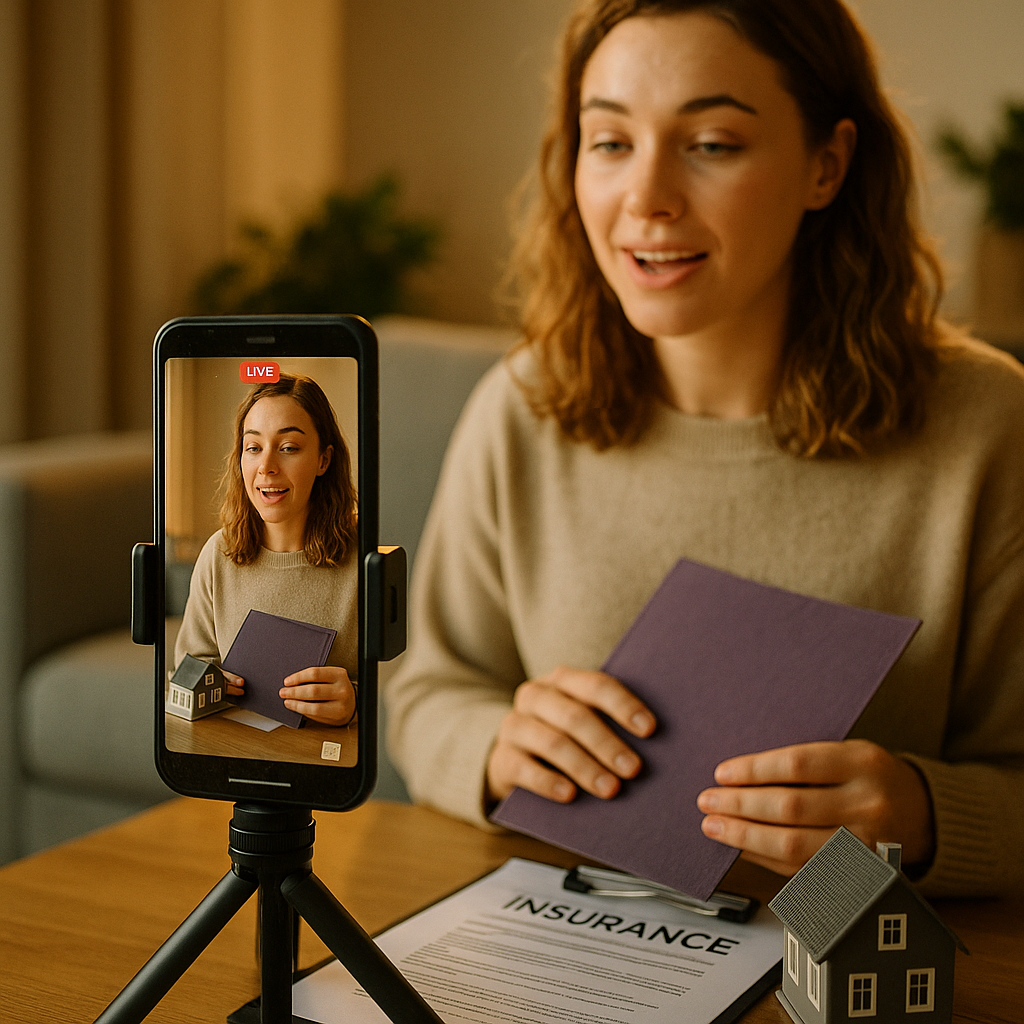
Renters insurance has a marketing problem: nobody wakes up wanting it. Duo Home Insurance solved that by attaching coverage to something people actually want to buy, discounted furniture, live, on TikTok Shop. The result was a cross-sell funnel that turned a commodity insurance product into an impulse add-on, and it’s forcing other insurtechs to rethink where distribution actually happens.
The Problem With Selling Renters Insurance Direct-to-Consumer
Renters insurance is cheap, boring, and easy to postpone. Average premiums sit around $15 to $20 a month, which means the acquisition cost to land a policyholder often exceeds the first year’s revenue. Search ads are expensive because every insurer is bidding on the same twelve keywords. Social ads convert poorly because nobody scrolls TikTok hoping to think about liability coverage.
Duo Home Insurance, a digital-first renters and small landlord insurer, had been running the standard playbook: comparison-site listings, a handful of finance TikTok creators, retargeting ads. It worked, technically. But customer acquisition cost had crept up quarter over quarter, and the sales cycle involved too many steps between “sees ad” and “buys policy.”
The insight came from an unlikely place: exit surveys from new renters. A huge share of new policyholders had just moved, which meant they were also furnishing an apartment. Moving and furniture shopping was already an emotionally charged, high-intent moment. Insurance could ride shotgun on that moment instead of trying to create its own.
Building the Livestream Bundle Model
Duo partnered with three mid-market furniture and home goods brands already active on TikTok Shop: a modular sofa company, a direct-to-consumer mattress brand, and a home decor label known for apartment-friendly, no-drill decor. All three had existing affiliate programs and regular livestream selling cadences.
The mechanic was simple. During scheduled livestreams for these furniture brands, Duo sponsored a segment where the host explained that anyone who bundled a renters policy quote with their purchase got a discount code stackable on top of the furniture deal, plus an entry into a monthly giveaway for a fully furnished starter apartment. Viewers could tap a second TikTok Shop card mid-stream, one for the couch, one for the insurance quote flow, both fulfilled without leaving the app.
The core mechanic wasn’t discounting insurance. It was making insurance feel like part of a purchase the viewer was already emotionally committed to making.
This mirrors a pattern TikTok Shop live selling has proven across categories where a lower-intent product piggybacks on a higher-intent one during the same stream, using urgency and stacked incentives to move both.
Why TikTok Shop, Specifically
TikTok Shop’s affiliate infrastructure made the cross-sell technically simple. Creators could tag multiple product cards in a single livestream, commissions could be tracked separately by brand, and checkout stayed in-app, which mattered enormously for conversion. Every extra tap or redirect to an external quote form was a place shoppers dropped off.
Duo built a streamlined quote flow specifically for TikTok Shop traffic: five questions instead of the usual fourteen, address auto-fill, and an instant estimated premium rather than a “we’ll email you” delay. Full underwriting still happened after the sale, but the top-of-funnel friction dropped dramatically. That single change, according to the team’s internal testing, was responsible for roughly a third of the lift in quote-to-bind conversion.
The Numbers That Made Finance Sign Off
Over a ten-week pilot spanning eighteen livestreams across the three furniture partners, Duo tracked the following:
- Quote starts from livestream traffic converted to bound policies at 22%, compared to 6% from paid search traffic during the same period.
- Blended customer acquisition cost for livestream-sourced policyholders came in at roughly 40% lower than the paid social baseline.
- Average order value on the furniture side rose for partner brands during Duo-sponsored segments, attributed to the discount stacking incentive nudging viewers from cart hesitation to purchase.
- Policyholders acquired through the bundle showed a slightly higher first-year retention rate than the direct-to-consumer cohort, which the team attributes to a stronger emotional association: the policy reminded them of the couch, not a cold sales call.
Those retention numbers matter more than they might seem. Insurance economics reward retention heavily since underwriting costs are front-loaded. A cohort that renews at even a few points higher than baseline changes the lifetime value math enough to justify a lower upfront acquisition cost target, which is exactly what let this channel pencil out for finance.
What the Affiliate Furniture Brands Got Out of It
This wasn’t charity from the furniture side. Each brand received a commission on bound policies (a new revenue line they hadn’t previously had access to) plus the AOV lift from the bundled discount mechanic. For brands running frequent livestreams, adding a no-inventory-risk affiliate product to the mix was close to free money, provided the insurance partner didn’t slow down the shopping experience.
Similar cross-brand affiliate structures are becoming more common as affiliate-creator hybrid models mature, with platforms increasingly built to handle multi-brand commission splits inside a single creator relationship rather than treating each brand deal as siloed.
Compliance Was the Hard Part, Not the Creative
Insurance marketing lives under more regulatory scrutiny than furniture or apparel, and that reality shaped almost every operational decision Duo made. State insurance regulators require specific disclosures, licensed agent involvement in the actual sale, and careful language around what a “quote” versus a “bound policy” actually means. None of the furniture livestream hosts were licensed insurance producers, which meant they could talk about the discount and the giveaway but could not answer coverage questions or imply guaranteed rates on camera.
Duo solved this by routing every insurance-intent tap to a licensed digital agent chat or the streamlined quote tool immediately, keeping the livestream host’s role strictly promotional. Legal reviewed every script line mentioning price, discount stacking, and giveaway odds before it went live, and the team kept records of each stream for compliance audit purposes.
The FTC’s endorsement guidance around clear disclosure of paid partnerships also applied, since viewers needed to understand the furniture creators were compensated for driving insurance leads, not just product sales. Duo’s team leaned on FTC guidance for structuring the required “paid partnership” disclosures across both product mentions in the same stream, which is a nuance a lot of cross-category affiliate deals miss.
That compliance overhead is worth naming because it’s the reason most insurers haven’t tried this yet. It’s genuinely more operationally complex than a standard affiliate deal. Brands considering something similar should budget legal review time as a real line item, not an afterthought, especially after seeing how costly disclosure missteps can become once regulators get involved.
What Other Brands Can Take From This
The renters insurance case is specific, but the underlying strategy generalizes well beyond insurtech. Any low-consideration, recurring-revenue product (warranties, subscriptions, financial services, even software add-ons) can borrow the same logic: find the adjacent high-intent purchase moment and attach yourself to it rather than trying to manufacture demand from zero.
A few operational lessons worth stealing:
- Match the funnel speed to the platform. A fourteen-question quote form kills livestream momentum. Strip your intake to the minimum viable data and defer full underwriting or verification to after the sale.
- Pick affiliate partners with existing livestream cadence. Duo didn’t build audiences from scratch. It borrowed attention from brands already running consistent, well-performing streams, which is a much faster path than launching a standalone channel.
- Treat commission structure as a negotiation, not an afterthought. The furniture brands needed a clear reason to prioritize the insurance segment in their scripts. A flat referral fee plus a shared discount pool aligned incentives on both sides.
- Compliance review has to move at content speed. If legal review takes three days but streams get scheduled weekly, you’ll bottleneck fast. Build a pre-approved script library instead of reviewing line by line every time.
Livestream commerce data backs up the broader shift here. eMarketer research has repeatedly shown livestream shopping conversion rates outperforming standard ecommerce by a wide margin, and TikTok’s own TikTok for Business resources continue to push affiliate-livestream hybrids as a core commerce format rather than a novelty. The category precedent is also there in retail: livestream selling conversion data out of markets like India shows this isn’t a one-market fluke.
Where This Goes Next
Duo has since expanded the model to two additional furniture partners and is testing a similar bundle with a moving-truck rental company, another naturally adjacent, high-intent moment. The team is also exploring whether the same mechanic works for auto insurance bundled with used car marketplaces livestreaming inventory, though the underwriting complexity there is considerably higher.
The bigger signal is what this says about distribution generally. Insurance, banking, and other trust-heavy categories have historically stayed away from livestream commerce, assuming it was too downmarket or too fast-paced for considered purchases. Duo’s numbers suggest that assumption was wrong, or at least incomplete. The purchase doesn’t need to be considered if the trust and timing are borrowed from somewhere else.
Frequently Asked Questions
What is a TikTok Shop livestream bundle?
A TikTok Shop livestream bundle is a promotional structure where two or more products from different brands are offered together during a single live shopping stream, often with a shared discount or incentive, using TikTok Shop’s in-app checkout and affiliate tagging to fulfill both purchases without leaving the platform.
Why did Duo Home Insurance choose furniture brands as affiliate partners?
Furniture shopping typically coincides with moving into a new apartment, the same moment renters are legally or practically required to secure renters insurance. Partnering with furniture brands let Duo reach high-intent shoppers at the exact moment insurance became relevant, rather than trying to create demand independently.
How did Duo handle insurance compliance during livestreams?
Non-licensed livestream hosts were restricted to promotional messaging only. Any viewer expressing intent to get a quote was routed immediately to a licensed digital agent or a compliant quote tool, and all discount, pricing, and giveaway language was pre-approved by legal before each stream aired.
Can this cross-sell model work for other low-interest financial products?
Yes. The strategy generalizes to any recurring-revenue or low-consideration product, such as extended warranties, subscription services, or financial add-ons, provided the brand can identify an adjacent high-intent purchase moment and negotiate a compliant affiliate structure with a partner already active in livestream commerce.
What made the streamlined quote flow so effective?
Reducing the intake form from fourteen questions to five, adding address auto-fill, and delivering an instant estimated premium removed friction at the exact moment purchase intent was highest. Full underwriting still occurred after the sale, but the shortened front-end flow was responsible for a significant share of the conversion lift.
Frequently Asked Questions
See above for the visible FAQ content.
The takeaway for brand teams: stop asking how to make a low-interest product more exciting, and start asking what high-intent purchase your customer is already making nearby. Attach yourself there, fix the friction in your own funnel, and let someone else’s momentum do the persuading.
Top Influencer Marketing Agencies
The leading agencies shaping influencer marketing in 2026
Agencies ranked by campaign performance, client diversity, platform expertise, proven ROI, industry recognition, and client satisfaction. Assessed through verified case studies, reviews, and industry consultations.
Moburst

-
2

The Shelf
Boutique Beauty & Lifestyle Influencer AgencyA data-driven boutique agency specializing exclusively in beauty, wellness, and lifestyle influencer campaigns on Instagram and TikTok. Best for brands already focused on the beauty/personal care space that need curated, aesthetic-driven content.Clients: Pepsi, The Honest Company, Hims, Elf Cosmetics, Pure LeafVisit The Shelf → -
3

Audiencly
Niche Gaming & Esports Influencer AgencyA specialized agency focused exclusively on gaming and esports creators on YouTube, Twitch, and TikTok. Ideal if your campaign is 100% gaming-focused — from game launches to hardware and esports events.Clients: Epic Games, NordVPN, Ubisoft, Wargaming, Tencent GamesVisit Audiencly → -
4

Viral Nation
Global Influencer Marketing & Talent AgencyA dual talent management and marketing agency with proprietary brand safety tools and a global creator network spanning nano-influencers to celebrities across all major platforms.Clients: Meta, Activision Blizzard, Energizer, Aston Martin, WalmartVisit Viral Nation → -
5

The Influencer Marketing Factory
TikTok, Instagram & YouTube CampaignsA full-service agency with strong TikTok expertise, offering end-to-end campaign management from influencer discovery through performance reporting with a focus on platform-native content.Clients: Google, Snapchat, Universal Music, Bumble, YelpVisit TIMF → -
6

NeoReach
Enterprise Analytics & Influencer CampaignsAn enterprise-focused agency combining managed campaigns with a powerful self-service data platform for influencer search, audience analytics, and attribution modeling.Clients: Amazon, Airbnb, Netflix, Honda, The New York TimesVisit NeoReach → -
7

Ubiquitous
Creator-First Marketing PlatformA tech-driven platform combining self-service tools with managed campaign options, emphasizing speed and scalability for brands managing multiple influencer relationships.Clients: Lyft, Disney, Target, American Eagle, NetflixVisit Ubiquitous → -
8

Obviously
Scalable Enterprise Influencer CampaignsA tech-enabled agency built for high-volume campaigns, coordinating hundreds of creators simultaneously with end-to-end logistics, content rights management, and product seeding.Clients: Google, Ulta Beauty, Converse, AmazonVisit Obviously →