


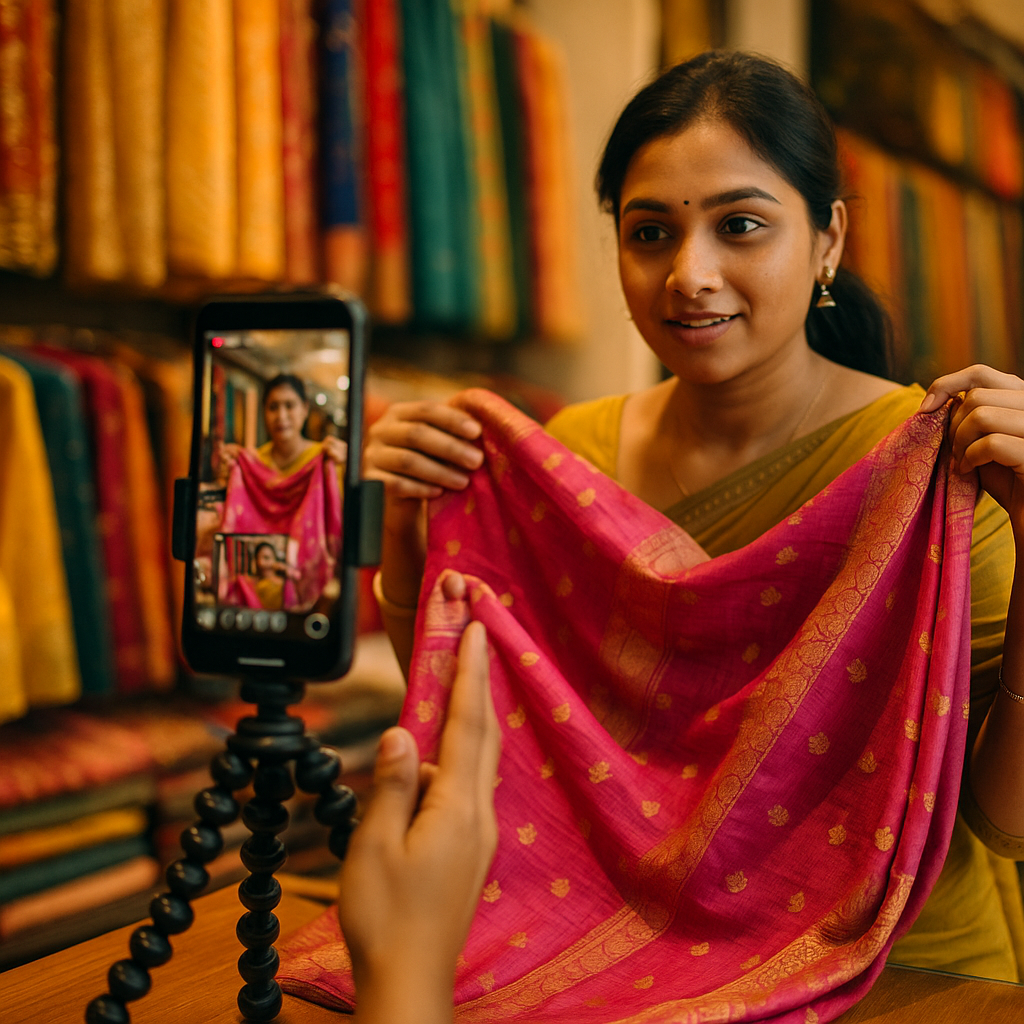
A 19% conversion rate on shoppable video sounds fabricated. It isn’t. One livestream selling program in India hit that number by treating short-form video less like content and more like a storefront. If your influencer program still separates “social” from “sales,” this livestream selling case study should make you uncomfortable.
Why India Became the Testing Ground
India’s ecommerce market doesn’t behave like the West’s. Trust in traditional online retail is still uneven outside metro tier-1 cities, but trust in a familiar face on a phone screen runs deep. That gap created fertile ground for livestream commerce to leapfrog straight into short-form video, skipping the slower adoption curve seen in the US.
The brand behind this case study, a mid-sized D2C beauty and personal care player selling through its own app plus Meesho and Amazon storefronts, had a problem familiar to nearly every brand reading this: massive social reach, disappointing conversion. Instagram Reels views were healthy. Follower growth was healthy. Revenue attribution from social was, frankly, embarrassing.
So the team rebuilt its content engine around one premise: stop making videos that entertain and hope people click later. Start making videos that sell in the moment, then measure everything against a single social-first shopper cohort.
The brand didn’t chase virality. It chased a repeatable purchase path from a 30-second video to a completed checkout, and tracked that path obsessively.
What “Social-First Shopper Base” Actually Means Here
This matters because the 19% figure gets misquoted if you don’t understand the denominator. The brand defined its social-first shopper base as users acquired exclusively through organic and paid social touchpoints, no search, no email, no direct app installs from other channels. Roughly 2.1 million users fell into that segment over a two-quarter window.
Of those, 19% completed at least one purchase directly through a shoppable short-form video or livestream session. That’s not a click-through rate. That’s a hard conversion number on people who started their journey scrolling, not searching. For context, industry benchmarks for social commerce conversion typically sit in the low single digits, according to data tracked by eMarketer. Nineteen percent isn’t an incremental win. It’s a category-defying one.
The Mechanics: How the Program Actually Worked
Strip away the buzzwords and the program had four operational pillars. None of them are exotic individually. The differentiator was execution discipline.
- Micro-livestreams, not marathon streams. Instead of two-hour livestream events (common in Chinese and increasingly Southeast Asian livestream commerce), the brand ran 12-18 minute focused sessions, three to five times a week, each anchored to a single product category.
- Creator-led, brand-scripted hybrid. Creators controlled tone and delivery. The brand controlled the offer structure, pricing cadence, and CTA timing down to the minute. This wasn’t influencer autonomy for its own sake.
- Shoppable short-form as top-of-funnel bait. 20-40 second Reels and YouTube Shorts previewed the livestream, tagged products directly, and funneled viewers into the live session or straight to checkout if the stream had ended.
- Real-time inventory and price visibility. Viewers saw live stock counters and time-boxed discounts inside the stream interface, a tactic borrowed heavily from Chinese platforms like Taobao Live and adapted for Indian app infrastructure.
The combination created urgency without feeling manipulative, at least according to the brand’s own post-campaign sentiment surveys. Scarcity cues plus a trusted face reduced the hesitation that normally kills social commerce conversion.
Nano and Micro-Creators Did the Heavy Lifting
Here’s the part a lot of Western brands get wrong when they try to copy this model: the brand didn’t lean on celebrity creators. It built a bench of 40+ nano and micro-creators (10K-80K followers) across regional languages, including Hindi, Tamil, and Bengali, and rotated them based on category fit rather than follower count.
This mirrors a pattern we’ve documented elsewhere. nano-creator programs consistently outperform celebrity-anchored campaigns on trust metrics, and trust is the entire mechanism behind livestream conversion. Nobody buys skincare from someone who feels like an ad. They buy from someone who feels like their cousin who happens to know skincare.
Regional language segmentation also unlocked audiences that English-first D2C brands routinely ignore. Livestreams in Tamil and Bengali outperformed Hindi and English sessions on conversion rate, though not on raw viewership, an important nuance for any brand assuming bigger audience always wins.
The Numbers Behind the Headline Stat
Beyond the 19% conversion figure, a few supporting metrics explain why this program worked structurally, not just anecdotally:
- Average watch time on shoppable Reels hit 22 seconds against a category average closer to 9-11 seconds.
- Cart abandonment during live sessions dropped to 34%, compared to a typical mobile ecommerce abandonment rate that Statista and others regularly peg above 65-70%.
- Repeat purchase rate among converted social-first shoppers reached 41% within 90 days, suggesting the format built habit, not just one-off impulse buys.
- Customer acquisition cost through the livestream funnel ran 28% lower than the brand’s blended paid social CAC.
That CAC figure deserves its own paragraph, honestly. Most brands justify livestream and shoppable video investment on engagement metrics because the ROI math is murky. This brand flipped that. It treated livestream selling as a lower-cost acquisition channel and measured it against paid social CPMs directly. When the channel wins on cost and conversion simultaneously, the internal budget argument writes itself.
A 28% lower CAC than paid social, paired with 3x the conversion rate, is the kind of number that gets a channel reclassified from “experimental” to “core” in a single planning cycle.
Where This Gets Harder to Copy
Every case study needs a reality check, and this one has three.
First, India’s mobile commerce infrastructure, particularly UPI-based instant payments, removes friction that doesn’t exist the same way in markets reliant on card checkout. A livestream viewer in India can complete a purchase in three taps. That speed is structural, not tactical, and it’s a big reason conversion held up. Brands in the US or UK trying to replicate this need to budget extra effort toward checkout friction reduction, because the platform layer won’t do it for them the way UPI does.
Second, the creator bench took nearly eight months to build. Regional-language creator relationships, script trust, and rehearsal cadence don’t happen in a single quarter. Brands expecting instant results from a livestream pilot are setting themselves up to kill the program before it matures. This is the same patience problem we’ve seen play out in livestream commerce programs in other markets, where early-stage numbers look unimpressive before the flywheel kicks in.
Third, compliance. India’s advertising standards around influencer disclosure and price claims during live sales are tightening, and brands running real-time discount countdowns need airtight documentation of pricing history to avoid deceptive-pricing complaints. This isn’t unique to India. Regulators globally, including the FTC, are scrutinizing urgency tactics in livestream and shoppable formats more closely each year.
What Brand Teams Should Actually Take From This
If you’re a brand strategist reading this thinking “great, but we’re not launching in India,” the transferable lessons are still solid:
- Segment your social-first shoppers as their own cohort. Blended attribution hides whether social is actually converting.
- Short-form video works best as a livestream trailer, not a standalone sales unit. The two formats should feed each other, not compete for budget.
- Nano-creators in regional or niche language communities often out-convert bigger names, even if they under-perform on reach.
- Measure livestream CAC against paid social CAC directly. If you’re only tracking engagement, you’re avoiding the harder, more useful comparison.
Platforms like TikTok Shop and Amazon Live are pushing similar mechanics globally, and brands that ignore livestream selling as “not our market” are increasingly the exception, not the rule. Amazon’s own tiered creator model shows a similar bet on smaller creators scaling discovery more efficiently than top-tier names, a pattern this India case study reinforces from a completely different market.
A Note on Measurement Discipline
None of this works without rigorous, cohort-level tracking. The brand’s data team built dashboards that isolated social-first shoppers at the pixel level, tagging every livestream and shoppable video interaction before it hit checkout. Most mid-market brands don’t invest in this granularity. That’s the real barrier to replication, not the format itself. Tools from Sprout Social and similar platforms have made this kind of attribution more accessible, but it still requires someone on the team to own the reporting structure, not just the content calendar.
Start small: pick one product category, build a 12-week micro-livestream cadence with three to five nano-creators, and track conversion against a clean social-first cohort before scaling spend. The 19% number wasn’t luck, it was a measurement system built before a single video went live.
FAQs
What is livestream selling and how does it differ from a standard shoppable video?
Livestream selling combines real-time video hosting with in-stream purchasing, letting viewers buy while a host demonstrates or discusses a product. Shoppable short-form video, like Reels or Shorts, is pre-recorded and typically links out to a product page, making livestream selling more immediate and interactive.
Why did this program achieve a 19% conversion rate when industry averages are much lower?
The program combined trusted regional creators, real-time scarcity cues like live inventory counters, frictionless UPI-based checkout, and a tightly segmented social-first shopper cohort. Each element reduced purchase hesitation at a different stage of the funnel.
Can brands outside India replicate this livestream selling model?
The core tactics, such as micro-livestreams, nano-creator partnerships, and shoppable video teasers, are transferable. However, results depend heavily on local payment infrastructure and checkout speed, so brands in markets without instant payment rails should expect lower conversion unless they invest separately in reducing checkout friction.
How long does it take to build a livestream selling program from scratch?
In this case study, building a reliable creator bench and content cadence took roughly eight months before results stabilized. Brands should treat the first two quarters as a build phase, not a performance benchmark.
What compliance risks should brands watch for in livestream selling?
Real-time discount countdowns and urgency tactics face growing regulatory scrutiny around deceptive pricing and influencer disclosure. Brands should document pricing history and ensure creators clearly disclose paid partnerships during live sessions.
Top Influencer Marketing Agencies
The leading agencies shaping influencer marketing in 2026
Agencies ranked by campaign performance, client diversity, platform expertise, proven ROI, industry recognition, and client satisfaction. Assessed through verified case studies, reviews, and industry consultations.
Moburst

-
2

The Shelf
Boutique Beauty & Lifestyle Influencer AgencyA data-driven boutique agency specializing exclusively in beauty, wellness, and lifestyle influencer campaigns on Instagram and TikTok. Best for brands already focused on the beauty/personal care space that need curated, aesthetic-driven content.Clients: Pepsi, The Honest Company, Hims, Elf Cosmetics, Pure LeafVisit The Shelf → -
3

Audiencly
Niche Gaming & Esports Influencer AgencyA specialized agency focused exclusively on gaming and esports creators on YouTube, Twitch, and TikTok. Ideal if your campaign is 100% gaming-focused — from game launches to hardware and esports events.Clients: Epic Games, NordVPN, Ubisoft, Wargaming, Tencent GamesVisit Audiencly → -
4

Viral Nation
Global Influencer Marketing & Talent AgencyA dual talent management and marketing agency with proprietary brand safety tools and a global creator network spanning nano-influencers to celebrities across all major platforms.Clients: Meta, Activision Blizzard, Energizer, Aston Martin, WalmartVisit Viral Nation → -
5

The Influencer Marketing Factory
TikTok, Instagram & YouTube CampaignsA full-service agency with strong TikTok expertise, offering end-to-end campaign management from influencer discovery through performance reporting with a focus on platform-native content.Clients: Google, Snapchat, Universal Music, Bumble, YelpVisit TIMF → -
6

NeoReach
Enterprise Analytics & Influencer CampaignsAn enterprise-focused agency combining managed campaigns with a powerful self-service data platform for influencer search, audience analytics, and attribution modeling.Clients: Amazon, Airbnb, Netflix, Honda, The New York TimesVisit NeoReach → -
7

Ubiquitous
Creator-First Marketing PlatformA tech-driven platform combining self-service tools with managed campaign options, emphasizing speed and scalability for brands managing multiple influencer relationships.Clients: Lyft, Disney, Target, American Eagle, NetflixVisit Ubiquitous → -
8

Obviously
Scalable Enterprise Influencer CampaignsA tech-enabled agency built for high-volume campaigns, coordinating hundreds of creators simultaneously with end-to-end logistics, content rights management, and product seeding.Clients: Google, Ulta Beauty, Converse, AmazonVisit Obviously →