


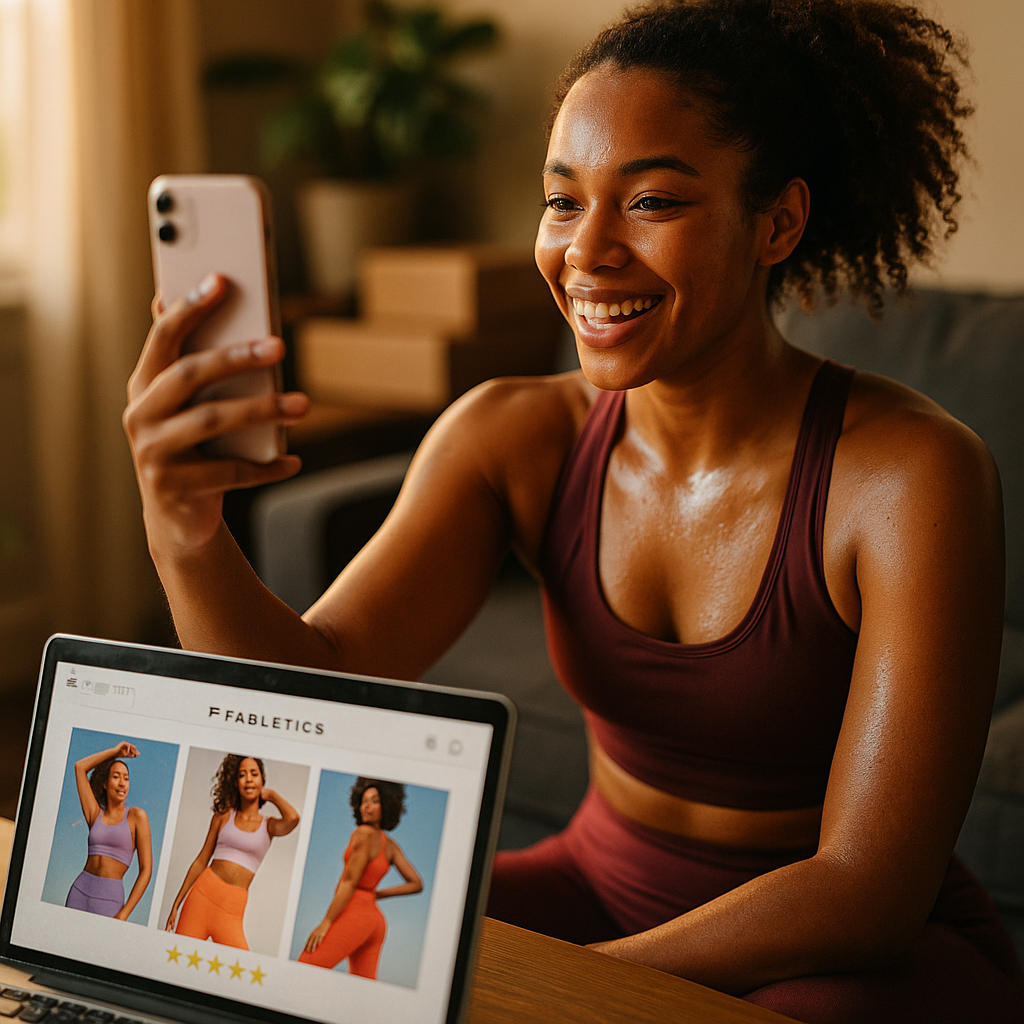
Fabletics converts nearly a third of its customers into repeat buyers within the first year, and its influencer strategy is a big reason why. While most athleisure brands chase one-off sales, Fabletics built a system where user-generated content quietly does the retention work that expensive retargeting ads used to handle. The Fabletics influencer strategy isn’t flashy. It’s methodical, membership-driven, and worth studying if your brand still treats UGC as a vanity metric instead of a revenue lever.
The membership model changes the influencer math entirely
Most brands measure influencer ROI on a single transaction: did the post drive a sale? Fabletics doesn’t have that luxury, or rather, it doesn’t need it. The brand runs on a VIP membership model, meaning the first purchase is only the entry point. The real value shows up in month three, month six, month twelve.
That structural difference reshapes everything about how Fabletics approaches creators. An influencer post doesn’t need to close a sale in 24 hours. It needs to build enough trust and product familiarity that a customer signs up for the membership and stays subscribed. This is why Fabletics leans so heavily on repeat, unpolished UGC rather than one-time celebrity endorsements. Kate Hudson’s involvement as co-founder gave the brand early credibility, but the sustained growth engine has always been the volume of real customers showing real workouts in real leggings.
When your business model depends on subscription retention rather than single-purchase conversion, influencer content has to build trust over months, not seconds.
How the UGC funnel actually works
Fabletics doesn’t rely on a handful of hero campaigns. It runs a continuous content pipeline that pulls from three tiers of creators simultaneously.
- Nano and micro fitness creators post honest try-ons and studio sessions, generating the bulk of raw content volume.
- Mid-tier lifestyle influencers integrate Fabletics into broader “day in my life” content, which normalizes the brand outside pure fitness contexts.
- A small set of ambassadors and Hudson herself anchor the brand’s aspirational identity while the long tail handles authenticity.
This layered approach mirrors what other direct-to-consumer brands have discovered the hard way. Alo Yoga’s creator payment model shows a similar shift toward treating creators as long-term partners rather than one-time vendors, because retention economics reward consistency over reach.
The content itself gets repurposed relentlessly. A single creator video might appear as an organic post, then a paid whitelisted ad, then a product page testimonial, then a retargeting asset. Fabletics doesn’t create once and discard. It stretches every piece of UGC across the entire funnel, which is exactly the kind of operational efficiency that separates brands scaling influencer spend from brands burning it.
Why UGC volume beats celebrity reach for this category
Athleisure buyers are skeptical of polish. A perfectly lit studio shot of leggings doesn’t answer the question shoppers actually have: does this hold up during a real workout, does it fit true to size, does the fabric pill after ten washes? Only real customers answer that convincingly.
Fabletics seeds product to a wide base of everyday creators specifically because volume creates statistical credibility. One glowing review is an anecdote. Fifty similar reviews from different body types, different workouts, different cities start to look like proof. This is the same logic driving Liquid Death’s micro creator UGC strategy, where trackable revenue comes from breadth of authentic voices rather than depth of celebrity spend.
There’s also a cost argument brand strategists can’t ignore. Micro and nano creators typically charge a fraction of what macro influencers or celebrities command, yet they often produce content with higher completion rates and lower cost per acquisition on paid social. eMarketer research has repeatedly shown engagement rates declining as follower count climbs, which is exactly why brands with subscription economics gravitate toward the long tail.
Repeat purchases start before the first sale
Here’s the part most breakdowns miss. Fabletics doesn’t wait for a customer to buy before exposing them to UGC. The content shows up in prospecting ads, in retargeting sequences, and on product pages before checkout. By the time a shopper completes their first order, they’ve already seen multiple versions of “real customer, real result.” That primes the psychological groundwork for the membership renewal months later.
This pre-purchase UGC exposure functions almost like a trust deposit. When the membership charge hits a customer’s card two months in, they’re not caught off guard by an unfamiliar brand relationship. They’ve already internalized dozens of micro-signals that this brand delivers what it promised. Compare that to brands that front-load UGC only into acquisition campaigns and go silent afterward, then wonder why churn spikes at the first renewal cycle.
What brand strategists can actually replicate here
You don’t need Fabletics’ budget or Kate Hudson’s name recognition to apply the underlying mechanics. The transferable playbook looks like this:
- Build a UGC pipeline, not a campaign calendar. Treat creator content as an always-on production line feeding multiple channels, similar to how ByNAMEs UGC pipeline scaled a single product category into massive organic reach.
- Prioritize volume of authentic voices over reach of a few big names. Statistical credibility from many similar creators often outperforms a single mega influencer post.
- Repurpose content across the entire customer journey, from cold prospecting through post-purchase retention emails.
- Measure influencer impact against retention metrics, not just first-purchase conversion, if your business model includes any recurring revenue component.
Retail and subscription brands outside athleisure are already borrowing pieces of this. Comfrt’s 600,000 creator TikTok Shop army demonstrates the same volume-over-reach logic applied to a different product category, and the repeat purchase lift followed a similar pattern of trust building through sheer content saturation.
Where the strategy could break
No approach is risk free, and brand strategists evaluating this model should account for a few operational headaches.
Volume-based UGC programs are harder to govern than a tight roster of vetted ambassadors. More creators means more disclosure inconsistency, more brand voice drift, and more legal exposure if content strays into unsubstantiated product claims. The FTC’s endorsement guidelines apply regardless of whether a creator has 900 followers or 900,000, and enforcement has only gotten stricter. Brands running high volume programs need clear contracts and consistent disclosure training baked into onboarding, not left to creator discretion.
There’s also a content fatigue risk. When UGC becomes the dominant creative format across every channel, some audiences start to detect the pattern and discount it as “another sponsored try-on haul.” Fabletics manages this partly through sheer diversity of creator body types, ages, and fitness levels, which keeps the format from feeling repetitive even at high volume. Brands attempting to copy this without that diversity often end up with content that looks suspiciously uniform, undermining the exact authenticity they’re trying to project.
Attribution is the third challenge. Subscription models make it genuinely difficult to trace a renewal decision back to a specific piece of content consumed months earlier. Fabletics likely relies on broader brand lift studies and cohort analysis rather than last-click attribution, an approach that requires more sophisticated measurement infrastructure than most mid-sized brands have in place. If you’re going to run this playbook, invest in the analytics stack before you scale the creator volume, not after.
A UGC strategy built for retention needs measurement built for retention too. Last-click attribution will underreport almost everything that matters here.
Platform allocation matters more than people assume
Fabletics doesn’t spread creator content evenly across every platform. Instagram carries the bulk of aspirational lifestyle integration, while TikTok handles the higher volume, lower production value try-on and workout content that performs better with the platform’s algorithm. This isn’t arbitrary. Each platform’s native content style demands a slightly different creator brief, and brands that send identical content across channels typically see weaker performance on both. Marketing teams evaluating platform mix should check current benchmarks through resources like HubSpot’s marketing research or Sprout Social’s platform analysis before locking in budget splits, since engagement patterns shift often enough to make last year’s allocation outdated.
Frequently Asked Questions
What makes the Fabletics influencer strategy different from typical athleisure marketing?
Fabletics builds its influencer approach around a subscription membership model, which means content needs to support long-term retention rather than a single conversion. This shifts the focus toward volume and authenticity of UGC rather than reach from a small number of celebrity endorsements.
Does Fabletics pay influencers or rely mostly on product seeding?
The brand uses a mix of both. Nano and micro creators are frequently compensated through product seeding and affiliate commissions, while mid-tier and ambassador-level creators typically work under paid contracts with clearer usage rights for whitelisting and paid amplification.
How does UGC actually drive repeat purchases instead of just first sales?
Repurposed UGC appears across the customer journey, from prospecting ads to post-purchase retention emails, building cumulative trust that supports membership renewal decisions made weeks or months after the first transaction, not just the initial click.
Can smaller brands realistically copy this model?
Yes, though the analytics investment matters more than the creative budget. Brands need cohort-based measurement to track retention impact, plus clear disclosure governance across a larger creator base, before scaling UGC volume the way Fabletics has.
What’s the biggest compliance risk with high volume UGC programs?
Inconsistent FTC disclosure compliance across a large, decentralized creator base is the most common risk. Brands should standardize disclosure language and contract terms rather than leaving compliance to individual creator judgment.
If you’re evaluating your own influencer program against this model, start by auditing whether your UGC currently supports retention metrics at all, or whether it’s still measured purely against first-purchase conversion. That single shift in measurement is usually the fastest way to find hidden ROI.
Frequently Asked Questions
What makes the Fabletics influencer strategy different from typical athleisure marketing?
Fabletics builds its influencer approach around a subscription membership model, which means content needs to support long-term retention rather than a single conversion. This shifts the focus toward volume and authenticity of UGC rather than reach from a small number of celebrity endorsements.
Does Fabletics pay influencers or rely mostly on product seeding?
The brand uses a mix of both. Nano and micro creators are frequently compensated through product seeding and affiliate commissions, while mid-tier and ambassador-level creators typically work under paid contracts with clearer usage rights for whitelisting and paid amplification.
How does UGC actually drive repeat purchases instead of just first sales?
Repurposed UGC appears across the customer journey, from prospecting ads to post-purchase retention emails, building cumulative trust that supports membership renewal decisions made weeks or months after the first transaction, not just the initial click.
Can smaller brands realistically copy this model?
Yes, though the analytics investment matters more than the creative budget. Brands need cohort-based measurement to track retention impact, plus clear disclosure governance across a larger creator base, before scaling UGC volume the way Fabletics has.
What’s the biggest compliance risk with high volume UGC programs?
Inconsistent FTC disclosure compliance across a large, decentralized creator base is the most common risk. Brands should standardize disclosure language and contract terms rather than leaving compliance to individual creator judgment.
Top Influencer Marketing Agencies
The leading agencies shaping influencer marketing in 2026
Agencies ranked by campaign performance, client diversity, platform expertise, proven ROI, industry recognition, and client satisfaction. Assessed through verified case studies, reviews, and industry consultations.
Moburst

-
2

The Shelf
Boutique Beauty & Lifestyle Influencer AgencyA data-driven boutique agency specializing exclusively in beauty, wellness, and lifestyle influencer campaigns on Instagram and TikTok. Best for brands already focused on the beauty/personal care space that need curated, aesthetic-driven content.Clients: Pepsi, The Honest Company, Hims, Elf Cosmetics, Pure LeafVisit The Shelf → -
3

Audiencly
Niche Gaming & Esports Influencer AgencyA specialized agency focused exclusively on gaming and esports creators on YouTube, Twitch, and TikTok. Ideal if your campaign is 100% gaming-focused — from game launches to hardware and esports events.Clients: Epic Games, NordVPN, Ubisoft, Wargaming, Tencent GamesVisit Audiencly → -
4

Viral Nation
Global Influencer Marketing & Talent AgencyA dual talent management and marketing agency with proprietary brand safety tools and a global creator network spanning nano-influencers to celebrities across all major platforms.Clients: Meta, Activision Blizzard, Energizer, Aston Martin, WalmartVisit Viral Nation → -
5

The Influencer Marketing Factory
TikTok, Instagram & YouTube CampaignsA full-service agency with strong TikTok expertise, offering end-to-end campaign management from influencer discovery through performance reporting with a focus on platform-native content.Clients: Google, Snapchat, Universal Music, Bumble, YelpVisit TIMF → -
6

NeoReach
Enterprise Analytics & Influencer CampaignsAn enterprise-focused agency combining managed campaigns with a powerful self-service data platform for influencer search, audience analytics, and attribution modeling.Clients: Amazon, Airbnb, Netflix, Honda, The New York TimesVisit NeoReach → -
7

Ubiquitous
Creator-First Marketing PlatformA tech-driven platform combining self-service tools with managed campaign options, emphasizing speed and scalability for brands managing multiple influencer relationships.Clients: Lyft, Disney, Target, American Eagle, NetflixVisit Ubiquitous → -
8

Obviously
Scalable Enterprise Influencer CampaignsA tech-enabled agency built for high-volume campaigns, coordinating hundreds of creators simultaneously with end-to-end logistics, content rights management, and product seeding.Clients: Google, Ulta Beauty, Converse, AmazonVisit Obviously →