


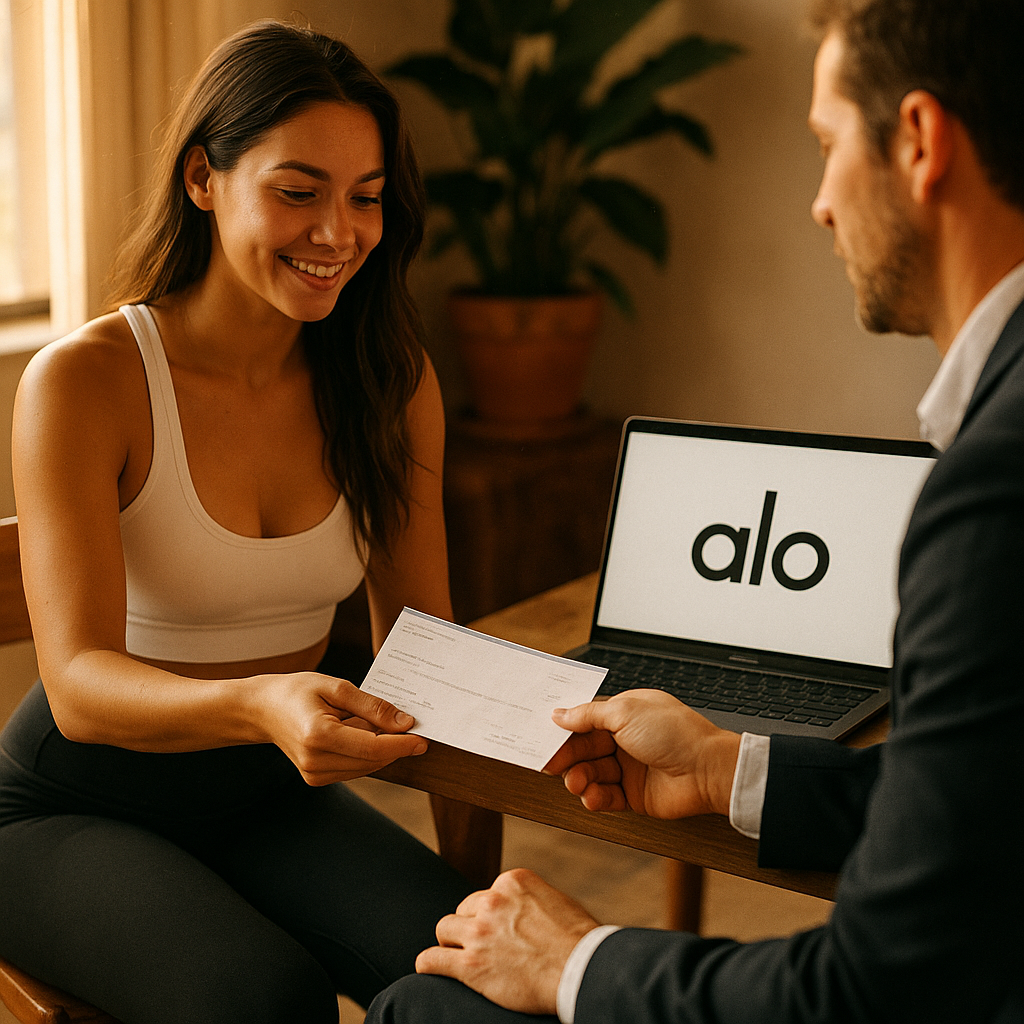
What if the biggest lever in your influencer program isn’t reach or engagement, but ownership? Alo Yoga has quietly built a creator affiliate equity model that pays top performers less like gig workers and more like stakeholders. For brands drowning in flat-rate influencer fees, it’s a case study worth stealing.
The Problem With Flat-Fee Influencer Deals
Most affiliate programs still run on a tired formula: fixed commission, flat rate, take it or leave it. A creator drives ten sales or ten thousand, the percentage rarely moves. That structure works fine for one-off campaigns. It falls apart when you want long-term brand advocates who think like founders, not freelancers.
Alo Yoga saw the ceiling early. The athleisure brand, valued at roughly $12 billion according to industry estimates, built its entire growth engine on creator relationships rather than traditional paid media. But flat commissions don’t scale loyalty. They scale transactions. So Alo restructured its top-tier affiliate relationships around equity-like incentives: escalating revenue share, exclusive product equity, and long-term partnership terms that reward creators for compounding growth rather than one-time conversions.
Flat commissions reward a single sale. Equity-style revenue share rewards the entire relationship, and that’s the difference between a creator posting once and a creator building your brand for years.
How Alo Structures the Revenue Share
Alo Yoga’s model isn’t a single public contract template (the brand keeps deal specifics private, as most do), but the pattern reported across creator marketing circles and confirmed by agency partners follows a tiered logic:
- Base affiliate tier: Standard commission rates for entry-level creators, similar to what you’d see on ShopMy or LTK.
- Growth tier: Escalating commission percentages tied to sustained monthly sales volume, not one campaign.
- Equity tier: Top-performing creators receive product equity, co-created capsule collections with backend revenue share, and in some cases long-term retainers structured like advisory equity rather than a media buy.
The genius here isn’t the commission math. It’s the psychology. When a creator has a stake in sustained performance, their content strategy shifts. They stop chasing single viral moments and start building an audience funnel that keeps converting quarter after quarter. That’s a fundamentally different incentive than “post this, get paid.”
Why This Matters More Than Ever
Creator fatigue is real. According to eMarketer, brands are spending more on influencer marketing than ever, yet average engagement rates per post have been flattening across most major platforms. Throwing more flat-fee deals at more creators doesn’t fix a saturation problem. It just adds noise.
Equity-based models flip the incentive structure so fewer creators do more, better, and for longer. That’s operationally cleaner too. Managing 15 high-trust equity partners is far less chaotic than managing 300 one-off affiliate codes, especially when it comes to compliance and disclosure tracking under FTC guidelines.
The ROI Math Brands Actually Care About
Let’s talk numbers, because equity models sound generous until you run the spreadsheet.
A flat 10% commission on a $2 million annual creator-driven revenue stream costs a brand $200,000, paid regardless of whether that creator’s audience keeps buying next year. An escalating equity model might start creators at 8%, but push top performers to 15-20% once they cross defined revenue thresholds, with additional product equity vesting over 12 to 24 months.
On paper that looks more expensive. In practice, brands report the opposite. Why? Because the equity tier only kicks in after a creator proves sustained, compounding performance. You’re not paying premium rates for unproven talent. You’re paying premium rates for creators who’ve already demonstrated they can move six or seven figures in sales, and the escalating structure incentivizes them to keep doing it rather than plateau.
Paying more for proven performance beats paying flat rates for unproven potential, every time the math gets run at scale.
This mirrors a pattern seen across other founder-driven equity plays. Prime Hydration’s founder-equity approach, for instance, showed how equity beat paid ads on cost efficiency because ownership stakes drove organic advocacy that paid media simply can’t replicate. Alo’s version applies similar logic to affiliate creators rather than co-founders.
Retention Over Reach: The Real KPI
Ask any CMO running an affiliate program what keeps them up at night, and it’s rarely reach. It’s churn. Creators sign for a season, post a few times, and vanish once a better-paying brand deal comes along. Alo’s equity structure directly attacks that churn problem by making the long game more profitable than the short game.
Consider the alternative math: acquiring a new creator partner, onboarding them, negotiating rates, waiting for content to ramp, and hoping for parity with a departed top performer costs real time and media spend. Retention isn’t just nicer, it’s cheaper. HubSpot’s research on customer and partner retention consistently shows that retaining high-value relationships costs a fraction of acquiring new ones at the same performance tier, and the same logic scales to creator partnerships.
This is where equity models earn their keep operationally. A brand isn’t just buying content, it’s buying reduced turnover in its highest-performing sales channel.
What This Looks Like in Practice
Picture a mid-tier fitness creator who signed with Alo two years ago at a standard 8% commission. Under a flat model, that creator’s incentive to grow the relationship caps out once the content routine feels comfortable. Under Alo’s tiered equity structure, crossing a defined sales threshold unlocks a higher commission band, plus eligibility for product collaboration equity.
Suddenly that creator has a reason to test new content formats, push into livestream shopping, or build out a dedicated landing page funnel, because their upside grows with the brand’s. This is the same behavioral shift TikTok Shop live selling case studies have shown: when a creator’s compensation scales with performance, they start optimizing like an owner, not a vendor.
Where the Model Gets Risky
No structure is without downside, and equity-style affiliate deals introduce a few risks brand teams should plan for.
- Complexity in tracking: Escalating tiers require airtight attribution. If your affiliate tech stack can’t cleanly track multi-tier thresholds, you’ll end up in payout disputes. Platforms like Sprout Social and dedicated affiliate infrastructure tools become non-negotiable at this scale.
- FTC disclosure exposure: Equity relationships blur the line between employee, advisor, and affiliate. That ambiguity raises the compliance stakes on proper disclosure, something brands like Poppi have learned the hard way after an FTC settlement.
- Concentration risk: Leaning heavily on a small pool of equity-tier creators means your revenue becomes more exposed if one of them exits, gets embroiled in controversy, or simply burns out.
None of these are dealbreakers. They’re operational costs of running a more sophisticated program, and any brand considering this model needs legal and finance sign-off before scaling past pilot creators.
Should Your Brand Try This?
Equity-style affiliate models aren’t for every brand or budget. They work best when three conditions are true: you have a proven affiliate channel already generating meaningful revenue, you can identify a small cohort of creators consistently outperforming the pack, and you have the operational maturity to track tiered payouts without errors.
If you’re still building your baseline affiliate program, start simpler. Flat-rate commissions with performance bonuses are a reasonable stepping stone, similar to the approach detailed in Stack Influence’s vetted network model for DTC brands cutting launch costs. Equity structures are the advanced move, not the starting play.
For brands that do qualify, the upside is significant: lower churn among your best-performing creators, stronger long-term content quality, and a compensation model that scales cost with actual revenue impact rather than guesswork.
Frequently Asked Questions
What is a creator affiliate equity model?
It’s a compensation structure where top-performing creators earn escalating commission rates, product equity, or long-term revenue share instead of a flat, fixed affiliate fee. It rewards sustained performance rather than one-off sales.
How does Alo Yoga’s model differ from standard influencer commissions?
Standard commissions pay a fixed percentage regardless of volume or tenure. Alo Yoga’s structure ties higher commission tiers and product equity to sustained revenue thresholds, giving top creators a growing financial stake in the brand’s long-term performance.
Is an equity-based affiliate model more expensive than flat-rate commissions?
It can cost more per creator at the top tier, but brands typically pay premium rates only after a creator proves consistent, compounding sales performance. Many brands find total program costs stay efficient because retention improves and acquisition costs for replacement creators drop.
What tools do brands need to run a tiered affiliate program like this?
Reliable attribution and payout tracking infrastructure are essential, along with clear contractual thresholds for tier upgrades. Without precise tracking, escalating commission structures create payout disputes and trust issues with creators.
What are the compliance risks with equity-style creator deals?
Blurring the line between affiliate, advisor, and quasi-employee raises the stakes on proper FTC disclosure. Brands need clear legal guidance on how these relationships are structured and disclosed to avoid regulatory exposure.
Is this model only suitable for large brands like Alo Yoga?
Not exclusively, but it works best for brands with an established affiliate channel, a proven pool of top-performing creators, and the operational systems to track tiered payouts accurately. Smaller brands may need to build toward this model rather than start with it.
The takeaway for brand teams: audit your top 5% of affiliate creators this quarter, and model what an escalating revenue share would cost versus what churn and replacement currently cost you. If the math favors equity, pilot it with two or three creators before rolling it out program-wide.
Top Influencer Marketing Agencies
The leading agencies shaping influencer marketing in 2026
Agencies ranked by campaign performance, client diversity, platform expertise, proven ROI, industry recognition, and client satisfaction. Assessed through verified case studies, reviews, and industry consultations.
Moburst

-
2

The Shelf
Boutique Beauty & Lifestyle Influencer AgencyA data-driven boutique agency specializing exclusively in beauty, wellness, and lifestyle influencer campaigns on Instagram and TikTok. Best for brands already focused on the beauty/personal care space that need curated, aesthetic-driven content.Clients: Pepsi, The Honest Company, Hims, Elf Cosmetics, Pure LeafVisit The Shelf → -
3

Audiencly
Niche Gaming & Esports Influencer AgencyA specialized agency focused exclusively on gaming and esports creators on YouTube, Twitch, and TikTok. Ideal if your campaign is 100% gaming-focused — from game launches to hardware and esports events.Clients: Epic Games, NordVPN, Ubisoft, Wargaming, Tencent GamesVisit Audiencly → -
4

Viral Nation
Global Influencer Marketing & Talent AgencyA dual talent management and marketing agency with proprietary brand safety tools and a global creator network spanning nano-influencers to celebrities across all major platforms.Clients: Meta, Activision Blizzard, Energizer, Aston Martin, WalmartVisit Viral Nation → -
5

The Influencer Marketing Factory
TikTok, Instagram & YouTube CampaignsA full-service agency with strong TikTok expertise, offering end-to-end campaign management from influencer discovery through performance reporting with a focus on platform-native content.Clients: Google, Snapchat, Universal Music, Bumble, YelpVisit TIMF → -
6

NeoReach
Enterprise Analytics & Influencer CampaignsAn enterprise-focused agency combining managed campaigns with a powerful self-service data platform for influencer search, audience analytics, and attribution modeling.Clients: Amazon, Airbnb, Netflix, Honda, The New York TimesVisit NeoReach → -
7

Ubiquitous
Creator-First Marketing PlatformA tech-driven platform combining self-service tools with managed campaign options, emphasizing speed and scalability for brands managing multiple influencer relationships.Clients: Lyft, Disney, Target, American Eagle, NetflixVisit Ubiquitous → -
8

Obviously
Scalable Enterprise Influencer CampaignsA tech-enabled agency built for high-volume campaigns, coordinating hundreds of creators simultaneously with end-to-end logistics, content rights management, and product seeding.Clients: Google, Ulta Beauty, Converse, AmazonVisit Obviously →