


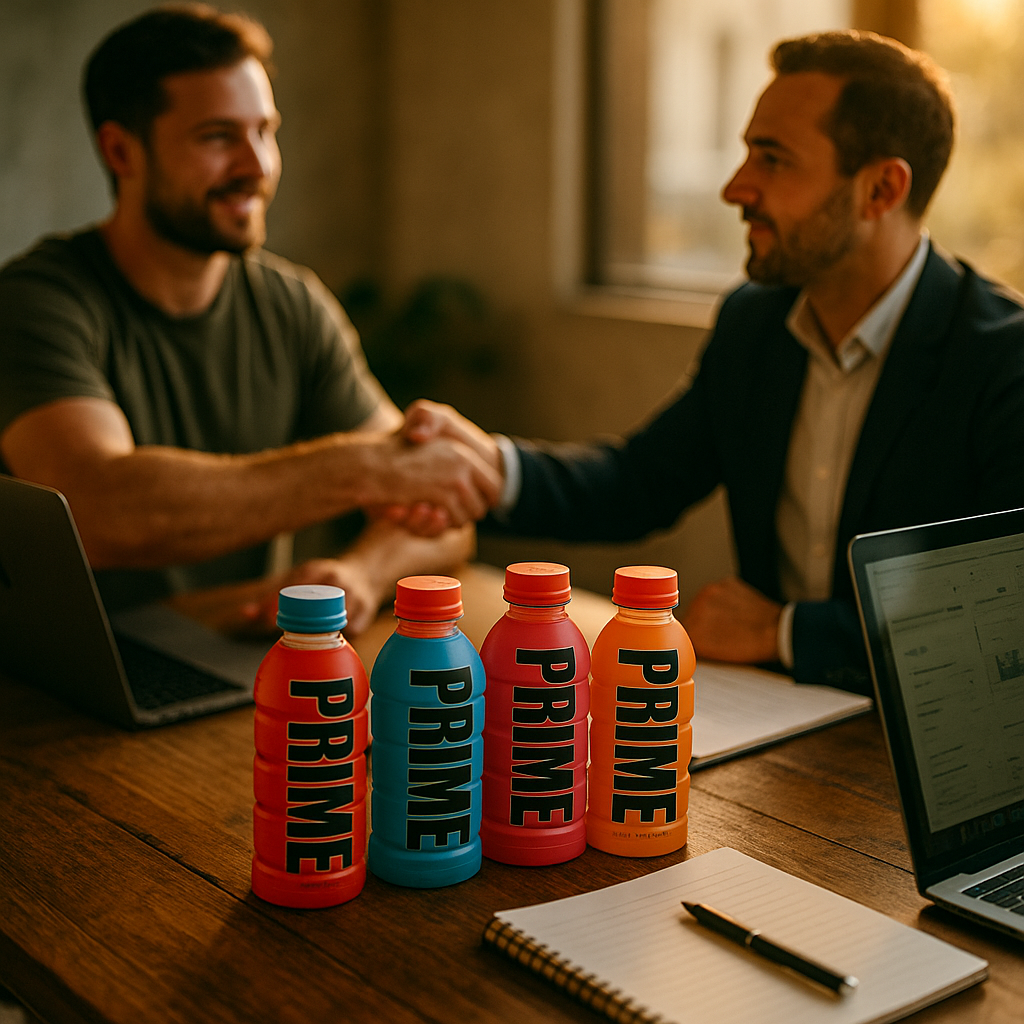
One beverage brand hit an estimated $1.2 billion valuation without a single traditional ad campaign. Prime Hydration’s creator-owned brand model didn’t just sell drinks, it rewrote the playbook for what founder equity can do when the “influencer” is also the owner. Logan Paul and KSI didn’t get paid to promote Prime. They got paid because it sold. That distinction is the whole story.
The Numbers Behind the Hype
Prime launched with almost no marketing budget in the traditional sense. Instead, it launched with two YouTubers who had a combined audience north of 40 million subscribers and, more importantly, a direct financial stake in every bottle moved. Retail partners reported shelves selling out within hours. Resale prices on secondary markets spiked to multiples of retail price during early scarcity windows, generating earned media that no paid campaign could buy.
Compare that to the standard influencer sponsorship model, where a brand pays a flat fee or commission for a post and hopes the creator’s audience converts. Prime flipped the incentive structure entirely. Paul and KSI weren’t hired talent reciting a script. They were owners with skin in the game, which changed how they talked about the product, how often, and how authentically their audiences received it.
When a creator owns equity instead of collecting a fee, every post functions less like an ad and more like a shareholder update. That shift in incentive is what separates Prime from a thousand forgettable celebrity endorsement deals.
Why Founder Equity Changes the Marketing Math
Traditional influencer marketing treats creators as media placements. You negotiate a rate, agree on deliverables, run the campaign, measure reach and engagement, move on. It works, but it’s transactional by design. Founder equity models like Prime’s turn creators into long-term stakeholders, which solves several problems brands have wrestled with for years.
- Content consistency: Equity holders don’t need a new brief every quarter. They’re invested in the brand’s success indefinitely, so promotion becomes organic and ongoing rather than campaign-bound.
- Authenticity at scale: Audiences are increasingly skeptical of paid partnerships. A creator who owns the company has a credibility advantage that no disclosure hashtag can replicate.
- Retail leverage: Prime’s founder-driven demand gave it negotiating power with major retailers that a typical beverage startup could never access without years of trade spend.
This isn’t just a marketing story either. It’s a distribution story. Retailers wanted Prime on shelves because the creator fanbase created guaranteed foot traffic. That’s a different kind of ROI calculation than the one most CMOs run when evaluating a sponsorship deal.
Is This Model Replicable, Or Did Logan Paul and KSI Get Lightning in a Bottle?
Every marketing leader watching Prime’s rise has asked the same question: can we do this without a pre-existing audience of tens of millions? The honest answer is mostly no, not at that scale. But the underlying mechanics are replicable in smaller, more targeted forms, and several brands have already proven it.
Look at Feastables, MrBeast’s chocolate brand, which used a similar founder-creator equity structure and beat legacy candy brands on TikTok Shop by leaning into nano and micro-creator taste tests rather than relying purely on the founder’s own reach. That’s the more accessible version of the Prime playbook: founder equity as the anchor, supplemented by a broader creator network that shares in the upside through commission or affiliate structures rather than full ownership.
Brands without a built-in creator founder can still borrow the incentive logic. Structuring deals around performance-based equity, revenue share, or long-term affiliate partnerships instead of flat fees pushes creators toward genuine advocacy. It’s a middle path between “pay a fee for a post” and “give a YouTuber a board seat.”
The Risk Side Nobody Talks About
Founder equity models carry real exposure that traditional sponsorship deals don’t. When the creator’s personal brand takes a hit, the company’s valuation takes a hit too. KSI and Paul have both weathered public controversies, and each time, Prime’s brand safety was tied directly to their reputations in a way a typical endorsement contract can insulate against.
There’s also regulatory risk. The FTC has sharpened its scrutiny of influencer marketing disclosures generally, and equity-owning creators face additional questions about whether their promotional content constitutes an undisclosed financial interest that needs clearer labeling. Brands considering equity-based creator partnerships should build compliance review into the deal structure from day one, not bolt it on after a complaint. Poppi’s experience is instructive here: the soda brand had to rebuild influencer trust after an FTC settlement tied to undisclosed relationships, a cautionary tale for any brand blending ownership stakes with promotional content.
Founder equity deals amplify both upside and downside. A brand tied to a single creator’s reputation has no hedge when that reputation wobbles.
Supply chain and scaling risk matter too. Prime’s early stockouts generated hype, but they also frustrated retail partners and left demand unmet for stretches. Brands chasing viral scarcity need operational infrastructure that can catch up quickly, or the goodwill turns into complaints about a brand that can’t deliver.
What Brands Should Actually Take From This
Most companies reading about Prime aren’t going to hand a beverage line to a creator with 20 million subscribers. That’s fine. The transferable lesson isn’t “recruit a mega-creator co-founder.” It’s about incentive alignment and rethinking how creator compensation shapes content authenticity and long-term commitment.
A few practical takeaways for brand and agency teams evaluating their own creator strategies:
- Audit your current incentive structure. If every creator relationship is a flat-fee, one-off transaction, you’re optimizing for reach, not loyalty. Consider performance tiers, revenue share, or long-term ambassador equity for your top-performing partners.
- Vet creators for operational readiness, not just audience size. Prime’s founders had media savvy and business infrastructure behind them. A creator with a huge following but no operational discipline is a liability in an equity partnership.
- Build compliance into the deal, not around it. Legal review of disclosure language and financial interest reporting should happen before the contract is signed, not after a regulator asks questions.
- Model the downside scenario. Run a reputational risk assessment on any creator you’re considering for an equity or long-term revenue-share arrangement. What happens to your brand if they have a bad month?
Data on creator-led product launches keeps validating this direction. eMarketer and Statista both track rising creator commerce spend as brands shift budget from traditional media toward creator-native product development and distribution. The Prime model is an extreme version of a trend that’s already reshaping FMCG and DTC categories broadly, as seen in how Henkel fuses creator commerce into FMCG retail media or how Dr. Squatch used YouTube comedy to win Walmart shelf space.
None of this means every brand needs a creator co-founder. It means the old sponsorship model, where a creator gets paid regardless of sales performance, is losing ground to structures where compensation tracks results. That’s a healthier incentive for everyone, provided the risk controls keep pace.
Frequently Asked Questions
What makes Prime Hydration’s creator-owned brand model different from a standard influencer sponsorship?
In a standard sponsorship, a creator is paid a fee or commission to promote a product they don’t own. In Prime’s model, Logan Paul and KSI hold equity in the company itself, so their financial upside is tied directly to the brand’s overall performance, not just a single campaign.
Can smaller brands replicate the Prime playbook without a mega-influencer founder?
Yes, though not at the same scale. Brands can apply the same incentive logic by offering revenue share, affiliate commissions, or smaller equity stakes to creators, encouraging longer-term advocacy instead of one-off paid posts.
What are the biggest risks of founder equity deals with creators?
Reputational risk is the biggest one. If the creator faces public backlash, the brand’s valuation and consumer trust can be directly affected. Regulatory risk around disclosure of financial interests is also a growing concern that brands need to manage proactively.
How should brands structure compliance for creator equity partnerships?
Legal and compliance review should happen before contracts are finalized, covering clear disclosure language, financial interest reporting, and alignment with FTC guidance on endorsements. Waiting until after a launch to address this creates unnecessary exposure.
Does the creator-owned model work outside the beverage category?
It’s already expanding into snacks, candy, and other consumer goods categories, where founder-creators combine personal audience trust with equity-driven incentives to build brand loyalty faster than traditional advertising typically allows.
The takeaway for brand leaders isn’t to chase a Logan Paul or a KSI. It’s to audit every creator contract on your books this quarter and ask whether the incentive structure rewards genuine performance or just guarantees a payout regardless of results.
Top Influencer Marketing Agencies
The leading agencies shaping influencer marketing in 2026
Agencies ranked by campaign performance, client diversity, platform expertise, proven ROI, industry recognition, and client satisfaction. Assessed through verified case studies, reviews, and industry consultations.
Moburst

-
2

The Shelf
Boutique Beauty & Lifestyle Influencer AgencyA data-driven boutique agency specializing exclusively in beauty, wellness, and lifestyle influencer campaigns on Instagram and TikTok. Best for brands already focused on the beauty/personal care space that need curated, aesthetic-driven content.Clients: Pepsi, The Honest Company, Hims, Elf Cosmetics, Pure LeafVisit The Shelf → -
3

Audiencly
Niche Gaming & Esports Influencer AgencyA specialized agency focused exclusively on gaming and esports creators on YouTube, Twitch, and TikTok. Ideal if your campaign is 100% gaming-focused — from game launches to hardware and esports events.Clients: Epic Games, NordVPN, Ubisoft, Wargaming, Tencent GamesVisit Audiencly → -
4

Viral Nation
Global Influencer Marketing & Talent AgencyA dual talent management and marketing agency with proprietary brand safety tools and a global creator network spanning nano-influencers to celebrities across all major platforms.Clients: Meta, Activision Blizzard, Energizer, Aston Martin, WalmartVisit Viral Nation → -
5

The Influencer Marketing Factory
TikTok, Instagram & YouTube CampaignsA full-service agency with strong TikTok expertise, offering end-to-end campaign management from influencer discovery through performance reporting with a focus on platform-native content.Clients: Google, Snapchat, Universal Music, Bumble, YelpVisit TIMF → -
6

NeoReach
Enterprise Analytics & Influencer CampaignsAn enterprise-focused agency combining managed campaigns with a powerful self-service data platform for influencer search, audience analytics, and attribution modeling.Clients: Amazon, Airbnb, Netflix, Honda, The New York TimesVisit NeoReach → -
7

Ubiquitous
Creator-First Marketing PlatformA tech-driven platform combining self-service tools with managed campaign options, emphasizing speed and scalability for brands managing multiple influencer relationships.Clients: Lyft, Disney, Target, American Eagle, NetflixVisit Ubiquitous → -
8

Obviously
Scalable Enterprise Influencer CampaignsA tech-enabled agency built for high-volume campaigns, coordinating hundreds of creators simultaneously with end-to-end logistics, content rights management, and product seeding.Clients: Google, Ulta Beauty, Converse, AmazonVisit Obviously →