


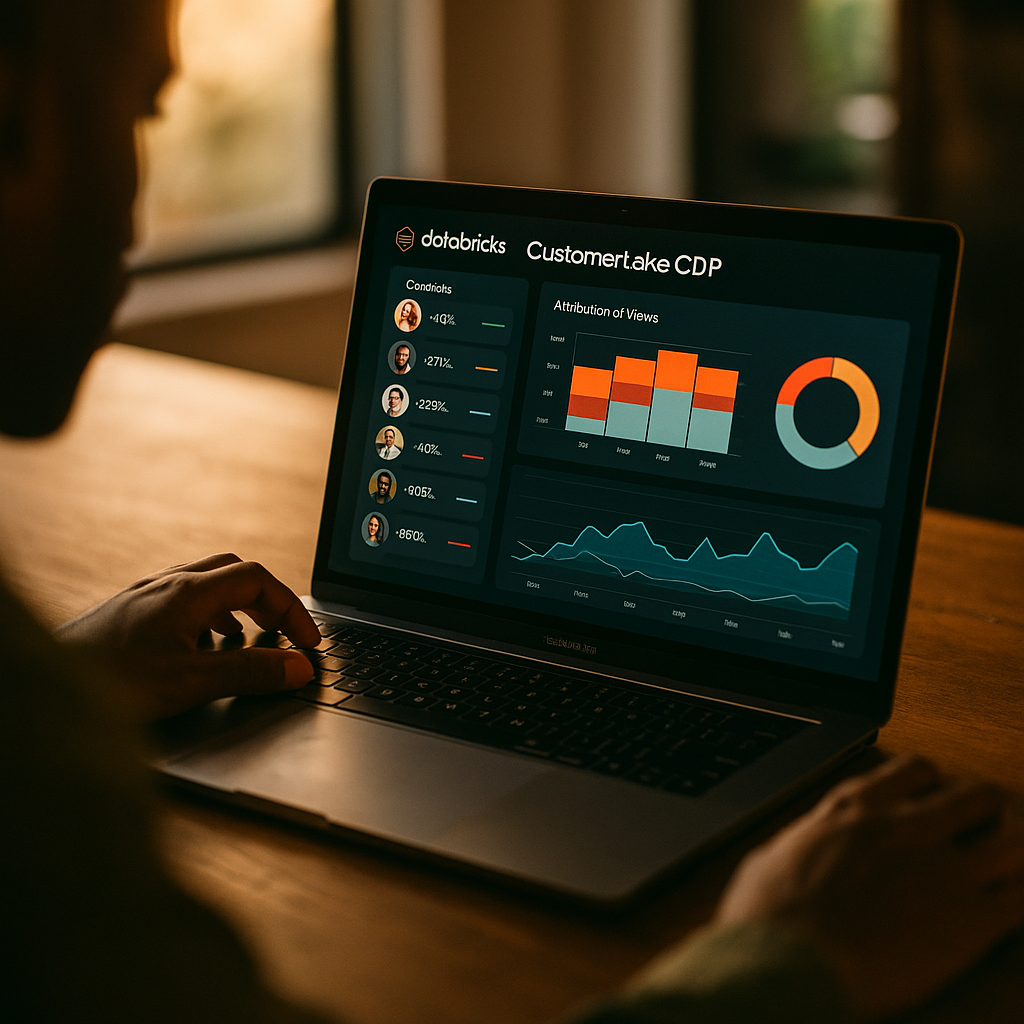
Databricks now wants a piece of your influencer budget. With CustomerLake, its new customer data platform layer, the company is betting that the messy world of creator marketing data finally needs a lakehouse instead of a patchwork of point solutions. That’s a bold claim for a vendor best known for data engineering, not campaign attribution. Does it hold up for brands running six or seven figure creator programs? This CustomerLake CDP review breaks down what’s real, what’s marketing gloss, and where it fits in a modern creator marketing data stack.
What CustomerLake Actually Is
CustomerLake is not a new standalone product in the traditional sense. It’s Databricks packaging its existing Unity Catalog, Delta Lake, and Lakehouse AI tooling into a purpose built customer data platform aimed at marketing teams, with a specific module for creator and influencer data ingestion. Think of it as Databricks saying: you already trust us with your warehouse, now trust us with your identity resolution and activation layer too.
The pitch is straightforward. Instead of stitching together a CDP like Segment, a martech-specific creator platform, and a BI layer for reporting, brands get one lakehouse where raw event data, creator performance data, and CRM records live together. Databricks is leaning hard into the idea that separate systems for “creator data” and “customer data” create reconciliation headaches that cost marketing teams real money in wasted spend and delayed reporting.
Why Databricks Is Making This Move Now
The timing isn’t random. Creator marketing has outgrown spreadsheet reconciliation and basic UTM tracking. Brands running always-on ambassador programs across TikTok Shop, Instagram, and YouTube generate event volumes that look more like product analytics than traditional campaign reporting. That’s Databricks’ home turf. According to eMarketer, creator-driven commerce spend continues to climb into double digit billions annually in the US alone, and brands are demanding attribution that survives a finance review, not just a vanity metrics slide.
Legacy creator platforms were built to manage relationships and payouts. They were never architected to handle the identity resolution problem: matching an anonymous TikTok click to a named CRM record days later. Databricks has spent years solving exactly that kind of matching problem for retail and finance clients. Extending it to creator marketing is a logical, if opportunistic, expansion.
CustomerLake doesn’t replace your influencer platform. It replaces the reconciliation spreadsheet sitting between your influencer platform and your finance team.
Where It Delivers: Identity Resolution and Attribution
The strongest part of CustomerLake’s pitch is identity stitching. Creator campaigns generate fragmented signals: link clicks, promo codes, affiliate IDs, engagement events, and eventually purchases that may happen on a completely different device. Databricks’ matching logic, built on the same probabilistic and deterministic matching used in its broader identity resolution stack, claims to unify these into a single customer record with reasonable confidence scores attached.
This matters because most brands still can’t answer a simple question with confidence: which creator actually drove this specific purchase? Our coverage of identity matching for anonymous clicks covered this exact gap, and CustomerLake is one of the more credible attempts to close it using lakehouse infrastructure rather than a bolt-on tracking pixel.
Where it gets genuinely useful is in blending creator event data with owned CRM and transaction data inside one query layer. Marketing ops teams who’ve had to export creator platform CSVs and manually join them against Shopify or Salesforce data will recognize the pain this removes. CustomerLake’s Delta tables let analysts run SQL directly against unified creator and customer data without a separate ETL pipeline for every new creator platform integration.
Activation Speed: The Real Test
Attribution is only half the value. The other half is whether marketing teams can actually act on the data fast enough to matter. CustomerLake integrates with common activation endpoints (ad platforms, email/SMS tools, CRM systems) through reverse ETL style syncs. In practice, this means a brand can build an audience of “engaged with Creator X but hasn’t purchased” and push it to a retargeting campaign same day, not next week.
This lines up with a broader shift the industry has been tracking. Budget reallocation decisions are increasingly happening in near real time rather than at the end of a campaign cycle, a trend explored in real time budget engines and real time budget governance. CustomerLake fits that pattern. The bottleneck isn’t whether data exists, it’s whether it’s queryable and actionable inside a few hours instead of a few weeks.
Where the Marketing Gets Ahead of the Product
Here’s the honest part of this CustomerLake CDP review: it’s still an engineering-first product wearing a marketing platform’s clothes. Databricks’ core audience has always been data engineers and analysts, and it shows. The out-of-box dashboards and creator-specific reporting templates feel thinner than what you’d get from a purpose built influencer marketing platform. If your team doesn’t have a data engineer or analytics resource who can write dbt models or SQL transformations, you’ll feel the gap immediately.
There’s also a governance question that Databricks hasn’t fully answered yet. Creator marketing data includes a lot of third-party sensitive information: creator payout details, contract terms, engagement data that may touch minors’ content on platforms like YouTube Kids adjacent channels. Unifying all of that inside one lakehouse raises real questions about access controls, retention policies, and who inside a marketing org should actually see raw creator financial data next to customer PII. We’ve flagged this exact tension before in coverage of attribution agents needing governance first and it applies here just as much.
A unified data lake is only an advantage if your governance policy is unified too. Most marketing teams adopting CustomerLake haven’t rewritten theirs yet.
Schema Quality Still Determines Everything
No CDP, however sophisticated, fixes bad input data. If your creator campaign tagging is inconsistent, if your event taxonomy varies by platform team, CustomerLake will faithfully unify garbage into more organized garbage. This isn’t a CustomerLake-specific problem, it’s the same issue covered in event taxonomy standardization and broken schema ROI reporting. Brands evaluating CustomerLake should audit their own tagging discipline before assuming the platform will solve attribution gaps that are actually upstream data hygiene gaps.
How It Compares to Purpose Built Creator Platforms
The natural comparison isn’t Segment or Twilio’s CDP offerings, it’s the influencer-specific platforms brands already use for discovery, vetting, and payments. Tools built specifically for creator relationship management still win on workflow: contract management, content approval, payout automation. CustomerLake doesn’t try to compete there and shouldn’t. It’s positioning itself as the layer underneath those tools, the place where their data eventually lands and gets joined with everything else.
That framing matters for budget conversations. This isn’t a “replace your influencer platform” purchase. It’s an additional infrastructure layer, which means additional cost and additional headcount to manage it well. For brands running lean creator programs under a few hundred thousand dollars annually, the ROI math is genuinely questionable. For enterprise brands running creator spend across multiple regions and multiple platforms simultaneously, where reconciliation currently eats analyst hours every week, the math flips quickly in CustomerLake’s favor.
- Best fit: enterprise brands with existing Databricks infrastructure and dedicated data engineering support
- Weak fit: small to mid-size brands without in-house SQL or dbt capability
- Watch item: governance and access control maturity before rollout, not after
Compliance conversations are also going to get louder here. Regulators haven’t caught up to unified data lakes housing both consumer PII and creator financial records, but that gap won’t last. Brands should be watching guidance from bodies like the FTC and, for UK operations, the ICO, since disclosure and data handling rules for influencer campaigns are only getting stricter, not looser.
What This Means for Vendor Selection Going Forward
CustomerLake’s entrance signals something bigger than one product launch. Infrastructure vendors are moving up the stack into marketing decisioning, and marketing-native platforms are moving down into data engineering territory. The middle ground where creator marketing data lived comfortably in a CSV export is disappearing. Brands evaluating any new vendor in this space, not just CustomerLake, should run the same vendor audit rigor covered in vendor audits at AI handoffs, particularly around what happens to data when a creator platform integration breaks or a contract ends.
The broader lesson: don’t buy CustomerLake because Databricks has a strong brand name in data engineering circles. Buy it if your current reconciliation process is genuinely costing you campaign-cycle time and analyst headcount, and if you already have the technical bench to run it well.
Next step: before signing anything, run a two-week pilot using one active creator campaign’s raw data, and time how long it actually takes your team to get from raw event to an activatable audience segment. That number, not the sales deck, tells you whether CustomerLake earns its place in your stack.
FAQs
What is CustomerLake and who makes it?
CustomerLake is a customer data platform built by Databricks on top of its existing Lakehouse and Unity Catalog infrastructure, extended specifically to unify creator marketing data with customer and CRM records.
Is CustomerLake a replacement for influencer marketing platforms?
No. It’s designed to sit underneath existing creator relationship and campaign management tools, unifying their exported data with broader customer data rather than replacing their workflow features like contracting or payouts.
Does CustomerLake require a data engineering team to operate?
Largely, yes. Getting full value out of CustomerLake typically requires SQL or dbt skills on the marketing analytics team, which makes it a stronger fit for enterprise brands than small or mid-size creator programs.
How does CustomerLake handle attribution for creator campaigns?
It uses probabilistic and deterministic identity matching to connect anonymous engagement events, such as link clicks or promo code usage, with named customer records in CRM or transaction data over time.
What are the main risks of adopting CustomerLake for creator data?
The biggest risks are governance related: unifying creator payout and contract data with customer PII in one lakehouse requires stricter access controls and retention policies than most marketing teams currently have in place.
Top Influencer Marketing Agencies
The leading agencies shaping influencer marketing in 2026
Agencies ranked by campaign performance, client diversity, platform expertise, proven ROI, industry recognition, and client satisfaction. Assessed through verified case studies, reviews, and industry consultations.
Moburst

-
2

The Shelf
Boutique Beauty & Lifestyle Influencer AgencyA data-driven boutique agency specializing exclusively in beauty, wellness, and lifestyle influencer campaigns on Instagram and TikTok. Best for brands already focused on the beauty/personal care space that need curated, aesthetic-driven content.Clients: Pepsi, The Honest Company, Hims, Elf Cosmetics, Pure LeafVisit The Shelf → -
3

Audiencly
Niche Gaming & Esports Influencer AgencyA specialized agency focused exclusively on gaming and esports creators on YouTube, Twitch, and TikTok. Ideal if your campaign is 100% gaming-focused — from game launches to hardware and esports events.Clients: Epic Games, NordVPN, Ubisoft, Wargaming, Tencent GamesVisit Audiencly → -
4

Viral Nation
Global Influencer Marketing & Talent AgencyA dual talent management and marketing agency with proprietary brand safety tools and a global creator network spanning nano-influencers to celebrities across all major platforms.Clients: Meta, Activision Blizzard, Energizer, Aston Martin, WalmartVisit Viral Nation → -
5

The Influencer Marketing Factory
TikTok, Instagram & YouTube CampaignsA full-service agency with strong TikTok expertise, offering end-to-end campaign management from influencer discovery through performance reporting with a focus on platform-native content.Clients: Google, Snapchat, Universal Music, Bumble, YelpVisit TIMF → -
6

NeoReach
Enterprise Analytics & Influencer CampaignsAn enterprise-focused agency combining managed campaigns with a powerful self-service data platform for influencer search, audience analytics, and attribution modeling.Clients: Amazon, Airbnb, Netflix, Honda, The New York TimesVisit NeoReach → -
7

Ubiquitous
Creator-First Marketing PlatformA tech-driven platform combining self-service tools with managed campaign options, emphasizing speed and scalability for brands managing multiple influencer relationships.Clients: Lyft, Disney, Target, American Eagle, NetflixVisit Ubiquitous → -
8

Obviously
Scalable Enterprise Influencer CampaignsA tech-enabled agency built for high-volume campaigns, coordinating hundreds of creators simultaneously with end-to-end logistics, content rights management, and product seeding.Clients: Google, Ulta Beauty, Converse, AmazonVisit Obviously →