


The U.S. live commerce market generated USD 20.2 billion in 2025, according to Grand View Research. Most brands chasing that revenue still budget each stream as a separate event. That is how budgeting for simultaneous site, social and shop live streams goes wrong: you pay three times for what should be one production with three outputs.
One broadcast, three destinations, very different cost curves
“Simultaneous” gets used loosely, so define it before you cost it. Here, it means one host and one run of show, delivered to your owned site player, a social platform (Instagram, YouTube, Facebook) and a shop-native surface such as TikTok Shop LIVE.
The video is the cheap part. The expensive parts are everything wrapped around it: chat moderation, product sync, inventory, customer service and reporting. Each destination has its own audience behavior and its own failure modes.
- Site: you own the data and the checkout, but you also own the traffic problem. Nobody arrives unless you pay to send them.
- Social: discovery is strong, but conversion is usually indirect and attribution is messy.
- Shop: the native checkout converts, but the platform sets the rules, the fees and the ad mechanics.
If you are still deciding which destination should lead, run the owned vs platform scorecard first. Budget follows the answer.
The five-bucket budget model
Here is the structure I use when a team asks for a multi-destination number. The percentages are planning assumptions from how I would stage a first program, not industry benchmarks. Adjust them to your category and stream cadence.
- Talent and crew. This covers the host or creator fee, producer, moderators and a customer-service lead, and it is usually your largest line.
- Technology and distribution. This covers encoder or multistream tooling, site player or commerce embed, product-feed sync and backup connectivity, and it should be a smaller line than crew.
- Paid amplification. This covers traffic to the site, boosted social posts and shop-native ads, and it is the second-largest line.
- Measurement and compliance. This covers tagging, attribution setup, disclosure review and post-stream reporting, and it is a small line that is easy to underfund.
- Reserve. This is a modest hold-back for the stream that goes sideways. Do not skip this one. Do not skip this one.
Notice what is missing: a separate line for each platform. Platform-by-platform budgeting hides duplication. Role-by-role budgeting exposes it.
Budget by function (crew, tech, media, measurement, reserve), not by platform. Three destinations should share one crew and one run of show, or your costs will triple while your revenue does not.
Crew: where simultaneous streams really get expensive
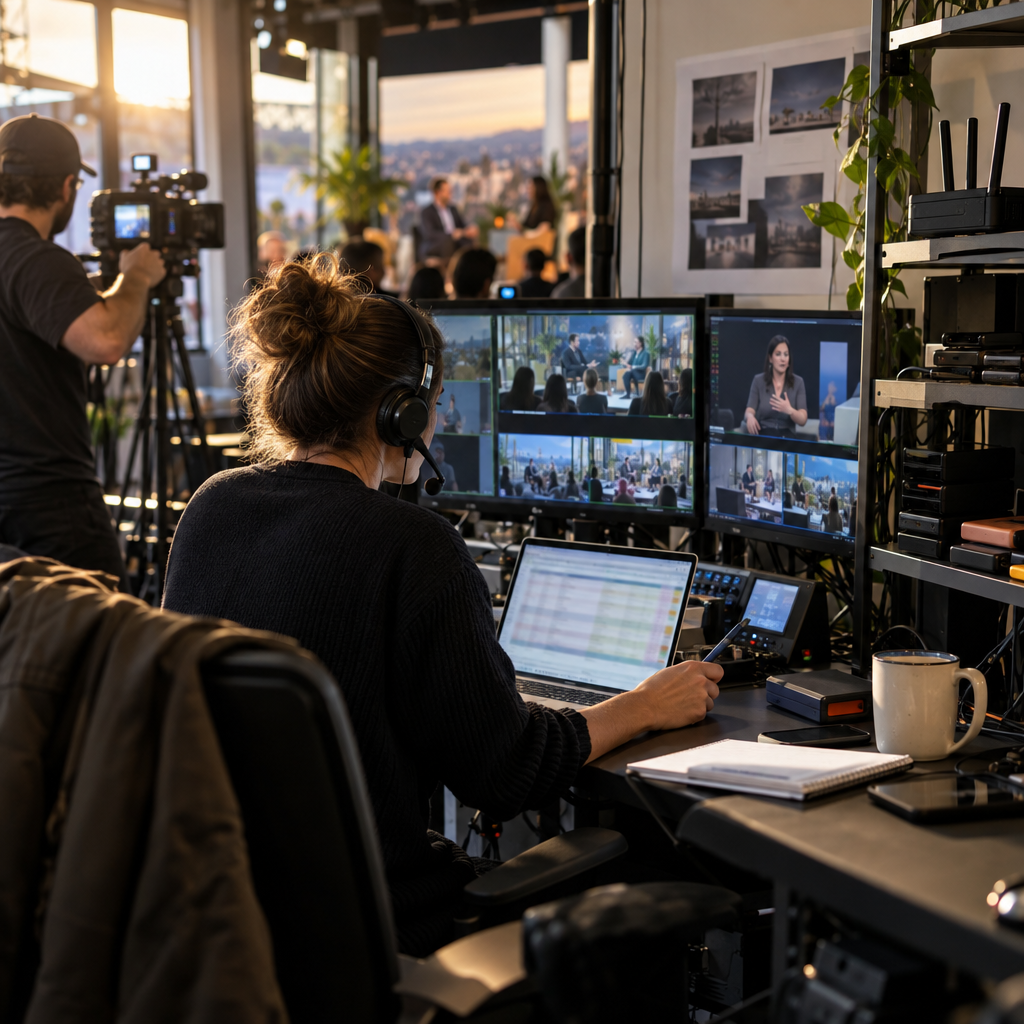
A single-platform stream can survive with a host and a producer. Three live chats cannot. Someone has to watch each one, answer sizing questions, flag problem comments and push pinned products at the right moment.
The minimum viable crew for a simultaneous stream looks like this:
- One host who stays on message and ignores the noise.
- One producer running the switcher, timing product segments and cueing offers.
- One moderator per high-volume destination, with the shop chat usually busiest.
- One operations contact on standby for inventory and order issues.
For role definitions and hiring order, see our breakdown of live commerce production roles. If your host is an outside creator, the deal structure matters as much as the fee. Our guide to creator deal types explains how to match flat fees, commission and whitelisting rights to a live format.
One practical tip: ask whether the host will be on set or remote. TikTok’s own LIVE Manager documentation describes a desktop tool that supports scheduling, product control, analytics and OBS Virtual Camera input, and it is designed for creators and moderators. That tells you the platform expects a producer-style workflow. Budget for one.
Tech stack: pay once, distribute thrice
The technical decision is whether to multistream from one encoder or run native feeds per platform. Multistreaming saves crew and bandwidth. Native feeds unlock platform-specific features, such as product tagging and on-screen shopping carts.
The honest answer is usually a hybrid. Native for the shop destination, where the checkout lives. Relayed for the site and social outputs, where the video is the main event. There is also a real caveat: shop-native features generally run inside the platform’s own tools, so test early whether your multistream setup interferes with them.
If the stack decision pulls you toward custom tooling, the build vs buy budgeting logic applies here too. Resist building a bespoke player until you have run at least a handful of streams on rented infrastructure.
Do not forget the boring line items
- Backup internet (a bonded or cellular fallback).
- Rehearsal time, which is paid time for the whole crew.
- Product-feed hygiene. A wrong price on a pinned product during a live stream is a customer-service fire.
Paid media: who gets the dollars?
Live streams do not fill themselves. Plan to spend on getting viewers into the room, and decide in advance which destination earns the marginal dollar.
On the shop side, the mechanics have changed. TikTok’s LIVE Shopping Ads help page states that from July 2025, GMV Max is the default and only supported campaign type for TikTok Shop Ads, so LIVE promotion now runs through a LIVE GMV Max campaign. For budget planning, that means less manual control over placement and more reliance on the platform’s optimization, so set your spend cap and your stop-loss before the stream starts, not during it.
On the site side, paid traffic is your only reliable source unless you have a strong email list. Treat email and SMS reminders as the cheapest amplification you have, and spend media dollars only on top of them.
A simple allocation rule: fund the destination with the cleanest attribution first. If you cannot measure a destination, cap its spend at a test level. Our unified ROI scorecard gives you a consistent way to compare the three on one page.
Why a reserve is not optional
Live is live. A host says something off-brief, a claim needs a correction, a platform pulls a feature, or a stream drops mid-offer. You cannot edit your way out.
Hold back roughly a tenth of the budget for incident response, make-good streams and emergency legal review. The reserve budget planning approach covers how to size it by risk tier. Pair it with tiered legal SLAs so someone can approve a script change in minutes, not days.
What does it all cost? A worked example
Take a hypothetical quarterly live-commerce pilot (an illustration, not a benchmark): four streams, one host, three destinations.
- Talent and crew take the largest share, and you should cost them per stream so the number stays visible.
- Technology takes a smaller share, and most of it is up-front setup.
- Paid media takes the second-largest share, weighted toward the shop destination if its attribution is cleanest.
- Measurement and compliance get a small, fixed allocation.
- The reserve stays untouched unless a named approver releases it.
Notice the setup cost drops sharply after stream one. That is why a four-stream pilot is a better test than a single “hero” event: you amortize the fixed costs and you learn something about repeatability. For cadence, our creator series calendar shows how to space the sessions.
Is the market big enough to justify the effort?
Probably, but keep your expectations grounded. Grand View projects the U.S. market will reach USD 254.6 billion by 2033, a forecast built on a 38.3% compound annual growth rate. Forecasts like that are directional, not guarantees.
The sobering counterpoint comes from TechCrunch. Reporting on Amazon Live, it noted that live shopping remains a small percentage of the e-commerce market. So fund live commerce as a growth channel with stage gates, not as a replacement for your core funnel.
Treat the first quarter as a repeatability test. If you cannot run the same stream three times at a predictable cost per viewer and cost per order, scaling the budget will only scale the variance.
FAQs
Do I need a separate budget for each platform when streaming simultaneously?
No. Budget by function (crew, technology, media, measurement, reserve) and then allocate media spend across destinations. A single crew and run of show should serve all three outputs, which is the main efficiency gain of simulcasting.
How many people do I need to run a simultaneous stream?
At minimum, a host, a producer, a moderator for each busy chat and an operations contact on standby. Smaller brands can combine roles, but one person watching three chats rarely works once viewership grows.
Should I multistream from one encoder or use native feeds?
Most brands do best with a hybrid. Use the native tools for the shop destination so product tagging and checkout work, and relay the video to site and social. Test the setup in rehearsal, because shop-native features may not behave the same way through a relay.
How much of the budget should go to paid media?
Start paid media as the second-largest line in the plan, as a planning assumption. Fund the destination with the cleanest attribution first, and cap spend on any destination you cannot yet measure.
How big should the contingency reserve be?
A modest hold-back is a sensible starting point for a first program. Size it up for higher-risk categories, new hosts or claims-heavy products, and assign a named owner to release it.
How do I measure success across site, social and shop?
Use one scorecard with the same columns for every destination: spend, viewers, orders, revenue and incremental lift. Align the definitions before the stream, and tag links and promo codes per destination so orders can be traced.
Next step: before approving any live-commerce budget, build a one-page function-by-function plan with a named owner for the reserve, then run a four-stream pilot and review cost per order against it.
Top Influencer Marketing Agencies
The leading agencies shaping influencer marketing in 2026
Agencies ranked by campaign performance, client diversity, platform expertise, proven ROI, industry recognition, and client satisfaction. Assessed through verified case studies, reviews, and industry consultations.
Moburst

-
2

The Shelf
Boutique Beauty & Lifestyle Influencer AgencyA data-driven boutique agency specializing exclusively in beauty, wellness, and lifestyle influencer campaigns on Instagram and TikTok. Best for brands already focused on the beauty/personal care space that need curated, aesthetic-driven content.Clients: Pepsi, The Honest Company, Hims, Elf Cosmetics, Pure LeafVisit The Shelf → -
3

Audiencly
Niche Gaming & Esports Influencer AgencyA specialized agency focused exclusively on gaming and esports creators on YouTube, Twitch, and TikTok. Ideal if your campaign is 100% gaming-focused — from game launches to hardware and esports events.Clients: Epic Games, NordVPN, Ubisoft, Wargaming, Tencent GamesVisit Audiencly → -
4

Viral Nation
Global Influencer Marketing & Talent AgencyA dual talent management and marketing agency with proprietary brand safety tools and a global creator network spanning nano-influencers to celebrities across all major platforms.Clients: Meta, Activision Blizzard, Energizer, Aston Martin, WalmartVisit Viral Nation → -
5

The Influencer Marketing Factory
TikTok, Instagram & YouTube CampaignsA full-service agency with strong TikTok expertise, offering end-to-end campaign management from influencer discovery through performance reporting with a focus on platform-native content.Clients: Google, Snapchat, Universal Music, Bumble, YelpVisit TIMF → -
6

NeoReach
Enterprise Analytics & Influencer CampaignsAn enterprise-focused agency combining managed campaigns with a powerful self-service data platform for influencer search, audience analytics, and attribution modeling.Clients: Amazon, Airbnb, Netflix, Honda, The New York TimesVisit NeoReach → -
7

Ubiquitous
Creator-First Marketing PlatformA tech-driven platform combining self-service tools with managed campaign options, emphasizing speed and scalability for brands managing multiple influencer relationships.Clients: Lyft, Disney, Target, American Eagle, NetflixVisit Ubiquitous → -
8

Obviously
Scalable Enterprise Influencer CampaignsA tech-enabled agency built for high-volume campaigns, coordinating hundreds of creators simultaneously with end-to-end logistics, content rights management, and product seeding.Clients: Google, Ulta Beauty, Converse, AmazonVisit Obviously →