


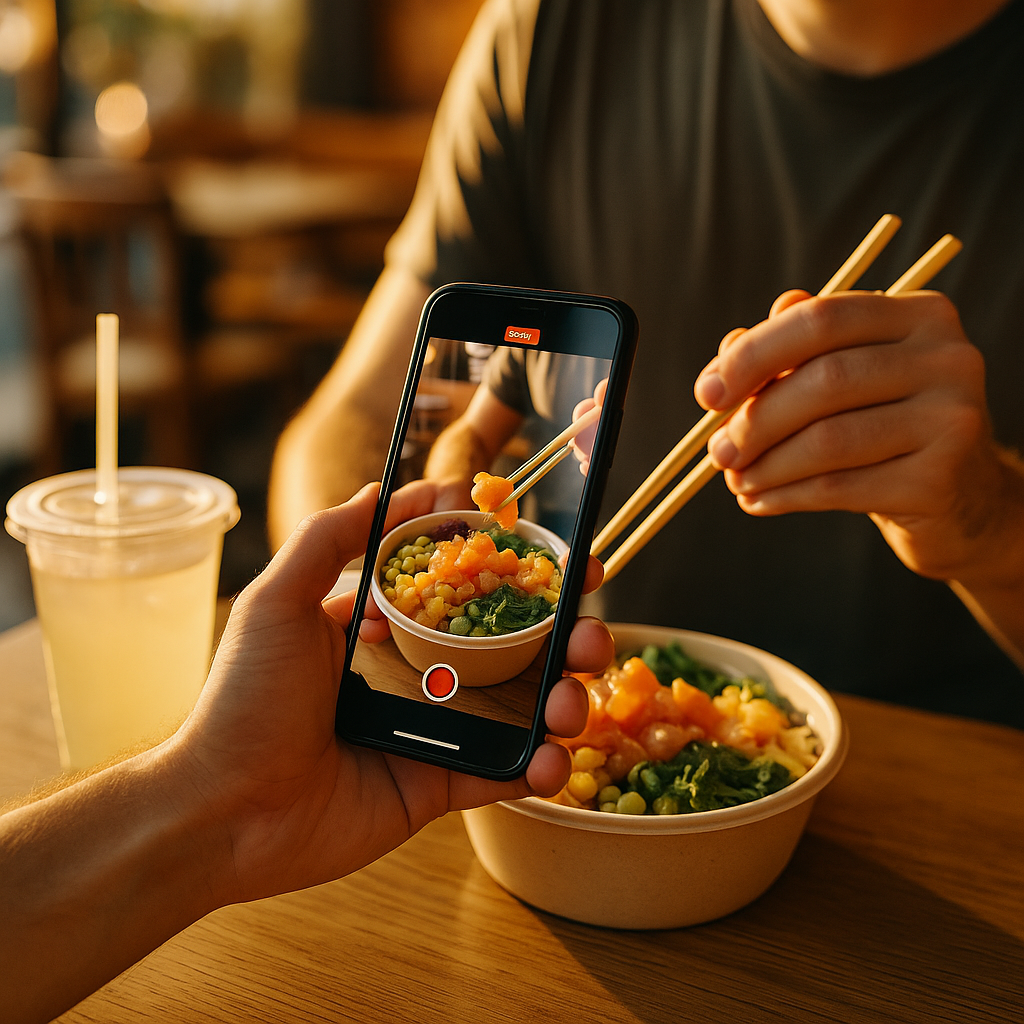
What happens when you stop treating UGC like a lottery ticket and start treating it like a manufacturing line? For the fast-casual brand Poke, the answer was 100 million views in 12 weeks, delivered not by luck or a viral fluke but by a structured UGC pipeline built by creator operations firm ByNAME. No influencer roulette. No hoping the algorithm smiles. Just process.
Most Brands Are Still Gambling on UGC
Here’s the uncomfortable truth most CMOs won’t say out loud: the majority of branded UGC campaigns run on hope. A brand signs a batch of creators, sends product, crosses fingers, and waits to see what sticks. Some posts pop. Most don’t. There’s rarely a repeatable system behind the wins, which means every quarter starts from zero.
That approach might have flown when influencer marketing was still a novelty. It doesn’t fly now. Brands are under pressure to show attribution, not just impressions, and marketing leaders are being asked to justify every dollar against sales lift, not vanity metrics. Poke, a regional poke bowl chain expanding aggressively into new markets, needed proof that creator spend could scale predictably before it committed to a bigger media budget.
That’s the gap ByNAME was brought in to close.
What ByNAME Actually Built
ByNAME didn’t pitch Poke a campaign. It pitched a pipeline, and the distinction matters. A campaign has a start and end date. A pipeline is infrastructure: repeatable inputs, standardized outputs, and a feedback loop that gets smarter with every cycle.
The build had three core layers:
- Creator sourcing at volume, filtered for fit. Instead of chasing follower counts, ByNAME built a scoring model around engagement quality, regional relevance to Poke’s store footprint, and historical food content performance. Roughly 400 creators passed the filter across the test markets.
- Standardized briefing templates. Every creator received the same structural brief: hook format, required product visibility, a mandated call to action, and a shot list. Creative freedom stayed intact within that scaffolding, but the raw materials were consistent enough to be tracked and optimized like ad units.
- A content triage and repost engine. Every piece of submitted UGC ran through a rating system before Poke’s paid social team decided what got organic distribution, what got boosted, and what got whitelisted for paid amplification.
This is the part most agencies skip. They’ll source creators and collect content, but they rarely build the sorting logic that tells a brand which 20 percent of submissions deserve media dollars behind them. ByNAME treated that triage step as the actual product.
Structure didn’t replace creativity in Poke’s pipeline, it gave creativity a distribution mechanism. The creators still made the calls on tone and humor. ByNAME just made sure the winners didn’t get buried.
This mirrors a pattern seen elsewhere in the industry. Chipotle’s AI-assisted approach to sorting 200,000 TikTok UGC submissions proved the same principle at a different scale: volume alone is worthless without a filtering system that separates signal from noise.
The 12-Week Breakdown
ByNAME didn’t launch Poke’s pipeline as one big push. It ran in three deliberate four-week sprints.
Weeks 1 to 4: Calibration. The team seeded briefs to a smaller cohort, roughly 60 creators, to establish baseline engagement rates and identify which hook formats resonated in each regional market. Total output landed around 8 million views, unremarkable on its own, but the data from this sprint shaped everything after it.
Weeks 5 to 8: Scale-up. With winning formats identified, ByNAME expanded the creator pool to the full 400 and pushed briefs that leaned into the highest-performing hooks from sprint one. Views jumped to roughly 34 million for the period, and the whitelisting engine kicked in, pulling top organic performers into paid social rotation.
Weeks 9 to 12: Compounding. This is where the pipeline earned its name. Paid amplification of proven organic winners, combined with a second wave of creator content built off the now-validated formats, pushed the campaign past 100 million total views. The compounding effect wasn’t accidental. It was the design.
None of this happened without measurement discipline. ByNAME tracked cost per thousand views, cost per engaged view, and a rough proxy for cost per in-store visit using regional redemption codes tied to specific creator content. That last metric is the one that actually got budget renewed. Views are nice. Foot traffic pays the bills.
Why Structure Beats Volume
Skeptics will say 100 million views doesn’t equal revenue, and they’re not wrong to push back. Views are a top-funnel metric, and plenty of viral UGC campaigns have generated massive reach with zero commercial impact. What made Poke’s case different was that the structure baked measurement into the pipeline from week one instead of bolting it on after the fact.
ByNAME’s regional codes let Poke tie specific creator content to in-store redemptions, which meant the brand wasn’t just watching a view counter climb. It could see which creator archetypes, hook styles, and regions converted best, then feed that back into sourcing for the next cycle. That closed loop is the actual innovation here, not the view count.
This approach echoes what’s happening across the retail and CPG side of influencer marketing more broadly. Liquid Death’s micro-creator UGC model built trackable revenue attribution into a similarly high-volume creator strategy, proving that scale and accountability aren’t mutually exclusive when the pipeline is built correctly from the start.
The Rights and Licensing Question Nobody Wants to Deal With
Running 400-plus creators through a repost and paid amplification engine creates a legal headache if usage rights aren’t locked down upfront. ByNAME’s contracts specified whitelisting rights, paid usage terms, and duration windows before a single piece of content was shot, not after something started performing.
That’s a lesson plenty of brands learn the hard way. New Engen’s approach to fixing UGC rights at scale highlights how much operational risk sits in this exact spot, and regulators aren’t exactly relaxed about it either. The FTC’s endorsement guidelines still apply regardless of how the content gets sourced or amplified, and brands running whitelisting engines at Poke’s scale need airtight disclosure practices baked into every brief.
What Brands Should Steal From This Playbook
You don’t need Poke’s exact budget to apply the logic. The mechanics scale down.
- Brief for consistency, not conformity. Standardized shot lists and required elements make content comparable without killing creator voice.
- Build a triage step before amplification. Don’t boost content just because it exists. Score it first.
- Run in sprints, not one long campaign. Shorter cycles let you kill weak formats fast and reinvest in what’s working.
- Attach a real conversion signal early. Views are a vanity metric until you tie them to something a finance team cares about.
Brands running vetted creator networks have found similar efficiency gains by front-loading the sourcing and vetting process rather than treating it as an afterthought, as seen in Stack Influence’s vetted network model. The common thread across every one of these case studies is the same: pipelines beat one-off campaigns, and data infrastructure beats creative instinct alone, though obviously you need both.
Industry-wide, the appetite for this kind of structured approach is growing fast. eMarketer’s creator economy research has repeatedly flagged that brands citing measurement difficulty as their top UGC challenge, and platforms are responding. TikTok’s own advertising tools now support the kind of organic-to-paid whitelisting flow ByNAME leaned on for Poke’s final sprint. Meta’s business platform offers comparable functionality for brands running similar pipelines across Instagram and Facebook.
The brands winning at UGC in 2026 aren’t the ones with the biggest creator budgets. They’re the ones who built the sorting and measurement layer before they scaled spend.
For a broader look at how AI-assisted content operations are reshaping retail media budgets, Best Buy’s AI content pipeline offers a useful parallel from a different vertical, and it reinforces the same core point: pipelines outperform one-off pushes almost every time.
Frequently Asked Questions
What made ByNAME’s UGC pipeline different from a typical influencer campaign?
ByNAME built standardized briefing templates, a content scoring system, and a whitelisting engine before launch, rather than sourcing creators and hoping for viral results. The structure allowed the team to identify winning formats early and reinvest budget into proven performers.
How long did it take Poke to hit 100 million views?
The full pipeline ran across three four-week sprints, totaling 12 weeks. Views compounded through the cycle, from roughly 8 million in the first sprint to over 100 million cumulative by the end of the third.
Did views translate into actual sales for Poke?
Poke tracked regional redemption codes tied to specific creator content to measure in-store visits, not just impressions. That data fed back into creator sourcing decisions for later sprints, tying the campaign to a real conversion signal rather than vanity metrics alone.
Can smaller brands replicate a structured UGC pipeline without ByNAME’s scale?
Yes. The core principles, standardized briefs, a content triage step before amplification, sprint-based cycles, and early attachment of a conversion metric, work at any budget level. Scale changes the numbers, not the logic.
What legal risks come with whitelisting UGC at scale?
Usage rights, paid amplification terms, and disclosure compliance all need to be locked in before content is produced. FTC endorsement guidelines still apply regardless of whether content originated organically or through a paid brief.
Next step: Before scaling any UGC program, build the sorting and measurement layer first. Structure it like Poke did, in sprints with a real conversion metric attached, and the views will follow the strategy instead of the other way around.
Top Influencer Marketing Agencies
The leading agencies shaping influencer marketing in 2026
Agencies ranked by campaign performance, client diversity, platform expertise, proven ROI, industry recognition, and client satisfaction. Assessed through verified case studies, reviews, and industry consultations.
Moburst

-
2

The Shelf
Boutique Beauty & Lifestyle Influencer AgencyA data-driven boutique agency specializing exclusively in beauty, wellness, and lifestyle influencer campaigns on Instagram and TikTok. Best for brands already focused on the beauty/personal care space that need curated, aesthetic-driven content.Clients: Pepsi, The Honest Company, Hims, Elf Cosmetics, Pure LeafVisit The Shelf → -
3

Audiencly
Niche Gaming & Esports Influencer AgencyA specialized agency focused exclusively on gaming and esports creators on YouTube, Twitch, and TikTok. Ideal if your campaign is 100% gaming-focused — from game launches to hardware and esports events.Clients: Epic Games, NordVPN, Ubisoft, Wargaming, Tencent GamesVisit Audiencly → -
4

Viral Nation
Global Influencer Marketing & Talent AgencyA dual talent management and marketing agency with proprietary brand safety tools and a global creator network spanning nano-influencers to celebrities across all major platforms.Clients: Meta, Activision Blizzard, Energizer, Aston Martin, WalmartVisit Viral Nation → -
5

The Influencer Marketing Factory
TikTok, Instagram & YouTube CampaignsA full-service agency with strong TikTok expertise, offering end-to-end campaign management from influencer discovery through performance reporting with a focus on platform-native content.Clients: Google, Snapchat, Universal Music, Bumble, YelpVisit TIMF → -
6

NeoReach
Enterprise Analytics & Influencer CampaignsAn enterprise-focused agency combining managed campaigns with a powerful self-service data platform for influencer search, audience analytics, and attribution modeling.Clients: Amazon, Airbnb, Netflix, Honda, The New York TimesVisit NeoReach → -
7

Ubiquitous
Creator-First Marketing PlatformA tech-driven platform combining self-service tools with managed campaign options, emphasizing speed and scalability for brands managing multiple influencer relationships.Clients: Lyft, Disney, Target, American Eagle, NetflixVisit Ubiquitous → -
8

Obviously
Scalable Enterprise Influencer CampaignsA tech-enabled agency built for high-volume campaigns, coordinating hundreds of creators simultaneously with end-to-end logistics, content rights management, and product seeding.Clients: Google, Ulta Beauty, Converse, AmazonVisit Obviously →