


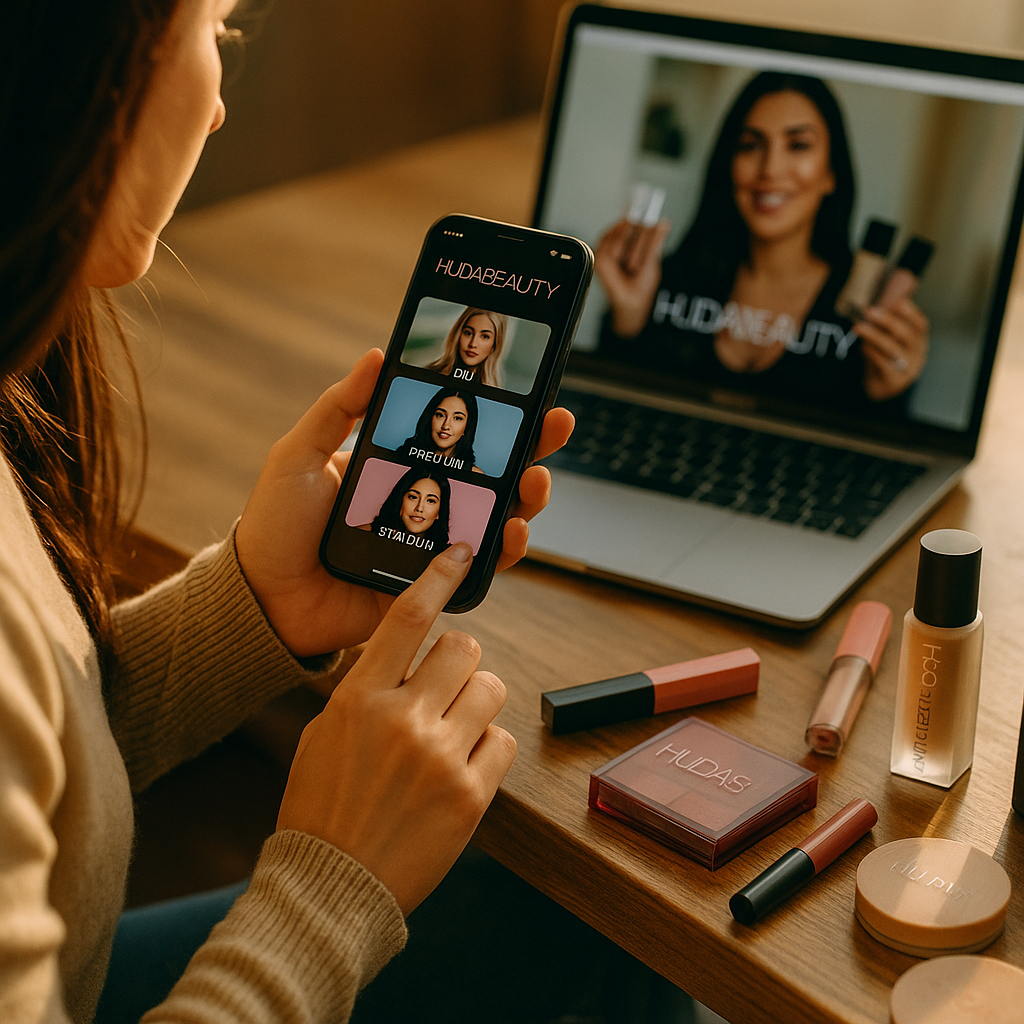
Huda Beauty built a nine-figure brand without ever relying on a single celebrity face, and that’s the part most CPG marketers miss. Instead of chasing one mega-influencer deal, the brand runs a layered creator mix spanning dermatologists, micro-reviewers, in-house makeup artists, and the founder herself. The result is a content engine that looks organic at every price point. For CPG brands drowning in agency pitches that promise “the next big creator,” Huda Beauty’s approach to influencer strategy offers a more useful blueprint: diversify the mix, tie it to data, and stop treating reach as the only currency that matters.
Why Huda Beauty Doesn’t Bet on One Tier
Most CPG brands still structure influencer budgets around a hierarchy: one or two celebrity anchors, a handful of mid-tier names, and then a long tail of micro-creators treated as an afterthought. Huda Beauty flips that ratio. The brand’s own channels and its network of affiliate creators skew heavily toward micro and mid-tier voices, people with 10,000 to 150,000 followers who post skin-first, unpolished content that reads like a recommendation rather than an ad.
Why does this matter for ROI? Because conversion behavior in beauty and CPG categories tracks closer to trust than to reach. A 2023 eMarketer analysis found that mid-tier and micro-creators consistently outperform celebrity talent on engagement rate and purchase intent per dollar spent, even though their absolute reach is a fraction of the size. Huda Beauty’s team has clearly internalized that math. The brand’s internal tiering system, which Influencers Time covered in depth in how Huda Beauty ties creator tiers to sales data, uses actual conversion tracking rather than follower count to decide who gets reinvestment dollars.
Huda Beauty doesn’t ask “how big is this creator’s audience.” It asks “how much did this creator’s content actually sell last quarter,” and reallocates budget accordingly.
Macro vs Micro: The Math Behind the Mix
Run the numbers on a typical campaign and the appeal of a diversified mix becomes obvious. A single macro-influencer post might cost $25,000 to $75,000 and generate a one-time spike in impressions. The same budget spread across 40 to 60 micro-creators generates a drip of always-on content, multiple testing variables for creative, and dozens of whitelisting-ready assets for paid social.
- Volume over singular bets: More creators means more content variants to test in paid media, lowering the cost of creative experimentation.
- Lower risk per unit: If one micro-creator underperforms or triggers a PR issue, the exposure is contained. A single celebrity misstep is a brand crisis.
- Authenticity at scale: Audiences increasingly discount polished celebrity endorsements, particularly in skincare and color cosmetics where results-based trust drives purchase.
This isn’t unique to Huda Beauty. e.l.f. Beauty’s creator scaling model follows a similar volume logic, pushing partnerships into the five-figure range annually rather than concentrating spend on a handful of names. The pattern across successful beauty CPG brands is consistent: breadth beats concentration when the goal is sustained sales lift rather than a single viral moment.
Does Huda Beauty Pay Everyone the Same Way?
No, and this is the operational detail most brands skip when they try to copy the model. Huda Beauty’s creator payment structure varies by tier and by function. Top-tier creators and brand ambassadors typically work on flat-fee-plus-commission arrangements. Mid-tier and micro-creators are more likely to be compensated through affiliate links, gifted product, or performance bonuses tied to trackable sales codes.
This mirrors a broader shift in CPG influencer economics. Brands like Alo Yoga have moved toward paying creators as revenue partners rather than one-off vendors, a model detailed in how Alo Yoga pays creators like partners. The logic is simple: when compensation scales with performance, creators are incentivized to produce content that actually converts, not just content that looks good on a media kit.
For CPG brands with thinner margins than prestige beauty, this tiered, performance-linked model is arguably more important, not less. A flat fee for a creator whose content doesn’t move product is pure cost. A commission-based structure protects margin while still buying reach.
The Compliance Layer Brands Keep Underestimating
A diversified creator mix multiplies disclosure risk. Managing FTC compliance across five influencers is manageable with a spreadsheet. Managing it across 200 is a different operational problem entirely, and it’s one that trips up brands scaling their creator programs without investing in the right infrastructure.
Huda Beauty’s affiliate and gifting programs run through structured platforms that enforce disclosure tagging, contract terms, and content usage rights at the point of onboarding, not after the fact. This matters because the FTC’s endorsement guidelines apply equally to a micro-creator with 8,000 followers and a celebrity with eight million. Brands that scale creator volume without scaling compliance tooling are sitting on exposure they don’t see until a regulator or a journalist finds it.
Coty’s approach offers a useful parallel here. As covered in how Coty rebuilt influencer spend around attribution, the brand centralized its creator data and contracting to make compliance and performance tracking a single workflow rather than two separate headaches owned by different teams.
Employee and Founder Content as a Trust Layer
One element of Huda Beauty’s mix that CPG brands consistently overlook: the founder and internal team as content creators. Huda Kattan’s own channels, along with appearances from in-house makeup artists and chemists, function as a credibility anchor that paid creator content can point back to. It’s a layer most CPG brands either skip entirely or hand off to a corporate comms team that treats it as press, not content.
This matters more in a feed environment where audiences are increasingly skeptical of anything that smells like an ad. A founder explaining a formulation decision on camera reads as expertise. A paid creator reading a script about the same formulation reads as a sponsorship. Both have a place, but brands that only invest in the second are leaving trust on the table.
What CPG Brands Get Wrong When They Try to Copy This
The mistake isn’t copying the tiered structure. It’s copying the structure without copying the measurement discipline underneath it. A lot of CPG marketing teams will read about Huda Beauty’s creator mix, greenlight a similar tiered program, and then measure it with the same vanity metrics they used for a single celebrity deal: impressions, reach, engagement rate.
That approach fails because a diversified mix only pays off if you can see which tier, which creator, and which content format is actually driving revenue. Without that visibility, a 60-creator program is just 60 times the guesswork of a one-creator program.
A tiered creator strategy without sales attribution isn’t a strategy. It’s just a bigger spreadsheet of unanswered questions.
Brands like Liquid Death have solved this by building trackable revenue pathways directly into micro-creator UGC, a model worth studying in how Liquid Death turns micro creator UGC into revenue. The common thread across every brand doing this well: unique codes, trackable links, and a reporting cadence that ties creator output to actual sales lift, not just social metrics.
Building the Operational Backbone
None of this works without the right infrastructure sitting underneath the creative. Brands attempting a Huda Beauty-style mix need, at minimum:
- A creator CRM or influencer platform that tracks tier, performance history, and contract status in one place.
- Attribution tooling (unique promo codes, affiliate links, or pixel-based tracking) that connects creator content to transactions.
- A compliance workflow that automates disclosure requirements at scale rather than relying on manual review.
- A reinvestment cadence, typically quarterly, that reallocates budget toward the creators and tiers proving out the best sales-to-spend ratio.
Platforms like those referenced by Sprout Social’s influencer management tools and affiliate infrastructure from retail media networks have made this more accessible to mid-sized CPG brands than it was even two years ago. The barrier to running a Huda-style mix isn’t budget anymore. It’s whether the brand is willing to build the measurement discipline to make the mix worth running.
According to Statista’s influencer marketing data, the global influencer marketing industry has continued its climb past the $20 billion mark, and an increasing share of that spend is flowing toward micro and mid-tier creators rather than top-of-market celebrity deals. That shift isn’t a trend brands can wait out. It’s the market correcting toward what actually converts.
Frequently Asked Questions
FAQs
What makes Huda Beauty’s influencer strategy different from a typical CPG approach?
Huda Beauty weights its creator mix toward micro and mid-tier voices rather than concentrating budget on one or two celebrity anchors, and ties reinvestment decisions to actual sales data rather than follower count or impressions.
Can smaller CPG brands realistically replicate this creator mix model?
Yes, though scale matters. Smaller brands should start with a narrower tier structure (two or three levels instead of five) and prioritize attribution tooling before expanding creator volume, since measurement discipline is what makes the mix profitable.
How does Huda Beauty measure influencer ROI across so many creators?
The brand uses trackable codes and affiliate links tied to individual creators, then reviews performance on a recurring cadence to decide which creators move up in tier, stay flat, or get cut from future campaigns.
Is micro-influencer content really more effective than celebrity endorsements for CPG brands?
For purchase intent and conversion efficiency, data consistently shows micro and mid-tier creators outperforming celebrity talent per dollar spent, largely because audiences perceive their recommendations as less transactional.
What’s the biggest compliance risk in running a large, tiered creator program?
Disclosure enforcement at scale. Brands running dozens or hundreds of creator relationships need automated tagging and contract workflows to stay aligned with FTC endorsement guidelines, since manual tracking breaks down past a certain volume.
Next step: audit your current creator roster by tier and attach a sales-attribution metric to each one this quarter. If you can’t answer which tier drove the most revenue per dollar spent, that’s the gap to close before adding a single new creator to the mix.
Top Influencer Marketing Agencies
The leading agencies shaping influencer marketing in 2026
Agencies ranked by campaign performance, client diversity, platform expertise, proven ROI, industry recognition, and client satisfaction. Assessed through verified case studies, reviews, and industry consultations.
Moburst

-
2

The Shelf
Boutique Beauty & Lifestyle Influencer AgencyA data-driven boutique agency specializing exclusively in beauty, wellness, and lifestyle influencer campaigns on Instagram and TikTok. Best for brands already focused on the beauty/personal care space that need curated, aesthetic-driven content.Clients: Pepsi, The Honest Company, Hims, Elf Cosmetics, Pure LeafVisit The Shelf → -
3

Audiencly
Niche Gaming & Esports Influencer AgencyA specialized agency focused exclusively on gaming and esports creators on YouTube, Twitch, and TikTok. Ideal if your campaign is 100% gaming-focused — from game launches to hardware and esports events.Clients: Epic Games, NordVPN, Ubisoft, Wargaming, Tencent GamesVisit Audiencly → -
4

Viral Nation
Global Influencer Marketing & Talent AgencyA dual talent management and marketing agency with proprietary brand safety tools and a global creator network spanning nano-influencers to celebrities across all major platforms.Clients: Meta, Activision Blizzard, Energizer, Aston Martin, WalmartVisit Viral Nation → -
5

The Influencer Marketing Factory
TikTok, Instagram & YouTube CampaignsA full-service agency with strong TikTok expertise, offering end-to-end campaign management from influencer discovery through performance reporting with a focus on platform-native content.Clients: Google, Snapchat, Universal Music, Bumble, YelpVisit TIMF → -
6

NeoReach
Enterprise Analytics & Influencer CampaignsAn enterprise-focused agency combining managed campaigns with a powerful self-service data platform for influencer search, audience analytics, and attribution modeling.Clients: Amazon, Airbnb, Netflix, Honda, The New York TimesVisit NeoReach → -
7

Ubiquitous
Creator-First Marketing PlatformA tech-driven platform combining self-service tools with managed campaign options, emphasizing speed and scalability for brands managing multiple influencer relationships.Clients: Lyft, Disney, Target, American Eagle, NetflixVisit Ubiquitous → -
8

Obviously
Scalable Enterprise Influencer CampaignsA tech-enabled agency built for high-volume campaigns, coordinating hundreds of creators simultaneously with end-to-end logistics, content rights management, and product seeding.Clients: Google, Ulta Beauty, Converse, AmazonVisit Obviously →