


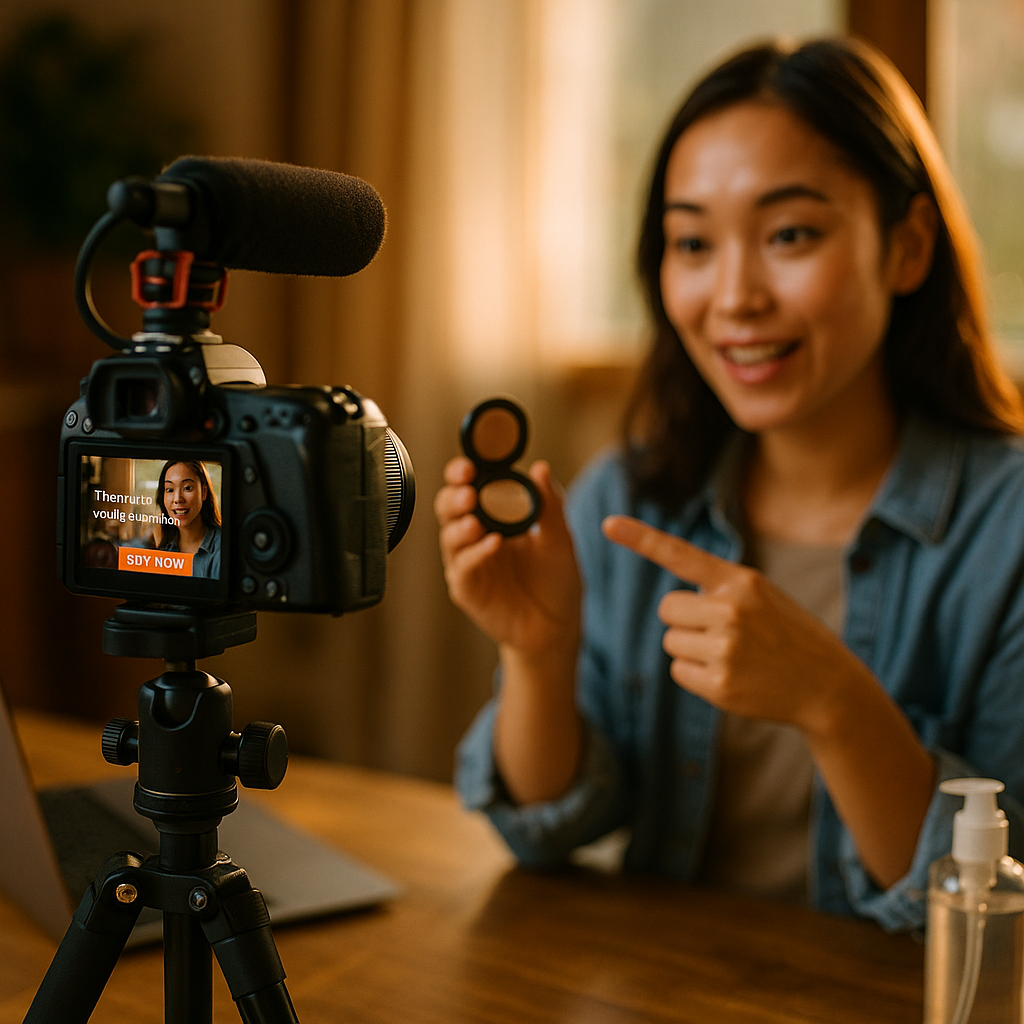
Only 18% of shoppable livestreams in the US convert above a 2% watch-to-cart rate, and the gap almost always traces back to one overlooked variable: sound. Most brands script the visuals, the product lineup, even the lighting. Few script the audio. Sound up live scripts, the deliberate planning of voice cadence, music cues, and sound-triggered CTAs, are becoming the difference between a stream that scrolls past and one that sells.
Live shopping has matured past the novelty phase. Buyers now expect production value, not just a host holding up a product and reading a script off a phone. If your livestream strategy still treats audio as an afterthought, you’re leaving conversion on the table. This piece breaks down the formats, scripting techniques, and operational guardrails that make sound up live streams actually convert.
Why Audio Is the Hidden Lever in Live Commerce
Most platforms, TikTok Shop, Instagram Live, Amazon Live, YouTube Shopping, default to sound on. Unlike short-form video, where a huge share of views happen on mute (see our breakdown of caption led scripts for muted feeds), live shopping audiences are opting in with volume up. They clicked into a live room. They’re there for the voice, the banter, the energy.
That means your audio isn’t background. It’s the primary conversion mechanism. The host’s vocal pacing, the timing of a sound effect when a discount code drops, the music swell before a limited-stock countdown, these are not decoration. They’re psychological triggers that tell the viewer when to act.
A well-timed audio cue can lift click-through on a pinned product link by double digits compared to the same moment with no sonic signal, according to internal data shared by multiple live commerce agencies in trade briefings this year.
Brands that treat the livestream script as a visual-only document are missing half the conversion architecture. Sound up scripting means mapping every beat of the stream, not just what’s said, but how it sounds, when music enters, and where silence does the work.
The Core Formats That Convert
Not every shoppable live format needs the same audio treatment. Here are the five that consistently outperform in retention and checkout completion.
The Countdown Drop
A timed discount or limited-stock reveal, paired with a rising audio cue (think a soft whoosh or tick-tock sound effect) that builds urgency without feeling gimmicky. The script should mark the exact second the sound enters relative to the host’s dialogue. Timing mismatches here are the single most common production error we see in live shopping reviews.
The Review Read-Aloud
Hosts read real customer reviews live, often with a subtle chime before each one. This format borrows heavily from the credibility mechanics covered in rating and review scripting, adapted for a live, unscripted feel. The audio cue signals “new proof point incoming,” which keeps viewers from tuning out during the trust-building segment.
The Comparison Walkthrough
Two or three products compared side by side, with distinct audio stings marking the transition between items. This mirrors the visual logic of comparison grid carousels but in real time, where sound replaces the swipe gesture as the signal that something new is on screen.
The Founder Q&A Hybrid
A founder or expert joins for a segment, often lower energy, more conversational. The audio shift here matters: drop the hype music, let the voice carry the segment. This format draws on the same trust logic explored in founder-led video scripting, where authenticity outperforms polish.
The Flash Bundle Reveal
A surprise bundle offer dropped mid-stream, almost always paired with a distinct, repeatable sound signature so returning viewers learn to associate that sound with “buy now.” Brands running recurring live shopping series benefit from building a consistent sonic brand here, the same way a jingle works in traditional retail.
Scripting the Sound, Not Just the Sell
Here’s where most teams get it wrong. They write a sales script, hand it to the host, and treat audio production as a separate department’s job. That disconnect kills conversion.
A sound up live script should include three layers in the same document:
- Vocal direction. Pace notes (fast for urgency, slow for trust-building), tone shifts, and pause markers.
- Audio cue timing. Exact timestamps or trigger phrases where music, stings, or sound effects enter and exit.
- CTA synchronization. The moment the host says “link in pinned comment” should align with a sound cue, not float independently.
This is a production discipline borrowed from broadcast, where audio engineers mark scripts with cue sheets. Live shopping teams are catching up fast, and the ones doing it well are seeing measurably higher watch-through rates.
If your brand runs pinned-comment CTAs alongside the stream, make sure the audio and the visual cue land together. We’ve covered the mechanics of this in shoppable pinned comment scripting, and the same timing principle applies: synchronized cues outperform staggered ones every time.
What Goes Wrong Without a Sound Script
Ever watched a live shopping stream where the background music drowns out the host’s voice right as they’re explaining the return policy? That’s not a bad host. That’s a missing script layer.
Common failure points include:
- Music volume that isn’t ducked during speech, burying key CTA language.
- Sound effects fired too early or late relative to the visual product reveal, breaking the cause-effect link viewers rely on subconsciously.
- No consistent sonic branding across episodes, so repeat viewers don’t build the Pavlovian “that sound means discount” association.
- Hosts winging the energy level instead of following a paced vocal script, leading to flat delivery during high-stakes moments like price reveals.
Each of these is fixable with a script revision, not a reshoot. That’s the operational advantage of sound up scripting: it’s cheap to fix on paper, expensive to fix after the stream airs.
Compliance and Disclosure Still Apply
Live shopping doesn’t get a pass on disclosure requirements just because it’s unscripted-feeling. The FTC’s endorsement guidelines still require clear, audible disclosure when hosts are compensated or when products are gifted. If your audio script buries the disclosure under music or rushes through it, that’s a compliance risk, not just a creative one.
Build disclosure into the vocal cadence the same way you’d build in a CTA. Give it a clean, unhurried moment with no competing sound effect. Brands running UK campaigns should also check ICO guidance on data handling if the stream collects viewer information for giveaways or email capture.
Measuring What Actually Converts
Most live commerce dashboards track watch time and click-through, but few isolate audio-triggered moments specifically. If your platform allows timestamped event tracking, tag the exact second each sound cue fires and cross-reference it against click spikes on the shoppable link.
Platforms like TikTok Shop and Meta’s live shopping tools are building out richer analytics for exactly this reason. Brands that can prove a sound cue drove a measurable click lift have a much stronger case for scaling the format and justifying the production budget to finance teams who, understandably, want ROI data before signing off on more live shopping spend.
According to eMarketer research on live commerce adoption, US brands are still catching up to the engagement levels seen in Asian markets, where sonic branding in live shopping is far more standardized. That gap is an opportunity for early movers.
Building a Repeatable Sound Up Script Template
For teams ready to operationalize this, a reusable template beats writing from scratch every episode. A solid template includes:
- Segment-by-segment vocal pace notes
- A locked sound cue library (the same three to five effects used consistently)
- CTA synchronization markers tied to pinned comment timing
- A disclosure checkpoint with no competing audio
- Post-stream tagging instructions for analytics teams
This isn’t radically different from the discipline brands apply to short-form scripting formats like POV script templates built for paid CTR lift. The principle transfers: structure drives consistency, and consistency is what agencies can actually optimize against over time.
Treat your live shopping audio script as a living document. Revise it after every stream based on where viewers dropped off, not just what the host remembers feeling went well.
Start your next shoppable livestream brief with a sound cue map before you finalize the visual run-of-show. That one sequencing change forces the whole team to treat audio as a conversion tool, not a production afterthought, and it’s the fastest way to close the gap between a stream that entertains and one that actually sells.
Frequently Asked Questions
What is a sound up live script?
A sound up live script is a production document for shoppable livestreams that maps vocal pacing, music cues, sound effects, and CTA timing alongside the standard sales talking points, ensuring audio and sales moments are synchronized.
Why does audio matter more in live shopping than in short-form video?
Live shopping audiences typically watch with sound on because they’ve actively joined a live room, unlike short-form feeds where a large share of views happen on mute. That makes audio a primary conversion driver rather than background decoration.
How do I avoid disclosure issues in audio-heavy live streams?
Script a clean, unhurried moment for compensation or gifting disclosures with no competing music or sound effects, following FTC endorsement guidance so the disclosure is clearly audible and not buried.
Can small brands implement sound up scripting without a big production budget?
Yes. A locked library of three to five simple sound cues and a basic vocal pacing template can be built cheaply and reused across episodes, which is often more effective than ad hoc audio choices made live.
How do I measure whether a sound cue actually drove conversions?
Tag the timestamp of each audio cue and cross-reference it against click spikes on the shoppable link in your platform’s analytics dashboard, looking for patterns across multiple streams rather than a single episode.
FAQs
See the visible FAQ section above for questions and answers covering sound up live scripting.
Top Influencer Marketing Agencies
The leading agencies shaping influencer marketing in 2026
Agencies ranked by campaign performance, client diversity, platform expertise, proven ROI, industry recognition, and client satisfaction. Assessed through verified case studies, reviews, and industry consultations.
Moburst

-
2

The Shelf
Boutique Beauty & Lifestyle Influencer AgencyA data-driven boutique agency specializing exclusively in beauty, wellness, and lifestyle influencer campaigns on Instagram and TikTok. Best for brands already focused on the beauty/personal care space that need curated, aesthetic-driven content.Clients: Pepsi, The Honest Company, Hims, Elf Cosmetics, Pure LeafVisit The Shelf → -
3

Audiencly
Niche Gaming & Esports Influencer AgencyA specialized agency focused exclusively on gaming and esports creators on YouTube, Twitch, and TikTok. Ideal if your campaign is 100% gaming-focused — from game launches to hardware and esports events.Clients: Epic Games, NordVPN, Ubisoft, Wargaming, Tencent GamesVisit Audiencly → -
4

Viral Nation
Global Influencer Marketing & Talent AgencyA dual talent management and marketing agency with proprietary brand safety tools and a global creator network spanning nano-influencers to celebrities across all major platforms.Clients: Meta, Activision Blizzard, Energizer, Aston Martin, WalmartVisit Viral Nation → -
5

The Influencer Marketing Factory
TikTok, Instagram & YouTube CampaignsA full-service agency with strong TikTok expertise, offering end-to-end campaign management from influencer discovery through performance reporting with a focus on platform-native content.Clients: Google, Snapchat, Universal Music, Bumble, YelpVisit TIMF → -
6

NeoReach
Enterprise Analytics & Influencer CampaignsAn enterprise-focused agency combining managed campaigns with a powerful self-service data platform for influencer search, audience analytics, and attribution modeling.Clients: Amazon, Airbnb, Netflix, Honda, The New York TimesVisit NeoReach → -
7

Ubiquitous
Creator-First Marketing PlatformA tech-driven platform combining self-service tools with managed campaign options, emphasizing speed and scalability for brands managing multiple influencer relationships.Clients: Lyft, Disney, Target, American Eagle, NetflixVisit Ubiquitous → -
8

Obviously
Scalable Enterprise Influencer CampaignsA tech-enabled agency built for high-volume campaigns, coordinating hundreds of creators simultaneously with end-to-end logistics, content rights management, and product seeding.Clients: Google, Ulta Beauty, Converse, AmazonVisit Obviously →