


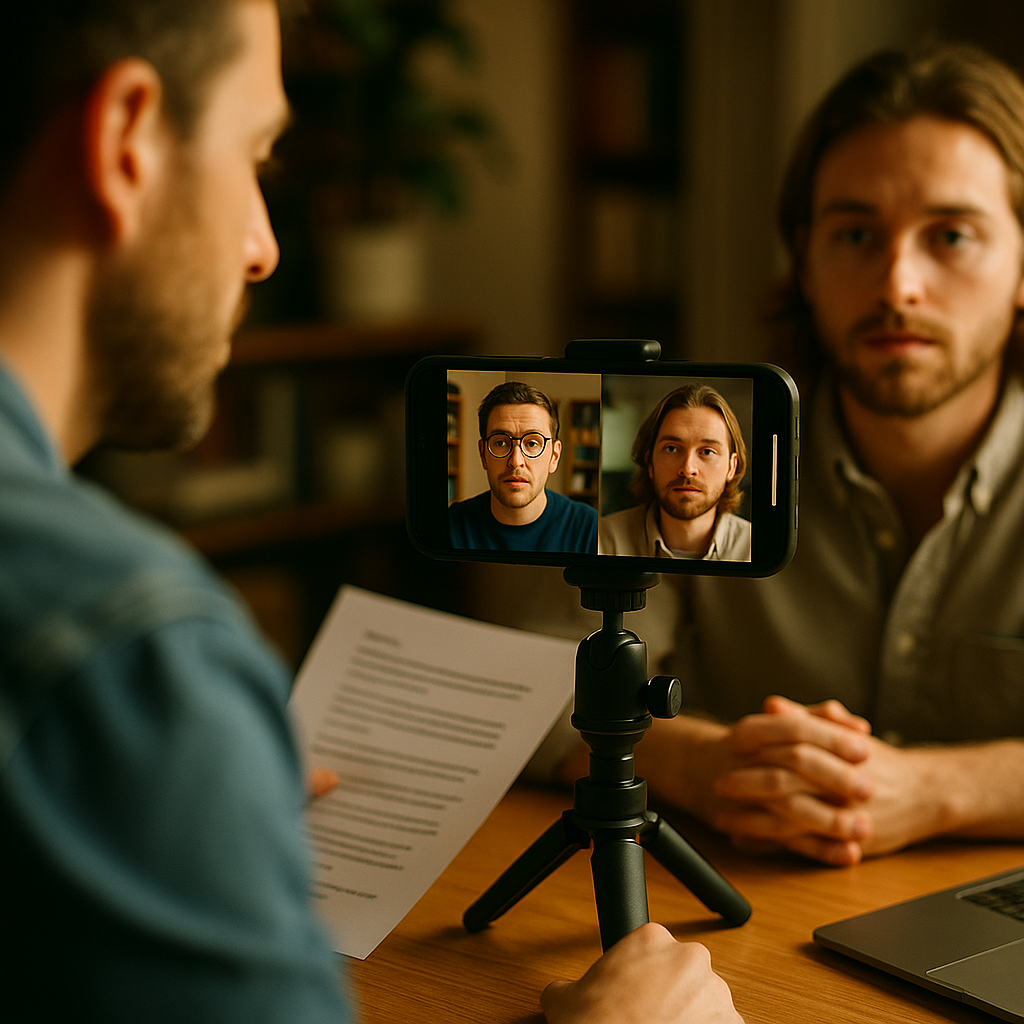
Here’s an uncomfortable truth for most C-suites: audiences trust a stranger with a ring light more than they trust your CEO’s polished keynote clip. That’s exactly why founder duet videos are becoming the fastest-growing format in B2B and DTC marketing alike. By 2026, pairing an executive’s unscripted voice with a creator’s reaction or commentary isn’t a novelty tactic anymore. It’s a credibility shortcut brands can’t afford to ignore.
What Is a Founder Duet Video, Exactly?
A founder duet video splits the screen (literally or editorially) between a company leader speaking directly to camera and a third-party creator reacting, translating, or pressure-testing that message in real time. Think of it as the TikTok duet format applied to executive communications. The founder brings institutional authority and product knowledge. The creator brings skepticism, humor, or an outsider’s lens that makes the content feel earned rather than broadcast.
This isn’t influencer marketing in the traditional sense, where a brand hands over product and hopes for favorable coverage. It’s a collaborative format where the executive’s authenticity and the creator’s commentary skills do different jobs within the same sixty seconds.
Audiences don’t distrust executives because they lie. They distrust them because corporate messaging rarely sounds like a real conversation. Duet formats fix that by literally inserting a conversation into the frame.
Why This Format Works When Straight Executive Content Falls Flat
Solo founder videos have a ceiling. Even charismatic CEOs read as “talking head content” once the novelty wears off. Viewers scroll past because there’s no tension, no friction, nothing to resolve. A creator duet introduces exactly that friction. They ask the question your audience is actually thinking: “Okay but does this actually work?” or “Why should I believe you?”
That tension is the hook. According to eMarketer research on creator-led content performance, formats built around dialogue and reaction consistently outperform monologue-style brand content on watch time and completion rate. Pairing a founder with a creator essentially manufactures that dialogue structure, even when the “conversation” is edited together after the fact.
There’s also a trust transfer mechanic at play. The creator has already built credibility with their audience over months or years. When they engage seriously with a founder’s claims (rather than just nodding along), some of that earned trust extends to the brand. This is the same psychological principle behind reali tea storytelling, where perceived authenticity drives conversion more than production value ever could.
The Operational Case: ROI and Risk, Not Just Vibes
Marketing leaders don’t greenlight formats because they’re charming. They greenlight them because the numbers work and the risk is manageable. Founder duets check both boxes better than most emerging formats.
- Lower production cost than branded documentaries. A duet video can be shot in an afternoon, often remotely, with the creator filming their reaction separately and editing it against the founder’s existing clip.
- Built-in distribution. The creator’s audience sees it on their feed, not just the brand’s. That’s incremental reach you’re not paying media dollars for.
- Reduced message fatigue. Because the format is inherently conversational, it survives repeat viewing and cross-platform repurposing better than a straight ad read.
- Lower compliance risk than paid endorsements. When structured correctly, the creator is reacting to the founder’s claims rather than making independent product claims themselves, which simplifies disclosure requirements under FTC endorsement guidelines.
That last point matters more than most brand teams realize. Legal and compliance teams are increasingly nervous about creator claims that go further than the brand ever intended. A duet format, where the creator’s role is explicitly to question or interpret rather than endorse, gives you a cleaner paper trail. It’s a structural cousin to the approach outlined in versus content scripts, where the format itself is designed to reduce legal exposure.
Casting: Why the Creator Choice Makes or Breaks the Video
Not every creator can pull off a founder duet. The best ones share three traits: subject-matter fluency, a skeptical-but-fair on-camera persona, and an audience that actually cares about the category. A beauty creator reacting to a skincare founder’s claims works. The same creator reacting to a fintech CEO’s compliance pitch does not.
Mid-tier and micro creators often outperform celebrity names here, mostly because their reactions read as genuine rather than contractually obligated. This mirrors findings in nano creator ensemble casts, where smaller, highly engaged audiences convert better per dollar spent than broad-reach celebrity placements.
One practical tip: brief the creator on the founder’s talking points, but never script their reaction. The moment a creator’s “surprise” or “pushback” feels rehearsed, the entire format collapses. Audiences are remarkably good at detecting performed skepticism versus real skepticism, even in a fifteen-second clip.
Scripting the Founder Side Without Killing the Authenticity
Here’s where most brands overcorrect. They’re so worried about looking scripted that they send founders in with zero preparation, and the result is rambling, unfocused footage that wastes everyone’s time. The fix isn’t more scripting. It’s better scaffolding.
Give founders three to five core points they need to land, in plain language, not corporate jargon. Let them say it in their own words, multiple takes if needed. The goal is message discipline with delivery freedom. This is the same principle behind confessional video briefs, where structure and spontaneity coexist rather than compete.
Founders should also be coached to leave conversational openings, pauses, half-finished thoughts, moments where a creator’s interjection feels natural rather than inserted. A founder who talks in tight, complete soundbites leaves no room for duet editing to work.
The single biggest mistake brands make with this format: treating the founder’s segment like a press interview and the creator’s segment like an ad read. Both halves need to feel like the same conversation, or the seam shows.
Where to Post, and How to Repurpose
Founder duet videos perform well across TikTok, Instagram Reels, and LinkedIn, but the framing shifts by platform. On LinkedIn, lean into the executive’s expertise and let the creator’s commentary function as third-party validation for a B2B audience. On TikTok, the creator’s reaction can carry more weight than the founder’s actual words; viewers often watch for the commentary first and the claim second.
Smart teams also chop these videos into smaller assets: a ten-second reaction clip, a quote card from the founder, a caption-led summary for sound-off viewing using the techniques in caption led scripts. One shoot can realistically fuel a week of content across three platforms if the editing team thinks modularly from the start.
Don’t ignore the comment section, either. Founder duets tend to generate high engagement because viewers want to weigh in on who “won” the exchange. Treat that as fuel, not noise. The approach in stitch and reply format content applies directly here: pull the sharpest comments into a follow-up video where the founder responds directly.
Measuring What Actually Matters
Vanity metrics will tell you the video “did well.” They won’t tell you whether it moved pipeline or units sold. Track completion rate as your top-funnel signal (if people drop off before the creator’s commentary lands, your founder segment is too long). Track branded search lift and site traffic from the creator’s bio link as your mid-funnel signal. And if you’re running this through paid amplification, compare cost-per-click against your standard influencer content benchmarks using platforms like Sprout Social or your existing social listening stack.
One underused metric: sentiment in the comments specifically directed at the founder versus the creator. If commenters are addressing the founder by name and asking follow-up questions, you’ve achieved the trust transfer this format is designed to produce. If all the engagement is about the creator and nobody mentions the brand, your founder’s segment needs more presence, not less.
Next Step
Pick one founder, one category-relevant micro creator, and one unscripted claim worth defending on camera. Ship it, measure completion rate and comment sentiment, then scale the format only once you’ve proven the chemistry works, not before.
Frequently Asked Questions
What makes founder duet videos different from standard influencer partnerships?
In a standard influencer partnership, the creator typically promotes or reviews a product independently. In a founder duet video, the executive appears directly alongside or opposite the creator, so the content is built around a live exchange rather than a one-sided endorsement.
Do founder duet videos require FTC disclosure?
Yes, if the creator is compensated or received free product, standard disclosure rules still apply. Consult current guidance at ftc.gov before launching a campaign, since the reactive framing doesn’t exempt the content from endorsement disclosure requirements.
What size brand should attempt this format?
Any brand with a founder willing to appear on camera and a budget for even a micro creator partnership can test this format. It scales from early-stage startups to established enterprises, though the creator tier and production polish should match brand size and category expectations.
How long should a founder duet video run?
Most high-performing versions run between thirty and ninety seconds for short-form platforms. LinkedIn audiences will tolerate longer cuts, up to three minutes, if the executive content carries genuine expertise.
Can this format work for B2B brands, not just consumer products?
Yes, and arguably it works even better in B2B, where buyer trust in executive claims is historically low. Pairing a founder with an industry analyst or practitioner-creator adds credibility that a solo thought leadership post rarely achieves.
Top Influencer Marketing Agencies
The leading agencies shaping influencer marketing in 2026
Agencies ranked by campaign performance, client diversity, platform expertise, proven ROI, industry recognition, and client satisfaction. Assessed through verified case studies, reviews, and industry consultations.
Moburst

-
2

The Shelf
Boutique Beauty & Lifestyle Influencer AgencyA data-driven boutique agency specializing exclusively in beauty, wellness, and lifestyle influencer campaigns on Instagram and TikTok. Best for brands already focused on the beauty/personal care space that need curated, aesthetic-driven content.Clients: Pepsi, The Honest Company, Hims, Elf Cosmetics, Pure LeafVisit The Shelf → -
3

Audiencly
Niche Gaming & Esports Influencer AgencyA specialized agency focused exclusively on gaming and esports creators on YouTube, Twitch, and TikTok. Ideal if your campaign is 100% gaming-focused — from game launches to hardware and esports events.Clients: Epic Games, NordVPN, Ubisoft, Wargaming, Tencent GamesVisit Audiencly → -
4

Viral Nation
Global Influencer Marketing & Talent AgencyA dual talent management and marketing agency with proprietary brand safety tools and a global creator network spanning nano-influencers to celebrities across all major platforms.Clients: Meta, Activision Blizzard, Energizer, Aston Martin, WalmartVisit Viral Nation → -
5

The Influencer Marketing Factory
TikTok, Instagram & YouTube CampaignsA full-service agency with strong TikTok expertise, offering end-to-end campaign management from influencer discovery through performance reporting with a focus on platform-native content.Clients: Google, Snapchat, Universal Music, Bumble, YelpVisit TIMF → -
6

NeoReach
Enterprise Analytics & Influencer CampaignsAn enterprise-focused agency combining managed campaigns with a powerful self-service data platform for influencer search, audience analytics, and attribution modeling.Clients: Amazon, Airbnb, Netflix, Honda, The New York TimesVisit NeoReach → -
7

Ubiquitous
Creator-First Marketing PlatformA tech-driven platform combining self-service tools with managed campaign options, emphasizing speed and scalability for brands managing multiple influencer relationships.Clients: Lyft, Disney, Target, American Eagle, NetflixVisit Ubiquitous → -
8

Obviously
Scalable Enterprise Influencer CampaignsA tech-enabled agency built for high-volume campaigns, coordinating hundreds of creators simultaneously with end-to-end logistics, content rights management, and product seeding.Clients: Google, Ulta Beauty, Converse, AmazonVisit Obviously →