


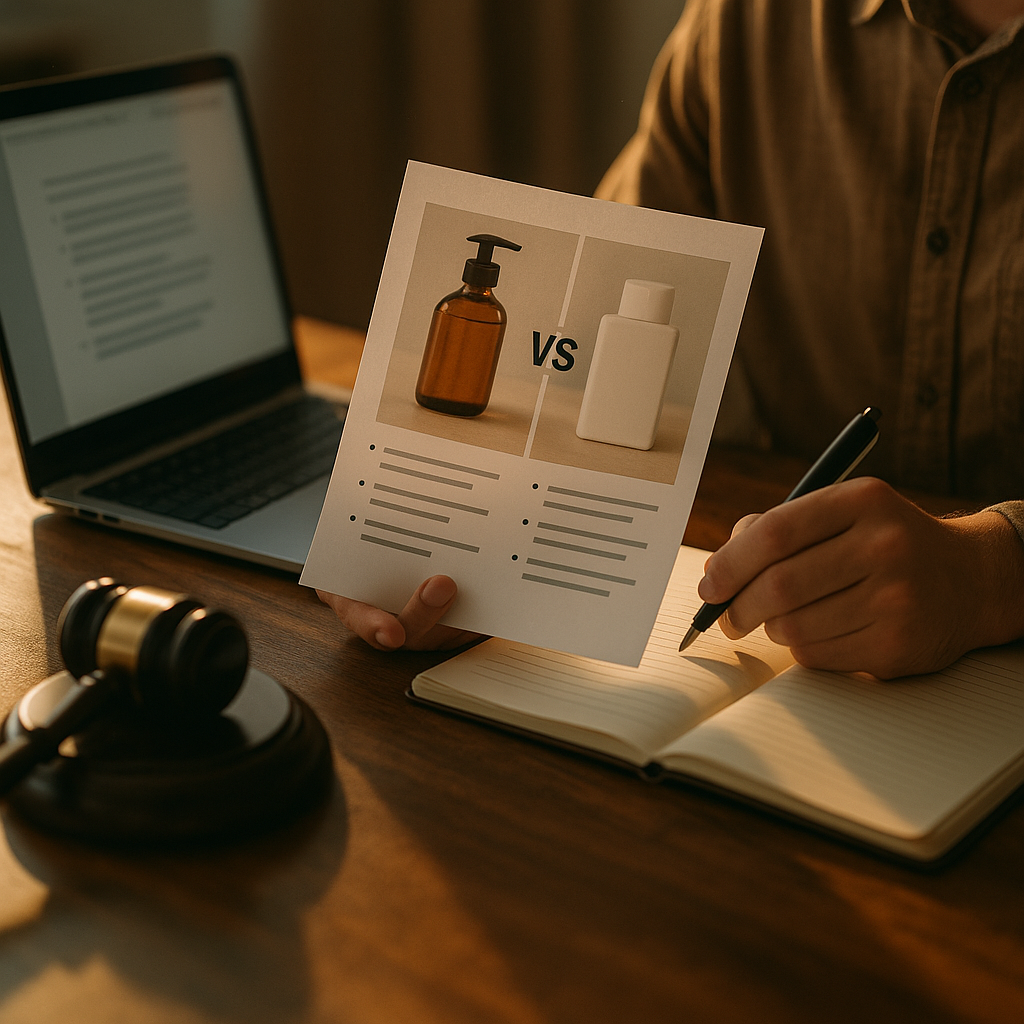
73% of consumers say they want to see proof before they buy, not promises. That single stat explains why versus content, the head-to-head comparison video pitting your product against a competitor, an old version of itself, or “the way everyone else does it,” has become one of the highest-converting formats in paid and organic creator campaigns. Done right, a comparison video shortens the path from scroll to cart. Done wrong, it’s a legal headache and a credibility killer.
This piece breaks down how to script comparison videos that actually move purchase decisions, not just views.
Why Comparison Format Beats the Standard Product Demo
A regular product demo asks viewers to imagine the alternative. A comparison video shows it to them, side by side, in real time. That’s a massive cognitive shortcut. Marketers don’t need to convince anyone that the problem exists; the split screen does it for you.
Performance teams have noticed. Brands running split screen comparison videos consistently report stronger thumb-stop rates than standard UGC ads, largely because the format triggers pattern recognition fast. Viewers see two options and instinctively want to know which one wins. That curiosity gap is free attention you don’t have to buy.
Comparison content doesn’t sell a product. It sells a decision, and decisions are what convert, not features.
There’s also a trust dimension here. According to eMarketer, consumers increasingly discount polished brand claims in favor of creator-led, visibly unscripted proof. A comparison video, even a scripted one, reads as more objective than a straight testimonial because it implies the creator tested both sides.
The Four-Beat Structure That Actually Converts
Most versus content fails not because the idea is weak but because the script wanders. Here’s the structure that consistently performs across TikTok, Reels, and YouTube Shorts for brand clients:
- The setup (0 to 3 seconds): State the comparison plainly. “I tried the $12 version and the $45 version.” No throat-clearing, no brand intro.
- The shared criteria (3 to 8 seconds): Name the metrics you’re judging on, upfront. Price, texture, speed, durability, whatever is relevant. This signals fairness and keeps viewers from feeling sold to.
- The side-by-side proof (8 to 20 seconds): This is the meat. Show, don’t narrate. Let footage of the actual test carry the weight while the voiceover stays sparse.
- The verdict with nuance (20 to 30 seconds): Avoid a blanket “mine wins every time.” Give the competitor credit where it’s earned. “If you only care about price, go with the cheaper one. If you want it to last, this is the one I’d buy again.”
That nuance in the verdict matters more than people think. A reviewer who admits a weakness reads as credible on everything else they say. This is the same psychological mechanism behind reali-tea storytelling: controlled honesty builds more trust than a flawless pitch ever could.
Choosing Your Angle: Competitor, Dupe, or Past Self
Not every comparison needs an external rival. There are three angles worth testing, and each one carries different risk and reward.
Brand versus named competitor. Highest conversion potential, highest legal exposure. You need substantiated claims and ideally third-party testing data if you’re going to name names.
Brand versus generic “the old way.” Lower risk, still effective. Think “skincare routine before versus after switching formulas” without naming a specific brand. This sidesteps most disparagement concerns while keeping the before/after tension that drives engagement.
Original versus dupe. A growing category, especially in beauty and fashion, where creators compare a premium product against a budget dupe. Brands on both sides of that equation have learned to script carefully. Our breakdown of dupe versus original reels covers how premium brands protect price positioning without sounding defensive, which is a real tightrope when a $9 alternative performs nearly as well on camera.
Pick the angle based on your risk tolerance and your legal team’s appetite, not just on what performs best in a vacuum. A viral video that triggers a cease-and-desist letter isn’t a win, it’s a distraction.
Scripting Without the Audio Crutch
A mistake brands make constantly: writing comparison scripts that depend entirely on narration to land the point. Most social video is watched muted first. If your “winner” only becomes clear because a voiceover says so, you’ve lost half your audience before the verdict even lands.
Build in visual proof points: on-screen text overlays stating the metric being tested, side-by-side timers, color-coded checkmarks. The principles from sound-off scripting apply directly here. If someone can watch your entire comparison with the sound off and still walk away knowing which product won and why, your script is doing its job.
Compliance Isn’t Optional: What the FTC Actually Requires
This is the section brands skip and then regret. Comparison advertising sits under specific regulatory scrutiny in most markets, and influencer-led versus content doesn’t get a pass just because it’s wrapped in casual creator tone.
The core rules, per FTC guidance, are straightforward but frequently ignored:
- Any claim made in a comparison must be substantiated. “Lasts twice as long” needs data behind it, not vibes.
- Material connections between the brand and the creator must be disclosed clearly, not buried in a caption’s fifth hashtag.
- Comparisons that disparage a competitor without factual basis open the door to false advertising claims, and that risk transfers to the brand, not just the creator.
If you’re operating in the UK or EU, the ICO and local advertising standards bodies apply similar scrutiny, particularly around comparative advertising directives that require the comparison to be objective and verifiable.
Every claim in a versus script should survive the question: “Could we show our receipts if a competitor’s lawyer called tomorrow?” If the answer is no, cut the claim.
Practical fix: build a simple claims log for every comparison video. Document the test conditions, the date, the sample size, and who ran it. It takes twenty minutes and it’s the difference between a defensible campaign and a scramble when legal gets a letter.
Testing and Scaling the Format
One comparison video rarely tells you enough. The format’s strength is in volume testing, because the “winner” framing can be flipped, reordered, or re-angled dozens of ways without reshooting everything.
A practical workflow:
- Shoot the raw footage once, both products, multiple angles, multiple lighting setups. This maps closely to the approach in raw footage capture plans, where a single shoot day gets sliced into a dozen usable assets.
- Cut 3 to 5 hook variants testing different opening claims: price-first, speed-first, results-first.
- Run a structured cross-channel hook test across TikTok and Meta before committing spend to a single edit.
- Scale the winning hook with nano and micro creators who can recreate the same comparison in their own voice, which keeps the format from feeling like a templated ad.
Per data referenced by Statista, video ad formats with clear “proof” framing continue to outperform aspirational lifestyle content on conversion metrics across most verticals, which is exactly the lane comparison content lives in. Platforms like TikTok Ads Manager also make it straightforward to split-test hook variants against the same core footage, so there’s little excuse for shipping a single, unvalidated cut.
For teams managing creator relationships at scale, Sprout Social and similar platforms can help track which comparison angles are getting organic pickup versus which need paid support to break through, which matters when you’re deciding where to allocate the next quarter’s budget.
FAQs
Frequently Asked Questions
What makes a comparison video legally risky?
Naming a specific competitor and making unsubstantiated claims about performance, price, or quality is the biggest risk. Keep claims factual, documented, and verifiable, and disclose any paid partnership clearly.
Should brands name competitors directly in comparison videos?
Only if legal has reviewed the claims and you have testing data to back them up. Many brands get similar performance by comparing against “the old way” or a generic alternative instead of naming a rival directly.
How long should a versus video be?
Most high-performing comparison videos run between 20 and 35 seconds. Long enough to show real proof, short enough to hold attention through the verdict.
Do comparison videos work better organic or paid?
Both, but they tend to perform especially well as paid ads because the format front-loads a clear value proposition, which shortens the decision cycle for cold audiences seeing the brand for the first time.
What’s the biggest scripting mistake brands make with this format?
Making the brand win too cleanly. A comparison that gives zero credit to the competitor reads as an ad, not a review, and viewers discount it accordingly.
Next step: pull your last three product reviews or support tickets mentioning a competitor by name, turn the strongest complaint into a documented, substantiated comparison claim, and script your next versus video around that single proof point instead of trying to cover everything at once.
Frequently Asked Questions
What makes a comparison video legally risky?
Naming a specific competitor and making unsubstantiated claims about performance, price, or quality is the biggest risk. Keep claims factual, documented, and verifiable, and disclose any paid partnership clearly.
Should brands name competitors directly in comparison videos?
Only if legal has reviewed the claims and you have testing data to back them up. Many brands get similar performance by comparing against “the old way” or a generic alternative instead of naming a rival directly.
How long should a versus video be?
Most high-performing comparison videos run between 20 and 35 seconds. Long enough to show real proof, short enough to hold attention through the verdict.
Do comparison videos work better organic or paid?
Both, but they tend to perform especially well as paid ads because the format front-loads a clear value proposition, which shortens the decision cycle for cold audiences seeing the brand for the first time.
What’s the biggest scripting mistake brands make with this format?
Making the brand win too cleanly. A comparison that gives zero credit to the competitor reads as an ad, not a review, and viewers discount it accordingly.
Top Influencer Marketing Agencies
The leading agencies shaping influencer marketing in 2026
Agencies ranked by campaign performance, client diversity, platform expertise, proven ROI, industry recognition, and client satisfaction. Assessed through verified case studies, reviews, and industry consultations.
Moburst

-
2

The Shelf
Boutique Beauty & Lifestyle Influencer AgencyA data-driven boutique agency specializing exclusively in beauty, wellness, and lifestyle influencer campaigns on Instagram and TikTok. Best for brands already focused on the beauty/personal care space that need curated, aesthetic-driven content.Clients: Pepsi, The Honest Company, Hims, Elf Cosmetics, Pure LeafVisit The Shelf → -
3

Audiencly
Niche Gaming & Esports Influencer AgencyA specialized agency focused exclusively on gaming and esports creators on YouTube, Twitch, and TikTok. Ideal if your campaign is 100% gaming-focused — from game launches to hardware and esports events.Clients: Epic Games, NordVPN, Ubisoft, Wargaming, Tencent GamesVisit Audiencly → -
4

Viral Nation
Global Influencer Marketing & Talent AgencyA dual talent management and marketing agency with proprietary brand safety tools and a global creator network spanning nano-influencers to celebrities across all major platforms.Clients: Meta, Activision Blizzard, Energizer, Aston Martin, WalmartVisit Viral Nation → -
5

The Influencer Marketing Factory
TikTok, Instagram & YouTube CampaignsA full-service agency with strong TikTok expertise, offering end-to-end campaign management from influencer discovery through performance reporting with a focus on platform-native content.Clients: Google, Snapchat, Universal Music, Bumble, YelpVisit TIMF → -
6

NeoReach
Enterprise Analytics & Influencer CampaignsAn enterprise-focused agency combining managed campaigns with a powerful self-service data platform for influencer search, audience analytics, and attribution modeling.Clients: Amazon, Airbnb, Netflix, Honda, The New York TimesVisit NeoReach → -
7

Ubiquitous
Creator-First Marketing PlatformA tech-driven platform combining self-service tools with managed campaign options, emphasizing speed and scalability for brands managing multiple influencer relationships.Clients: Lyft, Disney, Target, American Eagle, NetflixVisit Ubiquitous → -
8

Obviously
Scalable Enterprise Influencer CampaignsA tech-enabled agency built for high-volume campaigns, coordinating hundreds of creators simultaneously with end-to-end logistics, content rights management, and product seeding.Clients: Google, Ulta Beauty, Converse, AmazonVisit Obviously →