


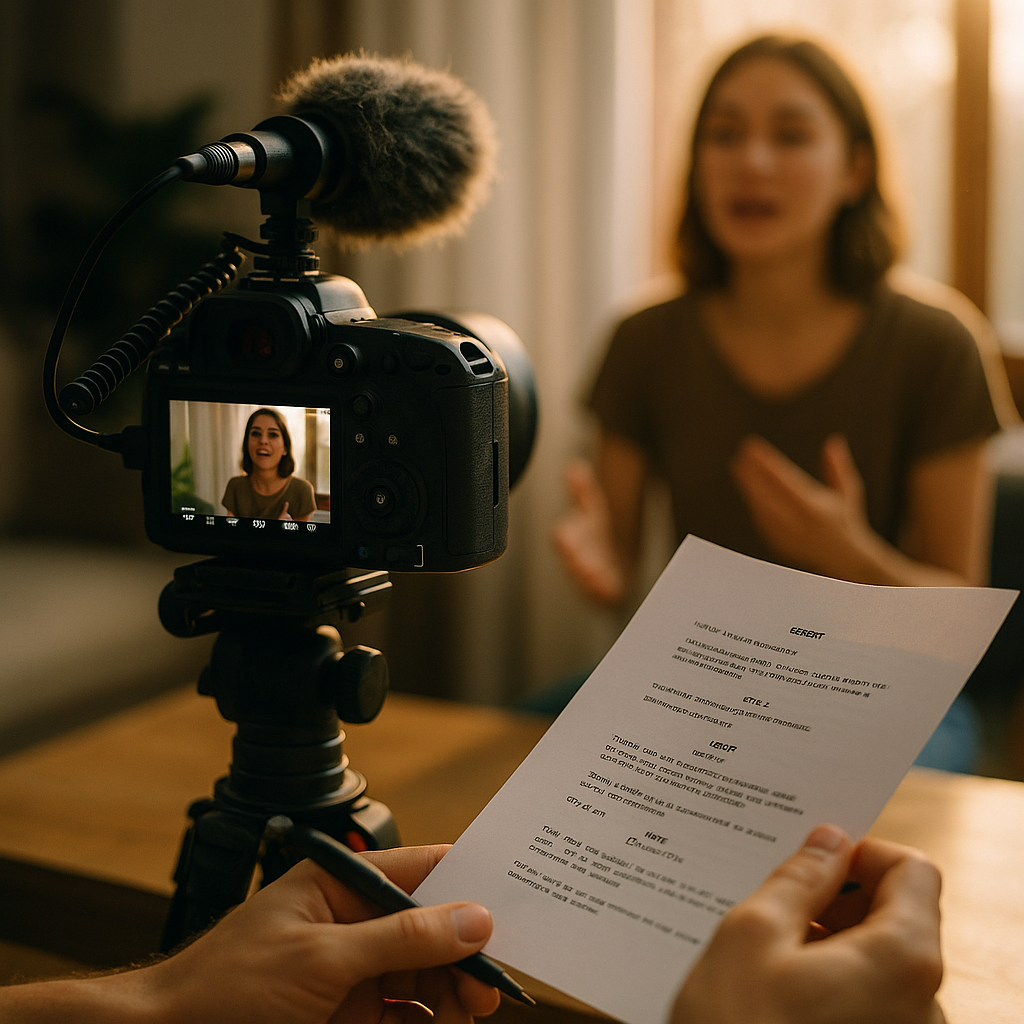
Here’s an uncomfortable number for brand marketers sitting on terabytes of unused footage: the average production shoot generates 8 to 12 hours of raw material for every 60 seconds of finished content. Almost all of it gets deleted. Meanwhile, audiences on TikTok and Instagram are actively telling platforms they want more making of behind the scenes clips, not less polish. That gap between what brands throw away and what audiences crave is pure, unclaimed ROI.
Why Raw Footage Is Suddenly a Content Category, Not Just an Asset
For years, b-roll and blooper reels lived in a folder nobody opened after the campaign wrapped. Then creator economy audiences shifted their trust signals. People stopped wanting to watch the ad. They wanted to watch the ad get made.
This isn’t nostalgia for DVD extras. It’s a response to feed fatigue. Viewers have become extremely good at spotting a sales pitch within the first second, and they scroll past it. Behind the scenes content sidesteps that defense mechanism because it doesn’t read as a pitch. It reads as access. You’re not watching a commercial, you’re watching a crew argue about lighting, a creator flub a line six times, a product get repositioned for the fourth take. That texture is the entire appeal.
Brands that repurpose production footage into standalone BTS content report 20 to 40 percent higher watch-through rates than their polished counterparts, according to agency benchmarking data circulating across creator marketing teams this year.
Our sister piece on turning raw footage into sales covers the commerce mechanics in more depth. This article focuses on the production and operational side: how to actually build a system that captures, clears, and ships this content without turning your shoot days into a legal minefield.
What Counts as Makeable BTS Content?
Not every outtake deserves a second life. The useful categories tend to fall into a few recognizable buckets:
- Setup and rigging footage. Lighting adjustments, camera rig swaps, product staging. This appeals to the “how did they do that” curiosity that drives craft-focused audiences on platforms like Instagram and YouTube Shorts.
- Bloopers and genuine reactions. A creator breaking character, laughing at a flubbed line, or reacting honestly to a product for the first time. This is the highest-performing category because it reads as unscripted, even when it technically wasn’t.
- Director or brand lead commentary. A quick cutaway where someone explains why a shot was reframed or why a product angle mattered. This builds brand credibility with practitioners and press, not just consumers.
- Crew and talent banter between takes. Low production value, high relatability. Often the best performer on TikTok specifically.
- Comparison of raw versus final. A split view showing the messy take next to the polished result. This format overlaps with techniques covered in split screen comparison videos, and it performs well because it satisfies viewer skepticism about how “real” the final ad actually is.
Not everything works. Dead air, repeated technical setup with no payoff, or footage where talent looks visibly uncomfortable should get cut. The goal is authenticity, not an actual unedited dump.
Build the Capture Plan Before You Shoot, Not After
Here’s where most teams fail. They treat BTS as a bonus someone grabs on a phone if they remember. That’s backwards. If you want usable repurposed footage, you need a second camera operator (or a producer with a phone and a plan) assigned specifically to BTS capture, with a shot list separate from the main production’s shot list.
A simple capture brief should specify:
- Which moments to prioritize (arrivals, rehearsals, reaction shots, wrap).
- Minimum and maximum clip lengths so editors aren’t stuck with unusable 45-second static shots.
- Audio capture requirements, since BTS content often lives or dies on ambient sound and overheard dialogue rather than scripted voiceover, a dynamic also explored in sound off scripting for autoplay feeds.
- A signal system (verbal cue or hand signal) so the BTS operator knows when something camera-worthy is about to happen.
Treat this the same way you’d treat multi-angle commerce shoots. Our guide on shooting commerce clips like films makes the case that intentional camera coverage during production pays off downstream, and BTS capture is really the same principle applied to a different output.
The Legal Layer Everyone Skips
This is the part that gets brands into trouble. Every person on camera, including crew, needs to have signed a release that specifically covers BTS and social repurposing, not just the primary deliverable. Standard talent contracts for a commercial shoot often restrict usage to the specific campaign assets. If your release language doesn’t explicitly cover “ancillary content, outtakes, and behind the scenes footage across owned and earned social channels,” legal will (rightly) kill your BTS post before it ships.
Build this into your production paperwork at the contract stage, not during the edit. Agencies that run frequent creator shoots now include a standing BTS usage clause in every creator agreement specifically to avoid the scramble. If you’re coordinating with talent agencies or influencer management platforms, confirm this clause explicitly, since usage rights disputes are one of the most common friction points in influencer partnerships according to guidance from the FTC on endorsement and disclosure compliance.
Music clearance is the other landmine. Ambient audio captured during a shoot (someone’s phone playing a song in the background, a radio on set) can trigger copyright claims the moment you publish. Strip or replace that audio before anything goes live, and keep a clean audio-only backup of dialogue so editors aren’t forced to mute an entire clip over one background track.
Editing Principles: Rough Is a Choice, Not an Accident
Counterintuitive truth: the best BTS content is deliberately under-edited, but it’s never unedited. There’s a difference. You’re removing dead time, tightening pacing, and adding minimal captions, while preserving the texture that makes it feel raw: natural lighting, ambient noise, imperfect framing.
A few practical rules that consistently improve performance:
- Keep cuts under 20 seconds for feed-first platforms. Longer BTS content performs better on YouTube and as owned-channel archival content, but attention spans on TikTok and Reels punish anything that doesn’t move.
- Caption dialogue even when audio is clear. A huge share of viewing happens sound-off, a behavior pattern that mirrors what’s documented in silent demo scripting.
- Resist the urge to add a polished voiceover explaining what’s happening. Let the moment speak. Overlay text works better than narration for this category.
- Use the comment section as a distribution engine. BTS clips that end on an open question (“guess how many takes this was”) consistently outperform clips with a hard CTA, a pattern covered extensively in comment bait hook scripting.
- Watch-through rate relative to your polished content baseline.
- Comment sentiment and volume (BTS tends to generate higher comment-to-view ratios).
- Follower growth attributed to the posting window.
- Saves and shares, which indicate the content is being used as reference or social currency rather than passively consumed.
- Over-producing the “raw” footage. Adding motion graphics, branded lower thirds, and music beds defeats the purpose. If it looks like an ad, the trust benefit disappears.
- Ignoring crew consent. Crew members aren’t talent, but they’re still identifiable on camera. Skipping their releases is a common and entirely avoidable legal gap.
- Treating it as disposable. Teams that build a repeatable capture and clearance process get compounding value across every future shoot. Teams that wing it every time rebuild the wheel on every production.
- No distribution plan beyond the brand’s own feed. Encourage creators involved in the shoot to post their own BTS angle too. Cross-posting from creator accounts multiplies reach without multiplying production cost, similar to the mechanics in cross channel hook testing.
-
2

The Shelf
Boutique Beauty & Lifestyle Influencer AgencyA data-driven boutique agency specializing exclusively in beauty, wellness, and lifestyle influencer campaigns on Instagram and TikTok. Best for brands already focused on the beauty/personal care space that need curated, aesthetic-driven content.Clients: Pepsi, The Honest Company, Hims, Elf Cosmetics, Pure LeafVisit The Shelf → -
3

Audiencly
Niche Gaming & Esports Influencer AgencyA specialized agency focused exclusively on gaming and esports creators on YouTube, Twitch, and TikTok. Ideal if your campaign is 100% gaming-focused — from game launches to hardware and esports events.Clients: Epic Games, NordVPN, Ubisoft, Wargaming, Tencent GamesVisit Audiencly → -
4

Viral Nation
Global Influencer Marketing & Talent AgencyA dual talent management and marketing agency with proprietary brand safety tools and a global creator network spanning nano-influencers to celebrities across all major platforms.Clients: Meta, Activision Blizzard, Energizer, Aston Martin, WalmartVisit Viral Nation → -
5

The Influencer Marketing Factory
TikTok, Instagram & YouTube CampaignsA full-service agency with strong TikTok expertise, offering end-to-end campaign management from influencer discovery through performance reporting with a focus on platform-native content.Clients: Google, Snapchat, Universal Music, Bumble, YelpVisit TIMF → -
6

NeoReach
Enterprise Analytics & Influencer CampaignsAn enterprise-focused agency combining managed campaigns with a powerful self-service data platform for influencer search, audience analytics, and attribution modeling.Clients: Amazon, Airbnb, Netflix, Honda, The New York TimesVisit NeoReach → -
7

Ubiquitous
Creator-First Marketing PlatformA tech-driven platform combining self-service tools with managed campaign options, emphasizing speed and scalability for brands managing multiple influencer relationships.Clients: Lyft, Disney, Target, American Eagle, NetflixVisit Ubiquitous → -
8

Obviously
Scalable Enterprise Influencer CampaignsA tech-enabled agency built for high-volume campaigns, coordinating hundreds of creators simultaneously with end-to-end logistics, content rights management, and product seeding.Clients: Google, Ulta Beauty, Converse, AmazonVisit Obviously →
Where Does This Fit in the Content Calendar?
BTS content shouldn’t compete with your primary campaign assets for launch-day attention. It works best as a staggered release: drop the polished ad first, then seed BTS clips over the following one to three weeks as “proof” content once the audience has already seen the finished product and is curious how it came together.
This sequencing also gives you a second wave of impressions from the same production budget without shooting anything new, which is the entire efficiency argument for this format. One shoot day, properly captured, can realistically feed four to six weeks of supplementary content across channels.
Brands running episodic or serialized creator content get even more mileage here. If you’re already building toward something like an episodic creator series, BTS clips slot naturally between episodes as retention content, keeping the audience engaged during gaps in the main release schedule without demanding new production.
Measuring What Actually Matters
Don’t judge BTS content by the same conversion metrics you’d apply to a direct-response ad. It’s a trust and retention asset, not a bottom-funnel one. The metrics that matter more here:
Track these using your existing social analytics stack. Platforms like Sprout Social and native insights from Meta Business Suite make it straightforward to segment BTS posts against your standard content and see whether the engagement pattern holds across campaigns, not just one lucky post.
Common Mistakes That Undercut the Format
A few patterns show up repeatedly when brands get this wrong:
The strategic case for this format keeps strengthening as paid media costs rise and audiences grow more skeptical of polished advertising. Platforms including eMarketer have tracked a sustained shift toward creator-led, lower-fi content formats outperforming traditional branded video on cost-per-engagement, and BTS repurposing is one of the cheapest ways to participate in that shift since the raw material already exists.
Next Step
Pick your next scheduled shoot, assign a dedicated BTS capture role before the first take, and get the usage clause added to every release form in advance. The footage is already free. The only cost is building the habit of actually capturing and clearing it.
Frequently Asked Questions
What is making of behind the scenes content in a marketing context?
It refers to raw or lightly edited production footage, such as rehearsals, bloopers, crew interactions, and setup shots, that gets repurposed into standalone social content rather than staying as unused archival material from a shoot.
Do I need separate legal releases for BTS content?
Yes. Standard talent and crew releases for a primary campaign deliverable often don’t cover ancillary or social repurposing use. You need explicit language covering BTS and outtake usage built into your production contracts before the shoot.
Does BTS content need to look unpolished to work?
It needs to feel authentic, but light editing for pacing and clarity is expected. Over-producing it with graphics, music beds, or scripted voiceover tends to undermine the trust signal that makes the format effective.
How do I measure the performance of BTS clips?
Focus on watch-through rate, comment volume, saves, and shares rather than direct conversion metrics. BTS content functions primarily as a trust and retention asset, not a bottom-funnel conversion driver.
Can BTS footage cause copyright or compliance issues?
Yes, most commonly through unintentional background music captured on set. Always strip or replace ambient audio with unclear rights before publishing, and confirm talent and crew consent explicitly covers social distribution.
Top Influencer Marketing Agencies
The leading agencies shaping influencer marketing in 2026
Agencies ranked by campaign performance, client diversity, platform expertise, proven ROI, industry recognition, and client satisfaction. Assessed through verified case studies, reviews, and industry consultations.
Moburst
