


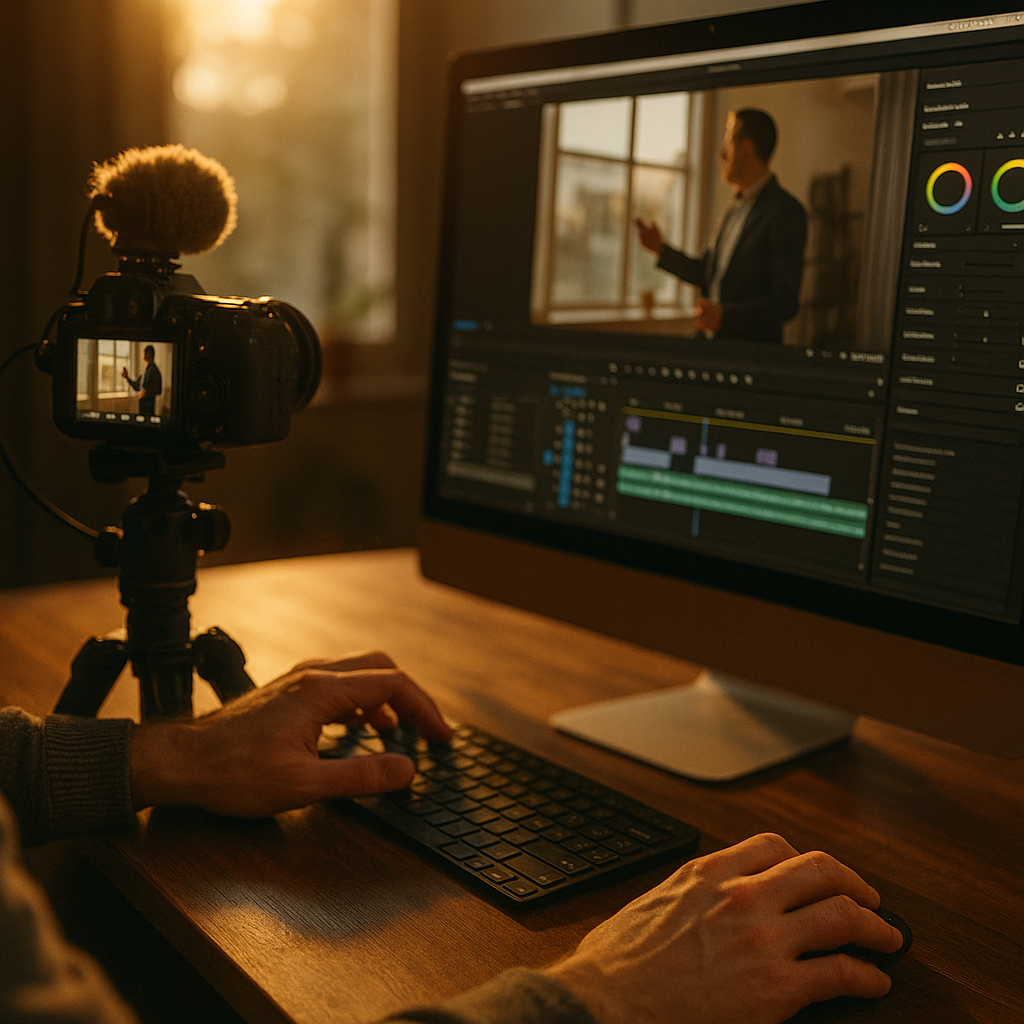
Seventy percent of TikTok users say the platform feels more authentic than other social apps, according to TikTok’s own marketing science research. Yet most brands still bolt their TikTok Shop links onto the same overproduced ads that have fatigued feeds for years. The format quietly outperforming them? Shoppable behind-the-scenes content: raw, process-driven clips that pull back the curtain on how a product gets made, packed, or tested, with a Shop cart sitting right under the chaos.
Why “Unfinished” Content Is Converting Better Than Polish
Here’s the uncomfortable truth for brand teams who’ve spent years perfecting hero shots: viewers don’t trust them anymore. They’ve seen too many ring lights, too many “candid” moments that were clearly blocked and reshot. Behind-the-scenes content works precisely because it looks like it wasn’t supposed to be seen. A founder fumbling through a packing station. A quality control reject pile. A factory floor with bad lighting and real noise.
That imperfection is the trust signal. When a creator shows the messy middle instead of the polished end, the audience reads it as proof rather than persuasion. And on TikTok Shop specifically, where the purchase decision happens in seconds, proof beats polish almost every time.
Shoppable BTS content works because it removes the question viewers ask of every ad: “but what’s really going on behind this?” Showing the answer, cart attached, turns skepticism into a sale.
What Shoppable Behind-the-Scenes Actually Looks Like
This isn’t a new content category invented from nothing. It’s an evolution of formats brands already use, stitched together with commerce functionality. A few patterns dominating TikTok Shop right now:
- Production walkthroughs: raw footage of manufacturing, formulation, or sourcing, with the product pinned for purchase mid-video.
- Day-in-the-life founder clips: the person behind the brand doing mundane tasks (inventory counts, shipping runs) that humanize the business.
- Failed-attempt reveals: showing a batch that didn’t pass QC before cutting to the one that did, reinforcing that standards exist.
- Live packing and fulfillment clips: customers watching their literal order type get boxed, which doubles as a soft proof-of-stock signal.
Notice the throughline: none of these are scripted sales pitches. They’re operational transparency dressed up as entertainment, and the TikTok Shop cart just rides along.
The Trust Gap TikTok Shop Needs to Close
Social commerce still has a credibility problem. Consumers have been burned by influencer promotions that felt hollow, products that didn’t match the demo, and returns processes that made buying feel risky. FTC guidance on endorsements exists precisely because that trust gap got wide enough to require regulation. Shoppable BTS content is one of the few formats actively narrowing that gap, because it shows process rather than just outcome.
Brands already leaning into proof-based formats know this. Our coverage of returns proof demo videos found that showing the unglamorous parts of a transaction, refunds included, actually increased conversion rather than scaring buyers off. Behind-the-scenes content operates on the same psychology: show the thing you’d normally hide, and watch trust compound.
How This Changes the Creator Brief
Most influencer briefs are built around hitting key messages. Shoppable BTS briefs need to be built around access instead. You’re not asking a creator to say the right lines, you’re giving them a reason to be somewhere interesting with a camera rolling. That’s a different kind of creative direction, and it requires brands to loosen their grip on message control.
Practically, that means:
- Granting creators real facility or process access instead of staged b-roll.
- Briefing for authenticity markers (ambient sound, unedited pacing) rather than polish.
- Pinning the TikTok Shop link to the product shown, not a generic storefront.
- Allowing some imperfection to survive editing. A stumble or an honest “this part’s boring” moment is doing work for you.
This pairs well with other low-friction formats already proving themselves on TikTok Shop. Silent captioned demos succeed for similar reasons: they strip away the sales voice and let the product and process speak. BTS content takes that one step further by showing what happens before the product ever reaches the demo stage.
Where It Fits in the Funnel
BTS content isn’t a top-of-funnel awareness play exclusively, and it isn’t a bottom-of-funnel closer either. It sits in the messy middle, the consideration stage, where a shopper has seen the product but hasn’t decided it’s legitimate. That’s exactly where TikTok Shop’s “For You” discovery mechanics reward native-feeling content anyway.
Brands running full-funnel TikTok Shop programs are increasingly pairing BTS clips with harder-working formats downstream. A countdown hook format might close the sale once trust is established, while the BTS clip did the work of establishing it. Think of BTS as the credibility layer, not the conversion layer, even though the Shop link sits in both.
It also complements comparison-driven content well. Split screen reviews pair reactions with proof side by side; BTS content provides the raw material that makes those proof claims believable in the first place. If a reviewer says “I watched them make this,” the BTS clip is the receipt.
Measurement: What to Actually Track
Standard view-through and click metrics undersell this format. Because BTS content builds trust rather than driving an immediate impulse buy, brands need to track:
- Save rate: a strong save rate signals viewers want to revisit the proof before buying, a classic consideration-stage behavior.
- Comment sentiment: look for trust language (“didn’t expect this,” “actually convinced me”) rather than just volume.
- Time-to-purchase after view: TikTok Shop’s attribution window can show whether BTS views precede conversions by days rather than minutes, which is normal and fine.
- Return rate on attributed sales: if BTS-driven purchases return less often than ad-driven ones, that’s the clearest ROI signal you’ll get.
Platforms like Sprout Social and TikTok’s own TikTok Ads Manager dashboards can help isolate these patterns, but brands should expect to build custom reporting views rather than relying on out-of-the-box conversion metrics built for direct-response ads.
If BTS content isn’t lowering your return rate on attributed sales within a quarter, the access you’re granting creators probably isn’t revealing anything your audience didn’t already assume.
Risk and Compliance, Because Someone Will Ask
Showing your operations on camera invites scrutiny you don’t control. A messy warehouse shot can read as “authentic” to one viewer and “unprofessional” to another. Before greenlighting BTS access, marketing and legal teams should align on:
- What facility areas are genuinely camera-ready without staging (safety, cleanliness, proprietary process concerns).
- Disclosure requirements for paid creator access, consistent with FTC endorsement rules.
- Data handling if creators film near customer information, shipping labels, or order details.
- A clear approval lane that doesn’t slow creators down so much that the content loses its spontaneous feel.
This is also where brands benefit from formats already built around operational honesty. Our piece on testimonial compilation reels covers how to source and clear real customer voices at scale, a discipline that transfers directly to managing BTS creator content across multiple facility visits or product lines.
Who Should Actually Be in Front of the Camera?
Founders and ops staff often outperform professional creators here, counterintuitively. Audiences forgive rougher production value when the person on screen clearly has real stakes in the product. That said, pairing an ops team member with a creator who knows pacing and hook construction tends to outperform either alone. The creator brings the instinct for what keeps someone watching past three seconds; the staff member brings the credibility.
For brands without internal bandwidth to coordinate that, formats like choose-your-creator formats offer a middle path: let multiple creator styles compete for the same BTS access and keep whichever version earns the trust signals you’re tracking.
Getting Started Without Overhauling Your Content Calendar
You don’t need a documentary crew to test this. Start with one process that’s genuinely interesting (a packing line, a formulation step, a quality check) and give one creator unscripted access for a single shoot. Measure save rate and return rate against your current best-performing ad format. If BTS content beats it on either metric within a month, you’ve found a format worth scaling. If it doesn’t, you’ve lost very little, because this content is cheap to produce relative to polished campaign assets.
FAQs
Frequently Asked Questions
What exactly is shoppable behind-the-scenes content?
It’s unscripted or lightly produced footage showing how a product is made, packed, or tested, with a TikTok Shop link attached directly to the clip so viewers can purchase without leaving the content.
Does BTS content work better than polished product ads on TikTok Shop?
For trust-building and consideration-stage shoppers, often yes. Polished ads still perform for straightforward impulse buys, but BTS content tends to reduce skepticism and lower return rates on items that require more buyer confidence.
How do I measure ROI on behind-the-scenes content specifically?
Track save rate, comment sentiment, time-to-purchase after view, and return rate on attributed sales rather than relying solely on immediate click-through conversions, since BTS content typically influences consideration rather than triggering instant checkout.
Do creators need professional production skills to make this work?
Not necessarily. Founders and operations staff often perform well on camera for this format because their credibility outweighs production polish, though pairing them with a creator skilled in pacing can improve watch time.
What compliance issues should brands watch for with BTS content?
Disclosure of paid creator relationships under FTC endorsement guidance, protection of proprietary processes, and careful handling of any customer data visible during warehouse or fulfillment footage.
Pick one process worth showing, hand a creator real access, and measure it against your best current ad on save rate and returns, not clicks alone. If it wins, scale it before your competitors figure out why polish stopped working.
Top Influencer Marketing Agencies
The leading agencies shaping influencer marketing in 2026
Agencies ranked by campaign performance, client diversity, platform expertise, proven ROI, industry recognition, and client satisfaction. Assessed through verified case studies, reviews, and industry consultations.
Moburst

-
2

The Shelf
Boutique Beauty & Lifestyle Influencer AgencyA data-driven boutique agency specializing exclusively in beauty, wellness, and lifestyle influencer campaigns on Instagram and TikTok. Best for brands already focused on the beauty/personal care space that need curated, aesthetic-driven content.Clients: Pepsi, The Honest Company, Hims, Elf Cosmetics, Pure LeafVisit The Shelf → -
3

Audiencly
Niche Gaming & Esports Influencer AgencyA specialized agency focused exclusively on gaming and esports creators on YouTube, Twitch, and TikTok. Ideal if your campaign is 100% gaming-focused — from game launches to hardware and esports events.Clients: Epic Games, NordVPN, Ubisoft, Wargaming, Tencent GamesVisit Audiencly → -
4

Viral Nation
Global Influencer Marketing & Talent AgencyA dual talent management and marketing agency with proprietary brand safety tools and a global creator network spanning nano-influencers to celebrities across all major platforms.Clients: Meta, Activision Blizzard, Energizer, Aston Martin, WalmartVisit Viral Nation → -
5

The Influencer Marketing Factory
TikTok, Instagram & YouTube CampaignsA full-service agency with strong TikTok expertise, offering end-to-end campaign management from influencer discovery through performance reporting with a focus on platform-native content.Clients: Google, Snapchat, Universal Music, Bumble, YelpVisit TIMF → -
6

NeoReach
Enterprise Analytics & Influencer CampaignsAn enterprise-focused agency combining managed campaigns with a powerful self-service data platform for influencer search, audience analytics, and attribution modeling.Clients: Amazon, Airbnb, Netflix, Honda, The New York TimesVisit NeoReach → -
7

Ubiquitous
Creator-First Marketing PlatformA tech-driven platform combining self-service tools with managed campaign options, emphasizing speed and scalability for brands managing multiple influencer relationships.Clients: Lyft, Disney, Target, American Eagle, NetflixVisit Ubiquitous → -
8

Obviously
Scalable Enterprise Influencer CampaignsA tech-enabled agency built for high-volume campaigns, coordinating hundreds of creators simultaneously with end-to-end logistics, content rights management, and product seeding.Clients: Google, Ulta Beauty, Converse, AmazonVisit Obviously →