


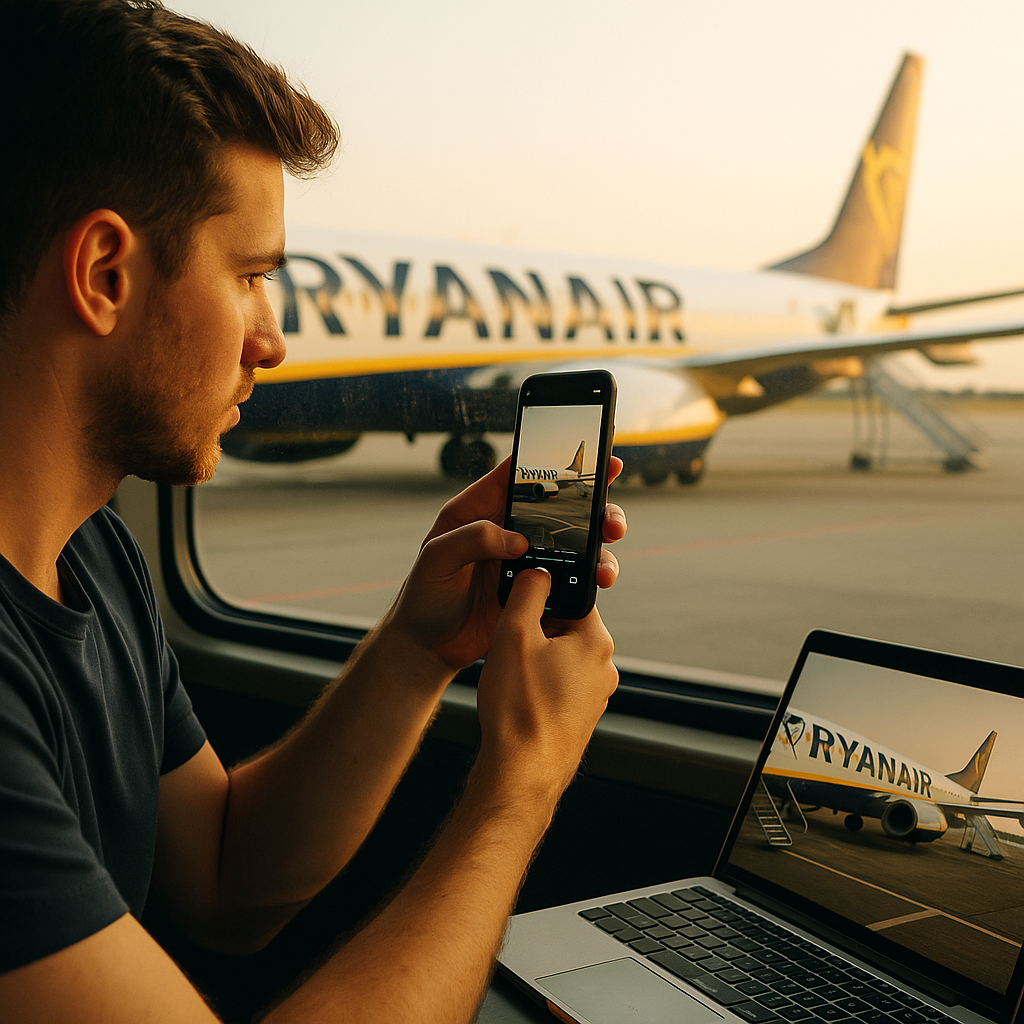
Ryanair’s social team has roughly a dozen people. No agency retainer, no outside creative shop, no influencer management platform subscription. Yet the airline consistently out-memes brands with budgets ten times the size, racking up hundreds of millions of organic views a year on TikTok and X. The lesson for anyone running an in house creator studio is blunt: speed and voice beat headcount and spend.
The Model: Builders, Not Just Posters
Most airlines treat social media as a customer service extension bolted onto PR. Ryanair treats it as a content production unit. The team doesn’t just schedule posts, it scripts, films, edits, and publishes within hours of a trend emerging. That’s the functional definition of a creator studio: a unit that produces original, platform native content on a near daily cadence rather than repurposing brand assets.
This matters because the traditional brand-agency pipeline was built for a different era. Brief, pitch, revise, approve, shoot, edit, approve again, schedule. That cycle can take weeks. Ryanair’s internal team compresses it into a single afternoon. When a trending sound or format appears on TikTok at 10am, the brand can have a response live by lunch.
Ryanair’s social success isn’t a budget story. It’s an operating model story: a small internal team with full creative authority can outrun agencies built for slower approval cycles.
Why Legacy Brands Can’t Just Copy the Playbook
Plenty of CMOs have tried to clone Ryanair’s tone and failed. The reason isn’t talent, it’s governance. Ryanair’s legal and brand teams gave the social unit latitude that most enterprises reserve for nobody. A snarky reply to a customer complaint or a joke about a competitor’s legroom would trigger a three day review cycle at most airlines. At Ryanair, it’s often the post itself.
That autonomy is the real structural advantage. Brands considering an in house model need to ask whether leadership will actually tolerate the risk profile that comes with real time, personality driven content. If the answer is no, hiring creators won’t fix the bottleneck. The approval chain will.
Operational Efficiency Over Agency Overhead
From a pure cost standpoint, the math is straightforward. A mid-sized agency retainer for social content production commonly runs into six figures annually before media spend, according to benchmarks tracked by HubSpot’s marketing research. An in house team of three to six multi-skilled staff, people who can shoot, edit, write, and understand platform mechanics, often costs less while producing more volume because there’s no briefing tax.
The briefing tax is underrated. Every handoff between brand and agency introduces latency: writing the brief, waiting for the pitch, requesting revisions, routing through legal. An internal creator studio collapses that chain into one room, sometimes one person wearing three hats. That’s precisely why other brands have started pulling UGC and creator production in house rather than routing it through external shops, a shift documented in how Starbucks moved UGC commissioning in house for faster rights clearance and quicker turnaround.
- Lower marginal cost per post: no per-deliverable agency fee once the team is staffed.
- Faster trend response: internal teams don’t need a new brief for every cultural moment.
- Tighter brand voice control: the people writing jokes about the brand also understand its legal red lines intimately.
- Institutional memory: internal staff retain context on what worked and what flopped, agencies rotate.
Risk Mitigation Looks Different When You Own the Voice
Here’s the counterintuitive part. Brands often assume external agencies reduce risk because they add a layer of professional distance. Ryanair’s experience suggests the opposite can be true for reputational risk in real time marketing. When the same small team owns both the joke and the legal boundaries, there’s no translation gap where an outside creative shop misreads how far a brand can push a bit.
That doesn’t mean zero risk. Ryanair has drawn criticism and occasional regulatory scrutiny for pushing boundaries, and the FTC’s disclosure guidance and the UK’s ICO data protection rules still apply regardless of who’s producing the content. An in house model doesn’t exempt a brand from compliance obligations, it just means the compliance check happens faster because it’s internal.
Content Velocity as a Competitive Moat
Social platforms reward speed. Algorithms on TikTok and X favor early engagement signals, which means the brand that posts first on a trending format often captures outsized reach compared to the brand that posts the polished version three days later. Ryanair’s internal studio structure is built specifically to win that race.
Contrast this with brands running influencer programs purely through external creator networks. Those models, well suited for scaled UGC and affiliate style commerce content as seen in Scrub Daddy’s open affiliate approach, optimize for volume and diversity of voices rather than split second cultural timing. Both models are valid. They just solve different problems. An in house studio wins on timing and tone consistency, a creator network wins on breadth and authentic peer to peer trust signals.
Industry data backs the volume argument too. eMarketer’s creator economy research has repeatedly shown that short form video consumption keeps climbing year over year, and platforms keep rewarding frequency. A brand that posts twice a week cannot compete on discovery with one posting multiple times daily, regardless of production quality.
What Other Brands Are Doing Instead
Ryanair’s full in house model isn’t the only path. Some brands build hybrid structures: a lean internal team handles real time reactive content while specialist hires own narrower formats. Canon EMEA’s decision to hire a dedicated UGC specialist to own short form content rather than build a full studio shows one version of this middle ground. Similarly, TP-Link hired a specialist instead of retaining an agency, betting that one sharp internal hire beats a slower external relationship.
Other organizations, like WEBTOON’s in house team built to scale creator IP, show that the internal studio model scales beyond airlines and CPG into entertainment and platform businesses. The common thread across all these examples: internal ownership of creative decisions shortens the distance between cultural moment and published content.
What This Means for Your 2026 Planning Cycle
If you’re building next year’s content operations budget, Ryanair’s structure offers a practical benchmark rather than a brand voice to imitate. Few companies can or should copy the airline’s specific tone. But the operational principles transfer cleanly to almost any category.
- Audit your current approval chain and count the hours between trend identification and publish.
- Identify which content types genuinely need legal review versus which are low risk enough for a trained internal team to self-approve.
- Staff for multi-skilled production, not siloed roles. One person who can shoot, write, and edit beats three specialists who each wait on each other.
- Measure output against engagement velocity, not just volume. A smaller, faster team often outperforms a larger, slower one on reach per post.
Brands weighing this shift should also look at how peers are tying internal production to measurable outcomes rather than vanity metrics, an approach explored in GameSquare and Chartis making influencer ROI auditable. An in house studio is only a win if leadership can prove it’s outperforming the old model on cost per engagement or conversion, not just producing more jokes.
Frequently Asked Questions
What makes an in house creator studio different from a regular social media team?
A creator studio produces original, platform native content daily rather than scheduling repurposed brand assets. It typically includes people who can film, edit, write, and publish without routing through an external agency, which cuts turnaround time from weeks to hours.
Is the Ryanair social media model replicable for other industries?
The tone isn’t replicable for every brand, but the operational structure is. Any brand can shorten its approval chain, staff multi-skilled producers, and give a small team real time publishing authority within defined legal boundaries.
Does an in house model increase legal and compliance risk?
Not inherently. It shifts where compliance review happens rather than removing it. Brands still need clear guidelines around disclosure and data handling under regulations enforced by bodies like the FTC and the ICO, but internal teams can often clear those checks faster than external agencies.
How many people does it take to run an in house creator studio?
Ryanair runs its program with roughly a dozen people covering content, community, and trend monitoring. Smaller brands have launched effective internal studios with three to six multi-skilled staff, depending on posting cadence and platform coverage.
Should brands choose an in house studio or an external creator network?
It depends on the goal. In house studios win on speed and voice consistency for real time cultural moments. External creator networks win on scale, diversity of voices, and peer to peer trust for commerce driven content. Many brands now run both in parallel.
The real takeaway isn’t “be funnier online.” It’s that Ryanair’s team structure, short approval chains, multi-skilled staff, and real publishing authority, is what actually drives the results everyone admires. Start there before you start writing jokes.
Top Influencer Marketing Agencies
The leading agencies shaping influencer marketing in 2026
Agencies ranked by campaign performance, client diversity, platform expertise, proven ROI, industry recognition, and client satisfaction. Assessed through verified case studies, reviews, and industry consultations.
Moburst

-
2

The Shelf
Boutique Beauty & Lifestyle Influencer AgencyA data-driven boutique agency specializing exclusively in beauty, wellness, and lifestyle influencer campaigns on Instagram and TikTok. Best for brands already focused on the beauty/personal care space that need curated, aesthetic-driven content.Clients: Pepsi, The Honest Company, Hims, Elf Cosmetics, Pure LeafVisit The Shelf → -
3

Audiencly
Niche Gaming & Esports Influencer AgencyA specialized agency focused exclusively on gaming and esports creators on YouTube, Twitch, and TikTok. Ideal if your campaign is 100% gaming-focused — from game launches to hardware and esports events.Clients: Epic Games, NordVPN, Ubisoft, Wargaming, Tencent GamesVisit Audiencly → -
4

Viral Nation
Global Influencer Marketing & Talent AgencyA dual talent management and marketing agency with proprietary brand safety tools and a global creator network spanning nano-influencers to celebrities across all major platforms.Clients: Meta, Activision Blizzard, Energizer, Aston Martin, WalmartVisit Viral Nation → -
5

The Influencer Marketing Factory
TikTok, Instagram & YouTube CampaignsA full-service agency with strong TikTok expertise, offering end-to-end campaign management from influencer discovery through performance reporting with a focus on platform-native content.Clients: Google, Snapchat, Universal Music, Bumble, YelpVisit TIMF → -
6

NeoReach
Enterprise Analytics & Influencer CampaignsAn enterprise-focused agency combining managed campaigns with a powerful self-service data platform for influencer search, audience analytics, and attribution modeling.Clients: Amazon, Airbnb, Netflix, Honda, The New York TimesVisit NeoReach → -
7

Ubiquitous
Creator-First Marketing PlatformA tech-driven platform combining self-service tools with managed campaign options, emphasizing speed and scalability for brands managing multiple influencer relationships.Clients: Lyft, Disney, Target, American Eagle, NetflixVisit Ubiquitous → -
8

Obviously
Scalable Enterprise Influencer CampaignsA tech-enabled agency built for high-volume campaigns, coordinating hundreds of creators simultaneously with end-to-end logistics, content rights management, and product seeding.Clients: Google, Ulta Beauty, Converse, AmazonVisit Obviously →