


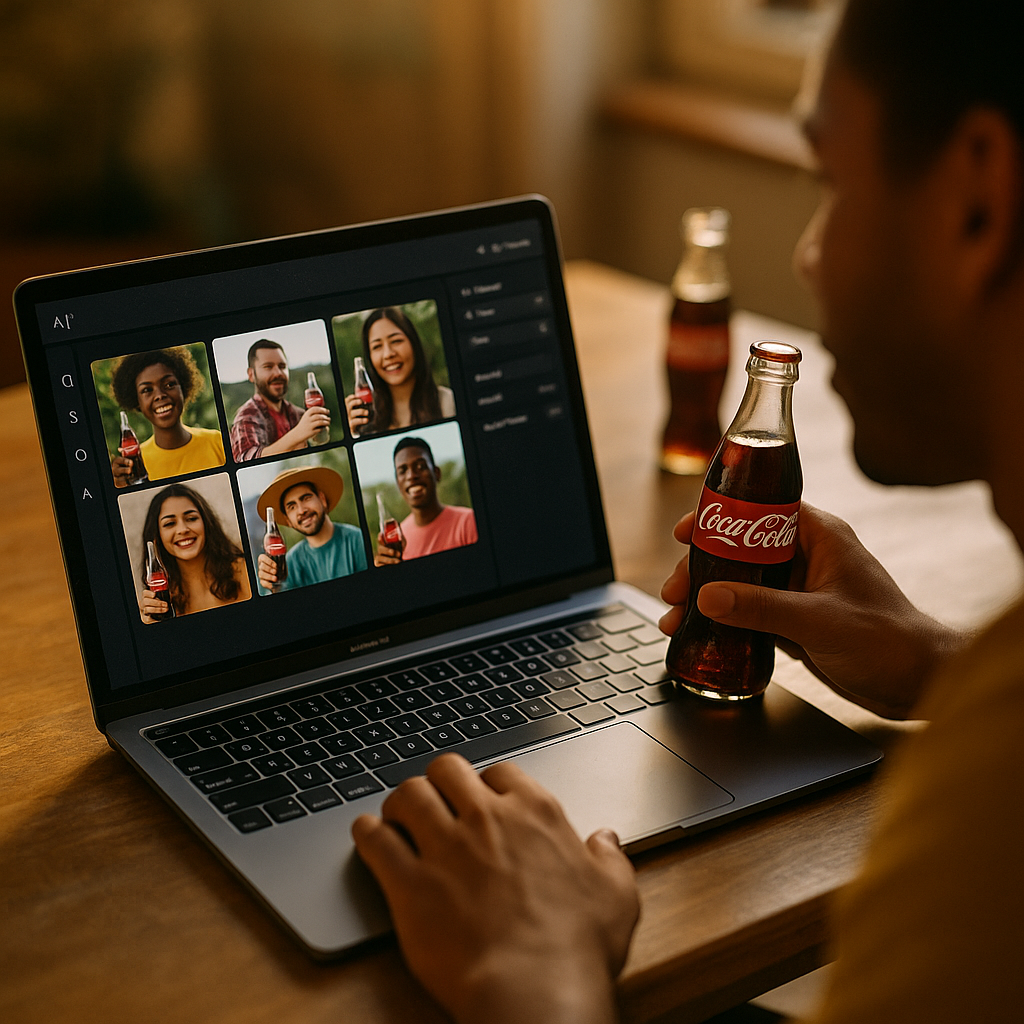
Coca-Cola now produces localized creator content in over 200 markets from a single campaign brief. That’s not a typo, and it’s not a hypothetical. It’s the operational reality of an AI content platform that compresses what used to take regional agencies months into a matter of days. For marketers still manually briefing fifteen different markets on the same campaign, this should be uncomfortable reading.
The Localization Problem Nobody Talks About
Every global brand hits the same wall eventually. You build a killer creative concept at headquarters, and then you watch it die a slow death in translation. Not literal translation, though that’s part of it. The real issue is cultural fit: a creator hook that lands in São Paulo falls flat in Seoul, and a visual style that feels premium in Paris reads as cold in Mexico City.
Historically, brands solved this by throwing headcount at it. Regional marketing teams, local agencies, market-specific creator rosters. Expensive, slow, and nearly impossible to audit for consistency. Coca-Cola’s answer wasn’t to hire more people. It was to build infrastructure.
Coca-Cola’s platform doesn’t just translate content, it regenerates it, adapting tone, pacing, and visual cues to match local creator norms while keeping brand assets locked.
What the AI Content Platform Actually Does
Coca-Cola’s internal tooling, built in partnership with technology vendors and refined through its in-house studio operations, takes a master creative asset (think a hero video or a core campaign concept) and generates localized variants at scale. This isn’t simple dubbing or subtitle overlay. The system adjusts:
- Pacing and edit rhythm to match regional content consumption habits
- Visual elements like on-screen text, product placement framing, and color grading preferences by market
- Tone and messaging emphasis, aligning with what local creators and audiences respond to
- Format variants for platform-specific requirements across short-form video channels
The output feeds directly into creator briefs. Instead of a generic global brief translated into twelve languages, local teams get a market-ready starting point that’s already 80% there. Creators then layer in their own voice and authenticity, which is still the part no algorithm should touch.
Why This Matters for Brand Teams Right Now
Budget scrutiny on influencer programs has only intensified. According to eMarketer research on global ad spend trends, marketers are under pressure to prove efficiency gains, not just reach metrics. A platform that cuts localization turnaround from six weeks to six days isn’t a nice-to-have. It’s a direct lever on cost-per-market and speed-to-cultural-relevance, two things that used to be mutually exclusive.
Compare this to how other large brands are approaching AI-assisted content production. Best Buy’s AI content pipeline takes a similar approach for retail media, generating product-focused creative at speed without sacrificing approval workflows. The pattern across categories is consistent: AI handles the repetitive scaling work, humans handle judgment and brand risk.
Scaling Creator Campaigns Without Losing Control
Here’s the question every compliance-minded marketer should be asking: how do you scale creator output across 200+ markets without losing grip on brand safety, legal review, and disclosure requirements?
Coca-Cola built guardrails directly into the platform’s architecture. Brand assets, logos, trademarked taglines, and approved messaging frameworks are locked at the template level. Regional teams and creators can adapt tone and local flavor, but they can’t drift outside pre-approved brand parameters. This matters enormously given how the FTC’s endorsement guidelines continue to tighten expectations around disclosure consistency across markets and creator tiers.
It also solves a quieter problem: version control. When fifteen markets are producing content independently, keeping track of which assets are approved, expired, or legally cleared becomes a nightmare. Centralizing generation through one platform means every variant traces back to a single source of truth. That’s a risk mitigation win as much as it’s a speed win.
The Economics of One-to-Many Content Production
Let’s talk numbers, because that’s what gets budget approved. Traditional localized campaign production often runs on a one-to-one model: one creative team, one market, one output. Multiply that by dozens of markets and the cost curve gets ugly fast.
An AI-assisted one-to-many model flips that math. One master brief generates the foundation for hundreds of market and platform-specific variants. The marginal cost of each additional localized asset drops sharply after the initial setup. This is the same efficiency logic brands like e.l.f. Beauty applied when scaling creator partnerships into the thousands. Volume only works when the per-unit cost of content creation and review falls as you scale, not rises.
The real ROI story isn’t just faster content. It’s the ability to run creator campaigns in markets that previously couldn’t justify a dedicated production budget.
That last point deserves emphasis. Smaller markets, think Baltic states, Southeast Asian secondary cities, or emerging Latin American regions, rarely get bespoke creative treatment because the budget math never works. AI-assisted localization changes that calculus. Suddenly a market with modest media spend can still get culturally relevant creator content instead of a diluted global asset.
Creator Relationships Still Drive Authenticity
None of this works if the output feels synthetic. Coca-Cola’s model treats AI-generated variants as a starting point, not a finished product. Local creators still record their own voiceovers, react in their own style, and inject the cultural nuance that no model fully captures. This mirrors what Huda Beauty has done with tiered creator structures, where technology handles briefing and measurement while creators retain creative ownership of the final piece.
Brands that skip this step, treating AI output as the final product, tend to get called out fast. Audiences on platforms like TikTok and Instagram are unusually good at smelling synthetic content, and the backlash can undo whatever efficiency gains the automation delivered. Coca-Cola’s approach seems to understand this tension: automate the scaffolding, protect the human layer.
What Other Brands Should Take From This
You don’t need Coca-Cola’s budget to apply the underlying principle. The strategic shift worth copying is this: stop treating localization as a translation task and start treating it as a content generation pipeline with built-in brand governance.
Practical steps for marketing teams evaluating this approach:
- Audit how many localized variants your current creative workflow actually produces per campaign, and what each one costs
- Identify which brand elements must stay locked (logos, claims, legal disclaimers) versus which can flex by market
- Evaluate AI content tools not just on output speed but on how well they integrate with existing creator briefing and approval workflows
- Build measurement into the pipeline from day one. Auditable ROI frameworks matter more as content volume increases, not less
Platforms like Meta Business Suite and TikTok Ads Manager are already building more granular localization and audience segmentation features, which suggests the broader creator marketing infrastructure is catching up to what brands like Coca-Cola are doing internally. The gap between in-house AI tooling and off-the-shelf platform capability is narrowing fast.
For smaller teams without the resources to build proprietary platforms, the lesson still applies at a smaller scale. Even a semi-automated workflow, where one creative team produces modular assets that local market teams can quickly adapt, captures a meaningful chunk of the same efficiency gain. The goal isn’t replicating Coca-Cola’s exact tech stack. It’s adopting the one-to-many mindset that makes localized creator campaigns financially sustainable at scale.
FAQs
What is Coca-Cola’s AI content platform used for?
It generates localized variants of a single master creative asset, adjusting tone, pacing, and visual elements so creator campaigns feel culturally relevant across more than 200 markets without rebuilding content from scratch in each region.
Does AI-generated content replace human creators at Coca-Cola?
No. The platform produces a localized starting point, and creators still add their own voice, delivery, and cultural nuance before content goes live. Human creative judgment remains part of the final output.
How does this approach reduce marketing costs?
By lowering the marginal cost of producing each additional localized asset. One master brief can feed hundreds of market-specific variants, which means markets with smaller budgets can still receive tailored creator content instead of a generic global version.
What risks should brands watch for with AI-assisted localization?
Brand consistency, legal compliance with disclosure rules in each market, and the risk of content feeling synthetic if creators aren’t given room to personalize the output. Locking brand assets at the template level while leaving room for creative flexibility helps manage this.
Can smaller brands apply this model without building custom AI tools?
Yes. Smaller teams can adopt a modular content approach, producing core creative assets that local teams or creators adapt quickly, capturing some of the same efficiency benefits without a full proprietary platform.
The takeaway for any marketing team managing multi-market creator programs: stop budgeting localization as a linear cost and start building a content pipeline where one brief scales into hundreds of culturally relevant assets. Start small, lock your non-negotiable brand elements, and let creators handle the rest.
Top Influencer Marketing Agencies
The leading agencies shaping influencer marketing in 2026
Agencies ranked by campaign performance, client diversity, platform expertise, proven ROI, industry recognition, and client satisfaction. Assessed through verified case studies, reviews, and industry consultations.
Moburst

-
2

The Shelf
Boutique Beauty & Lifestyle Influencer AgencyA data-driven boutique agency specializing exclusively in beauty, wellness, and lifestyle influencer campaigns on Instagram and TikTok. Best for brands already focused on the beauty/personal care space that need curated, aesthetic-driven content.Clients: Pepsi, The Honest Company, Hims, Elf Cosmetics, Pure LeafVisit The Shelf → -
3

Audiencly
Niche Gaming & Esports Influencer AgencyA specialized agency focused exclusively on gaming and esports creators on YouTube, Twitch, and TikTok. Ideal if your campaign is 100% gaming-focused — from game launches to hardware and esports events.Clients: Epic Games, NordVPN, Ubisoft, Wargaming, Tencent GamesVisit Audiencly → -
4

Viral Nation
Global Influencer Marketing & Talent AgencyA dual talent management and marketing agency with proprietary brand safety tools and a global creator network spanning nano-influencers to celebrities across all major platforms.Clients: Meta, Activision Blizzard, Energizer, Aston Martin, WalmartVisit Viral Nation → -
5

The Influencer Marketing Factory
TikTok, Instagram & YouTube CampaignsA full-service agency with strong TikTok expertise, offering end-to-end campaign management from influencer discovery through performance reporting with a focus on platform-native content.Clients: Google, Snapchat, Universal Music, Bumble, YelpVisit TIMF → -
6

NeoReach
Enterprise Analytics & Influencer CampaignsAn enterprise-focused agency combining managed campaigns with a powerful self-service data platform for influencer search, audience analytics, and attribution modeling.Clients: Amazon, Airbnb, Netflix, Honda, The New York TimesVisit NeoReach → -
7

Ubiquitous
Creator-First Marketing PlatformA tech-driven platform combining self-service tools with managed campaign options, emphasizing speed and scalability for brands managing multiple influencer relationships.Clients: Lyft, Disney, Target, American Eagle, NetflixVisit Ubiquitous → -
8

Obviously
Scalable Enterprise Influencer CampaignsA tech-enabled agency built for high-volume campaigns, coordinating hundreds of creators simultaneously with end-to-end logistics, content rights management, and product seeding.Clients: Google, Ulta Beauty, Converse, AmazonVisit Obviously →