


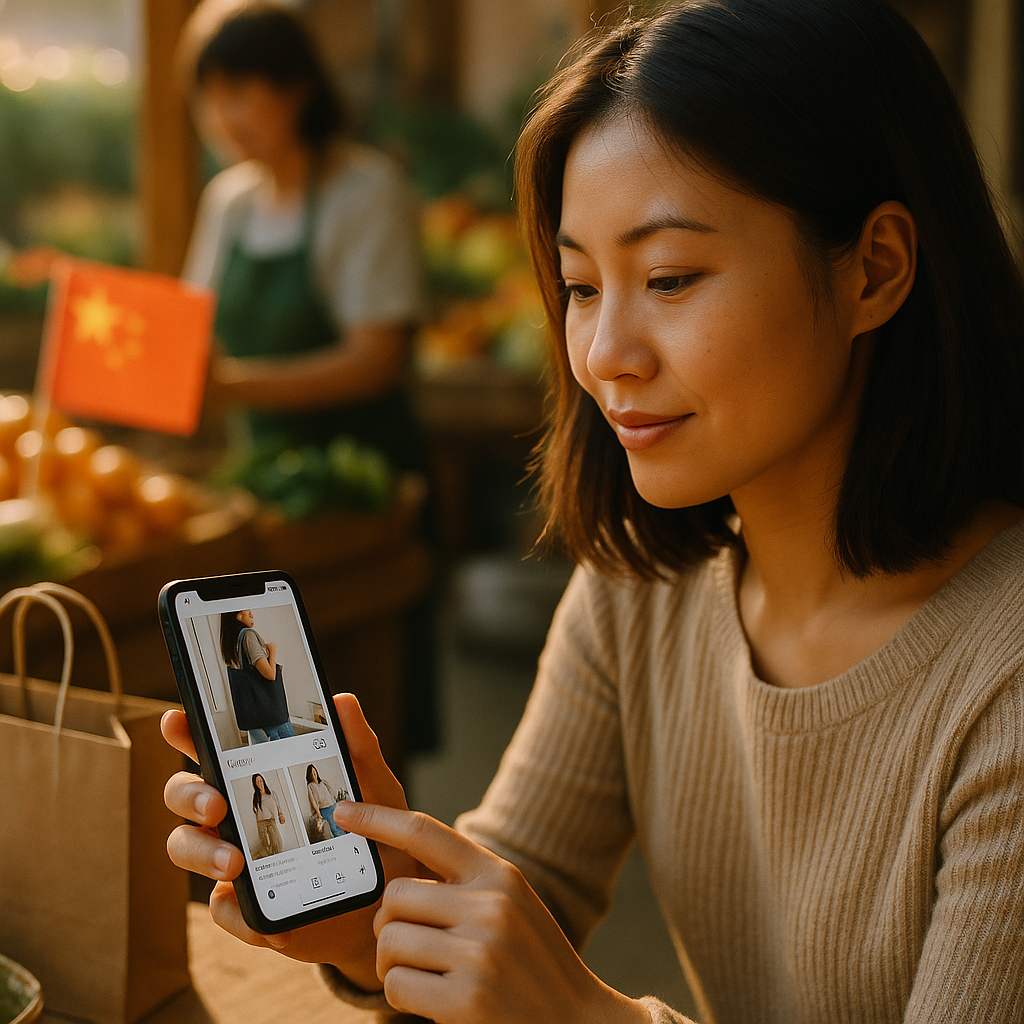
73% of consumers say content from local creators feels more trustworthy than content from national influencers, according to recent Statista consumer trust surveys. Yet most brands still run localized UGC growth programs like a copy-paste exercise: swap the language, keep the creative brief, call it “localization.” WeShop’s market entry model proves that approach leaves money and credibility on the table.
Why Most Localization Strategies Are Just Translation in Disguise
Here’s the uncomfortable truth. A lot of brands think localization means hiring a translator and adjusting currency symbols. That’s not localization, that’s logistics. Real localized UGC growth programs require rebuilding the creator relationship from scratch in each market because trust signals, platform habits, and purchase triggers differ wildly by region.
WeShop, the UK-founded social commerce platform that pays everyday shoppers for authentic product reviews and UGC, built its expansion model around a simple insight: shoppers trust other shoppers who look and shop like them. Not global mega-creators. Not even national influencers. Local, relatable voices with purchase context specific to that market’s retail habits.
That insight reshapes how a brand approaches market entry. Instead of asking “which creators have the biggest following in this country,” the better question becomes “which creators already shop the way our target customer shops, in that specific retail environment.”
The WeShop Approach: Community Before Campaign
WeShop’s model prioritizes building a base of everyday contributors before launching any brand-specific push. Rather than parachuting in with a campaign brief, the platform cultivates a pool of genuine shoppers who already generate content organically, then layers brand partnerships on top.
For brands planning localized UGC growth programs, this sequencing matters more than it sounds. Launching a campaign into a market with no existing creator community is expensive and slow. You’re paying premium rates for cold outreach, fighting low response rates, and often settling for whoever’s available rather than whoever’s right.
Market entry succeeds when the creator community already exists and the brand is simply the first to activate it well, not when the brand tries to build both the community and the campaign simultaneously.
This is where a lot of mid-market brands stumble. They allocate budget for content production but not for community seeding. The fix is treating local creator bench-building as its own line item, separate from campaign execution. If you’re still debating how to structure that spend, building a creator rate card for a new market before you negotiate a single deal saves you from reactive pricing chaos later.
Building the Local Creator Bench
A localized UGC growth program needs three things before it needs a single piece of content: a market-specific creator sourcing strategy, a compensation structure calibrated to local cost of living and platform norms, and a vetting process that screens for authenticity over reach.
- Sourcing: Use regional marketplaces and platform-native discovery tools rather than relying solely on your existing creator CRM, which likely skews toward your home market.
- Compensation: Flat fees that work in the US often overpay or underpay dramatically elsewhere. Rate benchmarks need local recalibration, not currency conversion.
- Vetting: Engagement rate benchmarks vary by region and platform. A 2% engagement rate might be strong in one market and mediocre in another.
Brands scaling across multiple markets at once often lean on AI-assisted matching to handle the volume. If you’re evaluating whether your team and tech stack can actually support that kind of scale, the AI creator matchmaking readiness checklist is a useful gut check before you commit budget to a market you’re not operationally ready to serve.
Compliance Isn’t Optional, and It Isn’t Uniform
This is the part brands underestimate most. Disclosure rules, data privacy expectations, and advertising standards differ by jurisdiction, and ignorance isn’t a defense regulators accept. The FTC’s endorsement guidelines govern US disclosure requirements, but the UK’s ICO enforces separate data protection standards that affect how you collect and store creator and customer information during UGC campaigns.
Running a program across three or four markets simultaneously multiplies your compliance surface area. One disclosure template does not fit all.
Brands that treat compliance as a market-entry checkbox rather than an ongoing workflow tend to get burned when regulators update guidance or when a local legal team flags something after content is already live. Building tiered approval workflows that route content through the right level of legal review, based on market risk and content type, keeps localized programs moving without turning every post into a six-week legal cycle.
Budgeting for Market-by-Market Rollout
Sequential rollout beats simultaneous launch for most mid-size brands. Enter one market, prove the model, reallocate budget based on actual CAC and payback data, then expand. This sounds obvious but gets ignored constantly because leadership wants global launch dates on a single slide.
The budgeting conversation gets easier once you have real numbers from a first market to anchor expectations. Setting realistic CAC payback benchmarks before expansion prevents the common mistake of assuming market two will perform identically to market one. It rarely does. Retail infrastructure, platform penetration, and creator economics all shift the math.
WeShop’s model also reflects a broader shift happening across the creator economy: compensation tied to actual commerce outcomes rather than flat production fees. According to eMarketer research on social commerce growth, performance-linked creator compensation is becoming the dominant structure in markets where shoppable content drives measurable conversion. Localized programs that pay based on verified sales or verified usable content perform better over time than those paying flat rates regardless of output quality.
Who Owns This? Structuring Teams for Multi-Market UGC
Localized growth programs fail organizationally almost as often as they fail strategically. Who approves creator rates in a new market? Who owns the compliance relationship with local legal? Who decides when to scale a market up versus pull back?
Without clear ownership, localized programs drift into committee paralysis. Every decision bounces between global marketing, regional teams, and legal, and nothing moves fast enough to matter. Mapping out creator partnership org charts before you launch market two prevents the structural confusion that kills momentum right when a program is starting to show traction.
A workable structure usually looks like a central creator operations function setting standards and tooling, paired with regional leads who own relationships, pricing nuance, and compliance liaison work. Neither side should operate in isolation. Central teams that never talk to regional leads end up imposing rate cards that don’t reflect local reality. Regional teams without central oversight end up duplicating tools and losing negotiating leverage.
Measuring What Actually Predicts Market Fit
Vanity metrics tell you almost nothing about whether a localized UGC growth program is working. Follower counts, likes, and impressions don’t predict whether the content drove a purchase or whether the creator relationship is worth renewing. According to Sprout Social’s annual index research, brands increasingly rank conversion and retention metrics above reach when evaluating creator program success, a shift that matters even more in unfamiliar markets where reach benchmarks are hard to interpret anyway.
Track these instead: cost per acquisition by market, content reuse rate, creator retention after the first campaign cycle, and time from creator onboarding to first usable asset. These numbers tell you whether the local program is becoming self-sustaining or whether you’re propping it up with constant manual intervention.
FAQs
Frequently Asked Questions
What makes a UGC growth program “localized” rather than just translated?
A localized program rebuilds creator sourcing, compensation benchmarks, and compliance processes around each specific market’s retail habits and regulations, rather than simply translating existing creative and swapping currency.
How does WeShop’s model differ from traditional influencer marketing?
WeShop prioritizes building a community of everyday shoppers who generate authentic content organically, then layers brand partnerships on top, rather than launching campaigns cold with no existing creator base.
Should brands launch in multiple markets simultaneously?
Sequential rollout generally outperforms simultaneous launch for mid-size brands, since it allows teams to validate CAC and payback data in one market before reallocating budget to the next.
What compliance issues come up most often in multi-market UGC programs?
Disclosure requirements and data privacy rules vary by jurisdiction, and brands running programs across borders need region-specific legal review rather than a single global template.
What metrics best predict whether a localized program is working?
Cost per acquisition by market, creator retention after the first campaign cycle, content reuse rate, and time to first usable asset are stronger indicators than reach or engagement alone.
The brands winning with localized UGC growth programs aren’t the ones with the biggest global budgets. They’re the ones who treat each market as its own creator ecosystem, fund the compliance and ops work nobody wants to budget for, and measure acquisition economics before scaling spend. Start with one market, prove the model with real CAC data, then expand.
Top Influencer Marketing Agencies
The leading agencies shaping influencer marketing in 2026
Agencies ranked by campaign performance, client diversity, platform expertise, proven ROI, industry recognition, and client satisfaction. Assessed through verified case studies, reviews, and industry consultations.
Moburst

-
2

The Shelf
Boutique Beauty & Lifestyle Influencer AgencyA data-driven boutique agency specializing exclusively in beauty, wellness, and lifestyle influencer campaigns on Instagram and TikTok. Best for brands already focused on the beauty/personal care space that need curated, aesthetic-driven content.Clients: Pepsi, The Honest Company, Hims, Elf Cosmetics, Pure LeafVisit The Shelf → -
3

Audiencly
Niche Gaming & Esports Influencer AgencyA specialized agency focused exclusively on gaming and esports creators on YouTube, Twitch, and TikTok. Ideal if your campaign is 100% gaming-focused — from game launches to hardware and esports events.Clients: Epic Games, NordVPN, Ubisoft, Wargaming, Tencent GamesVisit Audiencly → -
4

Viral Nation
Global Influencer Marketing & Talent AgencyA dual talent management and marketing agency with proprietary brand safety tools and a global creator network spanning nano-influencers to celebrities across all major platforms.Clients: Meta, Activision Blizzard, Energizer, Aston Martin, WalmartVisit Viral Nation → -
5

The Influencer Marketing Factory
TikTok, Instagram & YouTube CampaignsA full-service agency with strong TikTok expertise, offering end-to-end campaign management from influencer discovery through performance reporting with a focus on platform-native content.Clients: Google, Snapchat, Universal Music, Bumble, YelpVisit TIMF → -
6

NeoReach
Enterprise Analytics & Influencer CampaignsAn enterprise-focused agency combining managed campaigns with a powerful self-service data platform for influencer search, audience analytics, and attribution modeling.Clients: Amazon, Airbnb, Netflix, Honda, The New York TimesVisit NeoReach → -
7

Ubiquitous
Creator-First Marketing PlatformA tech-driven platform combining self-service tools with managed campaign options, emphasizing speed and scalability for brands managing multiple influencer relationships.Clients: Lyft, Disney, Target, American Eagle, NetflixVisit Ubiquitous → -
8

Obviously
Scalable Enterprise Influencer CampaignsA tech-enabled agency built for high-volume campaigns, coordinating hundreds of creators simultaneously with end-to-end logistics, content rights management, and product seeding.Clients: Google, Ulta Beauty, Converse, AmazonVisit Obviously →