


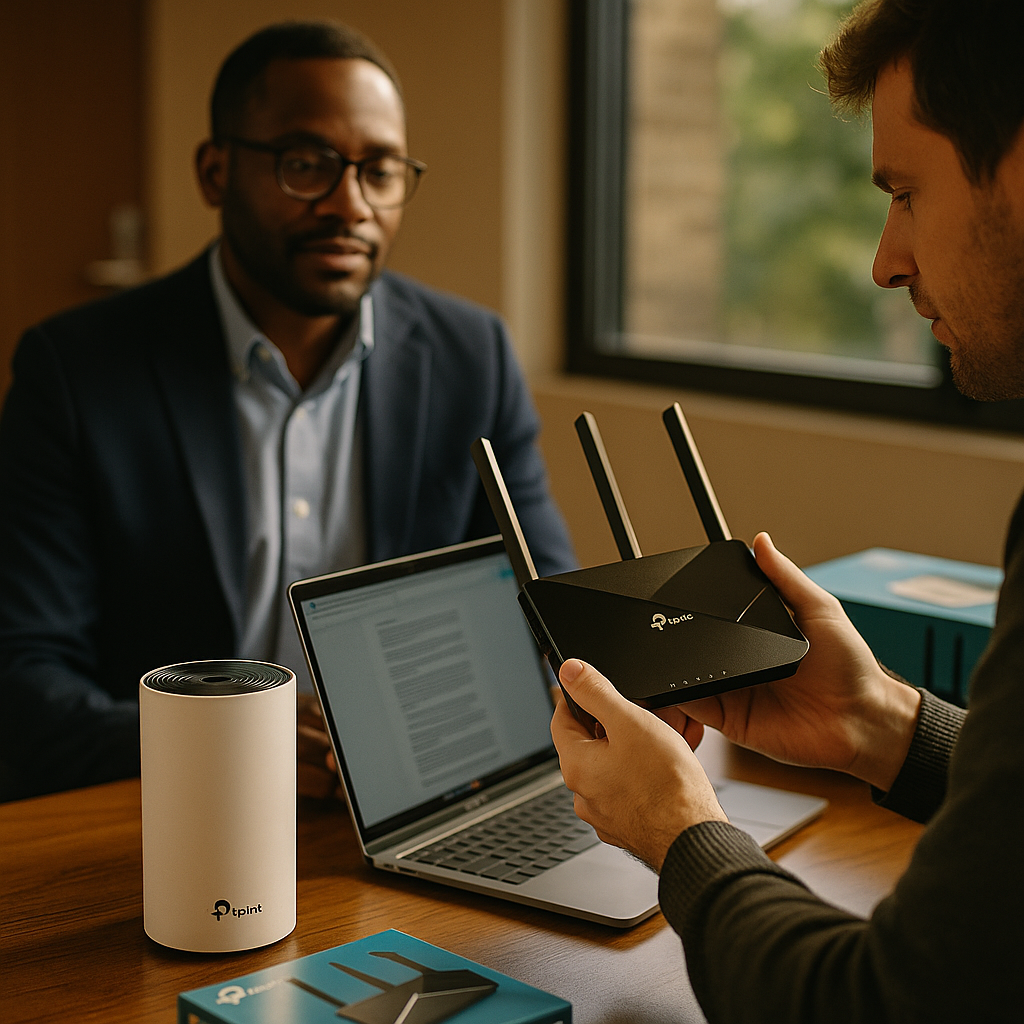
Most brands still treat influencer marketing as a side project bolted onto a social media manager’s already full plate. TP-Link just did the opposite: it created a dedicated influencer specialist role with its own budget authority, its own KPIs, and a direct line to commerce data. That single hiring decision says more about where performance marketing is headed than another trend report ever could.
Why TP-Link Built This Role Now
TP-Link isn’t a beauty brand chasing TikTok virality for vanity metrics. It’s a networking hardware company selling routers, mesh systems, and smart home devices, categories where purchase decisions hinge on specs, reviews, and trust. The company already proved it could bypass retail markups by building its own creator-driven sales channel, a move detailed in its earlier creator channel strategy. The new specialist role is the next logical step: someone whose entire job is to scale that channel without letting quality slip.
Here’s the uncomfortable truth most CMOs won’t say out loud: generalist social hires can’t run a creator program that touches procurement, legal, and revenue attribution at the same time. TP-Link apparently figured that out before the budget got wasted on mismatched campaigns.
A dedicated influencer specialist isn’t a headcount luxury anymore. It’s the difference between a creator program that scales and one that plateaus at “nice case study, no repeat budget.”
What’s Actually in the Job Description
Strip away the corporate language and TP-Link’s posting reads like a hybrid role: part talent scout, part media buyer, part data analyst. Responsibilities reportedly include sourcing and vetting creators across YouTube and TikTok, negotiating usage rights for whitelisting, and reporting directly against sales lift rather than impressions.
That last part matters most. According to eMarketer, influencer spend continues climbing even as brands demand tighter attribution, which means the specialist role has to justify its existence in revenue terms, not follower counts.
- Creator sourcing and vetting across hardware, tech review, and smart home niches
- Contract negotiation covering usage rights, exclusivity windows, and FTC-compliant disclosure language
- Performance tracking tied to promo codes, affiliate links, and direct sales channel conversions
- Coordination with product teams on early access seeding for launches
- Budget forecasting and quarterly ROI reporting to leadership
Notice what’s missing: there’s no mention of “growing brand awareness” as a standalone goal. Everything ties back to a number someone in finance can verify.
The Skills Stack Nobody Puts on a Resume Template
Job boards are full of “influencer marketing manager” postings that just want someone who can DM creators politely. TP-Link’s role demands more. The ideal candidate needs fluency in three areas that rarely coexist in one person: creator relationship management, hard-nosed negotiation, and enough data literacy to read a sales attribution dashboard without hand-holding.
That combination is rare, which is exactly why brands are willing to pay for it. A specialist who understands both TikTok Shop mechanics and basic contract law is worth more than two junior hires who each know half the job. If you’re building a similar role, look at how Coty rebuilt its influencer spend around sales attribution: the pattern is the same. Hire for the intersection, not the average.
Negotiation skill deserves special mention. Creators increasingly expect equity-style or long-term partnership arrangements rather than one-off checks, a shift documented in how Alo Yoga pays creators like partners. A specialist who can structure those deals without blowing the budget is doing risk mitigation as much as marketing.
Where This Role Sits in the Org Chart Matters More Than the Title
Reporting lines quietly determine whether an influencer specialist succeeds or gets sidelined. If the role reports into a social media team, it inherits social media’s shallow metrics and short attention span. If it reports into performance marketing or ecommerce, it inherits budget scrutiny and access to conversion data, which is exactly what a creator program needs to prove itself.
TP-Link’s structure reportedly places the specialist closer to commerce and product marketing than to brand social. That’s a deliberate signal. It tells the market this hire exists to move units, not just engagement rates.
Compare that to brands still running influencer work out of a PR function. Molson Coors saw engagement quadruple after centralizing its creator operations under one team with clear ownership. The lesson repeats across categories: fragmented ownership produces fragmented results. Centralized, commerce-adjacent ownership produces numbers leadership actually trusts.
The ROI Case: Why Pay for a Specialist Instead of an Agency Retainer?
Agencies are useful for scale and execution, but they rarely build institutional knowledge about your specific product category, your creator relationships, or your compliance history. An in-house specialist accumulates that knowledge and compounds it quarter over quarter.
Run the math. A mid-market agency retainer for influencer management often runs anywhere from $8,000 to $25,000 a month depending on scope, and that’s before media spend. A single senior in-house hire, fully loaded, frequently lands in a comparable or lower range while giving the brand direct access to creator relationships and first-party data. HubSpot’s marketing benchmarks consistently show that in-house teams close attribution gaps faster simply because they aren’t waiting on a third party to pull reports.
There’s also a speed advantage. When a product launch needs seeding within 48 hours, an in-house specialist with existing creator relationships moves faster than an agency waiting on a new brief. Best Buy’s approach to scaling retail media through an AI-assisted content pipeline shows how speed and internal ownership go hand in hand once the infrastructure exists.
Where This Kind of Hire Goes Wrong
Not every brand should copy TP-Link’s playbook blindly. A specialist role without proper budget authority becomes a bottleneck: creators get approved slowly, deals fall through, and the whole point of moving fast in-house evaporates.
Compliance risk is the other trap. A specialist juggling dozens of creator contracts needs airtight disclosure processes. The FTC’s endorsement guidelines haven’t gotten any looser, and a single mislabeled sponsored post can trigger regulatory attention that costs far more than the campaign it came from. Brands hiring for this role should build FTC compliance training into onboarding, not treat it as an afterthought handled by legal once a year.
There’s a staffing risk too. Hiring one specialist and expecting them to single-handedly run sourcing, negotiation, content review, and reporting for a growing program is a fast route to burnout and missed deadlines. TP-Link’s model works because the role has support structures around it, not because one person is doing everything alone.
What This Signals for Hiring Trends Across the Industry
TP-Link isn’t alone. More B2B and consumer electronics brands are quietly building dedicated creator roles instead of outsourcing everything. QYOU Media’s move to cut vertical video costs through an India-based production bet reflects a similar instinct: bring the expensive, specialized work closer to home where it can be controlled and optimized directly.
Job listing data backs this up. Searches for “influencer marketing specialist” and “creator partnerships manager” have grown steadily on major job boards over the past few quarters, according to trend tracking from Sprout Social’s industry reporting. The role is professionalizing fast, moving from “the intern who’s good at Instagram” to a line item with real budget accountability.
For hiring managers building the case internally, the pitch isn’t complicated: a dedicated specialist reduces wasted spend on mismatched creators, shortens the time from brief to live content, and gives leadership a single accountable owner for creator ROI instead of a shared responsibility nobody actually owns.
Build the Role Before You Need It
Waiting until influencer spend hits seven figures to hire a dedicated specialist means you’ve already absorbed years of inefficient, unaccountable spending. TP-Link’s blueprint suggests the smarter move is pairing the hire with commerce access and clear KPIs from day one, not backfilling structure after the budget gets big enough to notice.
Frequently Asked Questions
What does an influencer specialist role actually do differently from a social media manager?
An influencer specialist focuses on creator sourcing, contract negotiation, and performance attribution tied to sales or conversions, while a social media manager typically handles broader content calendars and community engagement without dedicated budget authority over creator deals.
Why did TP-Link create a dedicated influencer specialist position instead of using an agency?
In-house specialists build lasting creator relationships and category-specific knowledge over time, give the brand direct access to first-party attribution data, and can move faster on time-sensitive product launches compared to agency retainers that require new briefs for each campaign.
How much should a company budget for an in-house influencer specialist?
Fully loaded compensation for a senior in-house specialist often falls in a similar or lower range than a mid-market agency retainer, though exact figures depend on company size, category, and whether the role includes team management responsibilities.
What skills should companies prioritize when hiring for this role?
Look for candidates who combine creator relationship management, contract negotiation experience, and enough data literacy to interpret sales attribution reports, since the strongest hires operate at the intersection of these skills rather than excelling at only one.
What compliance risks come with scaling an influencer program under one specialist?
The main risks involve FTC disclosure violations from mislabeled sponsored content and bottlenecks if the specialist lacks proper budget authority or support staff, both of which require clear onboarding processes and adequate team resourcing to avoid.
Top Influencer Marketing Agencies
The leading agencies shaping influencer marketing in 2026
Agencies ranked by campaign performance, client diversity, platform expertise, proven ROI, industry recognition, and client satisfaction. Assessed through verified case studies, reviews, and industry consultations.
Moburst

-
2

The Shelf
Boutique Beauty & Lifestyle Influencer AgencyA data-driven boutique agency specializing exclusively in beauty, wellness, and lifestyle influencer campaigns on Instagram and TikTok. Best for brands already focused on the beauty/personal care space that need curated, aesthetic-driven content.Clients: Pepsi, The Honest Company, Hims, Elf Cosmetics, Pure LeafVisit The Shelf → -
3

Audiencly
Niche Gaming & Esports Influencer AgencyA specialized agency focused exclusively on gaming and esports creators on YouTube, Twitch, and TikTok. Ideal if your campaign is 100% gaming-focused — from game launches to hardware and esports events.Clients: Epic Games, NordVPN, Ubisoft, Wargaming, Tencent GamesVisit Audiencly → -
4

Viral Nation
Global Influencer Marketing & Talent AgencyA dual talent management and marketing agency with proprietary brand safety tools and a global creator network spanning nano-influencers to celebrities across all major platforms.Clients: Meta, Activision Blizzard, Energizer, Aston Martin, WalmartVisit Viral Nation → -
5

The Influencer Marketing Factory
TikTok, Instagram & YouTube CampaignsA full-service agency with strong TikTok expertise, offering end-to-end campaign management from influencer discovery through performance reporting with a focus on platform-native content.Clients: Google, Snapchat, Universal Music, Bumble, YelpVisit TIMF → -
6

NeoReach
Enterprise Analytics & Influencer CampaignsAn enterprise-focused agency combining managed campaigns with a powerful self-service data platform for influencer search, audience analytics, and attribution modeling.Clients: Amazon, Airbnb, Netflix, Honda, The New York TimesVisit NeoReach → -
7

Ubiquitous
Creator-First Marketing PlatformA tech-driven platform combining self-service tools with managed campaign options, emphasizing speed and scalability for brands managing multiple influencer relationships.Clients: Lyft, Disney, Target, American Eagle, NetflixVisit Ubiquitous → -
8

Obviously
Scalable Enterprise Influencer CampaignsA tech-enabled agency built for high-volume campaigns, coordinating hundreds of creators simultaneously with end-to-end logistics, content rights management, and product seeding.Clients: Google, Ulta Beauty, Converse, AmazonVisit Obviously →