


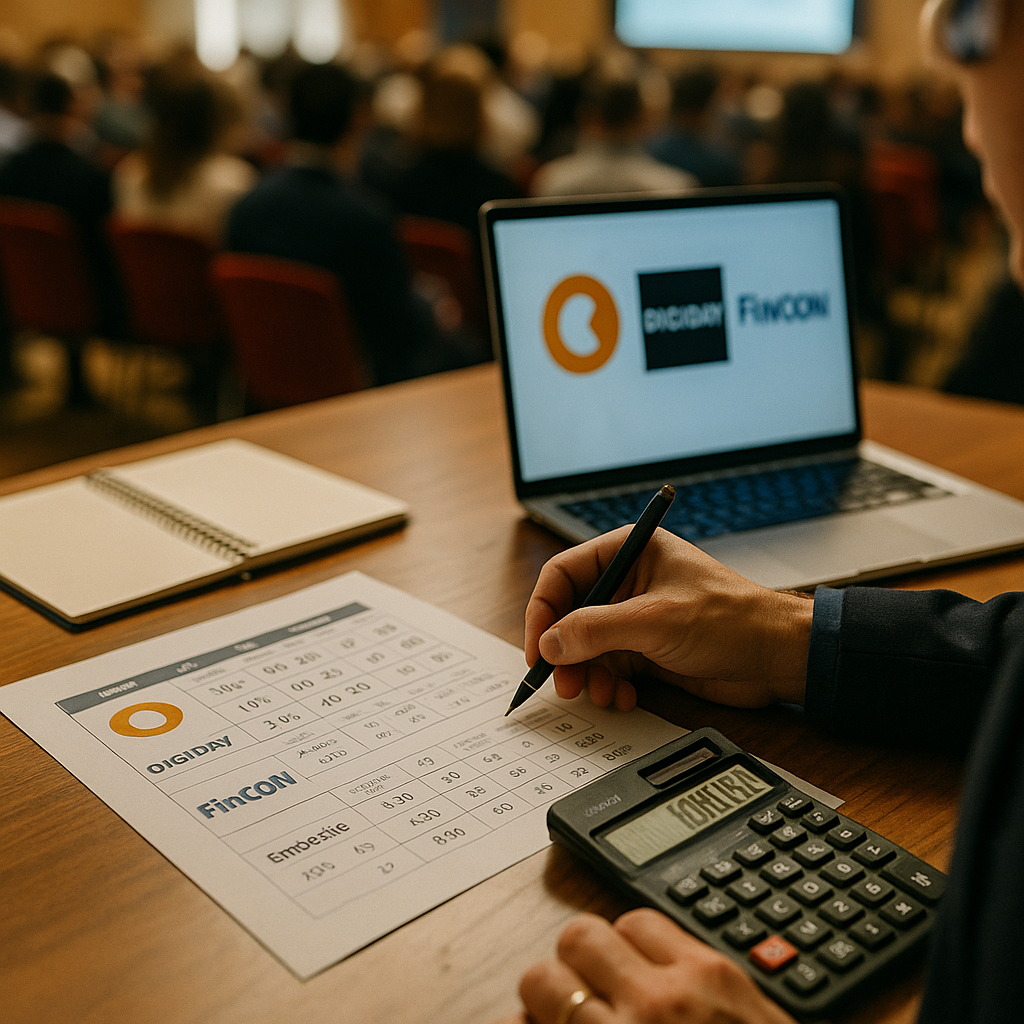
Marketing teams will spend an average of $8,000 to $15,000 per person sending staff to industry conferences this year, according to eMarketer event spend estimates, yet most brands still pick conferences based on who went last time rather than what closed deals. Conference ROI planning shouldn’t be a gut call. It should be a line item you defend the same way you defend a media budget: with attribution, not vibes.
If your team is staring at a calendar with IAB CreatorFronts, Digiday’s event circuit, and FinCon all competing for the same travel budget, you need a framework, not a coin flip.
Conferences Are Media Spend, Not Team Building
Here’s the uncomfortable truth: most brands still book conference travel out of the “professional development” line rather than the marketing budget, which means nobody ever audits it against pipeline. That’s backwards. A CreatorFronts pass, hotel, and two days of staff time can easily run $6,000 per attendee once you factor in opportunity cost. Compare that to a mid-tier creator retainer and suddenly the conference doesn’t look cheap anymore.
Treat every conference dollar the way you’d treat a paid media dollar: define the outcome before you buy the ticket. Is this event for deal sourcing? Category intelligence? Talent recruitment? Each answer points to a different event, and sometimes the answer is none of the above.
If you can’t name the deal, hire, or insight a conference is supposed to produce before you book travel, you’re funding a networking vacation with marketing dollars.
IAB CreatorFronts: Pitch to Buy or Pitch to Learn?
CreatorFronts has evolved fast since its NewFronts-style debut, and it now functions less like a trade show and more like an upfront negotiation venue. Platforms show up with slide decks full of reach numbers and AI-matching tools, and the room is thick with agency buyers trying to lock preferred rates before Q3 budgets firm up.
The ROI case for CreatorFronts is strongest if you’re actually in market to commit six or seven figures to a platform partnership this cycle. If you’re there to “see what’s new,” you’re paying conference prices for content you could get from a platform’s own sales deck over a video call. The value is negotiation leverage in the room, not information.
Before you send a senior buyer, run your own first party data audit so you know which platform integrations actually matter to your stack. Walking in without that homework means you’re evaluating vendors on vibes, which is exactly what CreatorFronts is designed to sell you.
Who Should Actually Go
- Media buyers with active RFPs for platform-level creator deals
- Category leads deciding on exclusive content partnerships for the next fiscal year
- Anyone evaluating AI matchmaking or creator discovery tools before a vendor contract renewal
If none of those describe your role, send someone else, or skip it entirely and read the recap coverage instead.
Digiday: The Networking Premium You’re Actually Paying For
Digiday’s conference portfolio (Digiday Media Buying Summit, Digiday Programmatic Marketing Summit, and the flagship Digiday Summit series) sells a different product than CreatorFronts: access to peer marketers, not platform pitches. The panels are fine, but nobody pays $3,000 to $4,000 for a badge because of the panels.
They pay for the hallway conversations. Digiday events skew toward brand-side and agency-side practitioners comparing notes on what’s actually working, which makes them useful for competitive intelligence you can’t get from a case study PDF. The tradeoff is that this value is diffuse and hard to attribute. Nobody signs a contract in the hallway; they just get smarter, and three months later that intelligence shows up in a smarter RFP or a renegotiated affiliate commission structure.
If your team is early in its creator program maturity, Digiday is a reasonable place to benchmark against peers without committing a platform budget yet. If you’re already running a mature, revenue-attributed program, the panels will feel introductory and you’re better served sending a junior strategist for the network building rather than a director for the content.
FinCon: Small Room, High Signal, Wrong Fit for Most
FinCon is the outlier on this list, and that’s exactly why it’s worth a separate conversation. It’s not a platform showcase or a media buyer mixer. It’s a vertical-specific gathering of personal finance creators, fintech brands, and affiliate marketers, and the room is small enough that you can actually build real relationships instead of collecting business cards.
For brands in fintech, insurance, credit, investing apps, or B2B financial services, FinCon delivers a kind of ROI the bigger conferences can’t match: direct access to the creators who actually move your category’s audience. You’re not competing with beauty, gaming, and CPG brands for attention. You’re one of a manageable number of relevant advertisers in a room full of relevant creators.
For everyone outside financial services, FinCon is close to a wasted trip. The niche depth that makes it valuable for a fintech brand makes it irrelevant for a beauty or travel brand. Don’t send your team just because someone heard it’s “a great conference.” Vertical fit matters more than event prestige here.
Niche conferences reward niche brands. A general-market CPG company at FinCon is paying full price for an audience that isn’t its own.
Building a Scoring Model Instead of Guessing
The cleanest way to prioritize across CreatorFronts, Digiday, and FinCon (or any other event on your shortlist) is to score each one against the same four criteria before you book anything. This turns a subjective debate into a defensible budget decision your CFO can actually follow.
- Deal readiness: Is there an active contract, RFP, or platform decision this event could accelerate?
- Audience match: Does the attendee list overlap with your actual buyer or creator target, or is it adjacent at best?
- Attribution path: Can you trace a specific outcome (signed deal, sourced hire, closed partnership) back to this event within a quarter?
- Opportunity cost: What’s the next best use of this budget, whether that’s a creator tier allocation shift or additional paid seeding?
Score each event one to five on each criterion. Anything scoring under twelve out of twenty gets cut, no matter how well-attended it is. This isn’t about being anti-conference. It’s about refusing to fund attendance out of habit when the same dollars could fund a measurable test.
Run this scoring exercise alongside your existing creator CAC modeling so conference spend gets held to the same standard as your paid creator budget. If you wouldn’t approve a $6,000 creator deal without a clear outcome attached, don’t approve a $6,000 conference trip either.
When to Skip All Three
Sometimes the right answer to “which conference should we prioritize” is “none of them this cycle.” If your creator program is still pre-launch, or you’re mid-restructure between agency and in-house models, conference travel is a distraction from the operational work that actually needs doing. Building the in-house creator studio foundation matters more than another badge scan.
It’s also worth remembering that most conference content gets recapped extensively by trade press, LinkedIn threads, and platform blogs within days. Sending nobody and reading three good recaps costs a fraction of a plane ticket. That’s not a knock on the events. It’s a reminder that FOMO is not a budget justification, and HubSpot’s own research on marketing event ROI consistently shows attribution gaps are the biggest complaint teams have after the fact.
If you do decide to reallocate conference dollars into working media instead, the budget reallocation playbook is a reasonable place to start mapping where that money does more.
What Good Post-Event Attribution Actually Looks Like
Whichever events make the cut, set the measurement bar before you leave the office, not after you’re back. Track three things for every attendee: contacts collected who turned into actual meetings, any pricing or rate intelligence that changed a negotiation, and hires sourced or accelerated. If none of those move within sixty days, that event drops a tier next cycle regardless of how good the panels were.
Platforms like LinkedIn make this tracking easier than it used to be. Tag every new contact from an event with a source field in your CRM and revisit it quarterly. Statista’s event marketing data shows most B2B teams still fail to do this basic tagging, which is exactly why conference budgets survive year after year without scrutiny.
FAQs
How much should a brand budget for creator marketing conferences annually?
Most mid-size marketing teams should cap conference spend at 3 to 5 percent of total creator program budget, and only after core program costs like creator fees, tooling, and staffing are funded. Anything above that starts crowding out working media dollars.
Is IAB CreatorFronts worth attending if we’re not ready to sign a platform deal?
Generally no. CreatorFronts is built around active negotiation and platform showcases, so the value is weakest for teams who are still in the research phase. Send a buyer only when there’s a live RFP or renewal decision on the table.
What makes FinCon different from general marketing conferences?
FinCon is a vertical-specific event for personal finance and fintech creators and brands, which makes it high-value for companies in that category and largely irrelevant outside of it. Niche depth is the whole point, so audience fit matters more than event size.
How do we measure conference ROI after the event ends?
Track three concrete outcomes: meetings converted from new contacts, pricing or negotiation intelligence gained, and any hires or partnerships sourced. Tag these in your CRM by event source and review the data within sixty to ninety days.
Should smaller brands skip conferences entirely?
Not necessarily, but smaller teams should be more selective. A brand with a lean creator budget is often better served sending one senior person to the single most relevant event rather than spreading thin across CreatorFronts, Digiday, and FinCon in the same cycle.
FAQs
The fastest way to fix conference budget waste is to require a one-line ROI hypothesis before anyone books travel: name the deal, hire, or insight it should produce. If nobody can write that sentence, the ticket doesn’t get bought.
Top Influencer Marketing Agencies
The leading agencies shaping influencer marketing in 2026
Agencies ranked by campaign performance, client diversity, platform expertise, proven ROI, industry recognition, and client satisfaction. Assessed through verified case studies, reviews, and industry consultations.
Moburst

-
2

The Shelf
Boutique Beauty & Lifestyle Influencer AgencyA data-driven boutique agency specializing exclusively in beauty, wellness, and lifestyle influencer campaigns on Instagram and TikTok. Best for brands already focused on the beauty/personal care space that need curated, aesthetic-driven content.Clients: Pepsi, The Honest Company, Hims, Elf Cosmetics, Pure LeafVisit The Shelf → -
3

Audiencly
Niche Gaming & Esports Influencer AgencyA specialized agency focused exclusively on gaming and esports creators on YouTube, Twitch, and TikTok. Ideal if your campaign is 100% gaming-focused — from game launches to hardware and esports events.Clients: Epic Games, NordVPN, Ubisoft, Wargaming, Tencent GamesVisit Audiencly → -
4

Viral Nation
Global Influencer Marketing & Talent AgencyA dual talent management and marketing agency with proprietary brand safety tools and a global creator network spanning nano-influencers to celebrities across all major platforms.Clients: Meta, Activision Blizzard, Energizer, Aston Martin, WalmartVisit Viral Nation → -
5

The Influencer Marketing Factory
TikTok, Instagram & YouTube CampaignsA full-service agency with strong TikTok expertise, offering end-to-end campaign management from influencer discovery through performance reporting with a focus on platform-native content.Clients: Google, Snapchat, Universal Music, Bumble, YelpVisit TIMF → -
6

NeoReach
Enterprise Analytics & Influencer CampaignsAn enterprise-focused agency combining managed campaigns with a powerful self-service data platform for influencer search, audience analytics, and attribution modeling.Clients: Amazon, Airbnb, Netflix, Honda, The New York TimesVisit NeoReach → -
7

Ubiquitous
Creator-First Marketing PlatformA tech-driven platform combining self-service tools with managed campaign options, emphasizing speed and scalability for brands managing multiple influencer relationships.Clients: Lyft, Disney, Target, American Eagle, NetflixVisit Ubiquitous → -
8

Obviously
Scalable Enterprise Influencer CampaignsA tech-enabled agency built for high-volume campaigns, coordinating hundreds of creators simultaneously with end-to-end logistics, content rights management, and product seeding.Clients: Google, Ulta Beauty, Converse, AmazonVisit Obviously →