


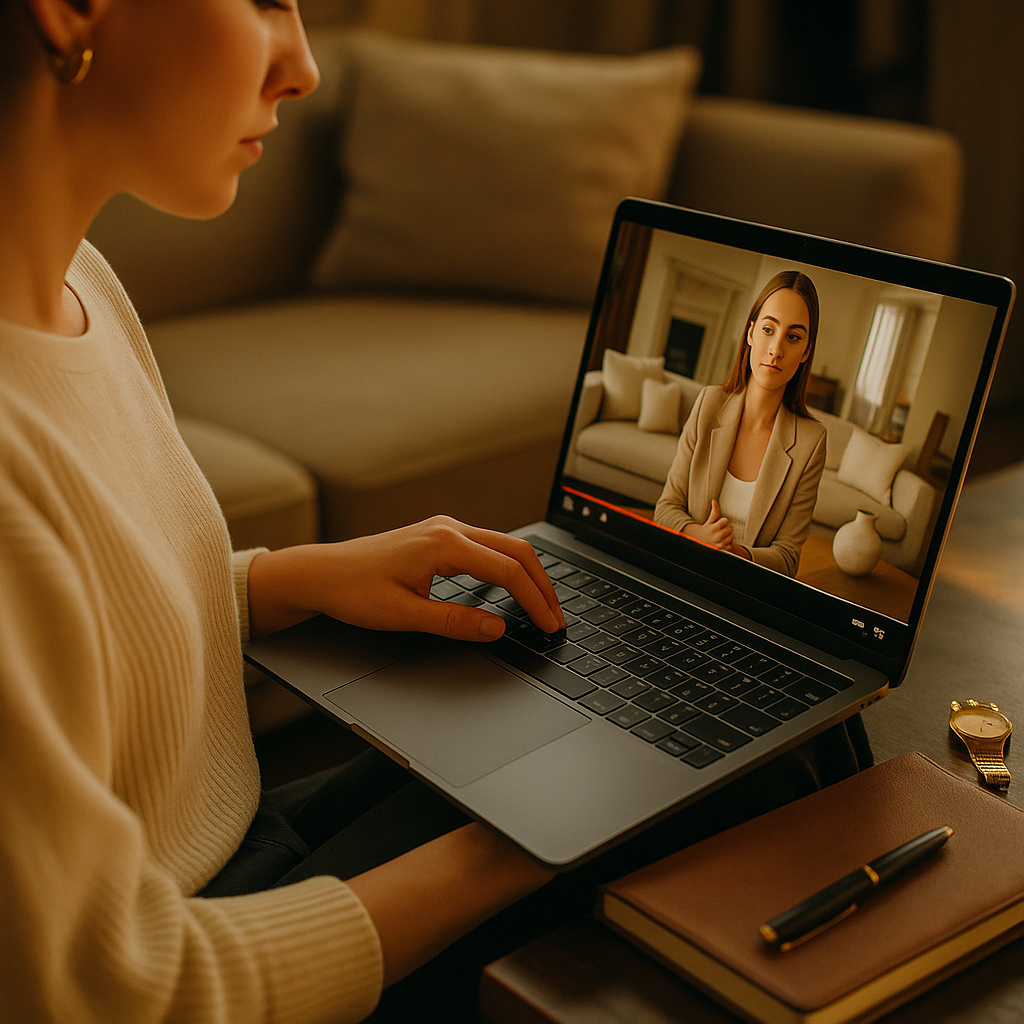
Searches for “quiet luxury” have outpaced “logomania” on Google Trends for six straight quarters, and the brands cashing in aren’t the ones shouting loudest. They’re the ones saying almost nothing at all. Quiet luxury vlogs have become the preferred format for premium brands trying to reach a buyer who distrusts hype, scrolls past hard sells, and spends real money on things that look effortless. The catch? Scripting “effortless” is some of the hardest creative work in the influencer playbook.
What Quiet Luxury Actually Demands From a Brief
Quiet luxury content reads as unscripted. It is not. Every pause, every lingering shot of a cashmere sleeve, every “oh, this old thing” moment is engineered to look incidental while doing deliberate persuasive work. That tension, calculated spontaneity, is the entire craft.
For brand marketers, this means the brief has to be more precise than a flashy unboxing script, not less. You’re not giving a creator room to improvise jokes or chase virality. You’re giving them a mood, a pacing rhythm, and a short list of things to never say out loud.
The goal of a quiet luxury vlog is to make the viewer feel like they stumbled onto wealth, not that they were sold it.
The Core Rules of the Format
- No price mentions unless the creator is explicitly doing a price breakdown as a separate, clearly framed piece of content.
- No direct calls to action inside the vlog itself. The product sells through proximity, not pitch.
- Minimal text overlays. If the content needs captions to explain itself, it has already failed the “quiet” test.
- Long, unhurried shots over fast cuts. Luxury doesn’t rush.
Scripting Restraint: Why Less Dialogue Means More Prep
Here’s the paradox every account manager eventually hits: a script with almost no spoken lines takes longer to approve than a script packed with hooks and CTAs. Why? Because there’s nowhere to hide a weak concept. A high-energy unboxing video can survive an awkward line delivery. A quiet luxury vlog cannot survive a single off-brand prop, a cluttered background, or a creator who seems to be performing calm rather than living it.
The script, in this format, is really a shot list with emotional beats attached. A typical structure looks like this:
- Cold open, no greeting. The creator is mid-morning routine already. No “hey guys” energy allowed.
- One object of focus. A watch being fastened, a coffee being poured into unbranded ceramic, a coat being folded. Single subject, held shot.
- Ambient audio only. No voiceover for the first 8 to 12 seconds. Let the room tone do the work.
- A single understated line. Delivered almost as an aside. “Been wearing this one on repeat lately.” That’s it. No adjectives stacked on adjectives.
- Soft exit. The scene ends, not the video. No wrap-up, no sign-off, no “link in bio” tacked on screen.
This approach shares DNA with the reali tea storytelling trend, where the perception of authenticity is engineered through controlled honesty rather than genuine improvisation. The difference is that quiet luxury trades warmth for restraint. It’s authenticity’s colder, more expensive cousin.
Casting Matters More Than the Script
You can hand a flawless script to the wrong creator and watch the entire concept collapse. Quiet luxury content lives or dies on whether the audience believes this person’s life actually looks like this when the camera is off.
That’s a casting problem, not a copywriting problem. Brands should look for creators whose existing content already skews toward slower pacing, muted color grading, and lower posting frequency. A creator who posts twelve times a day with high-saturation thumbnails is going to struggle to convincingly slow down for one branded video, and audiences notice the whiplash immediately.
Micro and mid-tier creators with tight, consistent aesthetics often outperform bigger names here, similar to the logic behind nano creator ensemble casts: smaller audiences, but far higher trust density per viewer. For quiet luxury specifically, that trust density is the entire ROI mechanism. You’re not buying reach. You’re renting credibility.
Production Notes That Signal Wealth Without Shouting It
Quiet luxury has its own visual grammar, and brand teams need to brief it the way they’d brief a brand style guide, not a content calendar.
- Natural light only. Ring lights and softboxes read as “content creation,” which breaks the illusion instantly.
- Texture over color. Linen, wool, brushed metal, raw wood. The camera should linger on how things feel, not how they’re branded.
- Negative space. Empty rooms, uncluttered counters, a single object on a table. Minimalism reads as money; clutter reads as trying too hard.
- Sound design over music. Footsteps, a door closing, water running. Many of these vlogs work best with sound optimized for autoplay feeds running silent, where ambient visuals need to carry the entire emotional load.
One mistake brands keep making: treating this like a faceless creator content cost-saving play. It isn’t. Quiet luxury still needs a face, a name, a life the audience aspires to. What it strips away is noise, not identity.
Where Brands Get It Wrong
The most common failure mode is overcorrecting. A brand manager reads “quiet luxury” and asks for zero branding, zero mentions, zero product visibility, and then wonders why the video didn’t move sales. Subtlety is not the same as absence.
The product still needs to be the clear visual anchor of at least one shot. The creator still needs to say the brand name once, even if it’s delivered flat and unceremonious. Full brand silence isn’t quiet luxury, it’s just a lifestyle video with nothing to sell.
Quiet luxury content whispers the brand name once and trusts the viewer to lean in. It never whispers so quietly the message disappears entirely.
Legal and compliance teams should also weigh in early. Even understated endorsements still require disclosure under FTC guidelines, and a pause-heavy, caption-light video actually makes disclosure placement trickier, not easier. Build the #ad or #sponsored tag into the shot composition from the start rather than bolting it on in post.
Measuring ROI When the Format Is Built to Underperform on Vanity Metrics
This is the conversation every performance marketer eventually has with a creative director: quiet luxury vlogs often post lower raw engagement rates than louder formats. Fewer comments, fewer shares, sometimes even lower watch-through on the first few seconds because there’s no aggressive hook.
That’s expected, and it’s not a failure signal on its own. According to eMarketer, premium and luxury category campaigns consistently show stronger correlation between brand lift surveys and sales than between likes and sales. The metrics that matter here are save rate, repeat views, click-through on bio links placed without a hard CTA, and branded search lift in the weeks following a campaign wave.
Track these instead of chasing comment volume:
- Save-to-view ratio (a strong proxy for aspirational intent)
- Branded search volume lift, measured through Statista-style trend benchmarking or your own analytics suite
- Audience quality of profile visits post-view (using platform tools via Meta Business Suite or TikTok Ads Manager)
- Repeat creator collaboration requests, which signal the audience wants more, not less
This measurement mindset borrows heavily from emotional ROI briefs, where the payoff shows up downstream in CPA and brand equity rather than in the immediate engagement panel. If your dashboard only tracks likes, you’ll kill a working campaign before it has time to prove itself.
A Practical Scripting Checklist for Brand Teams
Before greenlighting a quiet luxury vlog brief, run it against this list:
- Does the script include at least one unhurried, single-subject shot longer than five seconds?
- Is there exactly one brand mention, delivered without enthusiasm-driven language?
- Does the creator’s existing content library support this pacing, or are you asking them to fake it?
- Is the disclosure visible but unobtrusive, placed before the editing team locks the final cut?
- Are you measuring save rate and search lift instead of comments and shares?
If you answered no to more than one of these, the brief needs another pass before it goes to production.
Quiet luxury vlogs reward brands willing to trust restraint over reach. Start with one creator, one object, one unhurried scene, and measure save rate before you measure anything else.
Frequently Asked Questions
What makes a vlog “quiet luxury” instead of just a regular lifestyle video?
Quiet luxury vlogs deliberately strip out hard sells, loud branding, and fast editing in favor of slow pacing, natural light, and a single understated product mention. The restraint itself signals wealth and taste, rather than the product’s price tag doing the talking.
Do quiet luxury vlogs work for mass market or budget brands?
The format works best for premium and aspirational brands where perceived exclusivity drives purchase decisions. Mass market brands usually get better results from louder, more direct formats since the audience is shopping on price and clarity, not mystique.
How do you measure success if engagement rates are naturally lower?
Track save-to-view ratio, branded search lift, and repeat profile visits instead of comments and shares. These formats drive brand equity and intent signals that show up downstream, often weeks after the content posts.
What’s the biggest mistake brands make when briefing this format?
Overcorrecting into total brand silence. Removing every mention of the product name or brand kills the commercial purpose of the video. Quiet luxury should whisper the brand once, not erase it entirely.
Does FTC disclosure still apply to understated, low key content?
Yes. Disclosure requirements apply regardless of tone or pacing. Build the sponsorship tag into the shot composition early so it doesn’t disrupt the aesthetic when added in post production.
Top Influencer Marketing Agencies
The leading agencies shaping influencer marketing in 2026
Agencies ranked by campaign performance, client diversity, platform expertise, proven ROI, industry recognition, and client satisfaction. Assessed through verified case studies, reviews, and industry consultations.
Moburst

-
2

The Shelf
Boutique Beauty & Lifestyle Influencer AgencyA data-driven boutique agency specializing exclusively in beauty, wellness, and lifestyle influencer campaigns on Instagram and TikTok. Best for brands already focused on the beauty/personal care space that need curated, aesthetic-driven content.Clients: Pepsi, The Honest Company, Hims, Elf Cosmetics, Pure LeafVisit The Shelf → -
3

Audiencly
Niche Gaming & Esports Influencer AgencyA specialized agency focused exclusively on gaming and esports creators on YouTube, Twitch, and TikTok. Ideal if your campaign is 100% gaming-focused — from game launches to hardware and esports events.Clients: Epic Games, NordVPN, Ubisoft, Wargaming, Tencent GamesVisit Audiencly → -
4

Viral Nation
Global Influencer Marketing & Talent AgencyA dual talent management and marketing agency with proprietary brand safety tools and a global creator network spanning nano-influencers to celebrities across all major platforms.Clients: Meta, Activision Blizzard, Energizer, Aston Martin, WalmartVisit Viral Nation → -
5

The Influencer Marketing Factory
TikTok, Instagram & YouTube CampaignsA full-service agency with strong TikTok expertise, offering end-to-end campaign management from influencer discovery through performance reporting with a focus on platform-native content.Clients: Google, Snapchat, Universal Music, Bumble, YelpVisit TIMF → -
6

NeoReach
Enterprise Analytics & Influencer CampaignsAn enterprise-focused agency combining managed campaigns with a powerful self-service data platform for influencer search, audience analytics, and attribution modeling.Clients: Amazon, Airbnb, Netflix, Honda, The New York TimesVisit NeoReach → -
7

Ubiquitous
Creator-First Marketing PlatformA tech-driven platform combining self-service tools with managed campaign options, emphasizing speed and scalability for brands managing multiple influencer relationships.Clients: Lyft, Disney, Target, American Eagle, NetflixVisit Ubiquitous → -
8

Obviously
Scalable Enterprise Influencer CampaignsA tech-enabled agency built for high-volume campaigns, coordinating hundreds of creators simultaneously with end-to-end logistics, content rights management, and product seeding.Clients: Google, Ulta Beauty, Converse, AmazonVisit Obviously →