


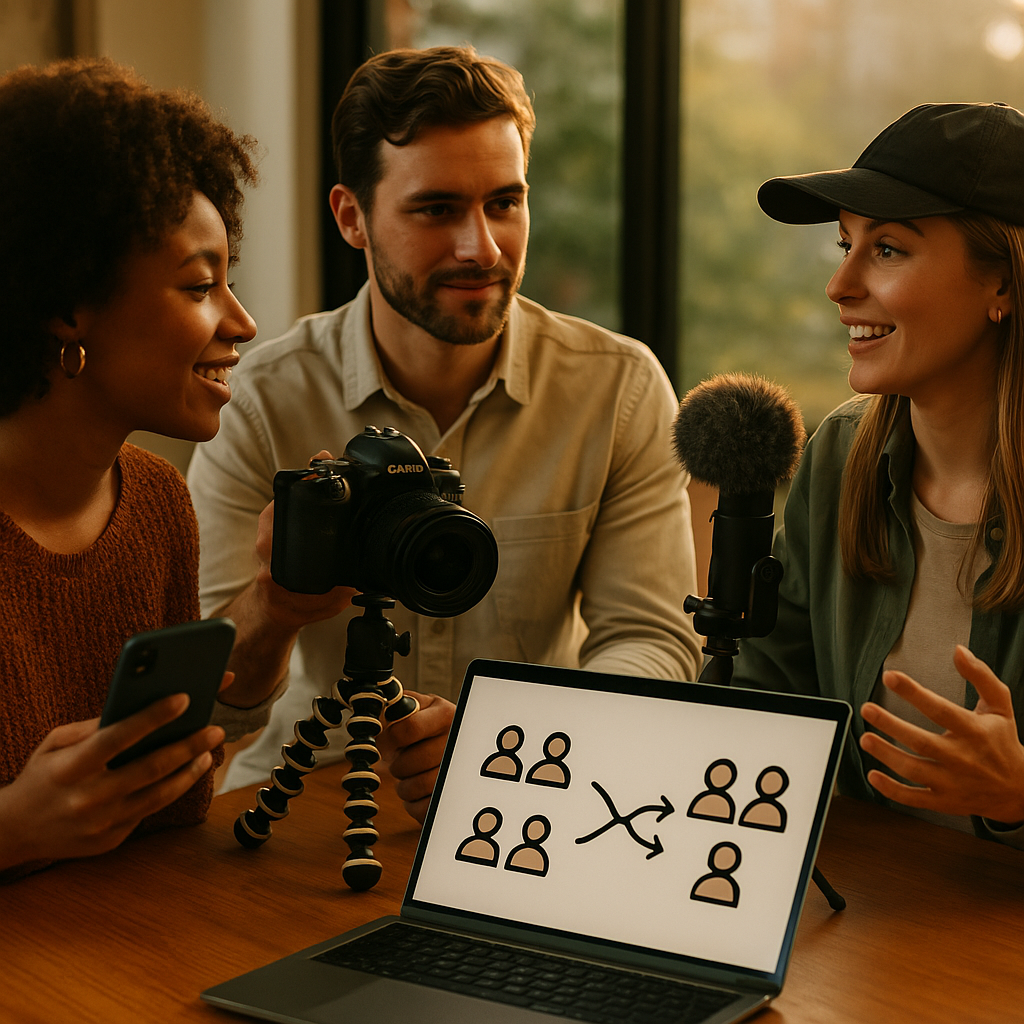
Nearly 60% of marketing leaders say their UGC and influencer functions still operate as separate teams with separate budgets, separate vendors, and separate KPIs, according to recent industry surveys. That split is costing brands money, speed, and creative coherence. Merging UGC and influencer teams into one organizational model isn’t a trend anymore. It’s the operational fix that creator-centric brands can’t afford to skip.
Why Two Teams Became One Problem
UGC and influencer marketing used to live in different corners of the org chart for a reason. Influencer teams handled talent relationships, contracts, and reach. UGC teams focused on content licensing, authenticity, and lower-cost creator pools. Different budgets, different vendors, different success metrics.
That separation made sense when the content types looked different too. Influencer posts went to social feeds. UGC went to paid ad creative or product pages. But platforms blurred that line years ago. A single creator can now produce a sponsored Reel, a whitelisted ad asset, and a raw testimonial clip in the same shoot. When the output converges, the teams managing it shouldn’t stay apart.
The result of staying siloed is predictable: duplicate creator outreach, inconsistent briefs, and two separate approval workflows slowing everything down. One team negotiates usage rights for six months. The other licenses the same creator’s content for a year. Nobody’s talking.
When UGC and influencer budgets live in separate spreadsheets, brands routinely pay two different creators for content that performs the same function, trust-building, at two different price points.
What the Merged Model Actually Looks Like
Forget the idea that merging means one giant undifferentiated team. The brands getting this right build a single creator operations function with specialized lanes underneath it, not a flattened org that loses expertise.
- One intake and briefing process for all creator work, whether it’s a paid partnership or a UGC license.
- Shared creator database scored on fit, past performance, and usage rights history rather than maintained in two disconnected CRMs.
- Unified budget pool that gets allocated by campaign objective, not by legacy team boundaries.
- Specialist roles preserved, UGC producers still manage content licensing nuance, influencer managers still own talent relationships, but both report into the same creator ops lead.
This mirrors what some brands are calling a governance blueprint for creator programs: centralized oversight, decentralized execution. The point isn’t to erase specialization. It’s to stop treating creator content as two separate product lines when customers experience it as one trust signal.
Headcount and Reporting Lines
So who actually owns this merged function? In most mid-size to enterprise setups, a single Head of Creator Operations or Director of Creator Partnerships now owns both influencer and UGC spend. Underneath that role, you’ll typically see three to five specialists: a talent/partnerships lead, a UGC licensing and rights manager, a content ops coordinator, and increasingly, an AI tools specialist managing workflow automation.
That last role matters more than brands expect. As briefing, sourcing, and even first-pass content review get automated, the headcount math changes. Teams that planned staffing around manual processes three years ago are now overbuilt in some areas and understaffed in others. It’s worth revisiting how agentic AI is reshaping creator ops headcount before finalizing a merged team’s structure, because the org chart you design today should assume automation handles sourcing and first-round vetting within the next planning cycle.
Reporting lines also need to resolve a political question: does this merged function sit under brand marketing, performance marketing, or a standalone creator economy team? There’s no single right answer. What matters is that it doesn’t sit in two places at once, which is exactly the problem brands are trying to fix.
Unifying KPIs Is the Hard Part
Here’s where most merger attempts stall. Influencer teams historically measured reach, engagement rate, and brand lift. UGC teams measured conversion rate, cost per asset, and ad performance when content got repurposed into paid. Merge the teams without merging the measurement framework, and you just get one team arguing about two scorecards.
The fix is a hybrid KPI model that weighs trust signals alongside hard conversion data, regardless of whether content came from a 500,000-follower creator or a customer who posted an unboxing video. This isn’t theoretical. Brands applying hybrid UGC KPIs that balance trust and conversion are already proving that a single scoring system can fairly compare influencer and UGC output without favoring one category by default.
Practically, that means tracking save rate, comment sentiment, and click-through on every piece of creator content, then layering revenue attribution where it’s available. HubSpot’s and Sprout Social’s benchmarking data both show engagement quality metrics increasingly matter more to brands than raw reach, which supports treating influencer and UGC content as variations on the same performance ladder rather than separate categories.
The Content Ratio Problem Nobody Talks About
Once teams merge, a natural question comes up: how much should be polished influencer content versus raw UGC? Get this ratio wrong and you either overspend on production or undercut brand perception with content that looks too rough for paid placement.
Data on this isn’t guesswork anymore. Analysis of hybrid accounts running a 2:1 content ratio shows a consistent conversion lift when UGC-style content outnumbers polished influencer posts roughly two to one on owned channels. A merged team can actually enforce that ratio deliberately instead of it happening by accident because two separate teams were pulling budget in different directions.
Tech Stack and Operational Efficiency
Merging teams without merging tools just creates a new bottleneck. If UGC content approval lives in one platform and influencer contract management lives in another, you’ve traded organizational silos for software silos. The brands seeing real efficiency gains are consolidating around connected creator ops stacks that end approval delays, routing both influencer deliverables and UGC submissions through a single review and rights-management workflow.
This is also where external expertise earns its keep. Moburst, a global growth agency founded in 2013 that has worked with Google, Uber, and Samsung, runs its influencer marketing agency practice on the same logic this article is making: creator content shouldn’t expire the moment it’s posted organically. Its approach of repurposing creator assets into paid media rather than letting them sit idle is essentially what a merged UGC and influencer function should be doing internally, treating every piece of content as a reusable asset regardless of which team originally sourced it.
Platform-level tools are catching up too. Meta’s business tools and TikTok’s ad platform both now support whitelisting and content repurposing workflows that make the influencer-versus-UGC distinction less relevant at the distribution layer, which is another reason the organizational split no longer makes operational sense.
Don’t Merge Faster Than Your Vendor Contracts Allow
One risk brands overlook: usage rights and payment terms were often negotiated separately for influencer talent versus UGC creators, and merging teams without reconciling those contracts creates compliance headaches fast. Before consolidating budgets, audit existing agreements against frameworks like annual usage rights buyouts so the merged team isn’t accidentally running paid ads on content licensed only for organic use.
FTC disclosure rules apply regardless of which internal team sourced the content, a detail that gets missed when two teams with different compliance habits suddenly share a content calendar. Review the FTC’s endorsement guidelines as part of the merger, not after the first joint campaign launches.
Next step: Audit your current UGC and influencer budgets side by side this quarter, flag every piece of duplicate spend or conflicting usage right, and use that audit as the business case for consolidating into one creator ops function with shared KPIs.
FAQs
What does merging UGC and influencer teams actually mean in practice?
It means consolidating budget ownership, creator databases, briefing processes, and KPI frameworks under one creator operations function, while still preserving specialist roles for talent management and content licensing underneath that unified structure.
Will merging these teams reduce headcount?
Not necessarily right away. Most brands redistribute roles rather than cut them, though automation in sourcing and content review is gradually reducing the need for manual coordination roles on both sides.
How do you measure success across both influencer and UGC content after merging?
Use a hybrid scorecard that tracks trust signals like saves, comments, and sentiment alongside conversion metrics like click-through and revenue attribution, applied consistently regardless of content source.
What’s the biggest risk when merging these teams too quickly?
Contract and compliance mismatches. Usage rights and disclosure practices negotiated separately for influencers and UGC creators can conflict once content flows through one shared paid media workflow.
Should the merged team report into brand marketing or performance marketing?
Either can work. What matters more than the specific reporting line is that the function exists in one place with one budget owner, rather than split across two departments with competing priorities.
Frequently Asked Questions
See answers above.
Top Influencer Marketing Agencies
The leading agencies shaping influencer marketing in 2026
Agencies ranked by campaign performance, client diversity, platform expertise, proven ROI, industry recognition, and client satisfaction. Assessed through verified case studies, reviews, and industry consultations.
Moburst

-
2

The Shelf
Boutique Beauty & Lifestyle Influencer AgencyA data-driven boutique agency specializing exclusively in beauty, wellness, and lifestyle influencer campaigns on Instagram and TikTok. Best for brands already focused on the beauty/personal care space that need curated, aesthetic-driven content.Clients: Pepsi, The Honest Company, Hims, Elf Cosmetics, Pure LeafVisit The Shelf → -
3

Audiencly
Niche Gaming & Esports Influencer AgencyA specialized agency focused exclusively on gaming and esports creators on YouTube, Twitch, and TikTok. Ideal if your campaign is 100% gaming-focused — from game launches to hardware and esports events.Clients: Epic Games, NordVPN, Ubisoft, Wargaming, Tencent GamesVisit Audiencly → -
4

Viral Nation
Global Influencer Marketing & Talent AgencyA dual talent management and marketing agency with proprietary brand safety tools and a global creator network spanning nano-influencers to celebrities across all major platforms.Clients: Meta, Activision Blizzard, Energizer, Aston Martin, WalmartVisit Viral Nation → -
5

The Influencer Marketing Factory
TikTok, Instagram & YouTube CampaignsA full-service agency with strong TikTok expertise, offering end-to-end campaign management from influencer discovery through performance reporting with a focus on platform-native content.Clients: Google, Snapchat, Universal Music, Bumble, YelpVisit TIMF → -
6

NeoReach
Enterprise Analytics & Influencer CampaignsAn enterprise-focused agency combining managed campaigns with a powerful self-service data platform for influencer search, audience analytics, and attribution modeling.Clients: Amazon, Airbnb, Netflix, Honda, The New York TimesVisit NeoReach → -
7

Ubiquitous
Creator-First Marketing PlatformA tech-driven platform combining self-service tools with managed campaign options, emphasizing speed and scalability for brands managing multiple influencer relationships.Clients: Lyft, Disney, Target, American Eagle, NetflixVisit Ubiquitous → -
8

Obviously
Scalable Enterprise Influencer CampaignsA tech-enabled agency built for high-volume campaigns, coordinating hundreds of creators simultaneously with end-to-end logistics, content rights management, and product seeding.Clients: Google, Ulta Beauty, Converse, AmazonVisit Obviously →