


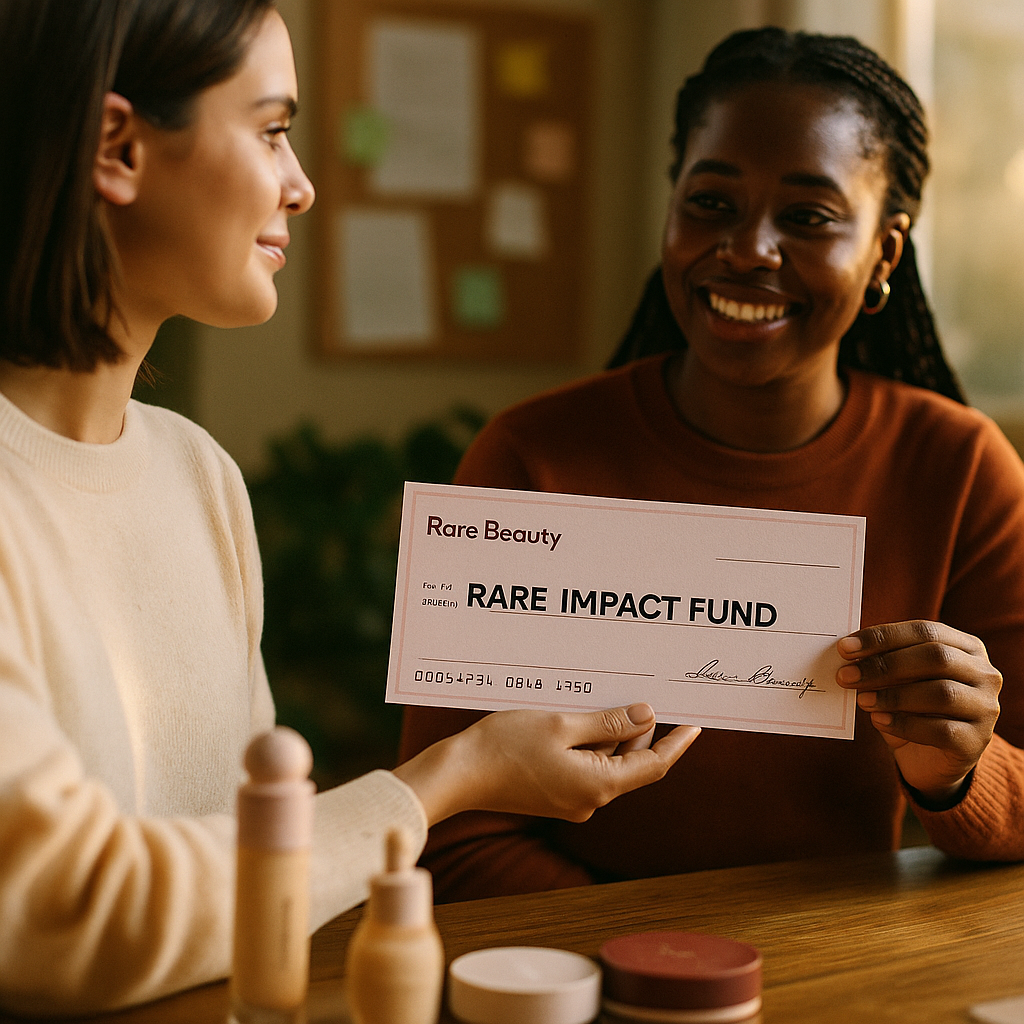
Eighty-eight percent of consumers say authenticity determines which brands they support, according to Sprout Social’s research on brand trust. Rare Beauty built a nine-figure business partly by betting that mental health advocacy, done right, converts better than another discount code. The Rare Beauty Rare Impact Fund creator partnerships program is the clearest case study in the beauty category of how a cause-led creator strategy can outperform a transactional one, if a brand is willing to hand creators something harder to script than a tutorial.
Most brands treat mental health messaging as a once-a-year campaign moment. Rare Beauty built it into the operating model, and that distinction matters for anyone running influencer budgets right now.
What Is the Rare Impact Fund, and Why Does It Matter for Creator Strategy?
Selena Gomez founded Rare Beauty in 2020 with a public commitment: one percent of all sales would fund the Rare Impact Fund, supporting mental health services and education for underserved communities. The brand pledged to raise $100 million by 2030. That pledge is not a marketing line item sitting in a CSR deck somewhere. It is woven into product packaging, retail activations, and crucially, the brand’s entire creator partnership architecture.
For marketers, the operational question is simple: how do you brief creators on a mental health cause without it reading as opportunistic? Rare Beauty’s answer has been to recruit creators who already talk about mental health in their own content, rather than asking beauty influencers to bolt on a cause they have never discussed. That sequencing, finding the advocacy first and the product fit second, is the opposite of how most beauty brands build creator rosters.
Rare Beauty did not ask creators to perform empathy for a campaign. It recruited creators whose actual audiences already trusted them on mental health, then let the product conversation follow naturally.
The Trust Math: Why Cause Alignment Beats Reach
Compare this to a typical CPG playbook, where brands chase follower count and let the messaging adapt to whatever the creator’s niche happens to be. Huda Beauty’s tiered creator mix is a strong example of reach-driven scaling done well. Rare Beauty runs a parallel but distinct track: a smaller cohort of creators selected for credibility on a specific topic, layered on top of its broader product-focused influencer work.
Why does this matter commercially? Because mental health content carries reputational risk that a lipstick swatch does not. Get it wrong, and a brand looks like it is monetizing trauma. Get it right, and you build the kind of loyalty that discount codes cannot buy. Edelman’s long-running trust research has repeatedly shown that consumers want brands to take a stand on social issues, but they punish brands that appear performative. Rare Beauty’s creator selection process is effectively a risk mitigation filter: pick advocates with existing credibility, and the authenticity question mostly answers itself.
This is the piece most brands skip. They want the halo effect of cause marketing without doing the harder work of vetting whether a creator’s audience will actually believe the message.
The Creator Vetting Process Looks Different Here
- Creators are sourced from mental health advocacy communities first, beauty communities second.
- Content briefs emphasize personal narrative over product demonstration.
- Disclosure is explicit about the Rare Impact Fund mechanics, not vague gestures toward “giving back.”
- Long-term retainers are preferred over one-off posts, because trust-building content needs repetition to land.
That last point deserves emphasis. A single post about mental health from a creator with no prior history on the topic reads as a brand deal. The same message, repeated across months from a creator whose audience already associates them with that conversation, reads as consistent values. Rare Beauty’s program leans heavily on the second model, which is more expensive in creator fees but cheaper in reputational insurance.
Operational Lessons: How Brands Can Replicate This Without Faking It
Marketers reading this case study will ask the obvious follow-up: can a brand without a celebrity founder and a nonprofit arm replicate this? Partially, yes. The underlying mechanic, matching creator selection to cause credibility rather than follower count, is replicable at any budget tier.
Start by auditing your current creator roster for topic credibility, not just engagement rate. Does this creator have a documented history discussing the cause you want to attach your brand to? If not, either invest in a longer relationship before the cause messaging starts, or choose a different creator. This is the same logic Huda Beauty applies to sales-tied creator tiers, just applied to trust metrics instead of revenue metrics.
Second, build disclosure into the brief, not as an afterthought. The FTC’s endorsement guidelines apply just as much to cause marketing as they do to product promotion. If a creator is being compensated to discuss the Rare Impact Fund, that compensation needs to be disclosed with the same rigor as a paid product post. Brands that blur this line risk the exact backlash they were trying to avoid with cause marketing in the first place.
Cause marketing through creators only works if the audience can tell the difference between advocacy and a paid script. Rare Beauty’s disclosure practices treat that line as non-negotiable.
Third, measure the right things. Engagement rate on a mental health post is a weak proxy for brand trust. Rare Beauty and brands modeling similar programs are better served tracking sentiment analysis, repeat purchase behavior among audiences exposed to the cause content, and unprompted brand mentions in mental health adjacent conversations. This is slower, messier data than a standard campaign dashboard, but it is the data that actually answers whether trust was built.
Where This Fits Inside a Broader Influencer Program
Rare Beauty does not run its Rare Impact Fund creator work in isolation from its product marketing. The brand still partners with beauty creators for launches, tutorials, and seasonal campaigns, much like the scaled creator operations seen in e.l.f. Beauty’s creator partnership model. The cause-driven cohort sits alongside that work, not instead of it.
This dual-track approach solves a real operational problem. Brands that try to make every single creator post carry a cause message end up diluting both the product story and the advocacy story. Rare Beauty’s separation, product creators doing product work, advocacy creators doing advocacy work, with some overlap, keeps each lane credible. For brand strategists managing mixed creator rosters, this is a workable org chart, not just a philosophy.
It also means budget allocation decisions get easier to defend internally. Finance teams want to know why a mental health creator program deserves separate line-item funding instead of getting folded into general influencer spend. The answer is that it serves a different KPI: brand trust and category reputation, not immediate conversion. eMarketer’s creator economy forecasts increasingly separate “trust building” spend from “performance” spend in brand budget breakdowns, and Rare Beauty’s structure anticipates that split.
What About the Risk of Backlash?
No cause marketing program is immune to criticism. Skeptics will always ask whether a beauty brand profiting from insecurity has any business funding mental health initiatives. Rare Beauty’s response has largely been transparency: publishing fund totals, naming grant recipients, and letting creators speak in their own words rather than brand-approved talking points. That transparency is itself a creator partnership strategy, because it gives advocates something factual to point to when audiences push back.
Brands considering similar programs should build a response plan before launch, not after the first skeptical comment thread. What will the brand say when someone questions the math behind the pledge? Who is authorized to respond publicly? Rare Beauty’s creators are rarely left to defend the brand alone in comment sections, which is a detail that gets missed in most “just partner with creators who care about the cause” advice.
Compare this to categories where creator partnerships have stumbled on trust, often because the compliance and disclosure groundwork was skipped. The UK’s Information Commissioner’s Office and the FTC have both signaled increased scrutiny of influencer disclosure practices generally, and cause marketing adds an extra layer of scrutiny because the stakes feel higher to audiences than a standard product plug.
The ROI Case, Even If It Is Harder to Measure
Marketing leadership will eventually ask the uncomfortable question: what did this actually return? Rare Beauty’s answer is indirect but observable. The brand has built one of the fastest-growing prestige beauty businesses of the last five years, with analysts citing mission alignment as a recurring factor in customer retention surveys, not just product quality. That is not a clean attribution model, and no honest marketer should pretend it is. But the directional signal is strong enough that category competitors are now building their own cause-aligned creator tracks.
The operational takeaway for brand strategists is that trust-building creator work needs its own measurement framework, separate from the CPA models used for conversion campaigns, similar to how Princess Polly tracks CPA for its own program but layers in brand sentiment separately.
If there is one lesson other brands should take from this case study, it is patience. Rare Beauty’s advocacy creator relationships are measured in years, not campaign cycles. That is a hard sell to a quarterly marketing budget, but it is also exactly why competitors have struggled to copy the model quickly. Trust compounds slowly. Scripts do not.
FAQs
What is the Rare Impact Fund?
The Rare Impact Fund is Rare Beauty’s philanthropic initiative, funded by one percent of all company sales, dedicated to expanding access to mental health resources and education, with a public goal of raising 100 million dollars.
How does Rare Beauty select creators for mental health focused partnerships?
Rare Beauty prioritizes creators who already discuss mental health topics with their audience, rather than recruiting beauty influencers and asking them to adopt a cause message, which strengthens perceived authenticity.
Can smaller brands replicate the Rare Impact Fund creator model?
Yes, on a smaller scale. Brands can audit existing creator rosters for genuine topic credibility, commit to longer-term partnerships instead of one-off posts, and build transparent disclosure practices from the start.
How should brands measure ROI on cause-driven creator partnerships?
Standard engagement metrics are a weak indicator. Brands should track sentiment analysis, repeat purchase behavior, and unprompted brand mentions in cause-related conversations, measured over longer time horizons than typical campaign cycles.
What compliance risks come with mental health focused creator content?
The same FTC and regulatory disclosure rules that apply to product endorsements apply to cause marketing. Compensated creators discussing a brand’s mental health initiative must disclose that relationship clearly.
Next step: audit your current creator roster for genuine topic credibility before attaching any cause message to a campaign brief, and budget cause-driven creator work separately from performance spend so trust metrics do not get judged against conversion benchmarks.
Top Influencer Marketing Agencies
The leading agencies shaping influencer marketing in 2026
Agencies ranked by campaign performance, client diversity, platform expertise, proven ROI, industry recognition, and client satisfaction. Assessed through verified case studies, reviews, and industry consultations.
Moburst

-
2

The Shelf
Boutique Beauty & Lifestyle Influencer AgencyA data-driven boutique agency specializing exclusively in beauty, wellness, and lifestyle influencer campaigns on Instagram and TikTok. Best for brands already focused on the beauty/personal care space that need curated, aesthetic-driven content.Clients: Pepsi, The Honest Company, Hims, Elf Cosmetics, Pure LeafVisit The Shelf → -
3

Audiencly
Niche Gaming & Esports Influencer AgencyA specialized agency focused exclusively on gaming and esports creators on YouTube, Twitch, and TikTok. Ideal if your campaign is 100% gaming-focused — from game launches to hardware and esports events.Clients: Epic Games, NordVPN, Ubisoft, Wargaming, Tencent GamesVisit Audiencly → -
4

Viral Nation
Global Influencer Marketing & Talent AgencyA dual talent management and marketing agency with proprietary brand safety tools and a global creator network spanning nano-influencers to celebrities across all major platforms.Clients: Meta, Activision Blizzard, Energizer, Aston Martin, WalmartVisit Viral Nation → -
5

The Influencer Marketing Factory
TikTok, Instagram & YouTube CampaignsA full-service agency with strong TikTok expertise, offering end-to-end campaign management from influencer discovery through performance reporting with a focus on platform-native content.Clients: Google, Snapchat, Universal Music, Bumble, YelpVisit TIMF → -
6

NeoReach
Enterprise Analytics & Influencer CampaignsAn enterprise-focused agency combining managed campaigns with a powerful self-service data platform for influencer search, audience analytics, and attribution modeling.Clients: Amazon, Airbnb, Netflix, Honda, The New York TimesVisit NeoReach → -
7

Ubiquitous
Creator-First Marketing PlatformA tech-driven platform combining self-service tools with managed campaign options, emphasizing speed and scalability for brands managing multiple influencer relationships.Clients: Lyft, Disney, Target, American Eagle, NetflixVisit Ubiquitous → -
8

Obviously
Scalable Enterprise Influencer CampaignsA tech-enabled agency built for high-volume campaigns, coordinating hundreds of creators simultaneously with end-to-end logistics, content rights management, and product seeding.Clients: Google, Ulta Beauty, Converse, AmazonVisit Obviously →