


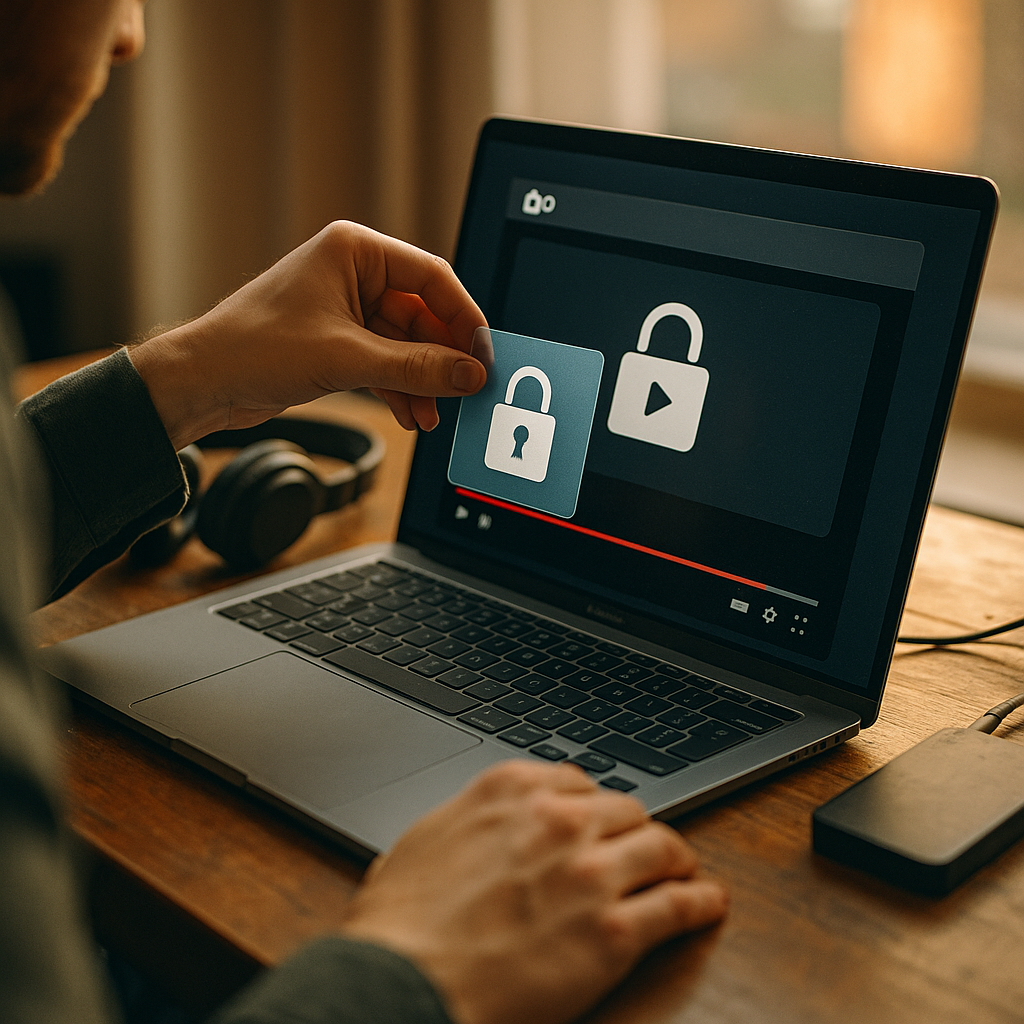
In 2025, brand teams distribute video across dozens of channels, partners, and devices—often with little control once files leave internal systems. This review of Digital Rights Management tools for branded video assets explains what modern DRM actually protects, how platforms differ, and what to verify before you buy. If your videos drive revenue or trust, what’s your weakest link?
DRM for branded video assets: what it is and what it is not
Digital rights management (DRM) is a set of technologies that controls how video is accessed, decrypted, and used. For branded video assets, DRM is typically applied when you publish or distribute content that must remain confidential, paid, embargoed, or contractually restricted—such as product launches, training libraries, partner enablement kits, and premium marketing experiences.
What DRM does well:
- Enforces playback rules (who can watch, on which devices, for how long).
- Encrypts video streams so files are not usable if intercepted.
- Protects keys through license issuance, often tied to user identity and device security.
- Supports revocation (disable access when a user leaves, a deal changes, or a leak occurs).
What DRM does not guarantee:
- It cannot fully stop screen recording. DRM can raise the bar via hardware-secure playback, but determined attackers can still capture content (for example, via camera capture or compromised endpoints).
- It is not a full brand governance solution. DRM does not replace brand guidelines, approvals, or creative version control.
- It does not prove ownership. Copyright registration, contracts, and watermarking are separate but complementary.
For most brands, DRM is strongest when paired with identity access management (SSO, MFA), watermarking (forensic or visible), and auditing (who watched, downloaded, shared).
Video content protection features: the checklist that matters in 2025
DRM choices often look similar in marketing materials. The practical differences show up in device support, workflow friction, reporting, and how well the system survives real-world partner distribution. Use this feature checklist to compare tools consistently.
1) Multi-DRM coverage
For broad browser and device compatibility, most organizations prefer a multi-DRM approach that supports major DRM schemes across platforms. Confirm coverage for the environments you actually use: modern browsers, iOS and Android apps, connected TVs, and embedded players in partner portals.
2) License policy controls
- Offline playback (allowed or blocked; time-limited downloads).
- Concurrent streams per user or per account.
- Geofencing and travel rules for global teams.
- Token expiration and short-lived signed URLs to reduce link sharing.
3) Watermarking options
If leaks are a serious risk, prioritize forensic watermarking that can identify the source account from a redistributed copy. Ask whether watermarking is session-based (dynamic per play) and whether it works reliably at scale.
4) Analytics and auditability
EEAT-aligned decision-making depends on evidence. Look for auditable logs (who accessed what, when, where, and on what device) and retention controls. For regulated industries or high-stakes launches, detailed logs can reduce investigation time after an incident.
5) Integration maturity
- SSO (SAML/OIDC), MFA support, and SCIM provisioning.
- CMS/DAM integrations for asset lifecycle control.
- API completeness for automated publishing and rights changes.
6) Packaging and encryption workflow
Many DRM deployments fail on operations: packaging pipelines, key rotation, and player configuration. Evaluate whether the provider offers managed packaging, just-in-time packaging, or clear guidance for your encoding stack.
7) User experience safeguards
Strong protection that breaks playback is still a failure. Verify startup time, adaptive bitrate behavior, caption support, and error messaging. Run pilots on real devices used by executives, partners, and sales teams.
Enterprise video DRM solutions: platform-by-platform review
Below is a practical review of common DRM routes for branded video assets. Rather than claiming a single “best” tool, this section clarifies what each option is best for—and what to verify before committing.
1) Cloud provider DRM services (best for engineering-led teams)
Major cloud ecosystems offer DRM building blocks that integrate with their media services. These are strong choices when you already run your encoding, storage, CDN, and identity stack in the same cloud. Benefits include deep infrastructure integration, scalable licensing, and flexible policy control.
- Pros: high scalability, infrastructure alignment, strong security primitives, broad ecosystem tooling.
- Cons: higher implementation complexity; you own more of the workflow and player integration; reporting may require additional buildout.
Best fit: brands with dedicated video engineering, custom experiences, and strict control over architecture.
2) Online video platforms with built-in DRM (best for speed to market)
Several enterprise video platforms include DRM as a configurable feature, often bundled with hosting, player, analytics, and access controls. This approach reduces operational burden, especially when marketing and comms teams need self-service publishing.
- Pros: faster deployment, unified analytics, easier governance for non-technical users.
- Cons: less flexibility in packaging and policy edge cases; pricing can scale with bandwidth and feature tiers.
Best fit: brand and comms teams that need secure distribution without building a media stack.
3) Specialized multi-DRM and licensing vendors (best for complex distribution)
These vendors focus on license delivery, key management, and cross-platform DRM compatibility. They are useful when you have an existing player and CDN strategy but need a robust, vendor-agnostic licensing layer.
- Pros: strong multi-DRM expertise, flexible licensing APIs, good for hybrid environments.
- Cons: you still manage hosting, player UX, and analytics integration.
Best fit: brands distributing through multiple apps, portals, and partners where a single OVP is too limiting.
4) Secure collaboration and review platforms (best for pre-release and internal review)
For creative review, approvals, and internal sharing, some platforms emphasize controlled access, expiring links, download restrictions, and watermarking. They may not offer full streaming DRM across every device, but they can reduce leaks during production and pre-launch windows.
- Pros: strong review workflows, granular permissions, fast sharing for stakeholders.
- Cons: not always designed for large-scale streaming distribution or consumer-like playback environments.
Best fit: agencies and brand studios managing sensitive pre-release assets and executive approvals.
How to decide between these categories:
- If you need custom experiences and already have media engineering, start with cloud services or specialized multi-DRM.
- If you need fast rollout and manageable workflows, start with an enterprise video platform with DRM included.
- If your risk is mainly pre-release leakage, prioritize review tools with watermarking plus controlled access, then layer DRM for distribution.
Secure video distribution workflow: how DRM fits with DAM, CMS, and partners
DRM succeeds when it is part of a distribution workflow, not a bolt-on. Branded video assets typically flow from creation to storage, to approval, to channel publishing, to partner syndication. Each step can either preserve control or quietly weaken it.
Step 1: Govern the master asset in a DAM
Store mezzanine files and project exports in a digital asset management system with role-based access control and versioning. Limit who can download masters. If teams routinely email files or use shared drives, DRM on the final stream will not stop upstream leakage.
Step 2: Publish derivatives, not masters
Use transcoded, streaming-optimized renditions for distribution. DRM belongs on these deliverables, paired with signed URLs and short token lifetimes to reduce uncontrolled sharing.
Step 3: Tie access to identity
For internal and partner audiences, connect DRM-protected playback to SSO. Use group-based entitlements (sales, distributors, press) so you can revoke access quickly. For external audiences, consider account-based access, one-time codes, or entitlement checks via API.
Step 4: Support partners without surrendering control
Partners often want downloadable files. When possible, distribute via a secure portal with DRM-protected streaming and controlled offline policies rather than sending files. If contracts require downloads, use watermarking, time-bound access, and audit logs. Make “download” a deliberate exception with approvals.
Step 5: Monitor and respond
DRM is preventative; response planning is corrective. Define what happens when credentials are shared, when a link leaks, or when a watermark points to a partner. Ensure you can revoke sessions, rotate keys, and pull assets quickly from distribution points.
Compliance and licensing controls: meeting legal, privacy, and brand governance needs
Brands often adopt DRM after an incident, but the strongest business case is predictable governance: meeting licensing obligations, controlling regional rights, and reducing legal exposure. In 2025, these concerns extend beyond “piracy” into privacy, data handling, and contractual compliance.
Rights and territory enforcement
If your branded content includes licensed music, talent agreements, or co-marketing restrictions, DRM policies can help enforce where and when content plays. Pair DRM with a rights metadata model in your DAM or CMS so policies can be applied consistently.
Data privacy and telemetry
DRM ecosystems often produce analytics and device identifiers. Evaluate what user data is collected, how long it’s retained, and whether it can be minimized. Ensure your vendor supports configurable retention, access controls for logs, and clear documentation on subprocessors.
Accessibility and user trust
Secure playback must still support captions and accessible controls. During vendor evaluation, test caption formats, multi-language audio, and keyboard navigation where relevant. Poor accessibility creates reputational risk and can limit adoption of internal training libraries.
Contract readiness
- Incident response: timelines for breach notification and support SLAs.
- Audit support: ability to export access logs for investigations.
- Vendor lock-in: confirm content portability and how keys are managed if you migrate.
DRM is not only a technical decision; it’s a legal and operational commitment. Get legal, security, and brand governance stakeholders involved before final selection.
Choosing a DRM vendor: evaluation criteria, proof points, and common pitfalls
To follow EEAT best practices, choose tools based on verifiable capabilities, documented security posture, and real-world performance—not feature lists alone. Use a structured evaluation process.
Ask for proof, not promises
- Security documentation: encryption approach, key management model, and secure playback requirements.
- Compliance artifacts: third-party audits and security policies relevant to enterprise procurement.
- Device test matrix: your actual target devices, not only “supported platforms.”
- Customer references: similar scale, similar distribution model (internal, partner, external).
Run a pilot designed to fail
Test worst-case realities: shared credentials, expired tokens, offline scenarios, network loss, and device switching. Validate that revocation works quickly and that analytics reconcile with your identity system.
Common pitfalls to avoid
- Over-indexing on “no downloads”: users will still find ways; combine DRM with watermarking and monitoring.
- Ignoring partner workflows: the “exception path” is where leaks occur. Design secure partner access early.
- Underestimating player integration: DRM success depends on the player, the app, and device security.
- Not planning key rotation and migration: document how you’ll rotate keys and move platforms if needed.
Practical takeaway for selection: shortlist two options from the category that matches your operating model, then select the winner based on device reliability, revocation speed, watermarking strength, analytics quality, and integration effort—not price alone.
FAQs: Digital Rights Management tools for branded video assets
What is the best DRM for branded videos?
The best DRM is the one that reliably supports your target devices and integrates with your identity and publishing workflow. Many brands choose a multi-DRM approach to cover major browsers and mobile platforms, then add watermarking for leak attribution and SSO for access control.
Will DRM stop someone from recording my screen?
DRM reduces casual copying and can enable hardware-secure playback on supported devices, but it cannot fully eliminate recording. To manage this risk, combine DRM with forensic watermarking, short-lived access tokens, and rapid revocation procedures.
Do I need DRM if my videos are “only internal”?
If internal videos include confidential strategy, pricing, product roadmaps, or licensed materials, DRM can be appropriate—especially when employees access content on personal devices or when contractors and partners are involved. If risk is low, strong access control plus watermarking may be sufficient.
How does DRM differ from watermarking?
DRM controls access and playback by encrypting streams and issuing licenses. Watermarking embeds identifying information into the video so you can trace leaks. DRM prevents many unauthorized plays; watermarking helps investigate and deter redistribution when prevention fails.
Can I use DRM with a DAM?
Yes. A common model is: the DAM governs masters and permissions, while an OVP or DRM service protects streaming derivatives for distribution. Look for API-based integrations so entitlements and rights metadata can drive DRM policies automatically.
What should I look for in DRM analytics?
Prioritize auditable events (user, device, IP/region, timestamp, asset ID), exportability, and retention controls. You should be able to answer: who watched, what they watched, whether access was denied, and whether a token or license was shared.
Is DRM expensive to operate?
Cost depends on licensing volume, bandwidth, packaging complexity, and whether you use a managed platform. Operational costs often come from integration, device testing, support, and analytics. A pilot that measures engineering effort and helpdesk tickets will predict total cost better than list pricing.
DRM is most effective when it supports your real distribution model: internal teams, agencies, resellers, and customer-facing experiences. In 2025, the strongest approach combines multi-DRM playback protection with identity-based entitlements, forensic watermarking, and auditable analytics. Choose tools based on device reliability, revocation speed, and integration fit—not marketing claims. Protect the workflow, and your branded video assets stay controlled.
Top Influencer Marketing Agencies
The leading agencies shaping influencer marketing in 2026
Agencies ranked by campaign performance, client diversity, platform expertise, proven ROI, industry recognition, and client satisfaction. Assessed through verified case studies, reviews, and industry consultations.
Moburst

-
2

The Shelf
Boutique Beauty & Lifestyle Influencer AgencyA data-driven boutique agency specializing exclusively in beauty, wellness, and lifestyle influencer campaigns on Instagram and TikTok. Best for brands already focused on the beauty/personal care space that need curated, aesthetic-driven content.Clients: Pepsi, The Honest Company, Hims, Elf Cosmetics, Pure LeafVisit The Shelf → -
3

Audiencly
Niche Gaming & Esports Influencer AgencyA specialized agency focused exclusively on gaming and esports creators on YouTube, Twitch, and TikTok. Ideal if your campaign is 100% gaming-focused — from game launches to hardware and esports events.Clients: Epic Games, NordVPN, Ubisoft, Wargaming, Tencent GamesVisit Audiencly → -
4

Viral Nation
Global Influencer Marketing & Talent AgencyA dual talent management and marketing agency with proprietary brand safety tools and a global creator network spanning nano-influencers to celebrities across all major platforms.Clients: Meta, Activision Blizzard, Energizer, Aston Martin, WalmartVisit Viral Nation → -
5

The Influencer Marketing Factory
TikTok, Instagram & YouTube CampaignsA full-service agency with strong TikTok expertise, offering end-to-end campaign management from influencer discovery through performance reporting with a focus on platform-native content.Clients: Google, Snapchat, Universal Music, Bumble, YelpVisit TIMF → -
6

NeoReach
Enterprise Analytics & Influencer CampaignsAn enterprise-focused agency combining managed campaigns with a powerful self-service data platform for influencer search, audience analytics, and attribution modeling.Clients: Amazon, Airbnb, Netflix, Honda, The New York TimesVisit NeoReach → -
7

Ubiquitous
Creator-First Marketing PlatformA tech-driven platform combining self-service tools with managed campaign options, emphasizing speed and scalability for brands managing multiple influencer relationships.Clients: Lyft, Disney, Target, American Eagle, NetflixVisit Ubiquitous → -
8

Obviously
Scalable Enterprise Influencer CampaignsA tech-enabled agency built for high-volume campaigns, coordinating hundreds of creators simultaneously with end-to-end logistics, content rights management, and product seeding.Clients: Google, Ulta Beauty, Converse, AmazonVisit Obviously →