


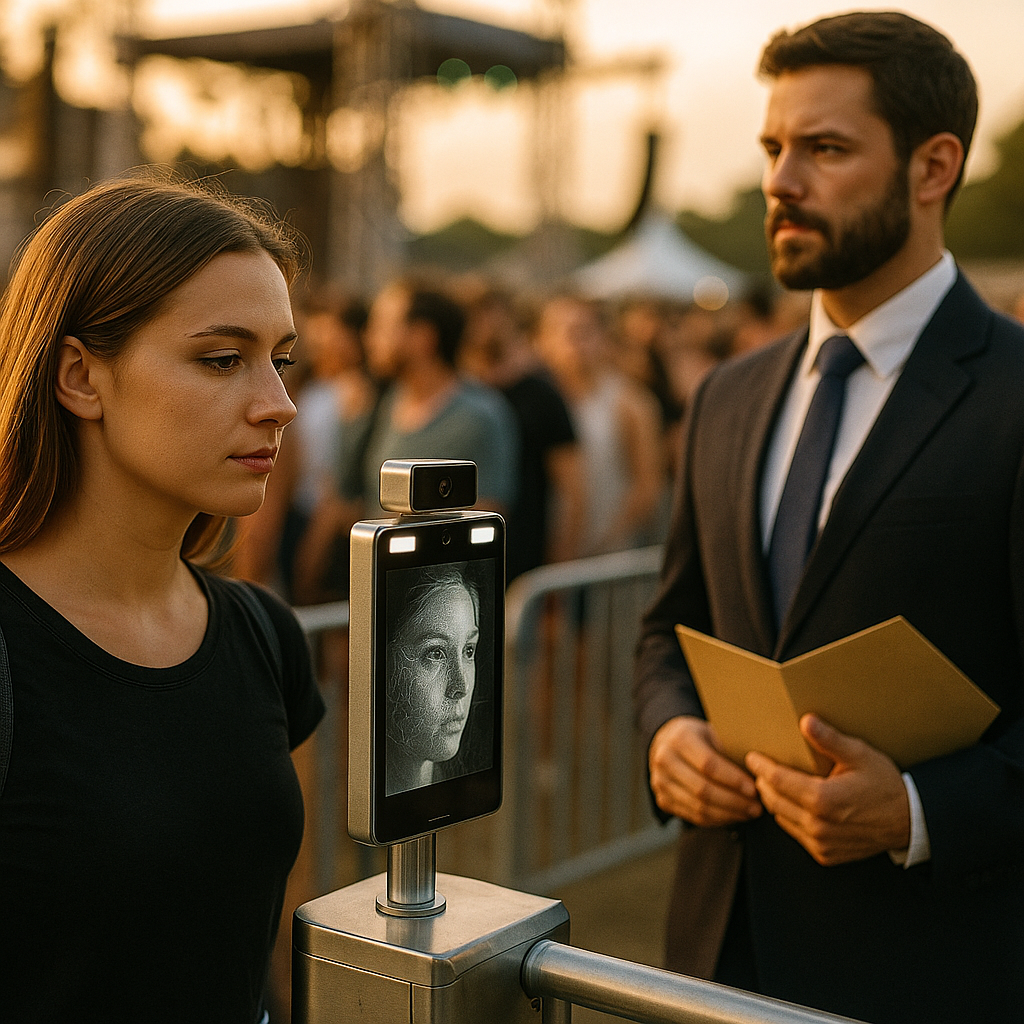
In 2025, brands are using face scans, fingerprints, and voiceprints to streamline entry, personalize experiences, and reduce fraud. But Legal Considerations For Brands Using Biometric Data In Live Events are complex, fast-changing, and enforced with real penalties. This guide explains how to collect and use biometrics lawfully, minimize risk, and maintain audience trust—before your next gate opens to thousands of fans.
Biometric privacy laws for live events: what applies and when
Biometric data is often treated as “sensitive” or “special category” information because it can uniquely identify a person and cannot be reissued like a password. The first legal step is mapping which rules apply to your event, your audience, your vendors, and your data flows.
Start with jurisdiction and scope. A live event can trigger multiple laws at once: where the venue sits, where ticket buyers reside, where your servers are hosted, and where vendors process data. Brands should assume regulators may take an expansive view when attendees are targeted or services are offered to residents from specific regions.
Common compliance patterns. While requirements differ, regulators typically look for:
- Clear legal basis for collection and use (often explicit consent for biometrics).
- Purpose limitation (use only for stated purposes such as entry verification).
- Data minimization (collect the least biometric data necessary).
- Transparency (plain-language notices at purchase and on-site).
- Security and retention controls (strong safeguards and timely deletion).
- Vendor accountability (contracts, audits, and subprocessor control).
Operational takeaway: Build a “law-by-law matrix” before you choose technology. If a vendor’s system cannot support opt-out, deletion, or short retention, you may be designing noncompliance into the experience.
Informed consent and attendee notice: making it valid at speed
Live events move fast. That’s exactly why consent and notice must be designed into ticketing and venue operations rather than bolted on at the gates. For biometrics, many regulators and consumer protection authorities expect consent to be affirmative, specific, and freely given.
What “valid consent” looks like in practice.
- Separate choice for biometrics (not buried in general terms).
- Clear explanation of what is collected (e.g., facial template, not “face data”).
- Purpose-by-purpose consent (entry vs. VIP lounge access vs. marketing personalization).
- Real alternative for entry and services without penalty (e.g., QR code + ID check lane).
- Easy withdrawal that is as simple as opting in.
Make notice unavoidable and readable. Provide layered notice at: (1) ticket checkout, (2) the event app enrollment screen, (3) confirmation email, and (4) physical signage at biometric capture points. Use short, direct sentences and avoid vague statements like “to enhance your experience.”
Answer the attendee’s core questions upfront:
- Do I have to do this? Say yes/no and offer an equivalent non-biometric route.
- What exactly do you store? Explain whether you store a biometric template, raw images, or both.
- Who gets it? Name categories of vendors and whether data is shared with sponsors.
- How long? Provide a specific retention period and deletion trigger.
High-risk pitfall: “Consent” obtained through pressure (longer lines for non-biometric entry, VIP perks locked behind biometrics, or confusing screens) may be challenged as not freely given.
Data minimization and retention policy: collecting only what you need
For live events, the safest biometric program is narrowly scoped: limited features, limited access, and limited duration. Data minimization is not just a best practice—it’s a legal expectation in many privacy regimes and a practical defense if an incident occurs.
Design for minimal biometric footprint.
- Prefer templates over raw media when feasible. Storing raw face images or voice recordings typically increases risk and scrutiny.
- Avoid secondary uses by default. Entry authentication is easier to justify than sentiment analysis, demographic inference, or behavioral profiling.
- Separate identity from event analytics. If you want foot-traffic insights, use aggregated counts rather than tying movement to an identifiable template.
- Disable continuous scanning unless you can justify it. Continuous or passive collection (e.g., cameras always matching faces) raises proportionality concerns.
Retention should match the event lifecycle. For many events, the business need ends shortly after gates close and dispute windows pass. A defensible approach includes:
- Short default retention for biometric templates.
- Automatic deletion after a defined window or upon account deletion.
- Documented exceptions (e.g., fraud investigations) with strict access controls and time limits.
Put the policy into engineering controls. Regulators care less about what you promise and more about whether the system enforces it: deletion jobs, audit logs, and retention settings that cannot be overridden casually.
Security and breach response for biometrics: reducing harm and liability
Biometric data carries outsized consequences if compromised because it is persistent and uniquely identifying. A security program must address both technical risk and legal obligations tied to incident response.
Security controls brands should require.
- Encryption in transit and at rest with strong key management and restricted access to keys.
- Strict access controls (least privilege, role-based access, MFA, and time-bound admin access).
- Segmentation between biometric systems and marketing/CRM systems.
- On-device or edge processing where feasible to reduce centralized exposure.
- Comprehensive logging of enrollment, matching, exports, and deletions, with monitoring for anomalies.
- Regular security testing (penetration tests and secure SDLC for app components used in enrollment).
Plan for failure before it happens. Your incident plan should be biometric-specific, including:
- Clear breach definitions for templates, raw images, and matching logs.
- Vendor notification timelines and escalation paths.
- Decision criteria for notifying attendees and regulators based on risk of harm and legal triggers.
- Containment playbooks for compromised devices, rogue admin access, or exposed storage buckets.
Liability is not only about hackers. Misconfiguration, overbroad internal access, and untracked vendor copies can create the same legal outcomes as external attacks. Keep audit trails and ensure staff are trained on “no screenshots, no exports, no exceptions” rules.
Vendor contracts and accountability: controlling processors and sponsors
Most brands rely on third parties for biometric capture hardware, facial matching engines, ticketing platforms, and cloud hosting. That creates legal and reputational risk if vendors misuse data, retain it too long, or repurpose it to train models.
Define roles and responsibilities. Determine whether each party acts as a controller, processor, or independent business with its own purposes. Mislabeling roles in contracts can backfire if reality does not match paper.
Contract terms to insist on.
- Purpose limitation and a ban on using biometrics for vendor product improvement or model training unless you have a separate, explicit attendee opt-in.
- Subprocessor controls (approval rights, flow-down terms, and a current list of subprocessors).
- Retention and deletion obligations with proof of deletion upon request.
- Security obligations aligned to your risk level, including breach notification windows and cooperation duties.
- Audit rights (or credible third-party attestations) and the ability to test controls for the event configuration.
- Data location and transfer terms to address cross-border restrictions and attendee expectations.
- Indemnities and liability caps that reflect biometric sensitivity and potential class-action exposure in some regions.
Manage sponsor involvement carefully. If sponsors want “personalized activations” using biometrics, treat that as a separate purpose requiring separate notice and consent. When in doubt, keep sponsors away from biometric identifiers and provide only aggregated or pseudonymized insights.
Children, employees, and accessibility: special rules at crowded venues
Events often involve mixed audiences, temporary staff, volunteers, and accessibility accommodations. These contexts introduce heightened legal and ethical obligations.
Children and teens. If minors may attend, your program should include age-aware flows. Many privacy regimes treat children’s data with extra protections. Practical steps include:
- Avoid biometric enrollment for minors unless you have a strong necessity case.
- Use parent/guardian consent where required and provide a non-biometric alternative.
- Do not use biometrics for marketing or profiling minors.
Employees, contractors, and volunteers. Using biometrics for staff access control can be lawful, but power imbalance makes “consent” risky. Brands should:
- Rely on an appropriate legal basis and document necessity (e.g., secure areas, credential sharing risk).
- Offer alternatives where feasible, especially for temporary staff.
- Separate HR data from attendee biometric systems and limit retention to employment needs.
Accessibility and discrimination risk. Facial recognition and voice systems can perform unevenly across demographics and may fail for attendees with disabilities. Legal exposure can arise from unequal access, denial of entry, or humiliation at the gate. Mitigation includes:
- Parallel non-biometric lanes staffed to provide equivalent speed and service.
- Human override procedures that do not penalize the attendee.
- Pre-event testing for false rejects and operational training for respectful resolution.
Document your decisions. Keep a written record of why biometrics are necessary, what alternatives exist, and how you prevent discriminatory outcomes. This supports both compliance and crisis communications.
FAQs
Do brands need explicit consent to use facial recognition for event entry?
Often, yes. Because biometrics are commonly classified as sensitive data, explicit opt-in consent is frequently the safest approach, especially for attendees. Even where another legal basis may apply, clear notice and a meaningful non-biometric alternative reduce legal and reputational risk.
Can we make biometric entry mandatory to speed up lines?
Mandatory biometric entry increases legal risk because consent may not be considered freely given. A better approach is to offer biometric entry as an optional fast lane while keeping a comparable alternative (QR code, barcode, or ID check) that does not degrade the attendee experience.
Is storing a “biometric template” safer than storing photos or recordings?
Yes, typically. Templates reduce exposure compared with raw images or voice recordings, but they are still biometric data and still regulated. You must secure templates, limit access, and delete them on a defined schedule.
Can vendors use our attendees’ biometrics to train their algorithms?
Not without very clear contractual prohibitions or, if you want that use, separate and explicit attendee opt-in. Treat model training as a distinct purpose and assume it will attract heightened scrutiny from regulators and the public.
How long should we keep biometric data after an event?
Keep it only as long as necessary for the stated purpose, typically tied to event completion, ticketing disputes, and fraud resolution. Set a short default retention period, automate deletion, and document any limited exceptions.
What should we do if an attendee asks to delete their biometric data during the event?
Provide a clear, staffed process to honor deletion requests quickly and switch the attendee to a non-biometric access method. Ensure your vendor systems can execute deletion promptly and confirm completion, while preserving only the minimal non-biometric records needed for ticket validation.
Do we need a dedicated privacy notice for biometric collection?
Yes in most cases. Even if you have a general privacy policy, a biometric-specific notice at the point of collection improves transparency and can be required by certain laws. Keep it concise and include purpose, retention, sharing, and attendee rights.
Brands can use biometrics at live events responsibly when legality drives design, not the other way around. Focus on explicit consent, minimal collection, short retention, strong security, and tight vendor contracts. Provide real non-biometric alternatives and prepare for rights requests and incidents. The takeaway: treat biometric programs as high-risk products with documented controls, not as simple upgrades to ticketing.
Top Influencer Marketing Agencies
The leading agencies shaping influencer marketing in 2026
Agencies ranked by campaign performance, client diversity, platform expertise, proven ROI, industry recognition, and client satisfaction. Assessed through verified case studies, reviews, and industry consultations.
Moburst

-
2

The Shelf
Boutique Beauty & Lifestyle Influencer AgencyA data-driven boutique agency specializing exclusively in beauty, wellness, and lifestyle influencer campaigns on Instagram and TikTok. Best for brands already focused on the beauty/personal care space that need curated, aesthetic-driven content.Clients: Pepsi, The Honest Company, Hims, Elf Cosmetics, Pure LeafVisit The Shelf → -
3

Audiencly
Niche Gaming & Esports Influencer AgencyA specialized agency focused exclusively on gaming and esports creators on YouTube, Twitch, and TikTok. Ideal if your campaign is 100% gaming-focused — from game launches to hardware and esports events.Clients: Epic Games, NordVPN, Ubisoft, Wargaming, Tencent GamesVisit Audiencly → -
4

Viral Nation
Global Influencer Marketing & Talent AgencyA dual talent management and marketing agency with proprietary brand safety tools and a global creator network spanning nano-influencers to celebrities across all major platforms.Clients: Meta, Activision Blizzard, Energizer, Aston Martin, WalmartVisit Viral Nation → -
5

The Influencer Marketing Factory
TikTok, Instagram & YouTube CampaignsA full-service agency with strong TikTok expertise, offering end-to-end campaign management from influencer discovery through performance reporting with a focus on platform-native content.Clients: Google, Snapchat, Universal Music, Bumble, YelpVisit TIMF → -
6

NeoReach
Enterprise Analytics & Influencer CampaignsAn enterprise-focused agency combining managed campaigns with a powerful self-service data platform for influencer search, audience analytics, and attribution modeling.Clients: Amazon, Airbnb, Netflix, Honda, The New York TimesVisit NeoReach → -
7

Ubiquitous
Creator-First Marketing PlatformA tech-driven platform combining self-service tools with managed campaign options, emphasizing speed and scalability for brands managing multiple influencer relationships.Clients: Lyft, Disney, Target, American Eagle, NetflixVisit Ubiquitous → -
8

Obviously
Scalable Enterprise Influencer CampaignsA tech-enabled agency built for high-volume campaigns, coordinating hundreds of creators simultaneously with end-to-end logistics, content rights management, and product seeding.Clients: Google, Ulta Beauty, Converse, AmazonVisit Obviously →