


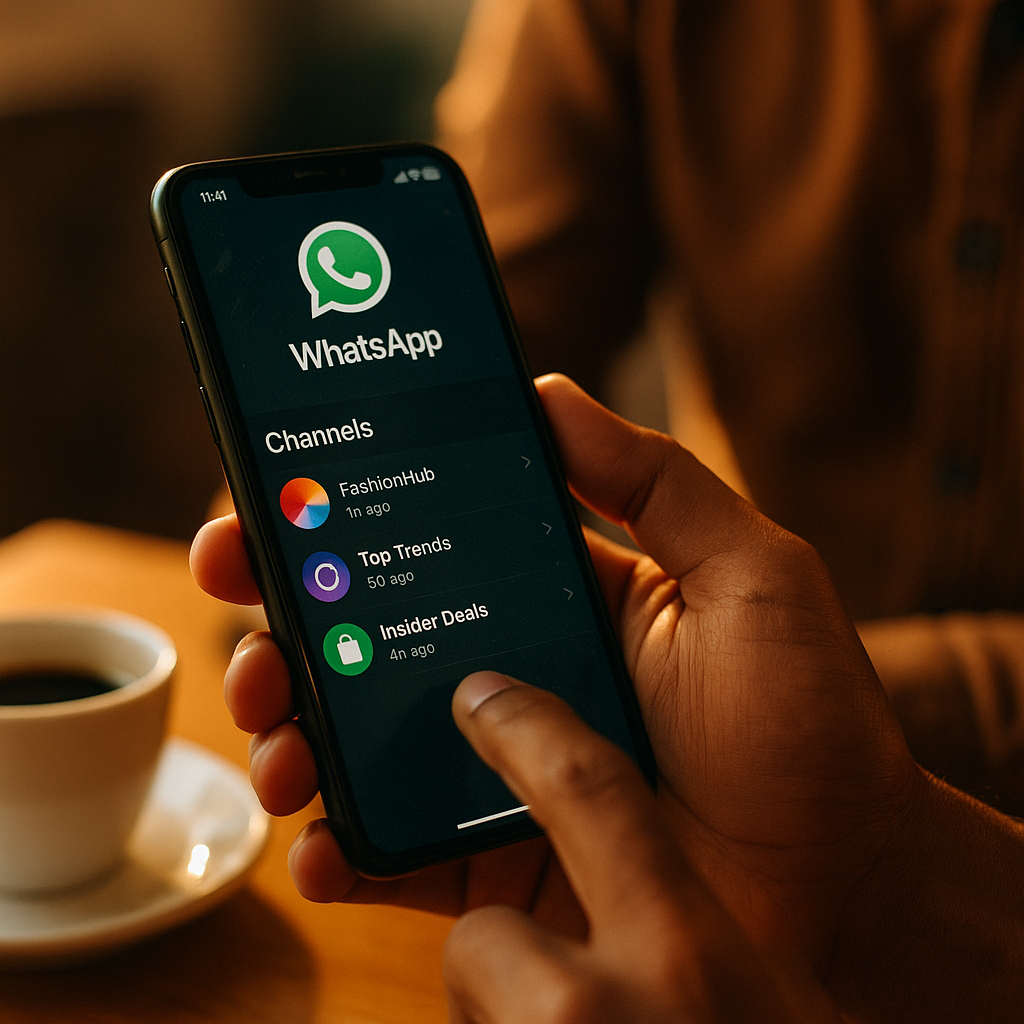
Customer loyalty is getting harder to earn in 2025, even for brands with great products. Attention is fragmented, email deliverability fluctuates, and social algorithms keep moving the goalposts. This A Playbook For Using WhatsApp Channels For High-Touch Retention shows how to turn one-way channel updates into a consistent retention engine—without spamming, violating privacy, or burning out your team. Ready to build a playbook your customers actually welcome?
WhatsApp Channels retention strategy: start with outcomes, not broadcasts
WhatsApp Channels are designed for one-to-many updates. That limitation is a feature for retention: it creates a predictable, low-friction way to keep customers informed and engaged without forcing them into a chat queue. But to make it “high-touch,” you need to define what “touch” means in your context.
Start with three retention outcomes and map your channel content to each:
- Activation and habit formation: help new customers get value fast, then repeat value weekly.
- Expansion: guide customers to the next best feature, tier, or add-on when they’re ready.
- Risk reduction: reduce churn triggers like confusion, surprises, downtime, or missed renewals.
Next, choose 2–4 measurable retention signals (avoid vanity metrics):
- Repeat usage: 7-day or 30-day active usage for apps; repeat purchases for ecommerce.
- Time-to-first-value: time from signup/purchase to a meaningful milestone.
- Support deflection with satisfaction: fewer tickets and stable CSAT/NPS.
- Renewal/repurchase rate: cohort-based retention (not blended averages).
Finally, define your “high-touch” promise. Examples: “You’ll always know what to do next,” “You’ll never be surprised by changes,” or “You’ll get a clear win every week.” This promise becomes the editorial standard for every post.
High-touch customer retention: segment with channel design and cadence
WhatsApp Channels don’t support traditional CRM segmentation inside a single channel. High-touch retention still works when you segment by channel architecture and cadence—and you make subscription choices obvious.
Build a small channel “suite” instead of one mega-channel. Aim for 2–5 channels maximum to avoid management overhead:
- Customer Updates: product updates, policy changes, service notices, roadmap highlights.
- Getting Started (first 30 days): onboarding, checklists, quick wins, setup guides.
- Pro Tips / Mastery: advanced workflows, templates, use cases, expert sessions.
- VIP / Insiders: early access, beta invites, priority content, community wins.
- Local or category-specific channels (optional): location-based events or niche product lines.
Set an intentional posting cadence. In 2025, retention content fails less from “bad writing” and more from inconsistent expectations. Pick a schedule you can sustain:
- Onboarding channel: 3–5 posts per week for the first 2–4 weeks, then a “graduation” path to the Pro channel.
- Customer Updates: 1–3 posts per week (plus urgent service notices only when necessary).
- Pro Tips: 1–2 posts per week, consistently.
Create subscription moments. Promote channels at the points where customers naturally want guidance:
- Checkout or post-purchase page: “Get setup tips on WhatsApp.”
- In-app after first milestone: “Want advanced workflows? Join Pro Tips.”
- Support resolution: “Get proactive updates so you don’t need to open tickets.”
Answer the obvious concern upfront: “Will you spam me?” Post a simple frequency statement in the channel description and adhere to it.
WhatsApp Channels best practices: craft messages that feel personal at scale
High-touch doesn’t mean high-volume. It means customers feel understood and guided. The fastest way to achieve that is to turn every post into one of four message types—and to write in a consistent voice.
Use the 4-post framework:
- Next-step post: one action to take now, one benefit, one link. Example: “Turn on weekly summaries to spot usage trends in under 2 minutes.”
- Proof post: a customer outcome, a before/after, or a measurable result. Avoid vague praise; include context (industry, use case, constraints).
- Clarity post: explain a change, price update, or policy in plain language, with a short “What this means for you.”
- Rescue post: troubleshoot a common failure point. “If X happens, do Y. If not fixed, here’s the escalation path.”
Make each post skimmable. WhatsApp is fast-scrolling. Use:
- A strong first line: state the benefit or the problem solved.
- Short paragraphs: 1–2 sentences each.
- Specific language: replace “optimize” with “reduce setup time by 10 minutes.”
Build trust with EEAT signals. Readers look for evidence you know what you’re doing and that your guidance is safe to follow:
- Experience: share real operational lessons (what reduced tickets, what increased renewals, what failed).
- Expertise: reference internal benchmarks, support themes, product analytics, and clear reasoning.
- Authoritativeness: keep policies consistent across channel, help center, and product UI.
- Trust: avoid dark patterns, be honest about limitations, and provide clear escalation routes.
Answer follow-up questions inside the post. If you announce a feature, include: who it’s for, how to enable it, how long it takes, and what to do if it doesn’t appear. High-touch content anticipates friction.
Retention messaging on WhatsApp: run onboarding, expansion, and win-back plays
Retention improves when customers repeatedly reach “value moments.” WhatsApp Channels can orchestrate those moments with structured plays. Below are proven patterns you can adapt, regardless of industry.
Play 1: The 14-day onboarding sprint (activation)
- Day 1–2: setup checklist + one “fast win” (something achievable in 5 minutes).
- Day 3–5: remove common blockers (permissions, integrations, sizing, delivery expectations).
- Day 6–10: show a repeatable habit (weekly workflow, restock routine, reporting cadence).
- Day 11–14: “graduation” post: next feature and a clear invitation to subscribe to Pro Tips.
Include one post that normalizes early confusion: “If you’re not seeing results yet, here are the two leading indicators to track.” This reduces “silent churn” driven by uncertainty.
Play 2: The weekly value loop (habit formation)
- Monday: one priority action (“Do this first this week”).
- Wednesday: proof or case example (“What success looks like”).
- Friday: review prompt (“Check these 3 indicators”).
This pattern works because it meets customers where they are: busy. It also creates a reliable cadence customers learn to expect, which increases “ambient engagement” without demanding replies.
Play 3: Expansion prompts tied to behavior (upsell without pressure)
Channels can’t individually target by behavior inside WhatsApp, but you can still align posts to common maturity stages and label them clearly:
- “If you’re doing X already…” introduce feature Y.
- “If your team is now 3+ people…” introduce roles, permissions, shared dashboards.
- “If you’re shipping 20+ orders/week…” introduce automation, batching, forecasting.
Make the message feel advisory, not salesy. Include a self-qualification line and a low-commitment next step (template, calculator, short demo page). High-touch expansion respects timing.
Play 4: Win-back via transparency (reduce churn triggers)
Churn often follows a negative surprise: a failed setup, an unexpected charge, a confusing change, or a service issue. Use Channels to reduce shock:
- Pre-empt renewal friction: “Your renewal window is coming—here’s how to review usage and adjust your plan.”
- Explain changes clearly: what changed, why, who is impacted, and what customers should do.
- Own incidents: concise status updates, what’s affected, current workaround, and when you’ll update next.
The high-touch move is not the apology—it’s the predictable cadence and clear next steps.
WhatsApp Channel analytics: measure retention lift and protect trust
In 2025, the biggest risk with retention channels is mistaking reach for impact. A high-touch approach treats metrics as guardrails that protect customer trust while proving business value.
Track three layers of performance:
- Channel health: follower growth, post views, view rate over time, and spikes after specific posts.
- Behavioral impact: clicks to help center, setup completion, feature adoption, repeat purchase, renewal intent.
- Retention outcomes: cohort churn/renewal, repurchase frequency, LTV shifts (measured against a baseline).
Use clean attribution practices. Add UTM parameters to every link and standardize naming (channel, campaign, post-type). If your product is authenticated, route through a tracked landing page that can tie sessions to customer IDs.
Run controlled tests when possible. If you can’t randomize, use a matched cohort approach:
- Compare customers who followed the channel vs. similar customers who didn’t (same signup week, plan, region, acquisition source).
- Watch for selection bias: channel followers may already be more engaged. Adjust expectations and look for incremental lift after specific plays (onboarding sprint, rescue posts, renewal clarity).
Protect trust and compliance. WhatsApp Channels are opt-in, but you still need to operate with restraint:
- Respect frequency: if you promised 2 posts/week, don’t drift to daily.
- Avoid sensitive personalization: don’t imply you know private customer behavior in a public broadcast.
- Keep links safe: use your primary domain, avoid confusing redirects, and maintain a consistent security posture.
When customers feel safe, they stay subscribed. When they stay subscribed, your retention engine compounds.
WhatsApp customer success playbook: roles, workflows, and scalable production
High-touch retention is operational. If content creation depends on one heroic person, it breaks. Build a lightweight system with clear ownership and a weekly rhythm.
Recommended roles (can be part-time hats):
- Channel editor (Customer Success or Lifecycle): owns calendar, voice, and quality control.
- Product partner: supplies release notes, known issues, and roadmap context.
- Support partner: shares top ticket drivers and emerging confusion points.
- Analytics partner: ensures UTMs, dashboards, and cohort reporting stay accurate.
Weekly workflow (90 minutes total):
- 15 minutes: review top support themes and product changes.
- 30 minutes: draft 2–4 posts using the 4-post framework.
- 15 minutes: compliance/brand review (tone, claims, links, frequency).
- 15 minutes: schedule posts and add UTMs.
- 15 minutes: review last week’s performance and decide one adjustment.
Content sources that keep you credible:
- Support macros that already solve real problems.
- Implementation checklists your CS team uses in calls.
- Release notes rewritten as “what you can do now.”
- Customer stories with clear context and results (with permission).
Governance rules that prevent mistakes:
- No vague claims: if you can’t substantiate it, rephrase it as guidance.
- No surprise promos: promotions should be predictable and clearly labeled.
- One link per post when possible: reduce choice overload.
This is how you keep the channel helpful, consistent, and aligned with customer success—without turning it into another marketing blast.
FAQs
Are WhatsApp Channels good for retention if customers can’t reply?
Yes. High-touch retention is about proactive guidance and clarity. Use Channels for updates, onboarding steps, troubleshooting, and renewal transparency. For two-way help, link to your support chat, help center, or ticket form with a clear escalation path.
How often should we post in a WhatsApp Channel for customer retention?
Most teams sustain 1–3 posts per week for an updates channel and 1–2 posts per week for a pro-tips channel. Onboarding channels can run 3–5 posts per week for the first 2–4 weeks, then transition subscribers to a steadier channel.
What’s the difference between WhatsApp Channels and WhatsApp Business messaging?
Channels are one-to-many broadcasts that followers opt into, designed for updates and content. WhatsApp Business messaging is one-to-one or automated conversational messaging, often used for support and transactional notifications. Use Channels to reduce inbound questions and increase product adoption; use Business messaging for individualized help.
How do we avoid spamming and losing followers?
Set a frequency promise in the channel description and keep it. Prioritize “next-step,” “clarity,” and “rescue” posts over promotions. Keep posts skimmable, include one clear action, and avoid repetitive announcements that don’t change what the customer should do.
How can we measure whether the channel improves retention?
Use UTMs on every link and track downstream actions like setup completion, feature adoption, repeat purchases, and renewal events. Compare cohorts of followers vs. non-followers, ideally matched by signup date and plan. Look for lift after structured plays (onboarding sprint, renewal clarity posts), not just overall views.
Should we create multiple channels or keep one?
Create a small suite (2–5) if you have distinct audiences or lifecycle stages, such as onboarding vs. power users. If you’re early, start with one updates channel and add an onboarding channel once you can maintain consistent cadence and quality.
WhatsApp Channels can deliver high-touch retention when you treat them as a guided customer success layer, not a broadcast megaphone. Define retention outcomes, build a small channel suite, and publish consistent next-step, proof, clarity, and rescue posts. Measure impact with UTMs and cohort tracking, and protect trust with frequency promises and transparent updates. In 2025, the best channel strategy is the one customers choose to keep open.
Top Influencer Marketing Agencies
The leading agencies shaping influencer marketing in 2026
Agencies ranked by campaign performance, client diversity, platform expertise, proven ROI, industry recognition, and client satisfaction. Assessed through verified case studies, reviews, and industry consultations.
Moburst

-
2

The Shelf
Boutique Beauty & Lifestyle Influencer AgencyA data-driven boutique agency specializing exclusively in beauty, wellness, and lifestyle influencer campaigns on Instagram and TikTok. Best for brands already focused on the beauty/personal care space that need curated, aesthetic-driven content.Clients: Pepsi, The Honest Company, Hims, Elf Cosmetics, Pure LeafVisit The Shelf → -
3

Audiencly
Niche Gaming & Esports Influencer AgencyA specialized agency focused exclusively on gaming and esports creators on YouTube, Twitch, and TikTok. Ideal if your campaign is 100% gaming-focused — from game launches to hardware and esports events.Clients: Epic Games, NordVPN, Ubisoft, Wargaming, Tencent GamesVisit Audiencly → -
4

Viral Nation
Global Influencer Marketing & Talent AgencyA dual talent management and marketing agency with proprietary brand safety tools and a global creator network spanning nano-influencers to celebrities across all major platforms.Clients: Meta, Activision Blizzard, Energizer, Aston Martin, WalmartVisit Viral Nation → -
5

The Influencer Marketing Factory
TikTok, Instagram & YouTube CampaignsA full-service agency with strong TikTok expertise, offering end-to-end campaign management from influencer discovery through performance reporting with a focus on platform-native content.Clients: Google, Snapchat, Universal Music, Bumble, YelpVisit TIMF → -
6

NeoReach
Enterprise Analytics & Influencer CampaignsAn enterprise-focused agency combining managed campaigns with a powerful self-service data platform for influencer search, audience analytics, and attribution modeling.Clients: Amazon, Airbnb, Netflix, Honda, The New York TimesVisit NeoReach → -
7

Ubiquitous
Creator-First Marketing PlatformA tech-driven platform combining self-service tools with managed campaign options, emphasizing speed and scalability for brands managing multiple influencer relationships.Clients: Lyft, Disney, Target, American Eagle, NetflixVisit Ubiquitous → -
8

Obviously
Scalable Enterprise Influencer CampaignsA tech-enabled agency built for high-volume campaigns, coordinating hundreds of creators simultaneously with end-to-end logistics, content rights management, and product seeding.Clients: Google, Ulta Beauty, Converse, AmazonVisit Obviously →