


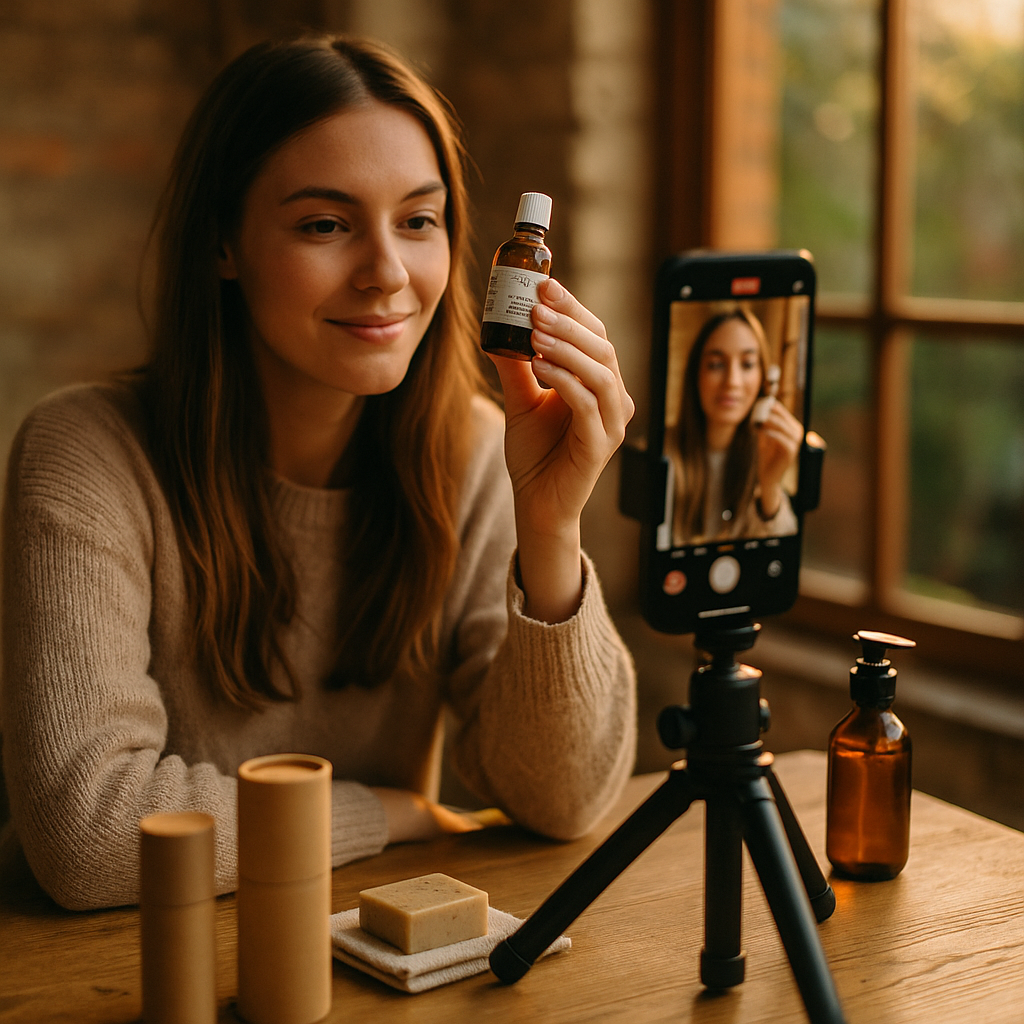
Case Study: The Growth Of A Sustainable Brand Through Nano-Influencers shows how a mission-led company can scale trust, sales, and repeat purchases without sacrificing values. In 2025, audiences expect proof, not promises—especially from eco-focused brands. This real-world breakdown maps the strategy, the numbers that mattered, and the operational changes required to grow responsibly. Ready to see what actually drove results?
Brand growth case study: The sustainable brand, baseline, and goals
Brand profile: “TideKind,” a direct-to-consumer sustainable household brand selling refillable cleaning concentrates, reusable spray bottles, and compostable accessories. The brand’s differentiator is measurable waste reduction (refill pouches that use less packaging than traditional bottles) and transparent ingredient disclosures.
Starting point (January 2025):
- Monthly revenue: $28,000
- Website conversion rate: 1.7%
- Average order value (AOV): $36
- Repeat purchase rate (90 days): 17%
- Primary channel mix: Paid social (55%), email/SMS (20%), organic (25%)
Problem: Paid social costs increased while performance became less predictable. The brand also faced a trust gap: shoppers liked the mission but hesitated to buy because “green” claims across the category had become noisy.
Business goals for 2025:
- Increase monthly revenue to $75,000+ without increasing paid spend proportionally
- Lift conversion rate above 2.3% through stronger social proof
- Improve repeat purchase rate to 25% by better onboarding and refill reminders
- Maintain brand integrity with verifiable claims and careful creator selection
Hypothesis: Nano-influencers (typically 1,000–10,000 followers) could generate credible, utility-driven content at scale, improving trust and assisting conversion, while keeping CAC stable.
Nano influencer marketing strategy: Why nano creators fit a sustainability-first model
TideKind chose nano creators because the brand needed trust density, not broad reach. Sustainability products often require explanation: how concentrates work, how to refill, how to store, and whether performance matches conventional options. Nano creators typically have tighter community ties and more dialogue in comments, which is crucial when prospects ask practical questions.
Strategic advantages TideKind targeted:
- Authenticity under scrutiny: Smaller creators could show real kitchens, real refills, and long-term use.
- Lower content production cost: UGC-style demonstrations reduced the need for high-production shoots.
- More niche matching: “Low-waste apartment living,” “fragrance-sensitive households,” and “new parents” segments were easier to reach via micro-communities.
- Testing velocity: Many creators allowed rapid iteration on messaging (scent-free, tough stains, refill convenience) without expensive ad cycles.
Channel selection: The program focused on short-form video-first platforms (for demonstrations), plus community-led placements (for Q&A). The brand prioritized creators who already posted about decluttering, low-tox routines, refill stores, budget-friendly sustainability, or family cleaning systems.
What TideKind avoided: Broad “eco lifestyle” accounts that posted frequent unrelated sponsorships. The brand found that generalist creators produced higher impressions but weaker purchase intent and more skepticism in comments.
Influencer outreach and vetting: Selection criteria, compliance, and brand safety
TideKind treated creator selection like hiring: it built a simple scorecard to protect the brand and reduce wasted product seeding. Each creator was evaluated on relevance, credibility, and the ability to create helpful demonstrations.
Vetting scorecard (0–5 scale each):
- Audience-fit: Do followers ask questions about home routines, budget, allergies, kids, pets, or low-waste swaps?
- Content proof: At least 3 recent posts showing products used in real life (not just aesthetics).
- Comment quality: Meaningful discussion versus generic emojis or engagement bait.
- Brand safety: No misinformation patterns, no harmful claims, no divisive posting likely to distract from product utility.
- Disclosure readiness: Clear ability to follow FTC-style ad disclosures and platform paid partnership tools.
Outreach process: TideKind used a two-message sequence: (1) short, personalized note referencing a specific post and asking if they’d test a refill system; (2) a clear offer with deliverables, timeline, and disclosure requirements. The brand highlighted its ingredient transparency page and refill instructions so creators could speak accurately.
Offer structure:
- Phase 1 (seeding): Product + $75–$150 content stipend for one short video and 3 story frames, with honest feedback encouraged.
- Phase 2 (performance): Affiliate commission (10–15%) plus tiered bonuses for verified sales milestones.
- Usage rights: Optional whitelisting/paid usage for top-performing content with separate compensation.
Compliance and claim control: TideKind provided a “safe claims” one-pager. Creators were instructed to avoid medical or “non-toxic” claims and to reference specific substantiated points (e.g., refill system reduces packaging compared to buying multiple single-use bottles, ingredient list available on site, scent-free option, usage instructions). This reduced risk while keeping creator voice intact.
Content and storytelling: Sustainable product storytelling that converts
Because cleaning products can feel interchangeable, TideKind centered content on demonstration, habit formation, and proof. Instead of pushing “save the planet” messaging, creators showed practical routines that made sustainable behavior easier.
Top-performing content formats:
- “Refill in real time” demos: 15–30 second clips showing the concentrate-to-water process, with a quick performance test (stovetop, sink, highchair tray).
- Before/after with constraints: “Pet-safe cleaning day,” “fragrance-free reset,” or “cleaning with a toddler underfoot.” Constraints increased relevance and credibility.
- Cost-per-use breakdowns: Simple math on-screen comparing refill concentrates to repurchasing bottles. This addressed a common objection: “Sustainable equals expensive.”
- Two-week update posts: Creators returned after real use, answering comment questions about scent, residue, and refill convenience.
- Waste avoided trackers: A running count of bottles not purchased because refills were used, paired with storage tips.
Messaging pillars that repeatedly won:
- Performance first: “It works like my old cleaner” led to fewer skeptical comments.
- Convenience second: Clear steps, cabinet organization, and refill reminders.
- Sustainability as a measurable benefit: Less packaging and fewer repeat purchases of bulky bottles.
On-site conversion support: TideKind updated landing pages to match creator narratives. Each creator link led to a page with:
- 30-second “how to refill” video
- Clear subscription/refill cadence options
- Ingredient transparency link above the fold
- FAQ blocks reflecting comment questions creators were receiving
This reduced the “message gap” between social content and checkout, a common reason influencer traffic fails to convert.
Performance metrics and ROI: What changed, what stayed stable, and why
TideKind tracked performance with platform analytics, affiliate links, post-purchase surveys (“How did you hear about us?”), and cohort retention. The goal was not to attribute every sale perfectly, but to build a reliable decision system.
Program scale (February–June 2025):
- Nano creators activated: 84
- Creators who posted at least once: 76
- Total assets produced: 210 short videos + 310 story frames
- Top platforms: Video-first short-form + community-led story/Q&A
Results by June 2025:
- Monthly revenue: $83,000 (up from $28,000)
- Website conversion rate: 2.6% (up from 1.7%)
- AOV: $41 (up from $36, driven by bundles promoted by creators)
- Repeat purchase rate (90 days): 26% (up from 17%)
- Blended CAC: Stayed within a tight band (slightly down overall), because creator-driven sales offset paid volatility
What actually drove the lift:
- Comment-driven conversion: Creators answered questions about scent strength, safety around kids/pets, and whether concentrates leave residue. Those answers reduced pre-purchase uncertainty.
- Creative diversification: Dozens of creators tested different hooks; the brand quickly learned which objections mattered most and updated its site accordingly.
- Better first-use experience: The brand added a “first refill” insert card and an email with a 30-second demo. Fewer customers stalled after delivery.
How TideKind judged ROI responsibly: Instead of evaluating only last-click sales, the brand used three checks: (1) affiliate revenue and discount-code revenue, (2) post-purchase survey mentions, and (3) changes in conversion rate and branded search volume after creator waves. This prevented under-investing in creators who influenced decisions but didn’t always get the final click.
Scaling sustainable brand growth: Operational changes, retention, and long-term trust
Nano-influencer programs break when operations can’t keep up. TideKind scaled sustainably by improving logistics, customer education, and governance around claims.
Operational upgrades that mattered:
- Inventory planning: The team built a “creator posting calendar” tied to demand forecasts to avoid stockouts after high-performing videos.
- Customer support macros: Support agents received scripts aligned with creator FAQs (how to dilute, which surfaces, fragrance-free guidance).
- Retention loops: Refill reminders were triggered by estimated usage, not arbitrary timing. Customers could adjust cadence easily.
- Community proof: TideKind added a verified UGC gallery and pinned “how to refill” tutorials to reduce friction for first-time buyers.
Creator relationship management: The brand built a “tier ladder” to keep the best nano creators engaged:
- Tier 1: Seeding + stipend
- Tier 2: Higher commission + early access to new scents/formulas
- Tier 3: Quarterly collaborations, whitelisting opportunities, and co-created bundles
Trust safeguards: TideKind ran quarterly reviews of claims, landing pages, and creator briefs to keep content accurate and aligned with evolving platform policies. The brand also kept negative feedback visible when it was constructive, responding with specific solutions (surface compatibility, dilution ratios, or scent sensitivity options). That transparency increased confidence rather than hurting sales.
FAQs: Nano-influencers and sustainable brand growth
What is a nano-influencer, and why do they work for sustainable brands?
A nano-influencer typically has about 1,000–10,000 followers and strong two-way engagement. For sustainable brands, their community trust and willingness to answer questions can reduce skepticism and improve conversion, especially when products require education (like refills or concentrates).
How many nano-influencers does a brand need to see results?
It depends on your category and content needs, but many brands see meaningful learning and early sales traction with 20–40 creators. TideKind scaled to 80+ to diversify hooks, audiences, and demonstrations, which helped stabilize performance over time.
Should nano-influencers be paid, or is gifting enough?
Pure gifting can work for a small test, but paying a modest stipend improves reliability and content quality. A hybrid model—small upfront payment plus affiliate commission—often aligns incentives while keeping budgets predictable.
How do you measure ROI if influencer attribution is messy?
Use a blended approach: track affiliate links/codes, collect post-purchase survey data, and monitor conversion rate and branded search changes during creator waves. This captures both direct and assisted impact without pretending attribution is perfect.
What content performs best for eco-friendly household products?
Demonstrations, constraints-based cleaning routines (kids, pets, allergies), cost-per-use breakdowns, and follow-up updates after real usage. Utility-driven content tends to outperform brand-forward mission statements.
How can a sustainable brand avoid “greenwashing” risks with creators?
Provide a clear list of substantiated claims, require proper disclosures, and review content for accuracy—without scripting creators into sounding unnatural. Link to transparent ingredient pages and explain exactly what “sustainable” means in measurable terms (packaging reduction, refill system design, verified sourcing where applicable).
Can nano-influencer content be used for ads?
Yes, but get explicit usage rights and compensate fairly. Many brands also whitelist top creator posts to run as paid social, which can lower creative fatigue and improve performance if the landing page matches the creator’s story.
In 2025, nano-influencers can drive sustainable growth when a brand prioritizes relevance, proof, and customer education over raw reach. TideKind grew by treating creators as a trust channel: careful vetting, accurate claims, utility-first content, and landing pages built to answer real questions. The takeaway is simple: scale credibility methodically, and sales follow without compromising your mission.
Top Influencer Marketing Agencies
The leading agencies shaping influencer marketing in 2026
Agencies ranked by campaign performance, client diversity, platform expertise, proven ROI, industry recognition, and client satisfaction. Assessed through verified case studies, reviews, and industry consultations.
Moburst

-
2

The Shelf
Boutique Beauty & Lifestyle Influencer AgencyA data-driven boutique agency specializing exclusively in beauty, wellness, and lifestyle influencer campaigns on Instagram and TikTok. Best for brands already focused on the beauty/personal care space that need curated, aesthetic-driven content.Clients: Pepsi, The Honest Company, Hims, Elf Cosmetics, Pure LeafVisit The Shelf → -
3

Audiencly
Niche Gaming & Esports Influencer AgencyA specialized agency focused exclusively on gaming and esports creators on YouTube, Twitch, and TikTok. Ideal if your campaign is 100% gaming-focused — from game launches to hardware and esports events.Clients: Epic Games, NordVPN, Ubisoft, Wargaming, Tencent GamesVisit Audiencly → -
4

Viral Nation
Global Influencer Marketing & Talent AgencyA dual talent management and marketing agency with proprietary brand safety tools and a global creator network spanning nano-influencers to celebrities across all major platforms.Clients: Meta, Activision Blizzard, Energizer, Aston Martin, WalmartVisit Viral Nation → -
5

The Influencer Marketing Factory
TikTok, Instagram & YouTube CampaignsA full-service agency with strong TikTok expertise, offering end-to-end campaign management from influencer discovery through performance reporting with a focus on platform-native content.Clients: Google, Snapchat, Universal Music, Bumble, YelpVisit TIMF → -
6

NeoReach
Enterprise Analytics & Influencer CampaignsAn enterprise-focused agency combining managed campaigns with a powerful self-service data platform for influencer search, audience analytics, and attribution modeling.Clients: Amazon, Airbnb, Netflix, Honda, The New York TimesVisit NeoReach → -
7

Ubiquitous
Creator-First Marketing PlatformA tech-driven platform combining self-service tools with managed campaign options, emphasizing speed and scalability for brands managing multiple influencer relationships.Clients: Lyft, Disney, Target, American Eagle, NetflixVisit Ubiquitous → -
8

Obviously
Scalable Enterprise Influencer CampaignsA tech-enabled agency built for high-volume campaigns, coordinating hundreds of creators simultaneously with end-to-end logistics, content rights management, and product seeding.Clients: Google, Ulta Beauty, Converse, AmazonVisit Obviously →