


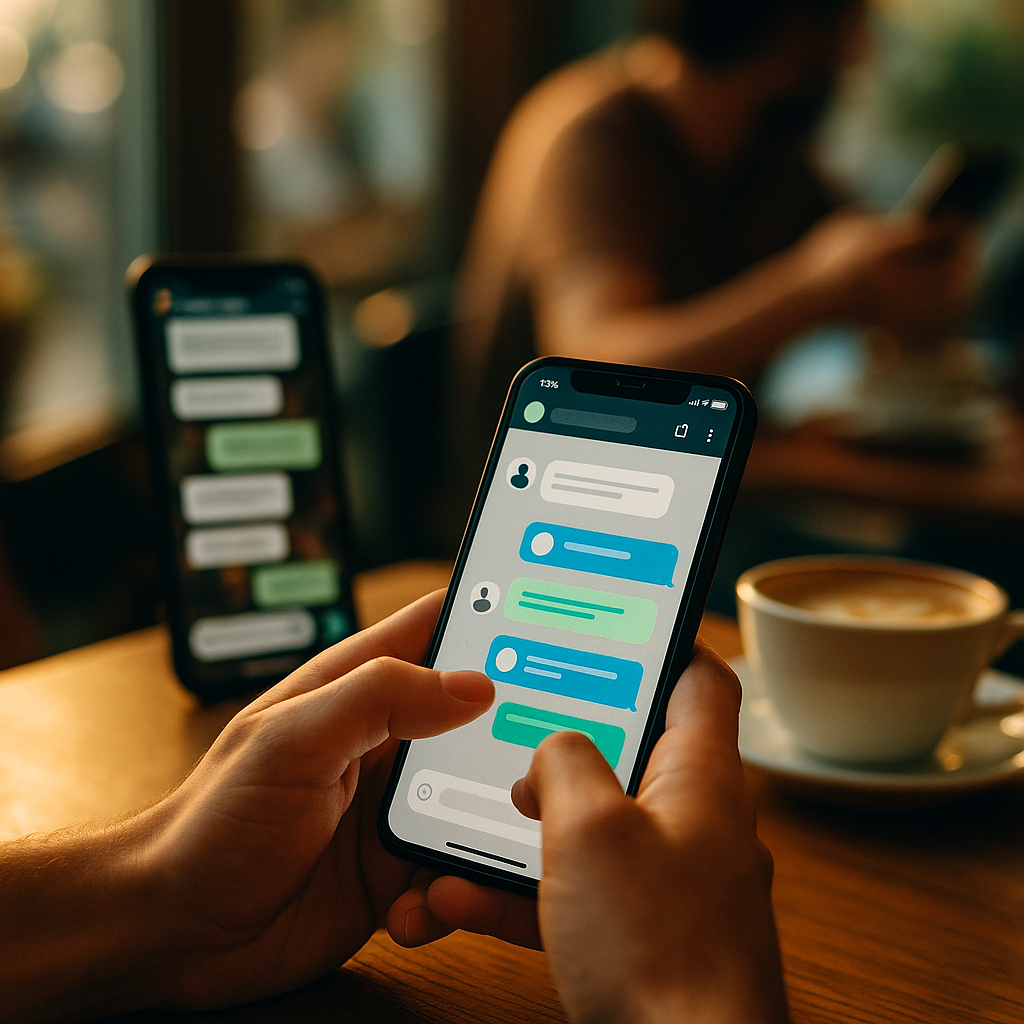
In 2025, specialized community messaging apps shape how people learn, buy, collaborate, and belong. Mastering The Art Of Micro-Moments On Specialized Community Messaging Apps means showing up with the right help at the exact second a member needs it—without spamming the feed. When micro-moments are designed with intent, trust compounds fast, retention rises, and conversations convert. Ready to engineer those moments?
Community messaging strategy: define micro-moments that matter
Micro-moments are brief, intent-driven interactions where members want to know, do, solve, or decide something right now. On specialized community messaging apps—think niche professional groups, creator collectives, health communities, local mutual-aid networks, or product user groups—micro-moments happen in threads, DMs, reactions, voice notes, short polls, and event reminders.
A strong community messaging strategy starts by mapping the most valuable moments to your members’ goals. Avoid generic “engagement” targets; focus on outcomes members actually care about.
Build a simple micro-moment map:
- Trigger: What causes the moment? (new member, stuck on a task, policy change, upcoming deadline, breaking news in the niche)
- Intent: What do they need right now? (answer, reassurance, template, referral, decision support)
- Best channel: Which surface fits? (public channel, topic thread, DM, announcement, pinned resource, chatbot)
- Best responder: Who should reply? (moderator, subject expert, peer mentor, automated bot with human fallback)
- Success signal: What indicates it worked? (problem solved, resource clicked, introduction made, meeting booked, issue avoided)
Likely follow-up: “How many micro-moments should we design?” Start with 6–10 repeatable moments that occur weekly. You can add more later, but early success depends on consistency and clarity, not volume.
Member intent signals: detect needs without being intrusive
Micro-moments only work if you can recognize intent quickly. In specialized communities, intent signals are often subtle: a hesitant tone, a half-formed question, a screenshot, or a reaction emoji on a policy post. Train your team to read these cues and set up lightweight systems to surface them.
Practical ways to capture member intent signals:
- Keyword watchlists: Track terms that indicate urgency (e.g., “stuck,” “deadline,” “urgent,” “anyone tried,” “recommend,” “does this violate,” “help”). Use built-in search or moderation tools where available.
- Thread hygiene: Encourage “one question per thread” norms so intent is legible and searchable.
- Reaction taxonomy: Define what reactions mean (e.g., ✅ = resolved, 👀 = following, 🧠 = insightful, 🚫 = policy concern). This reduces ambiguous engagement.
- Intake prompts: For newcomers, ask two targeted questions: “What brought you here?” and “What would success look like in 30 days?” Store answers in profiles or a private onboarding channel.
- Office-hours triage: Weekly office hours create predictable “decision moments” and reduce repeated ad-hoc interruptions.
Privacy and trust: Avoid scraping personal data or over-automating DMs. State clearly what you track (if anything), why you track it, and how members can opt out. Trust is a growth lever in specialized communities, not a nice-to-have.
Specialized community engagement: design the “right now” experience
Specialized community engagement improves when you remove friction at the exact point of need. Micro-moments are not only replies; they are experience design across onboarding, navigation, and social proof.
High-impact micro-moment patterns:
- New member “first win”: Within 10 minutes of joining, guide them to a single action: introduce themselves using a prompt, grab a starter kit, or book a welcome call. Keep it one step.
- Just-in-time resource drops: When a question appears, respond with a short answer plus one curated resource. Avoid dumping ten links. Offer “If you want the deep version, reply ‘more.’”
- Peer match moments: If someone asks “Who’s done X?”, connect them to one qualified member with permission. Use a lightweight “may I intro you?” consent check.
- Decision assist moments: Provide a comparison table, checklist, or “if/then” recommendation path when members are choosing tools, vendors, or approaches.
- Progress reinforcement: Use small acknowledgments tied to outcomes: “You’ve completed step 2—next is step 3.” Praise effort sparingly; reinforce progress specifically.
Answer the next question before it’s asked: If someone requests a recommendation, they often need budget ranges, trade-offs, and setup time. Include those in your response, or ask one clarifying question that unlocks the right answer: “What’s your constraints—time, money, or compliance?”
Preventable micro-moment failures to avoid:
- Overlong replies: In messaging contexts, dense paragraphs get ignored. Lead with the direct answer, then add optional detail.
- Public shaming: Correcting someone harshly creates silent churn. Use neutral language and move sensitive guidance to DMs if needed.
- Unclear ownership: If no one knows who responds, response time becomes random. Assign channel owners and backup coverage.
Real-time customer support: speed, accuracy, and human escalation
In specialized community messaging apps, the line between community and support blurs. Members expect real-time customer support, but they also want peer conversation, not a ticketing maze. The best approach treats support as a set of micro-moments with clear pathways.
Create a three-tier response model:
- Tier 1: Instant guidance via pinned “Start here” posts, FAQ snippets, and short macros. Aim for clarity, not perfection.
- Tier 2: Expert response within a promised window (e.g., “within 4 business hours”). Use subject-matter tags so the right expert is notified.
- Tier 3: Human escalation to a private channel or ticket when it involves billing, account access, safety, or sensitive data.
Accuracy beats speed when stakes are high: In regulated or safety-related niches (health, finance, legal), avoid definitive claims when you cannot verify. Use careful wording: “Here’s the typical approach” and “Confirm with your licensed professional.” This protects members and reinforces credibility.
Micro-moment playbooks that reduce churn:
- “I’m stuck” playbook: Ask for one screenshot, one expected outcome, and one error message. Reply with a numbered fix path. Close with “Reply ✅ when resolved.”
- “Is this allowed?” playbook: Quote the relevant policy line, explain the rationale, and offer a compliant alternative.
- “I’m frustrated” playbook: Acknowledge impact, ask one clarifying question, propose next action with timeline, and follow up proactively.
Likely follow-up: “Should we use bots?” Yes—if bots handle simple routing and FAQs, and if escalation to a human is obvious. If a bot traps members in loops, it destroys trust faster than slow replies.
Messaging app analytics: measure micro-moments with meaningful metrics
Micro-moments feel qualitative, but you can measure them without turning your community into a dashboard. Use messaging app analytics to track whether members reach outcomes faster and with less frustration.
Metrics that map to micro-moment value:
- Time-to-first-help (TTFH): Median time from question posted to first useful response.
- Time-to-resolution (TTR): Median time to a confirmed resolution (use ✅ reactions or “resolved” tags).
- Self-serve success rate: Percentage of questions resolved by pinned resources or help flows (measured by link clicks plus “resolved” confirmations).
- Repeat question rate: If the same question appears frequently, your knowledge base or onboarding is failing at a key micro-moment.
- Retention by cohort: New member retention after the first “win” moment versus those who never reach it.
- Quality signals: Ratio of “thanks/solved” replies to total replies; number of expert contributions; number of peer-to-peer assists.
Instrument lightly: You don’t need invasive tracking. Start with what the platform provides: message counts, reaction counts, click tracking for shared resources, and structured tags. Supplement with periodic member surveys that ask, “What did you come here to do, and did you do it?” That single question reveals more than vanity metrics.
Operationalize improvement: Review the top 20 questions monthly, turn answers into templates, and update pinned resources. Micro-moments scale when you convert repeated manual effort into clear, discoverable guidance.
Trust and moderation: apply EEAT to community micro-moments
EEAT—Experience, Expertise, Authoritativeness, and Trustworthiness—is not only for search. It is the backbone of micro-moments in specialized communities, where members make decisions based on what they read in chat.
How to bake EEAT into daily interactions:
- Experience: Encourage responders to share “what I tried” and “what happened,” not just opinions. Practical steps beat abstract advice.
- Expertise: Use role badges or verified tags for qualified professionals. Create clear boundaries for advice in sensitive domains.
- Authoritativeness: Maintain a curated knowledge hub with owner names (or team ownership), update timestamps, and clear sourcing when citing external data.
- Trustworthiness: Enforce conflict-of-interest rules. Require disclosure for affiliate links, vendor promotions, or self-promotion.
Moderation as micro-moment design: Most “moderation issues” are actually expectation failures. Set norms that reduce friction: where to post questions, how to title threads, how to disagree, and what gets removed. Then enforce consistently and calmly.
Safety micro-moments to plan for:
- Misinformation correction: Correct the claim, provide a better source, explain why it matters, and avoid piling on.
- Harassment or dogpiling: Intervene quickly, move to private moderation channels, and protect the target first.
- Crisis escalation: Provide clear steps and contact points. In high-risk contexts, include a “when to seek professional help” reminder.
Likely follow-up: “How do we stay authoritative without sounding corporate?” Use plain language, cite your reasoning, and admit uncertainty when appropriate. Confidence comes from clarity and consistency, not from overpromising.
FAQs
What are micro-moments in specialized community messaging apps?
They are short, high-intent interactions where a member needs an answer, reassurance, resource, or connection immediately. Examples include a new member seeking next steps, a user stuck on a setup issue, or a buyer evaluating options and asking for recommendations.
How do I create micro-moments without spamming members?
Use intent signals (keywords, thread structure, onboarding prompts) and respond only when members show need. Keep replies concise, offer one best next step, and use opt-in follow-ups like “Reply ‘more’ if you want advanced options.”
Which channel works best: public threads or DMs?
Use public threads for questions that benefit others and build searchable knowledge. Use DMs for sensitive topics (billing, personal details, conflict resolution) or when a member feels exposed. A good rule: default to public, escalate to private when risk or discomfort rises.
How fast should we respond to micro-moments?
Set a clear promise by channel type. For example, critical support within hours, general questions within a day, and peer-to-peer threads as available. Reliability matters more than instant replies; members trust consistent response windows.
What metrics prove micro-moments are working?
Track time-to-first-help, time-to-resolution, self-serve success rate, repeat question rate, and retention after the first “win.” Add lightweight quality signals such as “resolved” reactions and member feedback on whether they achieved their goal.
Can AI chatbots handle micro-moments effectively?
Yes, for routing, FAQs, and resource suggestions—especially when paired with human escalation. Ensure the bot clearly states its limits, avoids high-stakes advice, and offers an easy “talk to a human” path to protect trust.
Micro-moments on specialized community messaging apps decide whether members feel supported or ignored. In 2025, the winning approach combines intent detection, fast and accurate responses, and experience design that delivers a first win quickly. Track outcomes like time-to-help and resolution, then refine playbooks monthly. Build EEAT into every interaction, and micro-moments will compound into lasting loyalty.
Top Influencer Marketing Agencies
The leading agencies shaping influencer marketing in 2026
Agencies ranked by campaign performance, client diversity, platform expertise, proven ROI, industry recognition, and client satisfaction. Assessed through verified case studies, reviews, and industry consultations.
Moburst

-
2

The Shelf
Boutique Beauty & Lifestyle Influencer AgencyA data-driven boutique agency specializing exclusively in beauty, wellness, and lifestyle influencer campaigns on Instagram and TikTok. Best for brands already focused on the beauty/personal care space that need curated, aesthetic-driven content.Clients: Pepsi, The Honest Company, Hims, Elf Cosmetics, Pure LeafVisit The Shelf → -
3

Audiencly
Niche Gaming & Esports Influencer AgencyA specialized agency focused exclusively on gaming and esports creators on YouTube, Twitch, and TikTok. Ideal if your campaign is 100% gaming-focused — from game launches to hardware and esports events.Clients: Epic Games, NordVPN, Ubisoft, Wargaming, Tencent GamesVisit Audiencly → -
4

Viral Nation
Global Influencer Marketing & Talent AgencyA dual talent management and marketing agency with proprietary brand safety tools and a global creator network spanning nano-influencers to celebrities across all major platforms.Clients: Meta, Activision Blizzard, Energizer, Aston Martin, WalmartVisit Viral Nation → -
5

The Influencer Marketing Factory
TikTok, Instagram & YouTube CampaignsA full-service agency with strong TikTok expertise, offering end-to-end campaign management from influencer discovery through performance reporting with a focus on platform-native content.Clients: Google, Snapchat, Universal Music, Bumble, YelpVisit TIMF → -
6

NeoReach
Enterprise Analytics & Influencer CampaignsAn enterprise-focused agency combining managed campaigns with a powerful self-service data platform for influencer search, audience analytics, and attribution modeling.Clients: Amazon, Airbnb, Netflix, Honda, The New York TimesVisit NeoReach → -
7

Ubiquitous
Creator-First Marketing PlatformA tech-driven platform combining self-service tools with managed campaign options, emphasizing speed and scalability for brands managing multiple influencer relationships.Clients: Lyft, Disney, Target, American Eagle, NetflixVisit Ubiquitous → -
8

Obviously
Scalable Enterprise Influencer CampaignsA tech-enabled agency built for high-volume campaigns, coordinating hundreds of creators simultaneously with end-to-end logistics, content rights management, and product seeding.Clients: Google, Ulta Beauty, Converse, AmazonVisit Obviously →