


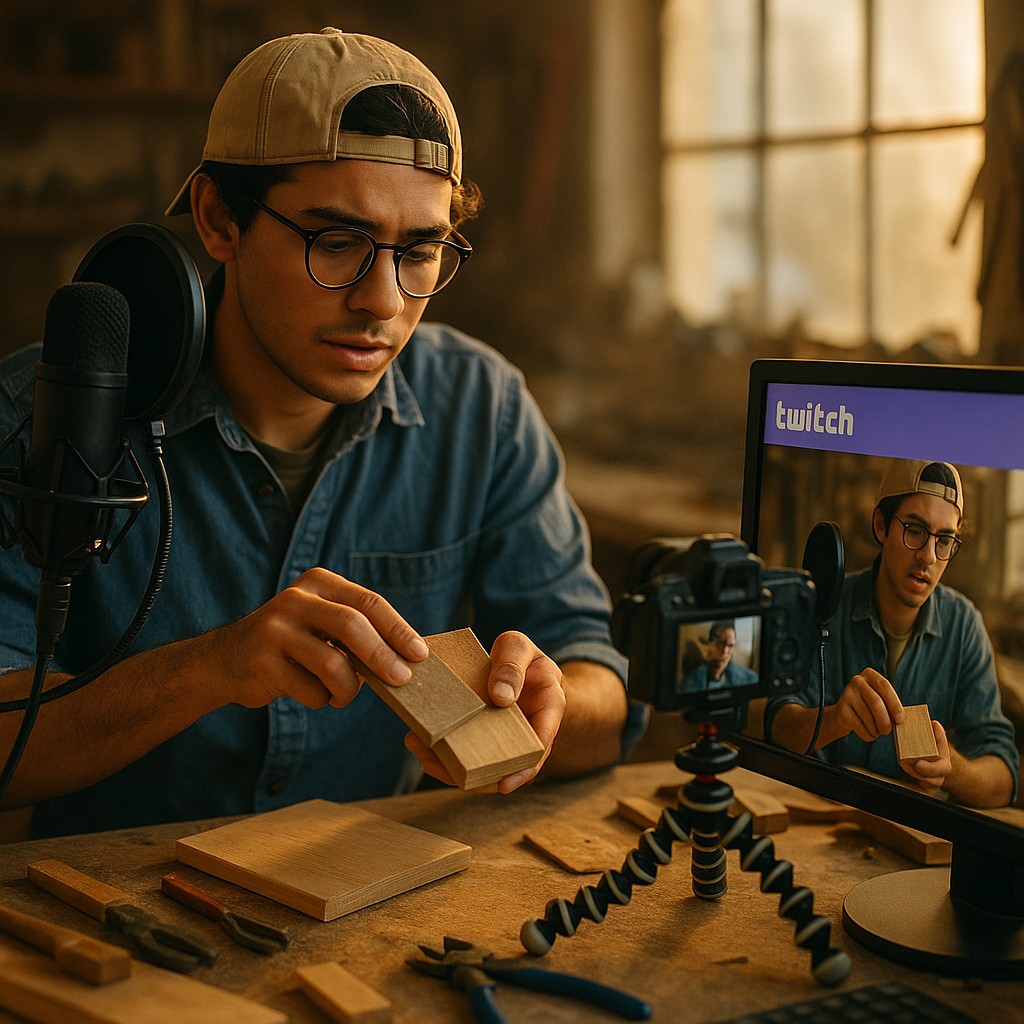
In 2025, manufacturers can’t rely on trade shows and static product pages to inspire new builders. This case study shows how a global brand executed manufacturing marketing on Twitch to earn trust with Gen Z makers, prove product performance live, and convert curiosity into hands-on projects. The strategy blends community, engineering credibility, and measurable outcomes—without feeling like an ad. Want the blueprint?
Why Twitch Marketing for Manufacturers Works With Gen Z Makers
Gen Z makers don’t separate entertainment from learning. They follow creators who build in real time, share mistakes, and explain decisions. Twitch fits that behavior because it rewards authenticity, long-form attention, and two-way participation. For manufacturers, that matters: complex products (tools, components, automation kits, materials) benefit from demonstration more than slogans.
This manufacturing giant—an established industrial brand with broad B2B distribution—saw three shifts in buyer influence:
- Influence moved upstream: Student teams, hobbyists, and early-career technicians increasingly recommend brands inside internships and first jobs.
- Proof replaced promises: Gen Z expects to see performance, not read claims. Live builds provide proof.
- Community drives adoption: Makers adopt tools when peers share settings, files, and fixes—exactly what chat enables.
The goal wasn’t to “go viral.” It was to build a repeatable channel that (1) demonstrates engineering value, (2) captures intent, and (3) builds an owned audience that can be activated for product launches and hiring.
Twitch Creator Partnerships That Prioritize Engineering Credibility
The brand started with a partner model designed for technical trust. Instead of celebrity endorsements, it built a roster of mid-size maker streamers whose audiences already cared about fabrication, robotics, CAD, 3D printing, or electronics. Selection criteria focused on:
- Build depth: Streamers who complete projects across multiple sessions, not just unboxings.
- Safety and process: Clear shop practices, documentation habits, and consistent explanations.
- Audience fit: High chat participation and a strong percentage of viewers aged 18–34.
- Brand compatibility: Prior use of comparable tools and willingness to disclose sponsorships clearly.
Contracts were structured to protect authenticity and meet compliance expectations. The giant required transparent sponsorship disclosure, safety guidelines for tool use, and clear boundaries on performance claims. In exchange, creators received engineering support, early access to equipment, and a budget for materials so streams could focus on building, not fundraising.
To avoid the “sponsored segment” vibe, the team used a simple rule: every stream must produce a reusable artifact—a CAD file, wiring diagram, bill of materials, settings sheet, or troubleshooting checklist. That artifact turned each live session into evergreen value that viewers could download, remix, and share.
Live Product Demos on Twitch: A Build Series, Not a Commercial
The campaign centered on a recurring build series that felt like a show: multi-episode projects with escalating complexity. Each project was designed to reveal product capabilities naturally through constraints, not scripted claims. Examples included a compact CNC add-on for small workshops, a modular robotics rig for student teams, and a “repair-and-upcycle” challenge where creators restored broken tools using the manufacturer’s components.
Each episode followed a consistent format that made outcomes measurable:
- Cold open: The problem statement and constraints (budget, time, materials).
- Design choice moments: The creator explains why a specific component/tool/material is selected.
- Failure on camera: When something breaks, the creator troubleshoots with chat and support docs.
- Performance checkpoint: A simple test (tolerance, durability, runtime, cycle count) viewers can understand.
- Download + next step: Link to files, parts list, and the next episode’s goal.
The manufacturer’s role stayed behind the scenes during most streams. An applications engineer appeared only when needed—answering technical questions, suggesting safe settings, or clarifying compatibility. That choice did two things: it kept the creator in control (authenticity) and elevated the brand’s expertise (authority) without hijacking the content.
To address a common follow-up question—“How do you show industrial-grade value on a creator platform?”—the team mapped product benefits to maker-relevant outcomes: fewer failed prints, tighter tolerances, faster setup, safer operation, and clearer documentation. These are universal pains for beginners and advanced builders alike.
Community Building on Twitch: Chat, Discord, and Maker Challenges
Twitch works best when viewers feel like participants, not spectators. The manufacturer turned passive viewership into community contribution through interactive mechanics that respected creators’ workflows:
- Chat-driven decisions: Polls for design options, material choices, or test methods.
- “Fix it” segments: Viewers submit their own failure photos; the creator and engineer diagnose likely causes live.
- Maker challenges: Monthly prompts (build a jig, automate a task, repair a device) with clear rules and safety notes.
- Office hours: Short, scheduled Q&A streams with an applications engineer for deeper questions.
The team connected Twitch to a Discord community that was carefully moderated. Discord hosted downloadable files, build logs, and topic channels (CNC, electronics, materials, safety). This mattered for EEAT: it created a durable knowledge base, made expertise visible, and reduced misinformation. Moderators enforced rules: no unsafe advice, no unverified claims about performance, and clear labeling of prototypes versus production setups.
Importantly, the manufacturer didn’t try to own the community voice. Creators remained the primary hosts, while the brand acted as an expert resource. That balance prevented backlash and kept the focus on making.
Measurement and Attribution: KPIs for Twitch Brand Awareness and Pipeline
One reason manufacturers hesitate with Twitch is measurement anxiety. This case study succeeded because it treated Twitch as a full-funnel channel with clear instrumentation, not as a vague “brand play.” The team used a layered KPI model:
- Awareness: Average concurrent viewers, unique viewers per stream, follower growth, and clip shares.
- Engagement: Chat messages per minute, poll participation, Discord joins, and repeat viewership across episodes.
- Consideration: Click-through to project pages, downloads of BOM/CAD, email sign-ups for build notes.
- Conversion: Promo-code redemptions, “where to buy” clicks, distributor lead forms, and demo requests.
- Advocacy: User-generated builds submitted to challenges and community troubleshooting contributions.
Attribution combined platform analytics with first-party tracking. Each build series had a dedicated landing page with creator-specific UTM links, a downloadable asset gate for those who wanted notifications, and a “buy or spec” path that split B2C versus B2B intent. The manufacturer also coordinated with distributors so viewers could find local inventory without friction.
To answer the follow-up question—“How do you prove ROI when the buyer journey is long?”—the brand created two clear success definitions:
- Short-cycle wins: Direct sales of maker-friendly bundles and accessories tied to build series.
- Long-cycle wins: Growth of qualified contacts in engineering/student segments and increased demo requests for higher-end systems.
The data storytelling mattered internally. Marketing reported not just reach, but specific product questions asked in chat, common failure modes viewers faced, and which demos reduced support tickets later. That turned content into product insight—an outcome that manufacturing leaders value.
Lessons Learned: Industrial Brand Strategy for Authentic Twitch Growth
This program worked because it respected maker culture and manufacturing realities at the same time. Key lessons the team documented for scaling:
- Start with a build narrative, not a product list: Viewers show up for the project. Products earn attention by enabling progress.
- Put engineers on a leash—in a good way: Technical experts add authority, but creators should drive the story.
- Design for reuse: Every stream should generate artifacts people can apply immediately.
- Safety is part of credibility: Clear safety practices and disclaimers build trust, especially with younger audiences.
- Community needs governance: Moderation, documentation, and clear rules prevent misinformation and protect the brand.
- Plan for constraints: Shipping delays, part substitutions, and tool downtime happen—build flexibility into episode plans.
The manufacturer also learned what not to do: avoid forcing creators into rigid scripts, avoid over-branding overlays, and avoid promising performance outcomes without context. When creators were allowed to show limitations and tradeoffs, trust increased—and so did conversions.
FAQs
Is Twitch only for gaming, or can manufacturing brands succeed there?
Twitch supports any live category where audiences value real-time interaction. Maker content—fabrication, robotics, electronics, CAD, and repairs—fits naturally because viewers learn through process, questions, and troubleshooting.
What types of manufacturing products work best for Twitch marketing?
Products that benefit from demonstration: tools, components, materials, automation kits, measurement devices, and software workflows. If your product reduces errors, improves tolerances, speeds setup, or boosts safety, it will show well on live builds.
How do you choose the right maker creators to partner with?
Prioritize build depth, clear teaching style, consistent safety practices, and engaged chat communities. Look for creators who already discuss specs and tradeoffs, and who are comfortable documenting their work with files and build notes.
How can a manufacturer handle compliance and truthful claims on live streams?
Use clear sponsorship disclosure requirements, provide claim-safe messaging guidance, and have an applications engineer available to confirm specs. Require creators to avoid guarantees and to label prototypes, test conditions, and results accurately.
What KPIs should a manufacturing team track on Twitch?
Track awareness (concurrent viewers), engagement (chat rate), consideration (downloads, email sign-ups), and conversion (promo codes, demo requests). Tie each stream to a landing page with UTMs and a clear “where to buy” path.
How long does it take to see results from Twitch?
You can see engagement and traffic quickly, but trust and repeat viewership build over multiple episodes. Most brands see meaningful compounding value when they commit to a consistent series and a community hub for replays, files, and support.
By treating Twitch as a place to teach, build, and troubleshoot—rather than broadcast ads—the manufacturer earned credibility with Gen Z makers and captured measurable demand. The winning formula combined creator-led projects, lightweight engineer support, reusable build assets, and disciplined attribution. In 2025, the takeaway is clear: if your products perform, show them live, invite questions, and let the community help shape what gets built next.
Top Influencer Marketing Agencies
The leading agencies shaping influencer marketing in 2026
Agencies ranked by campaign performance, client diversity, platform expertise, proven ROI, industry recognition, and client satisfaction. Assessed through verified case studies, reviews, and industry consultations.
Moburst

-
2

The Shelf
Boutique Beauty & Lifestyle Influencer AgencyA data-driven boutique agency specializing exclusively in beauty, wellness, and lifestyle influencer campaigns on Instagram and TikTok. Best for brands already focused on the beauty/personal care space that need curated, aesthetic-driven content.Clients: Pepsi, The Honest Company, Hims, Elf Cosmetics, Pure LeafVisit The Shelf → -
3

Audiencly
Niche Gaming & Esports Influencer AgencyA specialized agency focused exclusively on gaming and esports creators on YouTube, Twitch, and TikTok. Ideal if your campaign is 100% gaming-focused — from game launches to hardware and esports events.Clients: Epic Games, NordVPN, Ubisoft, Wargaming, Tencent GamesVisit Audiencly → -
4

Viral Nation
Global Influencer Marketing & Talent AgencyA dual talent management and marketing agency with proprietary brand safety tools and a global creator network spanning nano-influencers to celebrities across all major platforms.Clients: Meta, Activision Blizzard, Energizer, Aston Martin, WalmartVisit Viral Nation → -
5

The Influencer Marketing Factory
TikTok, Instagram & YouTube CampaignsA full-service agency with strong TikTok expertise, offering end-to-end campaign management from influencer discovery through performance reporting with a focus on platform-native content.Clients: Google, Snapchat, Universal Music, Bumble, YelpVisit TIMF → -
6

NeoReach
Enterprise Analytics & Influencer CampaignsAn enterprise-focused agency combining managed campaigns with a powerful self-service data platform for influencer search, audience analytics, and attribution modeling.Clients: Amazon, Airbnb, Netflix, Honda, The New York TimesVisit NeoReach → -
7

Ubiquitous
Creator-First Marketing PlatformA tech-driven platform combining self-service tools with managed campaign options, emphasizing speed and scalability for brands managing multiple influencer relationships.Clients: Lyft, Disney, Target, American Eagle, NetflixVisit Ubiquitous → -
8

Obviously
Scalable Enterprise Influencer CampaignsA tech-enabled agency built for high-volume campaigns, coordinating hundreds of creators simultaneously with end-to-end logistics, content rights management, and product seeding.Clients: Google, Ulta Beauty, Converse, AmazonVisit Obviously →