


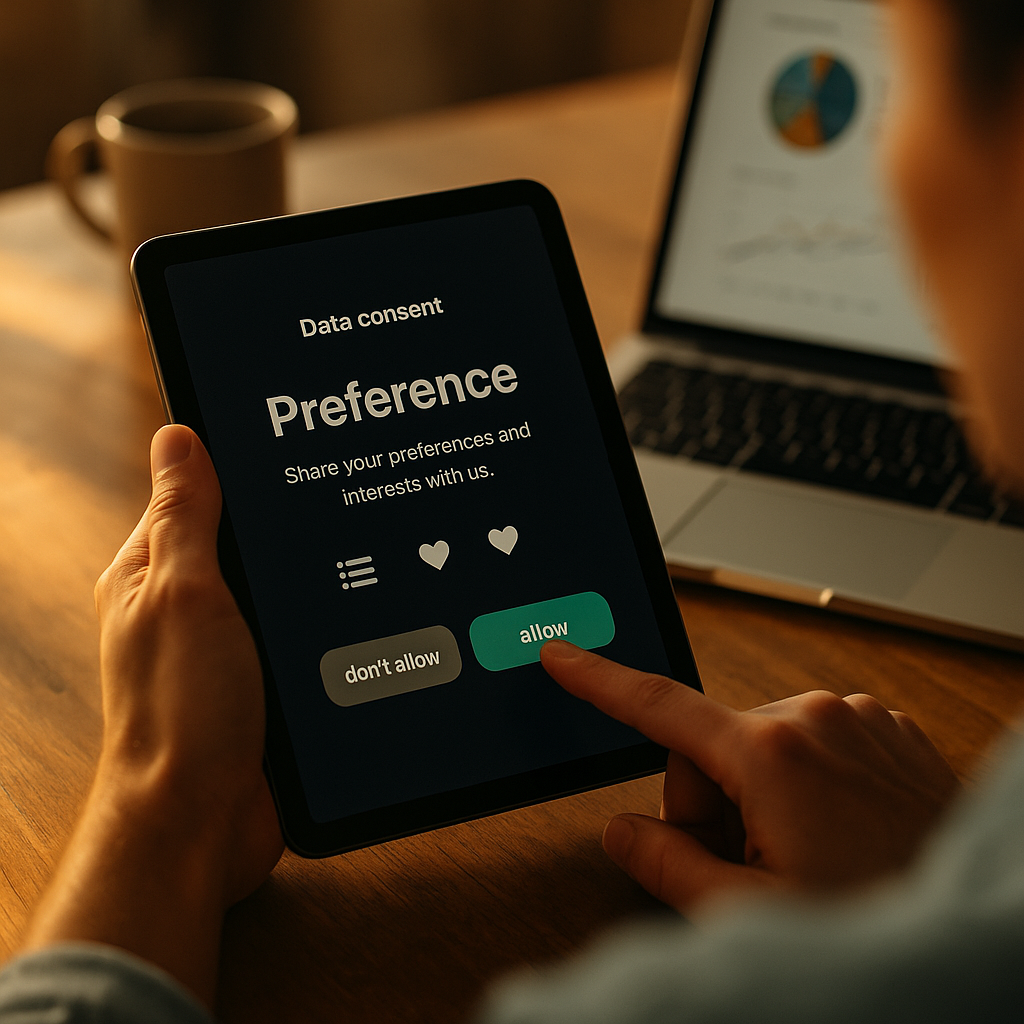
Zero-party data collection platforms give privacy-first brands a direct way to learn what customers want—by asking and receiving answers willingly. In 2025, that shift matters because third-party identifiers keep disappearing, and consumers expect clear choices and value in return. This review explains how leading tools work, what to look for, and which fits your use case—before you commit budget.
What is zero-party data and why it matters for privacy-first marketing
Zero-party data is information a person intentionally and proactively shares with a brand. That includes preferences, sizes, interests, intent, communication frequency, and product needs—often captured through quizzes, surveys, forms, preference centers, and interactive experiences. Unlike inferred data, it’s explicit, user-provided, and easier to justify for personalization because customers understand what they’re sharing and why.
For privacy-first brands, the advantage is not just compliance; it’s quality. When someone tells you “I have sensitive skin,” “I’m shopping for a gift,” or “Text me once a week,” your segmentation becomes more accurate, your messaging becomes more relevant, and your customer experience becomes less intrusive. It also supports consent-forward customer journeys: you can connect the data to a clear purpose (recommendation, replenishment reminders, loyalty benefits) and allow changes later through a preference center.
People often ask whether zero-party data replaces first-party data. It doesn’t—it complements it. First-party behavioral signals (site browsing, purchase history) show what happened; zero-party answers explain why and what the customer wants next. The best programs combine both to reduce guesswork and minimize over-collection.
Zero-party data collection platforms: core features to evaluate
Most platforms in this category look similar at a glance, but the details determine whether you gain trustworthy insights or just collect more forms. Use these evaluation criteria to compare options confidently.
- Consent, transparency, and auditability: Built-in consent capture, purpose statements, and proof of consent (time, source, language). Look for easy opt-out and preference editing.
- Data minimization controls: Ability to limit fields, set retention rules, and avoid collecting sensitive attributes unless truly necessary. This supports privacy-by-design.
- Experience formats: Product finders, quizzes, surveys, gated content, calculators, and progressive profiling. More formats usually means more use cases without new tools.
- Identity resolution and profile stitching: How the tool connects answers to an email, phone number, account ID, or anonymous session—and how it handles duplicates.
- Integrations: Native or reliable connectors to email/SMS, ecommerce, CRM, CDP, data warehouse, and ad platforms (where allowed). Pay attention to bi-directional sync and field mapping.
- Analytics and experimentation: Drop-off reporting, question performance, A/B testing, and outcome measurement (conversion rate, AOV, repeat purchase). Strong measurement prevents “quiz-for-quiz’s-sake.”
- Security and governance: Role-based access control, SSO, data encryption, and clear sub-processor policies. Ask for documentation and a security overview.
- Operational fit: Non-technical editing, brand controls, localization, accessibility, and workflow approvals—so marketing can move fast without risky workarounds.
Also decide where the “source of truth” should live. Many brands prefer zero-party attributes to land in a customer profile system (CRM/CDP) and then sync to messaging tools. Others keep the platform as the attribute store and push only what’s needed. Your answer affects governance, reporting, and long-term portability.
Interactive quizzes and product finder tools: best options for ecommerce
If you sell products with choice complexity—skincare, supplements, fashion, home goods—interactive quizzes and product finders convert well because they reduce decision fatigue. These tools typically excel at on-site personalization and email capture while gathering preference data.
Typeform remains a strong choice for brand-forward, conversational forms and quizzes. It’s widely adopted, flexible, and easy to publish. It works well when you need polished UX and broad integrations. Consider it if your team values speed and design, and you can manage deeper identity and governance needs in your CRM/CDP.
Jebbit focuses on interactive experiences built for marketing outcomes—quizzes, assessments, and preference capture—with an enterprise tilt. It’s often shortlisted when brands want strong activation pathways into marketing stacks and a structured approach to experience templates.
Octane AI is commonly used by Shopify brands for product quizzes and onsite personalization. It can be effective for “guided selling” and list growth, particularly when your workflow lives inside ecommerce and lifecycle marketing tools. Evaluate data portability and attribute governance if you plan to expand beyond Shopify-centric operations.
Outgrow specializes in calculators, assessments, and interactive content that can double as lead qualification. It’s a good fit for brands offering configurable products, subscriptions, or services where a calculator can capture needs (budget, goals, usage) while demonstrating value.
Best-fit guidance: Choose an ecommerce quiz tool if you need revenue impact quickly—product recommendations, bundles, personalized landing pages, and lifecycle flows. If your primary goal is long-term preference governance across channels, prioritize platforms with stronger consent logging, profile syncing, and administrative controls.
Preference centers and consent management: tools for first-party relationships
Preference centers and consent systems turn “permission” into a durable asset. They let customers decide what they receive, how often, and about what topics—while giving your team a safer basis for segmentation. For privacy-first brands, this category is where trust is built or lost.
OneTrust is a widely used privacy and consent platform with capabilities that can support consent capture, preference management, and governance workflows. It’s often selected by organizations that need robust compliance operations, structured documentation, and cross-team controls. It may be heavier than a marketing-led tool, but it can reduce legal and security friction if your brand has complex requirements.
Didomi is known for consent and preference management features and is frequently evaluated by brands that want a strong user experience with regional compliance support. If your brand operates across multiple jurisdictions and needs careful control of consent logic, it can be a strong contender.
TrustArc offers privacy management tooling that can support consent and governance needs. It’s typically considered by teams prioritizing broader privacy program management alongside customer-facing consent experiences.
Many readers ask whether a consent platform alone counts as “zero-party data.” Consent choices and communication preferences are zero-party attributes if captured transparently and used as stated. The practical point is this: don’t treat consent as a checkbox. Make preferences useful (topics, cadence, channels), keep them editable, and connect them to real suppression rules in your marketing tools.
CDPs and marketing automation integrations: turning zero-party data into revenue
Collecting answers is easy; operationalizing them is what separates high-performing programs from forgotten dashboards. Zero-party data becomes valuable when it flows into segmentation, personalization, service workflows, and measurement.
Twilio Segment is commonly used to route customer events and traits across tools. If you want zero-party attributes (like style preferences or replenishment timelines) to power email/SMS, onsite personalization, and analytics consistently, a CDP can provide the connective tissue. The key is disciplined trait naming, governance, and clear ownership.
mParticle and Tealium are also frequently used in enterprise stacks for profile and event management. They can help standardize data collection and activation, particularly when multiple apps and regions are involved. They are strongest when supported by mature data governance and engineering resources.
Braze, Klaviyo, and similar lifecycle platforms can store attributes and drive segmentation and messaging. Many brands push quiz answers directly into these tools to trigger flows (welcome series variants, replenishment reminders, category education). This works well when your primary activation channel is lifecycle messaging, but you still need a plan for central governance and portability.
Practical activation patterns that perform well:
- Progressive profiling: Ask 1–2 questions at signup, then request more later based on engagement.
- Preference-based onboarding: Use answers to personalize education content and product recommendations.
- Service alignment: Send key preferences to customer support so agents can respond consistently.
- Suppression and frequency controls: Respect cadence choices to reduce unsubscribes and spam complaints.
A likely follow-up is: “Should we store this in the CDP or the quiz tool?” If you care about long-term durability, portability, and consistent activation, store canonical attributes in a system designed for customer profiles (CDP/CRM/warehouse) and treat collection tools as capture interfaces.
Implementation checklist and vendor questions: reduce risk and improve outcomes
Platform selection is only half the work. A privacy-first program succeeds when the experience is clear, the exchange is fair, and the data is governed. Use this checklist to avoid common pitfalls.
- Define the value exchange: What does the customer get immediately (recommendation, discount, content, early access)? Make it explicit in the experience.
- Write purpose statements: For each question, state why you’re asking and how it will be used. Remove anything you can’t justify.
- Classify data sensitivity: Decide what counts as sensitive for your brand and avoid it unless essential. When necessary, add extra transparency and controls.
- Set retention rules: Preferences go stale. Decide when to refresh (e.g., style changes) and when to delete.
- Create a preference lifecycle: Let customers update choices via a preference center, and log changes.
- Measure outcomes: Tie collection to KPIs—conversion rate, return rate, AOV, LTV proxies, unsubscribe rate, and customer satisfaction signals.
Vendor questions to ask before signing:
- How do you capture and store consent and purpose for each attribute?
- Can we export all collected data in a structured format at any time?
- Where is data stored, and what security controls are standard (encryption, RBAC, SSO)?
- How do you handle deletion requests and suppression syncing across integrations?
- Do you support localization, accessibility, and brand controls without custom code?
- What reporting shows question drop-off and business outcomes?
Finally, align stakeholders early. Marketing owns the experience, legal owns risk tolerance, security owns controls, data teams own schemas, and customer support feels the downstream effects. A short cross-functional review reduces rework and helps you keep promises made to customers.
FAQs
-
What is the difference between zero-party data and first-party data?
Zero-party data is intentionally shared by the customer (preferences, intent, needs). First-party data is observed from interactions (purchases, browsing, app usage). Used together, they improve personalization while reducing reliance on inference.
-
Do zero-party data collection platforms replace cookies?
They don’t “replace” cookies one-to-one. They reduce dependence on third-party identifiers by building direct, permissioned customer profiles. You can still use first-party measurement where appropriate, but your targeting and personalization rely more on explicit preferences.
-
How do I choose between a quiz tool and a preference center?
Choose a quiz tool when you need guided selling and immediate conversion lift. Choose a preference center when you need durable communication controls, consent-based segmentation, and ongoing trust. Many brands use both: quizzes for capture, preference centers for long-term governance.
-
What data should we avoid collecting?
Avoid collecting sensitive information unless it’s essential to deliver the promised experience. Even when not legally classified as sensitive, minimize what you collect, explain the purpose, and provide simple ways to edit or delete preferences.
-
Where should zero-party attributes be stored?
Store canonical attributes in your CRM, CDP, or data warehouse if you need portability and consistent activation across channels. Collection tools should pass data downstream with clear schemas, timestamps, and consent context.
-
How can we prove ROI from zero-party data?
Track quiz completion and opt-in rates, then connect attributes to outcomes: conversion rate uplift on recommended products, lower return rates from better fit, improved email/SMS engagement, reduced unsubscribes due to frequency controls, and higher repeat purchase from relevant replenishment or education flows.
Zero-party data works when it improves the customer experience and strengthens trust, not when it simply increases data volume. In 2025, the best brands treat collection as a transparent value exchange, choose platforms with strong consent and integration foundations, and measure outcomes tied to revenue and retention. Pick tools that match your maturity, keep governance tight, and let customers stay in control.
Top Influencer Marketing Agencies
The leading agencies shaping influencer marketing in 2026
Agencies ranked by campaign performance, client diversity, platform expertise, proven ROI, industry recognition, and client satisfaction. Assessed through verified case studies, reviews, and industry consultations.
Moburst

-
2

The Shelf
Boutique Beauty & Lifestyle Influencer AgencyA data-driven boutique agency specializing exclusively in beauty, wellness, and lifestyle influencer campaigns on Instagram and TikTok. Best for brands already focused on the beauty/personal care space that need curated, aesthetic-driven content.Clients: Pepsi, The Honest Company, Hims, Elf Cosmetics, Pure LeafVisit The Shelf → -
3

Audiencly
Niche Gaming & Esports Influencer AgencyA specialized agency focused exclusively on gaming and esports creators on YouTube, Twitch, and TikTok. Ideal if your campaign is 100% gaming-focused — from game launches to hardware and esports events.Clients: Epic Games, NordVPN, Ubisoft, Wargaming, Tencent GamesVisit Audiencly → -
4

Viral Nation
Global Influencer Marketing & Talent AgencyA dual talent management and marketing agency with proprietary brand safety tools and a global creator network spanning nano-influencers to celebrities across all major platforms.Clients: Meta, Activision Blizzard, Energizer, Aston Martin, WalmartVisit Viral Nation → -
5

The Influencer Marketing Factory
TikTok, Instagram & YouTube CampaignsA full-service agency with strong TikTok expertise, offering end-to-end campaign management from influencer discovery through performance reporting with a focus on platform-native content.Clients: Google, Snapchat, Universal Music, Bumble, YelpVisit TIMF → -
6

NeoReach
Enterprise Analytics & Influencer CampaignsAn enterprise-focused agency combining managed campaigns with a powerful self-service data platform for influencer search, audience analytics, and attribution modeling.Clients: Amazon, Airbnb, Netflix, Honda, The New York TimesVisit NeoReach → -
7

Ubiquitous
Creator-First Marketing PlatformA tech-driven platform combining self-service tools with managed campaign options, emphasizing speed and scalability for brands managing multiple influencer relationships.Clients: Lyft, Disney, Target, American Eagle, NetflixVisit Ubiquitous → -
8

Obviously
Scalable Enterprise Influencer CampaignsA tech-enabled agency built for high-volume campaigns, coordinating hundreds of creators simultaneously with end-to-end logistics, content rights management, and product seeding.Clients: Google, Ulta Beauty, Converse, AmazonVisit Obviously →