


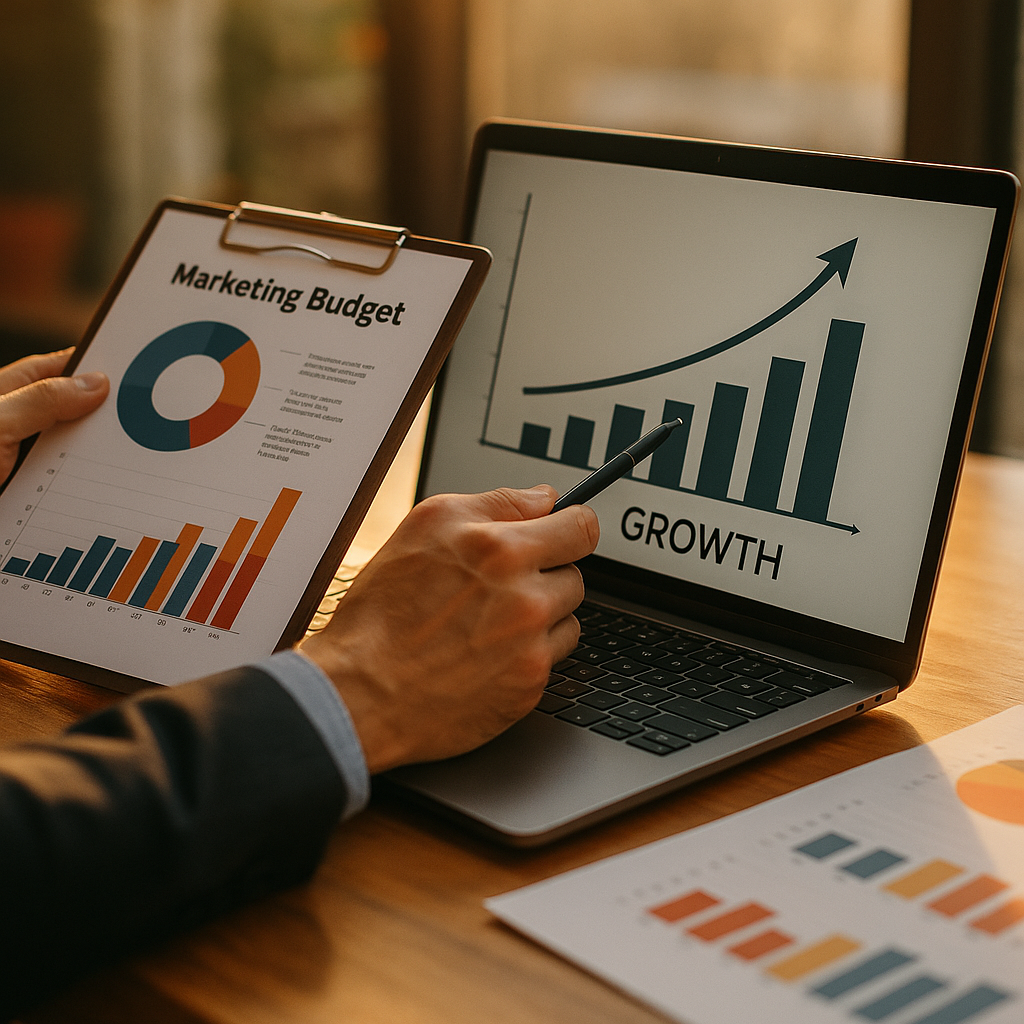
In 2025, marketing leaders are rethinking how money moves through the funnel. Transitioning From Campaign-Based Budgeting To Always-On Growth Models helps teams replace sporadic “big pushes” with continuous learning, steady demand capture, and faster compounding returns. The shift is not just operational; it reshapes measurement, governance, and cross-functional alignment. Done well, it unlocks predictable growth—so what changes first?
Always-on growth model: what it is and why campaign cycles fall short
An always-on growth model funds and runs core acquisition, activation, retention, and expansion programs continuously—while still allowing room for seasonal moments or launches. Instead of starting from zero every quarter, teams maintain an operating system that captures demand daily, learns from every touchpoint, and reallocates budget based on performance signals.
Campaign-based budgeting often fails because it:
- Creates stop-start learning: each campaign resets audiences, creative hypotheses, and measurement baselines.
- Rewards activity over outcomes: spend gets justified by “launches” rather than by incremental revenue or pipeline impact.
- Overweights short-term spikes: volume surges can mask inefficient CAC and weak retention.
- Strains operations: teams sprint, burn out, then spend time rebuilding rather than optimizing.
Always-on does not mean “run the same ads forever.” It means you keep the learning loop running: persistent measurement, iterative creative, and ongoing audience refinement. Your launches still happen—only now they plug into a stable system that can amplify them.
Marketing budget reallocation: shifting from fixed spends to dynamic funding
The hardest part of the transition is not channels or creative; it’s how money gets approved. Traditional budgets lock spend into line items months in advance. An always-on approach requires marketing budget reallocation rules that move dollars toward what is producing incremental value now.
Practical ways to redesign budget structure:
- Split the budget into “run” and “change”: fund core always-on programs (run) and reserve a controlled test pool (change) for new bets.
- Use guardrails, not rigid caps: define acceptable CAC/LTV ranges, payback windows, and pipeline quality thresholds to govern scaling.
- Adopt rolling forecasts: update spend plans monthly (or biweekly for high-velocity channels) using actuals and leading indicators.
- Define reallocation triggers: for example, “If blended CAC rises above X for two weeks and retention does not improve, shift Y% to retention or mid-funnel nurture.”
If leadership asks, “How do we prevent budget chaos?” the answer is governance. Set a cadence (weekly channel reviews, monthly finance check-ins) and a decision framework (what metrics matter, what time horizon, what confidence threshold). This turns budget movement into a controlled process rather than a scramble.
Always-on performance marketing: channels, content, and creative that compound
Always-on performance marketing works best when you treat each channel as part of a connected system. That means building durable assets and feedback loops rather than one-off flights.
Core building blocks that compound over time:
- Evergreen demand capture: branded search, high-intent non-brand search, marketplace listings (if relevant), and conversion-optimized landing pages.
- Continuous audience development: first-party audiences (site visitors, engaged content consumers, product-qualified leads) and privacy-resilient segmentation.
- Lifecycle programs: onboarding, activation nudges, usage education, and expansion offers that reduce churn and improve LTV.
- Creative iteration pipeline: a repeatable process to generate, test, and refresh ads and messages based on observed objections and top-converting angles.
To answer the common follow-up—“Will always-on reduce our ability to do big launches?”—it actually improves it. When you already have warm audiences, validated messages, and stable conversion paths, launches scale faster and waste less spend. Your “launch” becomes an acceleration layer, not the only moment you show up.
Operationally, create a steady rhythm:
- Weekly: creative and audience tests, landing page adjustments, bid/budget tuning.
- Monthly: channel mix shifts, offer experiments, messaging refresh based on sales and support insights.
- Quarterly: major positioning updates, site information architecture improvements, bigger product or regional pushes.
Full-funnel measurement: KPIs that finance and growth teams trust
Shifting to always-on breaks down if measurement stays stuck in last-click thinking. You need full-funnel measurement that balances speed (for optimization) with rigor (for investment decisions). In 2025, most teams combine multiple lenses rather than relying on a single attribution model.
Build a measurement stack that includes:
- Leading indicators: CTR, CVR, cost per lead, product activation rate, trial-to-paid conversion—useful for weekly optimization.
- Business outcomes: pipeline created, revenue, margin, retention, and LTV—used for monthly and quarterly allocation.
- Incrementality signals: geo or holdout tests, lift experiments, and controlled audience splits to estimate what spend actually causes.
- Quality metrics: sales acceptance rate, time-to-close, expansion rate, support tickets per cohort—ensures growth is healthy, not just fast.
To make finance comfortable, document definitions and data sources: what counts as a qualified lead, what date is used for revenue attribution, and how refunds or churn are handled. A simple but effective practice is a single KPI dictionary shared across marketing, sales, product, and finance.
Also anticipate “What do we optimize for when signals conflict?” Set a hierarchy. For example: (1) incrementality and retention thresholds must be met, then (2) payback window, then (3) volume. This prevents teams from scaling channels that look efficient but create low-quality customers.
Revenue growth operations: processes, roles, and governance for always-on execution
Always-on fails when it becomes “marketing runs ads continuously.” Sustainable growth needs revenue growth operations: a cross-functional system connecting marketing, sales, product, and customer success with shared priorities.
Roles and responsibilities to clarify:
- Growth owner: accountable for the end-to-end growth model, not just a channel.
- Performance lead: manages paid media, experimentation cadence, and budget pacing within guardrails.
- Lifecycle/CRM lead: improves activation, retention, and expansion through email, in-app, and customer programs.
- Analytics partner: maintains dashboards, testing methodology, and measurement integrity.
- Creative system: a repeatable intake and production process tied to performance insights, not subjective preference.
Governance that prevents drift:
- Weekly growth stand-up: review experiments, constraints, and next actions; keep it decision-oriented.
- Monthly business review: reconcile spend, pipeline/revenue, and cohort health; approve reallocations.
- Experiment backlog: prioritize by expected impact, confidence, and effort; retire losing ideas quickly.
EEAT depends on transparency. Capture learnings in a shared repository: what was tested, what changed, the result, and the decision. This builds organizational memory, reduces repeated mistakes, and makes results defensible to stakeholders.
Budget planning framework: a step-by-step transition plan without revenue disruption
A common fear is, “If we stop campaigns, will we lose momentum?” The goal is not to stop campaigns overnight, but to build an always-on base and migrate spend gradually using a budget planning framework.
Use this phased approach:
- Step 1: Audit current spend and outcomes: map every campaign and channel to funnel stage, cost, and measurable business impact. Identify “must-keep” programs that reliably drive qualified demand.
- Step 2: Define the always-on core: select 3–5 programs you will run continuously (e.g., evergreen search + retargeting + lifecycle onboarding + partner channel). Ensure tracking is stable before scaling.
- Step 3: Create a test-and-scale budget: set aside a controlled percentage for experiments (new audiences, offers, creators, landing pages). Require a clear hypothesis and success metric.
- Step 4: Establish reallocation rules: decide who can move budget, how often, and under what conditions. Document the thresholds.
- Step 5: Upgrade landing and conversion infrastructure: always-on amplifies whatever you send traffic to. Improve page speed, message-match, forms, pricing clarity, and post-conversion nurture.
- Step 6: Report in a way executives recognize: connect spend to pipeline, revenue, and cohort quality; explain what changed and why.
When executives ask for certainty, offer controlled risk: “We will migrate X% of spend to always-on over Y weeks, with guardrails on CAC, pipeline quality, and retention. If thresholds break, we pause scaling and reallocate.” This creates confidence without freezing learning.
FAQs
What is the biggest benefit of always-on growth models?
The biggest benefit is compounding learning and performance. You keep audiences warm, continuously refine messaging, and improve conversion paths over time, which typically lowers wasted spend and makes growth more predictable.
Do always-on models eliminate campaigns?
No. They reposition campaigns as accelerators rather than the foundation. Product launches and seasonal pushes still matter, but they plug into an ongoing system with established measurement and demand capture.
How much budget should be always-on versus experimental?
Many teams start by funding a stable always-on core and reserving a smaller portion for tests. The right split depends on maturity, channel volatility, and risk tolerance. What matters most is having explicit rules for scaling winners and stopping losers.
How do you measure success without relying only on attribution?
Combine fast optimization metrics (CVR, CPA, activation rate) with business outcomes (pipeline, revenue, retention) and incrementality methods (holdouts, geo tests). This triangulation helps separate correlation from true impact.
What if sales says lead quality dropped after moving to always-on?
Define lead qualification jointly, add quality metrics (acceptance rate, time-to-close), and adjust targeting and offers. Always-on makes it easier to fix quality issues because you can iterate weekly instead of waiting for the next campaign window.
Which teams need to be involved to make always-on work?
Marketing, sales, product, customer success, and finance should align on goals, definitions, and governance. Always-on growth is an operating model, so cross-functional agreement is a requirement, not a nice-to-have.
Always-on growth models replace sporadic budgeting with continuous, governed investment in what drives measurable outcomes. In 2025, the advantage goes to teams that keep demand capture running, improve conversion infrastructure, and reallocate spend based on incrementality and cohort health—not calendars. Build a stable always-on core, reserve budget for disciplined experiments, and operationalize weekly learning loops for durable growth.
Top Influencer Marketing Agencies
The leading agencies shaping influencer marketing in 2026
Agencies ranked by campaign performance, client diversity, platform expertise, proven ROI, industry recognition, and client satisfaction. Assessed through verified case studies, reviews, and industry consultations.
Moburst

-
2

The Shelf
Boutique Beauty & Lifestyle Influencer AgencyA data-driven boutique agency specializing exclusively in beauty, wellness, and lifestyle influencer campaigns on Instagram and TikTok. Best for brands already focused on the beauty/personal care space that need curated, aesthetic-driven content.Clients: Pepsi, The Honest Company, Hims, Elf Cosmetics, Pure LeafVisit The Shelf → -
3

Audiencly
Niche Gaming & Esports Influencer AgencyA specialized agency focused exclusively on gaming and esports creators on YouTube, Twitch, and TikTok. Ideal if your campaign is 100% gaming-focused — from game launches to hardware and esports events.Clients: Epic Games, NordVPN, Ubisoft, Wargaming, Tencent GamesVisit Audiencly → -
4

Viral Nation
Global Influencer Marketing & Talent AgencyA dual talent management and marketing agency with proprietary brand safety tools and a global creator network spanning nano-influencers to celebrities across all major platforms.Clients: Meta, Activision Blizzard, Energizer, Aston Martin, WalmartVisit Viral Nation → -
5

The Influencer Marketing Factory
TikTok, Instagram & YouTube CampaignsA full-service agency with strong TikTok expertise, offering end-to-end campaign management from influencer discovery through performance reporting with a focus on platform-native content.Clients: Google, Snapchat, Universal Music, Bumble, YelpVisit TIMF → -
6

NeoReach
Enterprise Analytics & Influencer CampaignsAn enterprise-focused agency combining managed campaigns with a powerful self-service data platform for influencer search, audience analytics, and attribution modeling.Clients: Amazon, Airbnb, Netflix, Honda, The New York TimesVisit NeoReach → -
7

Ubiquitous
Creator-First Marketing PlatformA tech-driven platform combining self-service tools with managed campaign options, emphasizing speed and scalability for brands managing multiple influencer relationships.Clients: Lyft, Disney, Target, American Eagle, NetflixVisit Ubiquitous → -
8

Obviously
Scalable Enterprise Influencer CampaignsA tech-enabled agency built for high-volume campaigns, coordinating hundreds of creators simultaneously with end-to-end logistics, content rights management, and product seeding.Clients: Google, Ulta Beauty, Converse, AmazonVisit Obviously →