


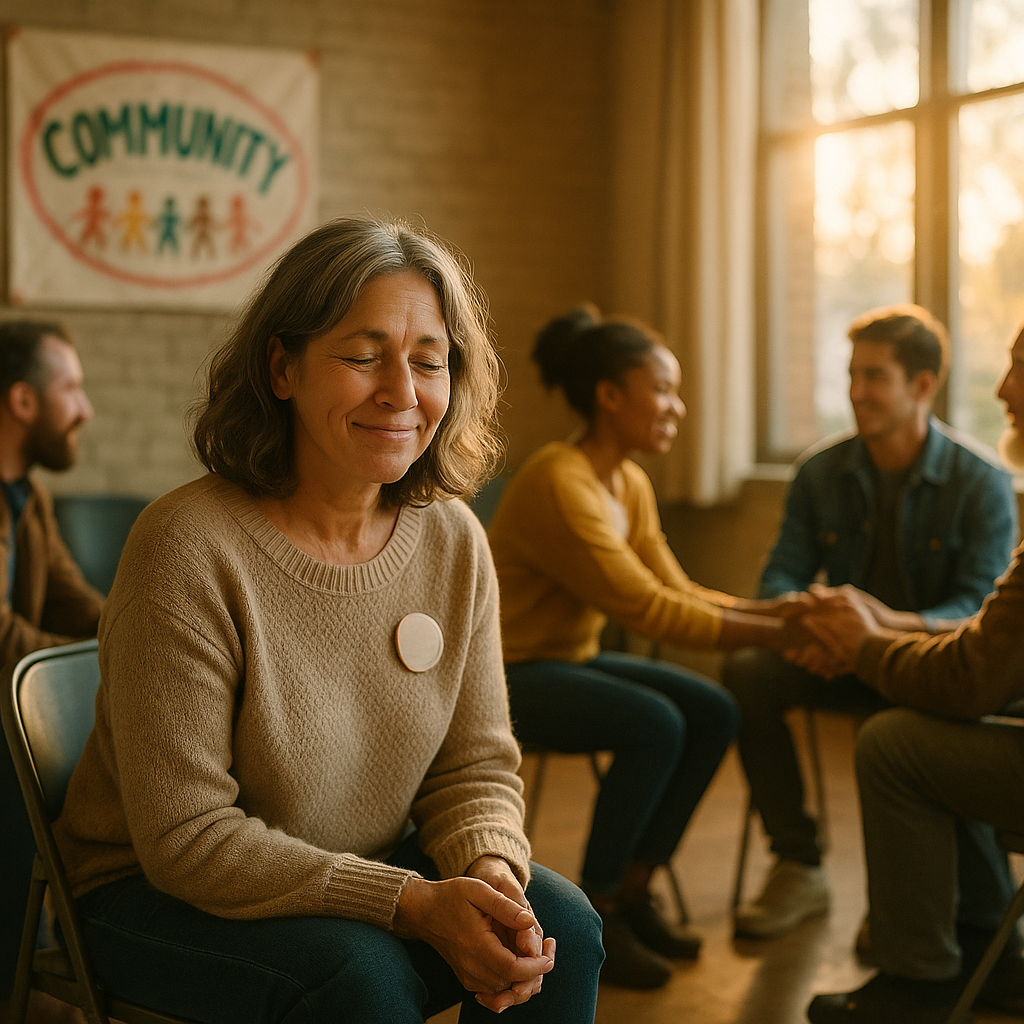
In 2025, the loneliness epidemic is no longer a private struggle; it is a public health, workplace, and community challenge. People are searching for connection in the same places they shop, learn, and get advice—online and offline. Brands that respond with credible, well-run support communities can reduce isolation while building trust. The question is: who will do it well?
Understanding the loneliness epidemic in 2025
Loneliness is often misunderstood as simply “being alone.” In reality, it is the gap between the relationships people want and the relationships they feel they have. That gap can widen even when someone has coworkers, family, or followers. For brands, that distinction matters because a successful community does not just add more interactions; it helps members build meaningful connections.
Recent public health reporting has framed loneliness as a significant risk factor for wellbeing. In the U.S., the Surgeon General’s advisory on social connection brought mainstream attention to the issue and helped organizations treat social health as measurable and addressable. In the U.K., national surveys have continued to track loneliness across age groups, reinforcing that this is not limited to older adults. These references are not marketing proof points—they are signals that loneliness is widely recognized, tracked, and taken seriously.
In 2025, the drivers are multifaceted:
- Hybrid life patterns: flexible work and study options can reduce casual social contact.
- Transaction-heavy digital experiences: many online spaces optimize for engagement, not belonging.
- Identity fragmentation: people are more likely to maintain separate personas across platforms and contexts.
- Care responsibilities and burnout: time poverty reduces opportunities to maintain relationships.
If you lead a brand, a key follow-up question is: “Is this our problem to solve?” You cannot solve loneliness at a societal scale alone, but you can design experiences that reduce isolation for the people you already serve—customers, patients, members, students, caregivers, or employees. That creates tangible value and supports long-term trust.
Brand-led support communities: why they work now
Brand-led support communities succeed when they meet three criteria: a real shared need, a safe environment, and a reliable path from “I’m struggling” to “I’m supported.” In 2025, consumers have high expectations for responsiveness and transparency. They also have low patience for spaces that feel like thinly disguised marketing channels. The opportunity is to lead with service, not sales.
Communities work because they combine two forces that traditional customer support cannot:
- Peer credibility: members value advice from people living the same reality—patients, parents, learners, founders, creators, or caregivers.
- Continuity: a community supports the full journey—onboarding, setbacks, renewals, and life changes—rather than a single ticket.
Brands are uniquely positioned to facilitate this because they can invest in moderation, education, and infrastructure. They also have direct access to experts—product specialists, clinicians, coaches, or trained advocates—who can correct misinformation and provide guardrails.
A practical concern is whether a brand community will attract only complaints. That happens when the brand offers no shared purpose beyond troubleshooting. The fix is to design a community around progress and identity: “people who are building X,” “people who are managing Y,” “people who are learning Z.” Support becomes one pillar inside a broader sense of belonging.
Social connection strategy: matching community models to human needs
A strong social connection strategy starts with understanding what members actually seek. Loneliness relief can come from different types of support, and each requires a different community design:
- Emotional support: “I feel overwhelmed.” Best served by moderated peer groups, clear empathy norms, and escalation paths for risk.
- Informational support: “What should I do next?” Best served by searchable knowledge, expert Q&A sessions, and vetted resources.
- Practical support: “I need steps.” Best served by templates, checklists, coaching, office hours, and accountability pods.
- Companionship and belonging: “I want to be seen.” Best served by rituals, introductions, small groups, and recurring events.
Choose a model that matches the stakes of your category:
- Health and caregiving: prioritize safety, privacy, and clinician-reviewed education. Consider anonymous posting and strict moderation.
- Financial services: focus on life moments (first job, debt payoff, buying a home) with strong guardrails against scams and risky advice.
- Consumer tech and subscriptions: emphasize onboarding cohorts, creator challenges, and user-led workshops that reduce churn through confidence.
- Education and upskilling: build cohort-based learning circles, mentor matching, and structured peer review to prevent drop-off.
Answer the follow-up question early: “Should we host this on social platforms or our own property?” In 2025, a hybrid approach often works best. Use social channels for discovery and lightweight touchpoints, then move deeper support into owned spaces where you control safety, search, and data stewardship. Owned spaces also reduce the risk of platform algorithm changes undermining community reach.
Online community moderation: safety, trust, and governance
Nothing undermines a community faster than unanswered harm: harassment, misinformation, predatory behavior, or insensitive responses to vulnerable posts. Strong online community moderation is not optional; it is the operating system of brand-led support.
Implement governance that members can understand:
- Clear community standards: define what “good” looks like (respectful language, confidentiality expectations, no shaming) and what gets removed.
- Role clarity: distinguish peer advice from professional guidance. Use badges for verified experts and trained moderators.
- Escalation and crisis pathways: provide resources and steps when someone expresses self-harm ideation, abuse, or urgent medical concerns.
- Privacy by design: minimize sensitive data collection, allow pseudonyms where appropriate, and explain what is visible to whom.
- Anti-scam and anti-spam controls: require account verification, rate limits, link restrictions, and proactive detection.
EEAT in communities comes from operational discipline:
- Experience: elevate lived-experience stories with context (“what worked for me”) rather than universal claims.
- Expertise: bring in qualified professionals for office hours, content review, and myth-busting, especially in health, finance, and legal-adjacent topics.
- Authoritativeness: cite reputable sources in resource libraries and partner with credible organizations when stakes are high.
- Trust: document moderation actions, explain rules, and consistently enforce them—even when it costs short-term engagement.
One common follow-up: “Won’t moderation feel restrictive?” Good moderation is enabling. It removes fear of being attacked, ignored, or misled. Members stay when they feel protected and respected, not when “anything goes.”
Customer trust and loyalty: benefits brands can measure
The most durable outcome of support communities is customer trust and loyalty, but that is not the only measurable value. In 2025, leadership teams expect community to connect to clear business outcomes without turning the space into an ad channel.
Track value in three layers:
- Member outcomes: confidence, progress milestones, reduced anxiety about the product or life challenge, faster time-to-success.
- Support efficiency: deflection of repetitive tickets, improved first-contact resolution through peer answers, and stronger self-serve resources.
- Growth indicators: retention, expansion, referrals, product adoption, and advocacy—measured with careful attribution.
To avoid the “community as a funnel” trap, separate commercial messaging from support. A simple rule works: members should receive more help than hype. When you do offer products or upgrades, make it contextual and permission-based (for example, “Here are options if you want additional coaching”).
Another likely question: “What if our community surfaces product flaws?” That is an advantage when handled transparently. Communities are high-signal listening posts. Publish fixes, acknowledge issues, and close the loop with changelogs. That behavior strengthens trust because it proves the brand listens in public and acts in private.
Community building for brands: a practical launch blueprint
Community building for brands works best when you start small, prove safety and value, then scale with structure. In 2025, the fastest failures come from launching a platform with no programming, unclear purpose, and inconsistent moderation. The strongest launches treat community like a product: research, design, test, iterate.
Use this blueprint:
- Define the “who” and “why”: pick one high-need segment (new customers, caregivers, first-time founders) and one core promise (feel supported, get unstuck, stay consistent).
- Design the first 90 days: plan weekly rhythms—welcome threads, topic prompts, live Q&A, and small-group introductions.
- Recruit founding members: invite a diverse set of early participants and empower them as peer leaders with training and clear boundaries.
- Create a resource spine: build a curated library of FAQs, guides, and expert-reviewed materials so members get help even when others are offline.
- Staff the room: assign named community managers, establish moderator coverage, and set response-time expectations for sensitive posts.
- Set measurement and feedback loops: collect lightweight sentiment and outcomes data, run monthly listening sessions, and publish “you said, we did” updates.
Decide early how inclusive you want to be. Some communities thrive as customer-only spaces that protect privacy and reduce spam. Others succeed as open ecosystems that include prospects and partners. The right choice depends on risk, regulation, and the vulnerability of topics discussed.
Finally, keep the ethical boundary clear: a support community is not therapy, medical care, or legal advice unless you explicitly provide that service with qualified professionals. Provide disclaimers where appropriate and make it easy to reach official support channels.
FAQs
- What is the difference between a brand community and a support community?
A brand community can focus on identity, fandom, and shared interest in the brand. A support community is anchored in help—peer guidance, education, and structured pathways to solve problems or cope with challenges. The best programs often combine both, but support needs stronger moderation and clearer governance. - Which industries benefit most from brand-led support communities?
Health, caregiving, education, financial wellbeing, B2B SaaS, and lifestyle subscriptions see outsized impact because members face recurring questions and long journeys. Any industry with anxiety, complexity, or habit change can benefit—if it commits to safety and usefulness. - How do we prevent misinformation in a peer-led space?
Use expert-reviewed resource libraries, clear rules about claims, and “verified expert” roles for sensitive topics. Train moderators to correct misinformation quickly and respectfully, and design prompts that encourage members to share experiences rather than prescribe universal advice. - Should we build on a third-party platform or create our own?
If safety, searchability, and data governance matter, owned platforms provide more control. If you need rapid discovery and lightweight interaction, third-party platforms help—but you accept algorithm risk and weaker moderation controls. Many brands use third-party channels for awareness and an owned hub for deeper support. - How do we measure whether the community reduces loneliness?
Combine qualitative and quantitative signals: regular member pulse surveys about belonging and support, participation in small groups, repeat attendance at events, and sentiment trends in posts. Pair that with outcomes like retention and reduced support tickets, while keeping privacy and consent central. - What staffing is required to run a safe community?
At minimum: a dedicated community manager, trained moderators, and access to subject-matter experts for periodic review or live sessions. Higher-risk categories may require clinical, legal, or compliance oversight and documented escalation procedures.
Brands cannot eliminate loneliness, but they can reduce it for the people they already serve by building safer places to ask, learn, and belong. In 2025, the winning approach combines clear purpose, consistent moderation, and expert-backed resources—without turning support into a sales pitch. Build small, protect trust, and scale what helps. The strongest communities create connection that lasts.
Top Influencer Marketing Agencies
The leading agencies shaping influencer marketing in 2026
Agencies ranked by campaign performance, client diversity, platform expertise, proven ROI, industry recognition, and client satisfaction. Assessed through verified case studies, reviews, and industry consultations.
Moburst

-
2

The Shelf
Boutique Beauty & Lifestyle Influencer AgencyA data-driven boutique agency specializing exclusively in beauty, wellness, and lifestyle influencer campaigns on Instagram and TikTok. Best for brands already focused on the beauty/personal care space that need curated, aesthetic-driven content.Clients: Pepsi, The Honest Company, Hims, Elf Cosmetics, Pure LeafVisit The Shelf → -
3

Audiencly
Niche Gaming & Esports Influencer AgencyA specialized agency focused exclusively on gaming and esports creators on YouTube, Twitch, and TikTok. Ideal if your campaign is 100% gaming-focused — from game launches to hardware and esports events.Clients: Epic Games, NordVPN, Ubisoft, Wargaming, Tencent GamesVisit Audiencly → -
4

Viral Nation
Global Influencer Marketing & Talent AgencyA dual talent management and marketing agency with proprietary brand safety tools and a global creator network spanning nano-influencers to celebrities across all major platforms.Clients: Meta, Activision Blizzard, Energizer, Aston Martin, WalmartVisit Viral Nation → -
5

The Influencer Marketing Factory
TikTok, Instagram & YouTube CampaignsA full-service agency with strong TikTok expertise, offering end-to-end campaign management from influencer discovery through performance reporting with a focus on platform-native content.Clients: Google, Snapchat, Universal Music, Bumble, YelpVisit TIMF → -
6

NeoReach
Enterprise Analytics & Influencer CampaignsAn enterprise-focused agency combining managed campaigns with a powerful self-service data platform for influencer search, audience analytics, and attribution modeling.Clients: Amazon, Airbnb, Netflix, Honda, The New York TimesVisit NeoReach → -
7

Ubiquitous
Creator-First Marketing PlatformA tech-driven platform combining self-service tools with managed campaign options, emphasizing speed and scalability for brands managing multiple influencer relationships.Clients: Lyft, Disney, Target, American Eagle, NetflixVisit Ubiquitous → -
8

Obviously
Scalable Enterprise Influencer CampaignsA tech-enabled agency built for high-volume campaigns, coordinating hundreds of creators simultaneously with end-to-end logistics, content rights management, and product seeding.Clients: Google, Ulta Beauty, Converse, AmazonVisit Obviously →