


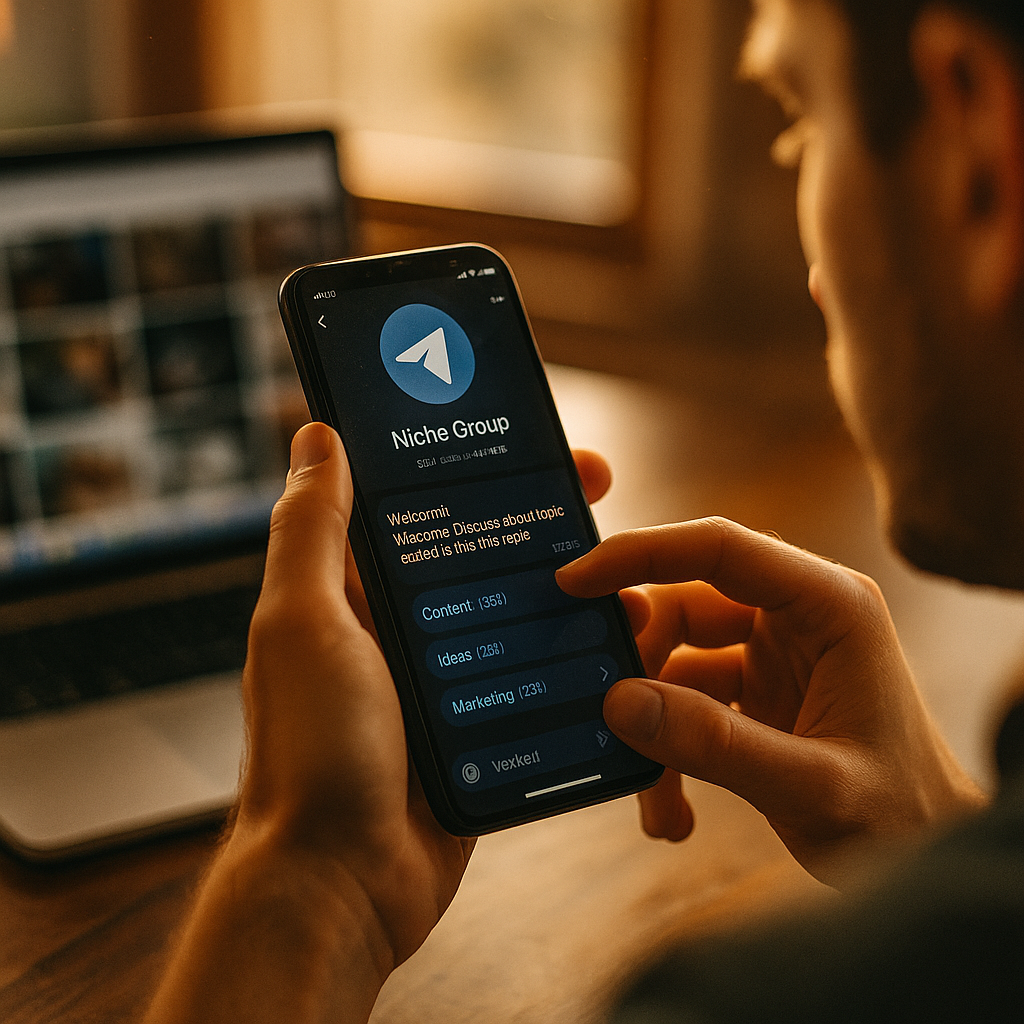
In 2025, brands win attention by earning it, not buying it. Mastering Niche Interest Groups On Telegram For Organic Brand Growth means showing up where real conversations happen and adding value consistently. Telegram’s group and channel ecosystem rewards specificity, trust, and momentum. This guide breaks down how to find the right micro-communities, contribute credibly, and convert engagement into compounding visibility—without feeling spammy. Ready to build demand from the inside out?
Why Telegram niche communities drive organic reach (secondary keyword: Telegram niche communities)
Telegram niche communities concentrate people around a shared identity, problem, or hobby—fitness programming, indie game dev, homesteading, local parenting, crypto security, language learning, B2B ops, and more. That focus changes the marketing math: a smaller group can outperform a larger, general audience because relevance is higher and word-of-mouth spreads faster.
In 2025, Telegram’s appeal for organic growth comes from a few structural advantages:
- High-signal discussions: Well-run groups protect member attention through rules, moderation, and topic boundaries.
- Direct distribution: Messages land in the same app people use for friends, work chats, and communities, increasing visibility when your content is genuinely useful.
- Community memory: Pins, saved messages, and searchable chat history make helpful contributions discoverable later, not just “in the moment.”
- Lightweight media: Short voice notes, quick screenshots, polls, and concise text can outperform long-form when the audience wants speed.
Organic reach on Telegram isn’t automatic. It depends on whether your brand acts like a member first and a marketer second. If you consistently answer questions, share resources, and clarify confusing topics, you become a trusted “node” in the community network.
How to find and vet your ideal interest group (secondary keyword: finding Telegram groups)
Not every group is worth your time. The goal is to identify communities where your expertise solves a recurring problem and where the group culture rewards helpful contributors. Use a simple vetting checklist before you invest weeks building a presence.
Where to discover groups
- Telegram search: Search for problem-based keywords (e.g., “email deliverability,” “sourdough starter,” “Notion templates”).
- Creator and brand links: Check YouTube descriptions, newsletters, and podcasts in your niche—many hosts link to Telegram communities.
- Partner ecosystems: Tools you integrate with, suppliers, associations, and training programs often run groups.
- Customer interviews: Ask existing customers what Telegram groups they read weekly and which ones they trust.
How to vet a group quickly (10-minute scan)
- Member quality over member count: Read 50 recent messages. Are questions thoughtful? Are answers detailed?
- Clear rules and active moderation: Healthy groups publish guidelines and remove low-effort promotion.
- Conversation cadence: A dead group won’t help; an overly noisy group may bury value. Aim for consistent daily or several-times-weekly activity.
- Topic fit: If most threads are about pricing hacks but you sell premium outcomes, you may face resistance.
- Commercial tolerance: Some groups allow a weekly promo thread; others allow none. Respect that boundary.
Practical target: Choose 3–5 groups to start. One primary group where you contribute deeply, plus a few secondary groups where you participate selectively. This prevents “drive-by posting” and keeps your credibility intact.
Build authority through community engagement tactics (secondary keyword: Telegram community engagement)
Authority in Telegram groups is earned through repeated, specific help. Your objective is to become the person members tag when a common problem appears. That’s what drives organic brand growth without pushing links.
Start with a credible profile
- Name and role clarity: Use your real name or brand name plus a short descriptor that signals expertise.
- Bio with proof: Include a concise line of credibility (e.g., “Built X,” “10 years in Y,” “Maintainer of Z”). Avoid exaggerated claims.
- Safe link placement: If allowed, add one link in your bio to a neutral landing page (a resource hub, not a sales page).
Use the 70/20/10 contribution mix
- 70%: Answer questions, troubleshoot, share templates, summarize best practices.
- 20%: Ask smart questions that elevate discussion and help you learn the audience’s language.
- 10%: Share your own asset—only when it clearly solves the thread’s problem and matches group rules.
Write “high-utility” replies
- Lead with the conclusion: Give the fix or recommendation first, then a brief explanation.
- Offer a decision tree: “If A, do X. If B, do Y.” This reduces back-and-forth.
- Include constraints: Mention caveats, risks, and when to consult a specialist. This signals expertise and integrity.
Turn repeat questions into reusable assets
If you answer the same question three times, create a short resource you can reference: a checklist, a one-page guide, or a short video. Pin it in your own channel (if you have one) and link it only when relevant. This builds compounding value and prevents your presence from feeling like constant pitching.
Content strategy: channels, groups, and funnels that don’t feel like funnels (secondary keyword: Telegram content strategy)
Telegram works best when you separate conversation from distribution. Groups are for dialogue and community; channels are for publishing. A thoughtful structure lets you help people in groups while letting interested members opt into deeper content.
A simple ecosystem that scales
- One brand channel: Your “library” of posts, resources, and updates. Keep posts tight and skimmable.
- One discussion group (optional): For Q&A around your channel content. Use clear rules to protect quality.
- Your presence in niche interest groups: Where discovery happens through contribution and reputation.
What to publish in your channel (and why it performs)
- Problem-solving series: 5–10 posts that walk through a core challenge step-by-step. People join for clarity.
- Teardowns and audits: With permission, analyze a real example and show your thinking. This demonstrates experience, not just opinion.
- Templates and scripts: Practical assets that members can use the same day.
- “What I’d do if…” posts: Scenario-based guidance that helps readers self-identify and take action.
Conversion without pressure
Instead of “Buy now,” use progression CTAs: “Reply with your use case,” “Vote in this poll,” “DM me your constraints,” or “Grab the checklist.” The point is to move people from passive reading to small commitments. When members ask for deeper help, you can offer a consult, demo, or product link in a one-to-one context where it’s welcome.
Answer follow-up questions before they’re asked
- Pricing questions: Share ranges and what drives cost (scope, urgency, risk) rather than a generic “it depends.”
- Implementation questions: Provide timelines and common failure points.
- Tool questions: Recommend a simple starting stack, then an advanced option, explaining trade-offs.
Trust, safety, and moderation for brand credibility (secondary keyword: Telegram group moderation)
Organic growth collapses when trust erodes. In Telegram, trust is shaped by how you handle privacy, claims, and community safety. This is central to EEAT: experience, expertise, authoritativeness, and trustworthiness.
Operate with “community-first” ethics
- Respect rules and norms: If links are banned, don’t look for loopholes. Share value in plain text.
- Disclose affiliations: If you recommend your own product or a partner tool, say so clearly.
- Avoid inflated results: Use realistic outcomes and note variability. Overpromising harms long-term growth.
Privacy and data handling
- Don’t scrape member lists: Treat groups as communities, not lead databases.
- Be careful with screenshots: Remove names and identifying details unless you have explicit consent.
- Keep DMs respectful: Ask permission before sending resources. “Want a link?” beats unsolicited pitching.
If you run your own group, set standards early
- Write rules that protect attention: Clear posting guidelines, self-promo limits, and consequences.
- Use onboarding: A pinned welcome message that explains who it’s for, what to post, and how to get help.
- Moderate consistently: Remove spam fast. Consistency signals safety.
Credibility compounds when members feel protected from noise and manipulation. If your brand becomes associated with high-quality discourse, you’ll earn referrals that paid ads can’t replicate.
Measure what matters and scale responsibly (secondary keyword: Telegram analytics)
Telegram’s native analytics are strongest for channels, but you can still measure organic growth in a practical, decision-making way. Focus on signals that map to trust and demand, not vanity metrics.
Key metrics to track weekly
- Channel growth quality: New subscribers after specific posts or after visible contributions in niche groups.
- Engagement depth: Replies, forwards, and saved messages (qualitative indicators that content is useful).
- Inbound intent: Number of DMs that mention a problem you solve (“Can you help with…?”).
- Referral sources: Ask new leads where they found you. Keep a simple spreadsheet.
- Content-to-conversion path: Which resource or post most often precedes a request for a call, trial, or purchase.
Scaling playbook
- Double down on one repeatable content format: If checklists drive DMs, publish more checklists.
- Create a contribution calendar: 3–4 helpful group replies per week in your primary community beats 20 scattered comments.
- Systemize your best answers: Build a searchable “response bank” so your advice stays consistent and fast.
- Collaborate with admins: Offer a live Q&A, mini-workshop, or resource drop that benefits members first.
Common scaling mistakes to avoid
- Over-automating: Bots can help with onboarding, but automated engagement reads as fake and can get you removed.
- Expanding too fast: Joining 20 groups makes you a stranger everywhere. Depth wins.
- Chasing trends: Niche groups reward consistency and substance, not hype.
FAQs (secondary keyword: Telegram marketing for brands)
-
Do I need my own Telegram group to grow a brand organically?
No. Many brands grow faster by participating in existing niche groups and using a channel as a content library. Create your own group only when you can moderate it well and you have a clear reason for members to talk to each other.
-
How do I promote without getting banned?
Follow group rules strictly, contribute helpful replies first, and share links only when asked or when the group explicitly permits it. When in doubt, summarize the solution in-chat and offer to DM the resource if someone wants it.
-
What’s the best posting frequency for a Telegram channel?
Publish consistently enough to stay memorable without overwhelming subscribers. For most niches, 3–5 high-utility posts per week works well. Prioritize clarity and usefulness over volume.
-
Should I use bots for lead generation?
Use bots for onboarding, FAQs, and routing requests, but avoid aggressive automation like forced funnels or spammy DMs. Human, permission-based interactions build trust and outperform short-term tactics.
-
How long does it take to see organic results in niche Telegram groups?
Expect early signals (mentions, DMs, small subscriber growth) within a few weeks of consistent contribution. Strong compounding typically appears after you’ve built recognizable expertise through repeated helpful interactions.
-
How do I know which niche groups are worth my time?
Look for active moderation, recurring problem-solving threads, and members who value detailed answers. If you can’t add unique value or the culture is overly promotional, choose a different group.
Organic growth on Telegram in 2025 rewards brands that behave like trusted peers. Choose a few high-quality niche communities, contribute practical help, and publish a steady stream of useful resources in your channel. Protect trust through transparent disclosure, respectful DMs, and strong moderation where you control the space. The takeaway: depth of relationships beats breadth of exposure, and consistency turns credibility into demand.
Top Influencer Marketing Agencies
The leading agencies shaping influencer marketing in 2026
Agencies ranked by campaign performance, client diversity, platform expertise, proven ROI, industry recognition, and client satisfaction. Assessed through verified case studies, reviews, and industry consultations.
Moburst

-
2

The Shelf
Boutique Beauty & Lifestyle Influencer AgencyA data-driven boutique agency specializing exclusively in beauty, wellness, and lifestyle influencer campaigns on Instagram and TikTok. Best for brands already focused on the beauty/personal care space that need curated, aesthetic-driven content.Clients: Pepsi, The Honest Company, Hims, Elf Cosmetics, Pure LeafVisit The Shelf → -
3

Audiencly
Niche Gaming & Esports Influencer AgencyA specialized agency focused exclusively on gaming and esports creators on YouTube, Twitch, and TikTok. Ideal if your campaign is 100% gaming-focused — from game launches to hardware and esports events.Clients: Epic Games, NordVPN, Ubisoft, Wargaming, Tencent GamesVisit Audiencly → -
4

Viral Nation
Global Influencer Marketing & Talent AgencyA dual talent management and marketing agency with proprietary brand safety tools and a global creator network spanning nano-influencers to celebrities across all major platforms.Clients: Meta, Activision Blizzard, Energizer, Aston Martin, WalmartVisit Viral Nation → -
5

The Influencer Marketing Factory
TikTok, Instagram & YouTube CampaignsA full-service agency with strong TikTok expertise, offering end-to-end campaign management from influencer discovery through performance reporting with a focus on platform-native content.Clients: Google, Snapchat, Universal Music, Bumble, YelpVisit TIMF → -
6

NeoReach
Enterprise Analytics & Influencer CampaignsAn enterprise-focused agency combining managed campaigns with a powerful self-service data platform for influencer search, audience analytics, and attribution modeling.Clients: Amazon, Airbnb, Netflix, Honda, The New York TimesVisit NeoReach → -
7

Ubiquitous
Creator-First Marketing PlatformA tech-driven platform combining self-service tools with managed campaign options, emphasizing speed and scalability for brands managing multiple influencer relationships.Clients: Lyft, Disney, Target, American Eagle, NetflixVisit Ubiquitous → -
8

Obviously
Scalable Enterprise Influencer CampaignsA tech-enabled agency built for high-volume campaigns, coordinating hundreds of creators simultaneously with end-to-end logistics, content rights management, and product seeding.Clients: Google, Ulta Beauty, Converse, AmazonVisit Obviously →