


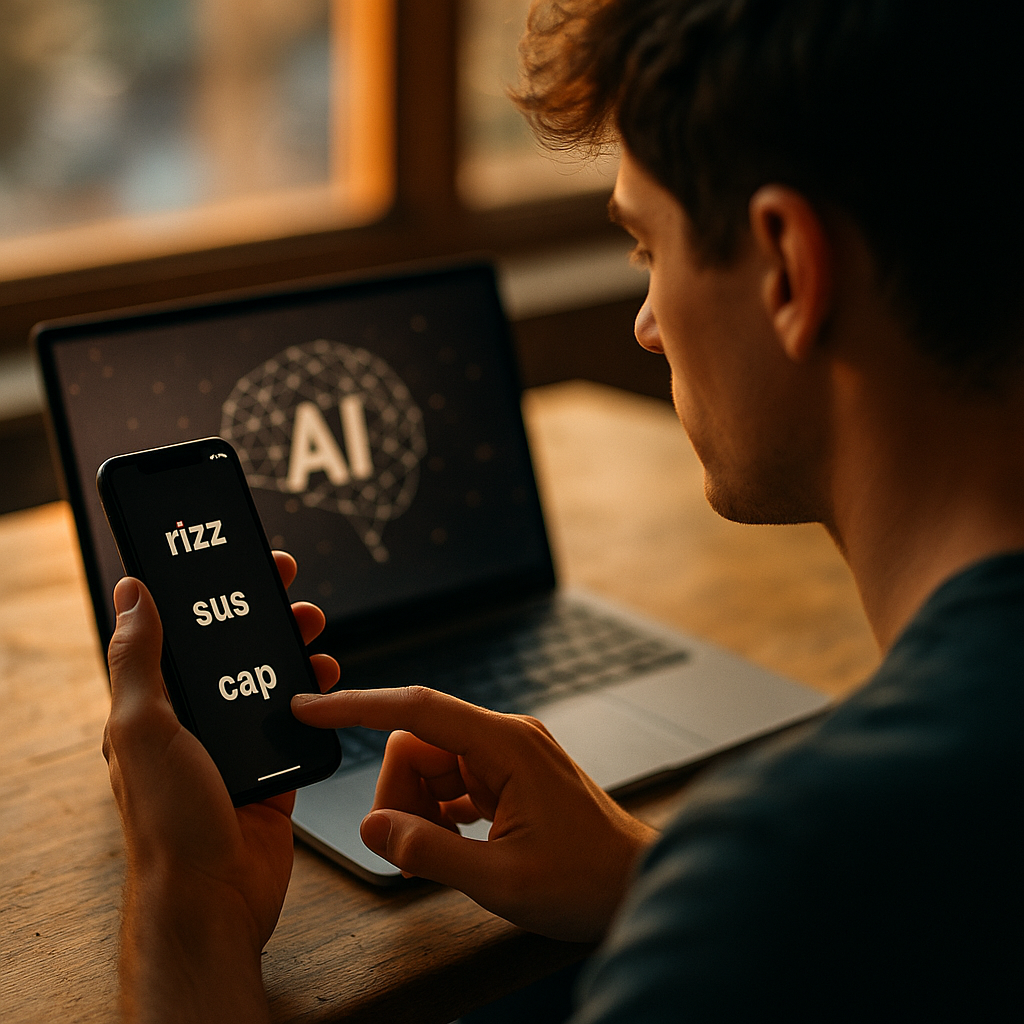
In 2025, language moves faster than most brands and researchers can track. Using AI To Detect Emerging Cultural Slang Before It Reaches Mainstream helps you spot new phrases early, understand their meaning in context, and decide whether to respond—or stay quiet. Done well, it reduces guesswork, protects brand voice, and improves cultural relevance. Ready to learn how to catch slang before it explodes?
Why early slang detection matters for brands and researchers (secondary keyword: emerging slang trends)
Slang is not just playful vocabulary; it is a signal. It can indicate shifting identities, new subcultures, political moods, humor styles, and product sentiment. When you identify emerging slang trends early, you gain practical advantages:
- Marketing relevance without chasing: You can decide whether a term fits your brand voice before it becomes overused or mocked.
- Faster insight cycles: Cultural research and consumer insights teams can validate themes while they are still forming, not after they peak.
- Risk reduction: Many slang terms have meanings that change by community or region. Early detection paired with context prevents embarrassing misuse.
- Product intelligence: New slang often clusters around frustrations (“this app is…”), delight (“that feature is…”), or identity (“I’m a…”). Those clusters can guide roadmap priorities.
Readers often ask, “Can’t we just watch TikTok and X manually?” You can, but manual monitoring struggles with volume, speed, and context shifts. AI can scan across platforms continuously, surface novelty, and attach evidence so humans can make the final call. The goal is not to automate culture; it is to prioritize attention intelligently.
Where AI finds cultural signals (secondary keyword: social media listening)
Effective slang discovery starts with broad, ethical social media listening—not in the sense of spying, but in the sense of analyzing publicly available or properly licensed data streams to understand linguistic change. Slang appears first where communities experiment:
- Short-form video captions and comments: Fast iteration, remix culture, and inside jokes accelerate new terms.
- Community forums and chat spaces: Niche communities coin language to signal belonging.
- Music and gaming ecosystems: Lyrics, streamer chat, and meme formats drive rapid adoption.
- Product reviews and support tickets: Slang can emerge in complaints and praise, especially among younger segments.
- Newsletters and micro-communities: Some terms incubate in private or semi-private groups; access should be permission-based.
AI does not need to “read everything” to be useful. It needs representative coverage, stable ingestion pipelines, and clear governance. A practical approach is to collect:
- Public text: Posts, captions, comments, forum threads, review text.
- Transcribed audio: Speech-to-text from podcasts or videos when licensing allows it.
- Metadata for context: Timestamp, platform, language, region, and engagement signals (without storing unnecessary personal identifiers).
Follow-up question: “Is it enough to track only one platform?” Usually not. Slang hops across platforms, and meaning mutates. Cross-platform monitoring helps you see whether a term is confined to a subculture, spreading regionally, or already nearing mainstream.
How NLP models spot new slang before it spikes (secondary keyword: natural language processing)
Most teams start with keyword lists. That approach fails because slang is, by definition, unknown. Modern natural language processing finds novelty by modeling language behavior over time. Common methods include:
- Out-of-vocabulary and neologism detection: Identify tokens, spellings, or hashtags that are new or rising compared with a baseline corpus.
- Embedding shift analysis: Track how a word’s “neighbors” in semantic space change. If an existing word suddenly appears alongside different terms, its meaning may be shifting.
- Collocation and phrase mining: Detect new multi-word expressions (“it’s giving …”, “coded”, “core”) and their variants.
- Topic modeling with temporal layers: Group conversations into themes and observe which themes are gaining novelty and velocity.
- Graph-based diffusion signals: Model how terms move between communities (e.g., from a niche forum to a broader platform).
Strong systems also quantify “emergence” rather than relying on vibes. Useful metrics include:
- Velocity: Rate of mention increase over recent periods.
- Acceleration: Whether velocity itself is increasing (a clue that mainstream adoption may be near).
- Dispersion: Spread across different communities, regions, or content categories.
- Stability of meaning: Consistency of context. If contexts are chaotic, the term may be too ambiguous for brand use.
A common reader concern is accuracy: “How do we avoid false positives like typos?” You filter novelty candidates with spelling normalization, language detection, bot/automation heuristics, and minimum evidence thresholds. You also keep a “human-in-the-loop” review step where cultural analysts validate meaning with real examples.
From detection to interpretation (secondary keyword: cultural trend forecasting)
Detection is only step one. The harder part is interpretation—turning a rising term into a reliable insight. This is where cultural trend forecasting benefits from combining AI with expert review.
To interpret slang safely and usefully, build a structured “slang card” for each candidate term:
- Definition in plain language: What it means in the detected context.
- Example snippets: A small set of representative posts, paraphrased when possible to reduce privacy risk.
- Origin and community: Where it appears first and who uses it (as best you can infer without profiling individuals).
- Sentiment and intent: Praise, insult, sarcasm, self-description, irony, critique.
- Usage rules: Who can say it without backlash, and in what settings.
- Lifecycle stage: Incubating, emerging, accelerating, saturated, declining.
AI helps by clustering contexts and summarizing patterns, but humans add the cultural reading. In 2025, the most reliable setups pair:
- Computational linguists or NLP engineers to maintain detection quality and reduce bias.
- Cultural strategists or community researchers to interpret nuance and power dynamics.
- Brand and legal stakeholders to decide usage boundaries and risk tolerance.
Follow-up question: “How do we know if a term will go mainstream?” You cannot guarantee it, but you can estimate probability by looking for:
- Multi-platform spread beyond one niche community.
- Format adoption (memes, audio trends, catchphrases) that makes reuse easy.
- Creator amplification where mid-tier creators adopt it consistently.
- Meaning stability that allows broader audiences to repeat it without needing insider knowledge.
Building an AI pipeline your team can trust (secondary keyword: AI trend analysis)
Trustworthy AI trend analysis requires more than choosing a model. It needs an end-to-end workflow with governance, evaluation, and clear accountability. A practical pipeline looks like this:
- Data ingestion: Collect from approved sources with documented permissions, retention rules, and security controls.
- Preprocessing: De-duplicate, remove spam, detect language, normalize slang spellings, and preserve context windows.
- Candidate generation: Novelty detection, phrase mining, embedding drift, and diffusion scoring.
- Ranking and alerting: Score candidates by velocity, dispersion, and brand relevance; route top items to analysts.
- Human review: Validate meaning, flag sensitive terms, and categorize lifecycle stage.
- Knowledge base: Store validated slang cards with evidence links, definitions, and do/don’t guidance.
- Activation: Feed into content strategy, customer support macros, product research, or crisis monitoring.
- Evaluation: Track precision (how many surfaced items were real slang), recall (missed terms), and time-to-detection.
To align with helpful-content expectations and EEAT, document your methodology. Stakeholders should be able to answer:
- Where did the data come from? Public, licensed, first-party, or partner sources.
- What is the model’s role? Prioritization and summarization, not final cultural judgment.
- How do we test quality? Benchmarks, sample audits, and drift monitoring.
- Who signs off? Named owners for analytics, brand, and compliance.
Readers often want tooling guidance. You can build with a mix of:
- Search and indexing: For fast retrieval and evidence review.
- Vector databases: For semantic similarity and context clustering.
- LLMs with guardrails: For summarizing usage patterns and drafting slang cards, always citing examples and uncertainty.
- Dashboards: For velocity charts, diffusion maps, and analyst workflows.
The key is to treat LLM output as a draft, not truth. Require evidence: every definition should tie back to real, recent usage samples.
Ethics, bias, and safe activation (secondary keyword: brand safety)
Slang is culturally loaded. If you operationalize it carelessly, you risk misrepresentation, appropriation, or amplifying harmful language. Strong brand safety practices make your system more accurate and your actions more defensible.
Core safeguards to implement:
- Privacy by design: Minimize personal data, avoid storing handles unless necessary for moderation, and respect platform terms.
- Community sensitivity checks: Identify terms tied to marginalized groups, identity labels, or trauma contexts; treat these as “high-risk” by default.
- Hate and harassment filters: Separate “emerging slang” from coded slurs and harassment euphemisms.
- Bias auditing: Ensure your sources are not over-weighted toward one demographic or region; slang is not universal.
- Clear usage rules: Decide when the right move is to understand a term for monitoring, not to use it in public-facing content.
Another likely question: “Should brands use slang at all?” Sometimes yes, often no. A safe decision framework is:
- Use internally first: Train support teams to recognize slang in tickets and social replies.
- Use externally only with fit: If the term aligns with your audience, tone, and purpose—and if your team understands it deeply.
- Avoid identity-bound terms: If a community uses language to signal belonging, brands repeating it can feel extractive.
- Prefer clarity over performance: If you cannot explain a term plainly, you should not publish it.
EEAT is not just about credentials; it is about responsible practice. Show your work: keep an audit trail of why a term was flagged, how it was interpreted, and who approved any activation.
FAQs (secondary keyword: detecting slang with AI)
- What is the best way to start detecting slang with AI if we have a small team?
Start with a limited set of sources, run novelty detection weekly, and require human review for the top 20 candidates. Build a simple knowledge base of validated terms and measure time-to-detection and precision before expanding.
- How quickly can AI detect new slang after it appears?
With near-real-time ingestion, systems can surface candidates within hours. Practical, validated reporting usually happens within days because you need enough examples to confirm meaning and avoid overreacting to one-off jokes.
- Do we need large language models to do this well?
No. Traditional NLP can detect novelty and track semantic drift effectively. LLMs are most helpful for summarizing contexts, drafting slang cards, and accelerating analyst workflows—if you enforce evidence-based review.
- How do we tell whether a term is harmless slang or a coded slur?
Use a combination of toxicity classifiers, community/context analysis, and human experts. Treat ambiguous terms as high-risk until you can confirm meaning across multiple contexts and communities.
- Can AI predict which slang will go mainstream?
AI can estimate likelihood using spread, velocity, and cross-community diffusion, but it cannot guarantee outcomes. Use probability scoring to prioritize monitoring, not to make irreversible brand decisions.
- How can customer support benefit from early slang detection?
Support teams can interpret tickets faster, reduce miscommunication, and spot emerging product issues expressed in new terms. This improves resolution quality while keeping replies clear and respectful.
AI can surface new slang early, but the winning advantage comes from pairing detection with disciplined interpretation and ethical restraint. Build a pipeline that measures novelty, tracks meaning in context, and keeps humans accountable for final judgments. In 2025, the fastest teams are not the ones who mimic every new phrase—they are the ones who understand language shifts first and act with intent.
Top Influencer Marketing Agencies
The leading agencies shaping influencer marketing in 2026
Agencies ranked by campaign performance, client diversity, platform expertise, proven ROI, industry recognition, and client satisfaction. Assessed through verified case studies, reviews, and industry consultations.
Moburst

-
2

The Shelf
Boutique Beauty & Lifestyle Influencer AgencyA data-driven boutique agency specializing exclusively in beauty, wellness, and lifestyle influencer campaigns on Instagram and TikTok. Best for brands already focused on the beauty/personal care space that need curated, aesthetic-driven content.Clients: Pepsi, The Honest Company, Hims, Elf Cosmetics, Pure LeafVisit The Shelf → -
3

Audiencly
Niche Gaming & Esports Influencer AgencyA specialized agency focused exclusively on gaming and esports creators on YouTube, Twitch, and TikTok. Ideal if your campaign is 100% gaming-focused — from game launches to hardware and esports events.Clients: Epic Games, NordVPN, Ubisoft, Wargaming, Tencent GamesVisit Audiencly → -
4

Viral Nation
Global Influencer Marketing & Talent AgencyA dual talent management and marketing agency with proprietary brand safety tools and a global creator network spanning nano-influencers to celebrities across all major platforms.Clients: Meta, Activision Blizzard, Energizer, Aston Martin, WalmartVisit Viral Nation → -
5

The Influencer Marketing Factory
TikTok, Instagram & YouTube CampaignsA full-service agency with strong TikTok expertise, offering end-to-end campaign management from influencer discovery through performance reporting with a focus on platform-native content.Clients: Google, Snapchat, Universal Music, Bumble, YelpVisit TIMF → -
6

NeoReach
Enterprise Analytics & Influencer CampaignsAn enterprise-focused agency combining managed campaigns with a powerful self-service data platform for influencer search, audience analytics, and attribution modeling.Clients: Amazon, Airbnb, Netflix, Honda, The New York TimesVisit NeoReach → -
7

Ubiquitous
Creator-First Marketing PlatformA tech-driven platform combining self-service tools with managed campaign options, emphasizing speed and scalability for brands managing multiple influencer relationships.Clients: Lyft, Disney, Target, American Eagle, NetflixVisit Ubiquitous → -
8

Obviously
Scalable Enterprise Influencer CampaignsA tech-enabled agency built for high-volume campaigns, coordinating hundreds of creators simultaneously with end-to-end logistics, content rights management, and product seeding.Clients: Google, Ulta Beauty, Converse, AmazonVisit Obviously →