


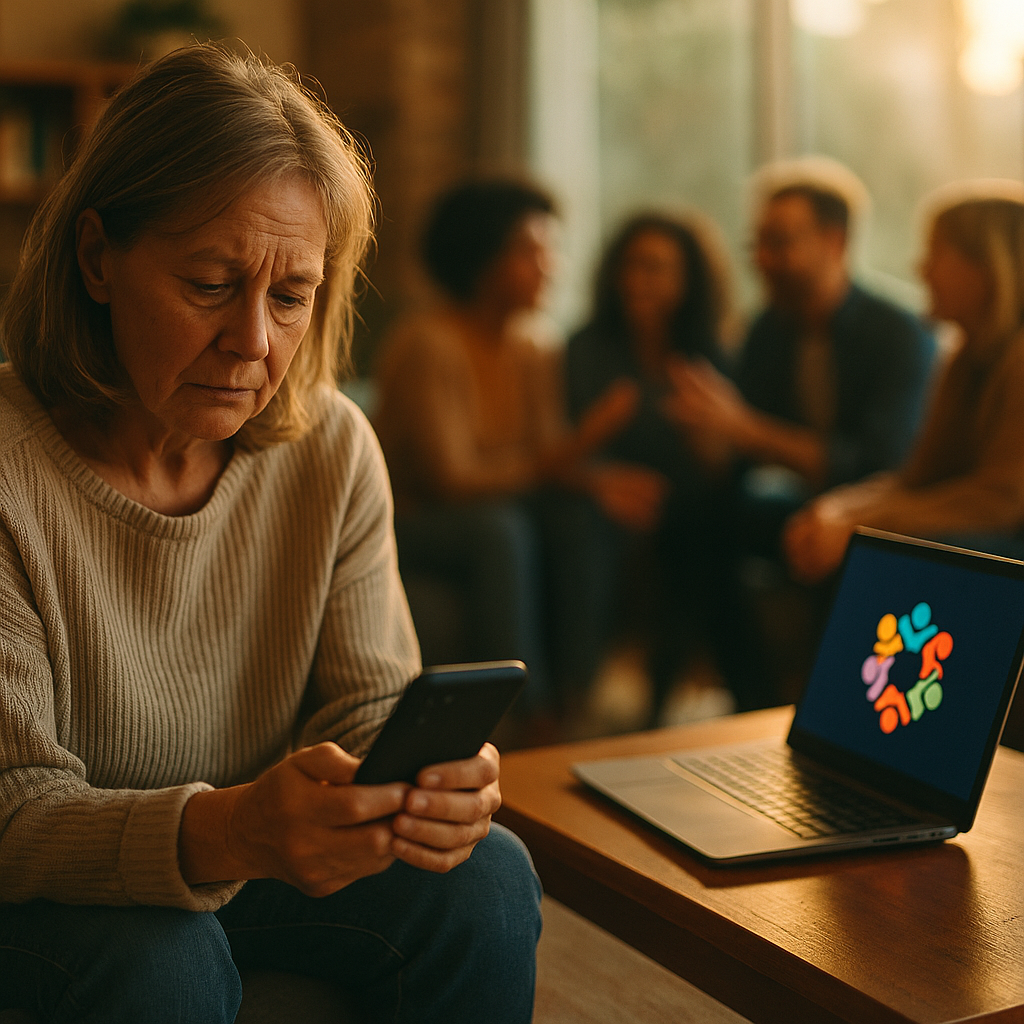
The loneliness epidemic is no longer a private feeling tucked behind busy schedules; it is a measurable public-health and social challenge affecting workplaces, families, and online life. In 2025, brands can either amplify isolation with transactional messaging or help people reconnect with practical, respectful support. The rise of brand-led communities is reshaping how connection is built—if we design them well. What should that look like?
Understanding the loneliness epidemic in 2025
Loneliness is not the same as being alone. People can have full calendars and still lack the sense of belonging that protects mental and physical health. In practical terms, loneliness shows up as fewer trusted relationships, reduced social support in moments of stress, and limited opportunities to be seen and heard without judgment.
Recent public-health research has framed loneliness as a significant risk factor associated with poorer health outcomes. In 2023, the U.S. Surgeon General’s advisory on loneliness and isolation brought mainstream attention to the scale of the issue and the need for multi-sector solutions. That advisory emphasized that social connection functions like a protective factor—similar to sleep, movement, and nutrition—rather than a “nice to have.”
For brands, the implication is direct: customers, patients, members, and employees often need more than information or product features. They need access to people who understand their context and can share credible, experience-based guidance. However, community is not a marketing layer. It is infrastructure for human support.
Loneliness also intersects with major changes in how people live and work. Hybrid work can reduce spontaneous social interactions. Digital platforms can increase connection breadth while reducing connection depth. Caregiving burdens can isolate adults in midlife, while younger people often report anxiety about initiating in-person friendships. If your audience is experiencing these pressures, community can either help or harm depending on how it is designed and governed.
Brand-led support communities: why they matter
A brand-led support community is a structured space—online, in-person, or blended—where people gather around a shared need, identity, challenge, or goal, and where the brand sponsors the environment rather than dominating the conversation. The most credible communities help members exchange practical support, find trustworthy resources, and build ongoing relationships.
These communities matter because they can reduce the “friction” of getting help. Many people do not know where to start when they feel isolated, overwhelmed, or stuck. A well-run support community provides:
- Access: one place to ask questions without needing the perfect wording or a formal appointment.
- Normalization: members see that others share similar struggles, which reduces shame and avoidance.
- Peer learning: practical, lived-experience tips that complement professional guidance.
- Continuity: ongoing connection that persists beyond a single transaction or campaign.
- Navigation: curated pathways to vetted resources, services, and next steps.
Brands are uniquely positioned to convene communities because they often already have trust, reach, and recurring touchpoints. In healthcare, financial services, parenting, fitness, chronic conditions, career transitions, and caregiving, the brand may be one of the few consistent “institutions” in a person’s life.
Still, a brand’s presence raises valid skepticism. People worry about surveillance, upsells, or exploitation of vulnerability. Addressing that concern openly is part of EEAT: demonstrate expertise in the topic, build authority through transparent policies and credible partnerships, and earn trust through consistent member-first decisions.
Building social connection programs that people actually trust
Trust is built through design choices that signal respect. If the community feels like a funnel, members will leave or lurk silently. If it feels like a safe, useful environment, members will invite others and contribute.
Focus on these foundations:
- Clear purpose and boundaries: state what the community is for, who it serves, and what it is not. For example, clarify whether it is peer support, education, or both—and whether it provides crisis or clinical support.
- Member-first governance: publish moderation standards, escalation paths, and conflict resolution practices. Make enforcement consistent and explain decisions when possible.
- Privacy by design: minimize data collection, separate community participation from marketing profiles, and provide easy controls for visibility and notifications. Say plainly what is tracked and why.
- Accessible entry points: offer newcomer threads, guided prompts, topic channels, and “small group” options for those intimidated by large forums.
- Supportive rituals: weekly check-ins, challenges, office hours with experts, and “wins” threads create predictable touchpoints for connection.
Answering the reader’s likely follow-up question—Should this be on social media?—depends on risk and sensitivity. For high-stakes topics (health conditions, grief, addiction recovery, domestic violence), a dedicated platform with strong privacy controls and trained moderators is usually safer than public feeds. For low-stakes topics (hobbies, product education), social platforms can work if the moderation and community care are strong.
Another common question—How do we prevent misinformation?—requires a layered approach: community guidelines, proactive moderation, expert-reviewed resource libraries, and “member story” labeling that distinguishes experience from advice. Encourage members to share what worked for them while avoiding prescriptive medical or legal instructions.
Community management and psychological safety in online communities
Psychological safety is the difference between a community that reduces loneliness and one that quietly reinforces it. People join because they want connection, but they stay only if the environment feels predictable and respectful.
Community management is not a part-time task. It is a professional function that combines facilitation, moderation, conflict management, and member advocacy. Strong practice includes:
- Trained moderators: equip moderators with de-escalation skills, bias awareness, trauma-informed communication, and clear playbooks for sensitive situations.
- Escalation and referral: for mental health or crisis-related communities, provide clear instructions for urgent help and maintain referral links to qualified services. Do not imply the community replaces professional care.
- Anti-harassment enforcement: remove personal attacks, discrimination, and coercive behavior quickly. Publish consequences and apply them consistently.
- Belonging across differences: design for inclusion—language accessibility, neurodiversity-friendly formatting, and options for anonymous or pseudonymous participation when appropriate.
- Healthy participation patterns: reduce pressure to “perform.” Avoid leaderboards that reward volume over helpfulness. Encourage listening and small contributions.
Brands often ask, How much should we participate? Participate as hosts, not stars. Staff should be visible enough to provide structure and accountability, but not so dominant that members feel monitored. A practical rule: staff posts should guide and support—welcoming newcomers, clarifying resources, highlighting member contributions—rather than pushing products.
Psychological safety also depends on how you handle mistakes. When moderation is imperfect, address it publicly: acknowledge harm, explain what changed, and invite feedback. Silence erodes trust faster than imperfection.
Measuring impact: community ROI and wellbeing metrics
Measuring community impact is essential, but the wrong metrics can push teams toward shallow engagement. “More posts” is not the same as “less loneliness.” In 2025, strong measurement blends business outcomes with wellbeing indicators and quality signals.
Consider a balanced scorecard:
- Connection quality: repeat interactions between members, ratio of replies to posts, percentage of newcomers who receive a response within 24 hours, and growth of small-group participation.
- Member-reported outcomes: brief, voluntary pulse surveys asking whether members feel more supported, more informed, and more confident taking next steps. Keep it short to protect privacy and reduce fatigue.
- Safety and trust: reports of harassment, resolution time, content removals by category, and member sentiment around fairness and privacy.
- Knowledge effectiveness: reduction in repetitive questions after resource improvements, helpfulness ratings on guides, and attendance at expert sessions.
- Business outcomes (appropriate to context): retention, churn reduction, customer support deflection for non-urgent questions, net promoter score changes, and member lifetime value—reported without exploiting sensitive disclosures.
To protect EEAT and credibility, explain your methodology. If you publish results, disclose what you measured, how you measured it, and what limitations exist. Avoid overstating causality. For example, a community may correlate with higher retention, but multiple factors can contribute.
A frequent leadership question is, How long until we see results? Expect early wins in responsiveness and resource usage within weeks, but trust and relationship depth typically develop over months. Plan budget and staffing accordingly. Communities fail when leadership expects campaign-speed returns from relationship-speed work.
Ethical boundaries: responsible marketing and privacy in support spaces
Support communities operate close to vulnerability. Ethical boundaries protect members and protect the brand from reputational and legal risk.
Set non-negotiables:
- No targeting based on sensitive disclosures: do not retarget ads or personalize offers using posts about health, finances, grief, or relationship distress.
- Consent and clarity: clearly differentiate community emails (safety updates, facilitation prompts) from marketing emails. Let members opt out without losing access.
- Independent expertise: when using professionals (clinicians, coaches, financial counselors), publish credentials, scope of practice, and conflicts of interest.
- Fair representation: do not cherry-pick testimonials from vulnerable members without explicit permission. Provide context and allow withdrawal of consent.
- Member agency: allow pseudonyms, control over profile visibility, and deletion options consistent with platform requirements and safety considerations.
Brands also need to address the follow-up question, Should we monetize the community? Monetization is possible, but it must not create coercion or a two-tier support system where basic help is locked behind a paywall. If there is a premium tier, keep essential safety resources and fundamental peer connection available to all members, and explain pricing transparently.
Finally, build partnerships where appropriate. Community spaces dealing with mental health, chronic illness, caregiving, or crisis-adjacent issues benefit from advisory boards and referral relationships with qualified organizations. This strengthens authority and reduces harm.
FAQs about brand-led support communities and loneliness
What is a brand-led support community?
A brand-led support community is a space sponsored by a company or organization where members connect around a shared need or goal, exchange peer support, and access curated resources. The brand provides structure, moderation, and tools, while members shape the conversations.
Can a community really reduce loneliness?
It can help, especially when it increases meaningful interactions, provides reliable support, and encourages real-world coping and help-seeking. Communities work best when they promote ongoing relationships and psychological safety, not just content consumption.
What industries benefit most from support communities?
Healthcare and wellness, insurance, financial services, parenting and family services, education, career platforms, fitness, and consumer products tied to identity or long-term use often see strong outcomes because customers need guidance and continuity, not one-time transactions.
How do you keep members safe from harassment or misinformation?
Use clear rules, trained moderators, fast enforcement, and expert-reviewed resources. Label member stories as personal experience, not professional advice. Provide reporting tools and publish how moderation decisions are made.
Should brands host communities on social media or a dedicated platform?
Choose based on sensitivity, privacy needs, and moderation capability. Social platforms can work for low-risk topics and broad engagement. Dedicated platforms are typically better for sensitive topics where anonymity, data control, and consistent governance are essential.
How do you measure success without exploiting vulnerable people?
Prioritize aggregated, privacy-preserving metrics: response rates, repeat interactions, member-reported support, and safety indicators. Avoid tying individual disclosures to marketing targeting or sales outreach, and be transparent about what is measured.
Do communities replace professional mental health care?
No. Peer communities can complement care by reducing isolation and improving navigation to resources, but they are not a substitute for diagnosis, treatment, or crisis support. Responsible communities include clear disclaimers and referral pathways.
Loneliness is a systemic challenge, but it responds to consistent, human-scale support. In 2025, brand-led communities can serve as reliable places where people are welcomed, guided, and protected—provided the brand earns trust through privacy, safety, and transparent intent. Build communities as long-term infrastructure, not campaigns. The takeaway is simple: measure connection quality, design for dignity, and let members lead the belonging.
Top Influencer Marketing Agencies
The leading agencies shaping influencer marketing in 2026
Agencies ranked by campaign performance, client diversity, platform expertise, proven ROI, industry recognition, and client satisfaction. Assessed through verified case studies, reviews, and industry consultations.
Moburst

-
2

The Shelf
Boutique Beauty & Lifestyle Influencer AgencyA data-driven boutique agency specializing exclusively in beauty, wellness, and lifestyle influencer campaigns on Instagram and TikTok. Best for brands already focused on the beauty/personal care space that need curated, aesthetic-driven content.Clients: Pepsi, The Honest Company, Hims, Elf Cosmetics, Pure LeafVisit The Shelf → -
3

Audiencly
Niche Gaming & Esports Influencer AgencyA specialized agency focused exclusively on gaming and esports creators on YouTube, Twitch, and TikTok. Ideal if your campaign is 100% gaming-focused — from game launches to hardware and esports events.Clients: Epic Games, NordVPN, Ubisoft, Wargaming, Tencent GamesVisit Audiencly → -
4

Viral Nation
Global Influencer Marketing & Talent AgencyA dual talent management and marketing agency with proprietary brand safety tools and a global creator network spanning nano-influencers to celebrities across all major platforms.Clients: Meta, Activision Blizzard, Energizer, Aston Martin, WalmartVisit Viral Nation → -
5

The Influencer Marketing Factory
TikTok, Instagram & YouTube CampaignsA full-service agency with strong TikTok expertise, offering end-to-end campaign management from influencer discovery through performance reporting with a focus on platform-native content.Clients: Google, Snapchat, Universal Music, Bumble, YelpVisit TIMF → -
6

NeoReach
Enterprise Analytics & Influencer CampaignsAn enterprise-focused agency combining managed campaigns with a powerful self-service data platform for influencer search, audience analytics, and attribution modeling.Clients: Amazon, Airbnb, Netflix, Honda, The New York TimesVisit NeoReach → -
7

Ubiquitous
Creator-First Marketing PlatformA tech-driven platform combining self-service tools with managed campaign options, emphasizing speed and scalability for brands managing multiple influencer relationships.Clients: Lyft, Disney, Target, American Eagle, NetflixVisit Ubiquitous → -
8

Obviously
Scalable Enterprise Influencer CampaignsA tech-enabled agency built for high-volume campaigns, coordinating hundreds of creators simultaneously with end-to-end logistics, content rights management, and product seeding.Clients: Google, Ulta Beauty, Converse, AmazonVisit Obviously →