


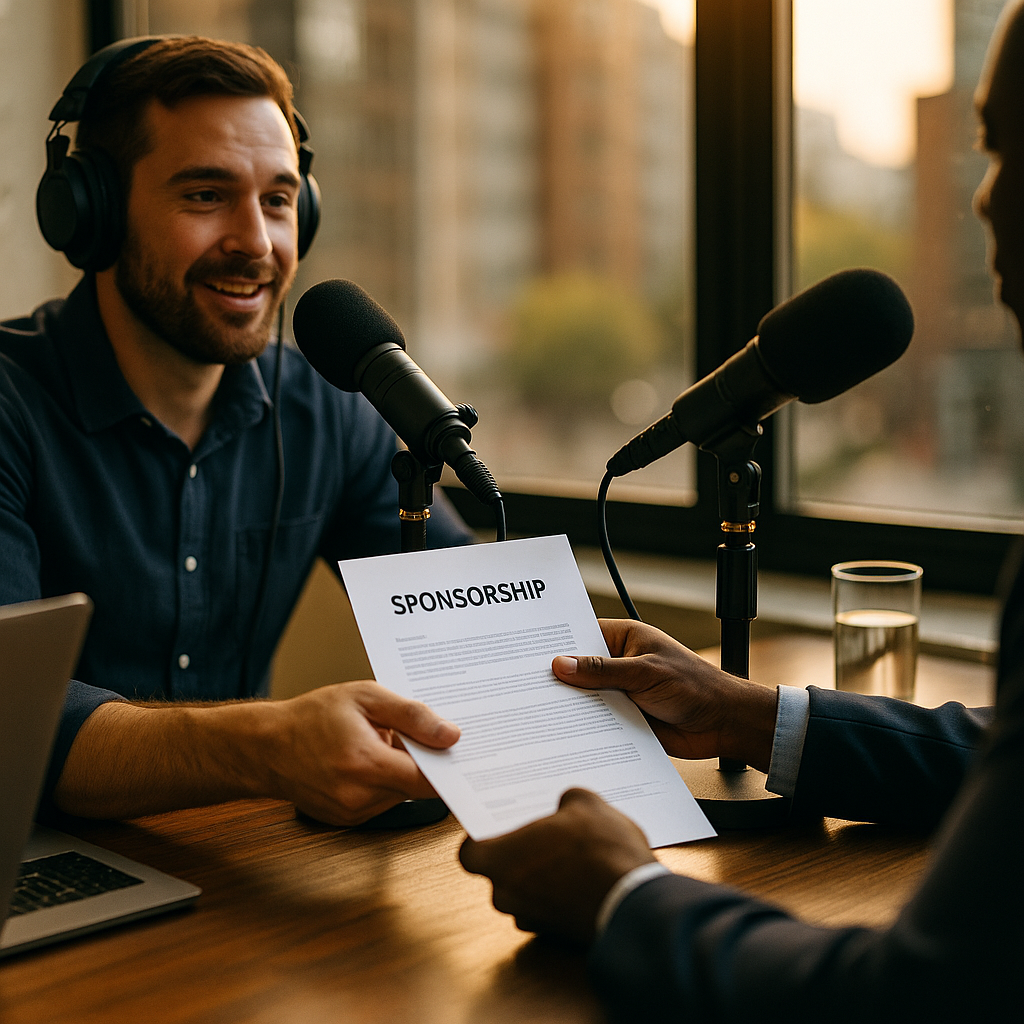
In 2025, B2B buyers research quietly, move fast, and reward brands that show up with credibility in the right places. A Playbook For Sponsoring Specialized Industry Podcasts For High-Intent Leads helps you reach decision-makers when they’re actively learning, not passively scrolling. This guide shows how to pick shows, structure offers, measure revenue impact, and avoid costly missteps—before your competitors lock in the best inventory.
Choosing specialized industry podcasts for high-intent lead generation
Podcast sponsorship works best when the audience is narrow, professional, and already problem-aware. Your goal is not “reach,” it’s relevance—the listener should feel the episode speaks directly to their role, industry constraints, and buying triggers. In practice, that means prioritizing podcasts that serve a specific vertical (e.g., industrial automation, clinical research ops, fintech risk, property management) or a specific function (e.g., RevOps, safety leaders, procurement).
Use these selection criteria to find the right shows and qualify them quickly:
- Listener-job fit: Ask for audience breakdown by role, seniority, company size, and region. If the host can’t share any audience insight, you’re buying blind.
- Problem alignment: Review the last 10 episodes. Do guests and topics map to the “pain → solution → purchase” arc you sell into?
- Commercial tolerance: Listen to at least two episodes with sponsors. Does the host read ads naturally, or do ads feel like an interruption? Host-read ads usually outperform announcer reads because trust transfers.
- Episode relevance: Identify “buying-intent episodes” where your solution fits the topic (compliance changes, cost reduction initiatives, security incidents, hiring constraints, platform migrations).
- Inventory and cadence: Weekly shows offer faster learning cycles. Monthly shows can work if the audience is highly concentrated in your ICP.
- Proof of response: Ask if prior sponsors renewed and why. Renewal is a strong signal the audience is responsive, even if exact conversion data varies.
Likely follow-up: Do I need big podcasts? No. Many B2B teams find stronger lead quality from smaller, specialized shows because listeners share the same constraints and vocabulary. High-intent beats high-volume when sales cycles are complex.
Podcast sponsorship strategy for B2B pipeline impact
To generate high-intent leads, you need a sponsorship plan that aligns with how B2B buyers actually convert: repeated exposure, clear use cases, and a low-friction next step. Treat podcast sponsorship as a pipeline channel, not a branding experiment. That means defining: (1) who you want, (2) what you want them to do, and (3) how you will attribute value.
Start with a clear sponsorship brief:
- Ideal customer profile (ICP): role, industry, tech stack, regulatory environment, typical contract size, and “must-have” pains.
- Primary conversion: demo request, diagnostic call, benchmark report, assessment, or waitlist—choose one and optimize it.
- Secondary conversions: newsletter signup, webinar registration, or product tour as fallbacks for colder listeners.
- Sales readiness: define what qualifies as a sales-accepted lead (SAL) so the team doesn’t chase low-fit inquiries.
- Measurement window: podcasts often create delayed conversions. Commit to tracking for at least 30–90 days after flight, depending on deal cycle.
Then choose a flight structure that fits your goals:
- Test flight (4–6 weeks): validate fit, messaging, and offer. Use 1–2 shows only to avoid noisy data.
- Scale flight (8–12 weeks): expand to adjacent shows that share the same buyer persona.
- Always-on (quarterly renewals): for categories where buyers need repeated reminders and timing is unpredictable.
Likely follow-up: Should we sponsor multiple podcasts at once? Only after you prove one show can drive qualified conversations. Early on, concentration improves learning and negotiation leverage.
Host-read podcast ads and offer design that converts
High-intent leads happen when the ad sounds like a useful recommendation and the offer removes uncertainty. The fastest path is a host-read placement built around a specific, credible outcome. Avoid generic slogans and “visit our website” calls-to-action. Instead, engineer the offer so the listener can immediately see themselves using it.
Build a converting offer with these elements:
- Specific audience callout: “If you lead compliance for multi-site manufacturing…” signals relevance.
- One problem, one promise: “Cut audit prep time by 30%” is stronger than “streamline operations.” Keep claims defensible.
- Low-friction next step: diagnostic, assessment, calculator, or benchmark tends to outperform “book a demo” for colder audiences.
- Time-to-value: state what happens in the next 7–14 days after they opt in.
- Risk reversal: “No obligation,” “we’ll tell you if we’re not a fit,” or “leave with a tailored plan.”
Write the host-read script as a framework, not a rigid ad. Provide the host with:
- 3 key talking points tied to real use cases
- 2 customer proof notes (industry, outcome, constraint) without overhyping
- 1 clear CTA and one backup CTA
- Pronunciation guide for your brand and product terms
Make the landing experience match the ad. If the ad promises a “risk assessment,” the landing page should not lead with a generic product overview. Keep it tight: one offer, one form, one next step.
Likely follow-up: Should we use a promo code? Use a dedicated URL first (e.g., /podcastname) because it captures both web and “I heard you on…” self-attribution. Promo codes help with direct-response tracking, but they can reduce completion if they add friction.
Tracking podcast sponsorship ROI with attribution you can trust
Podcast attribution fails when teams rely on a single signal. In 2025, you should expect multi-touch behavior: listeners may visit your site days later, search your brand, click a retargeting ad, then convert. Build a measurement plan that combines direct, inferred, and self-reported attribution—then ties it to pipeline and revenue.
Use a layered tracking approach:
- Dedicated landing pages: one per show (and optionally per episode theme). Keep the URL short and easy to say.
- Unique tracking parameters: UTM tags for links placed in show notes and episode descriptions.
- Self-reported source fields: add “How did you hear about us?” with a dropdown that includes the podcast name.
- CRM campaign mapping: every podcast and flight should map to a CRM campaign so you can report on SALs, SQLs, pipeline, and revenue.
- Call tracking (if relevant): for industries where prospects call first, use a unique number on the podcast landing page.
What to measure (in order):
- Lead quality: ICP match rate, seniority, company size, and problem fit captured at intake.
- Sales progression: meeting held rate, opportunity creation rate, and stage-to-stage velocity.
- Pipeline efficiency: cost per SAL and cost per SQL (more meaningful than cost per lead).
- Revenue impact: influenced and sourced revenue, plus payback period.
Likely follow-up: What if the podcast “works” but attribution is messy? Use lift tests: sponsor for a defined period, then pause. Watch for changes in branded search, direct traffic to the dedicated URL, inbound mentions, and pipeline from your ICP. The combination is often more reliable than any single dashboard metric.
Negotiating podcast sponsorship packages and avoiding common pitfalls
You can improve results dramatically with smarter sponsorship terms. Most podcasts will offer a menu—pre-roll, mid-roll, post-roll, newsletter, social, and sometimes a dedicated interview. Choose based on what supports intent and trust rather than what looks like “more.”
Negotiation priorities that tend to matter most:
- Mid-roll placements: typically the strongest attention and recall because they sit inside the episode’s core content.
- Host-read with light customization: ensure the host can adapt the message to the episode topic while staying accurate.
- Category exclusivity: if your niche is competitive, negotiate exclusivity for the flight to avoid being bracketed by direct competitors.
- Frequency and consistency: two reads across consecutive episodes can outperform one “big” placement because repetition drives action.
- Makegoods and guarantees: if an episode under-delivers on downloads, negotiate a replacement spot or extended flight.
Common pitfalls—and how to prevent them:
- Overpaying for generic audiences: require evidence of audience fit and show-content alignment before signing.
- Vague CTAs: “Learn more” rarely converts. Use a specific next step with a clear outcome.
- Weak sales follow-up: high-intent leads decay fast. Set a response SLA (for example, same business day) and route podcast leads to a trained rep.
- Ignoring creative fatigue: rotate angles every 4–6 weeks: new pain point, new proof, or new offer while staying consistent in positioning.
- No compliance review: in regulated industries, pre-approve claims and keep a record of what ran in each episode.
Likely follow-up: Should we do an episode sponsorship or guest interview? Guest interviews can be powerful for authority-building, but they are not a shortcut to pipeline. Treat them as top-of-funnel unless you pair them with a strong, relevant offer and distribution plan (email, sales enablement, retargeting).
Building authority and trust with EEAT-led podcast partnerships
Specialized podcasts are trust engines. If your team shows up as credible, experienced, and transparent, you gain more than clicks—you gain permission to be part of the buyer’s shortlist. That’s why an EEAT approach matters: demonstrate real experience, show expertise, establish authority, and operate with trust.
Practical EEAT tactics for sponsorship success:
- Use real-world proof: share outcomes with context (industry, constraints, scope). Avoid exaggerated claims that can erode trust.
- Offer educational assets: benchmarks, checklists, templates, and assessments that genuinely help the listener make a decision.
- Align spokespersons to the audience: if the podcast serves technical buyers, use a technical leader in the messaging and follow-up content.
- Create a “podcast hub” page: host your best podcast appearances, your methodology, customer stories, and clear contact paths in one place.
- Train sales on the podcast context: reps should reference the show and episode topic naturally, then ask better discovery questions.
Likely follow-up: How do we keep it helpful without becoming too “salesy”? Lead with clarity: name the problem, share one actionable insight, then invite the listener to a next step that gives them a tailored answer. Helpful content earns the click; the next step earns the deal.
FAQs
How much should we budget to sponsor a specialized industry podcast?
Budget depends on audience size, niche value, and placement type. For B2B, plan a test budget that covers at least 4–6 placements so you can evaluate lead quality and sales progression, not just clicks. Prioritize mid-roll host-read spots and a dedicated landing page before adding extra channels like newsletters.
What’s the best call-to-action for high-intent B2B podcast leads?
The best CTA is usually a diagnostic: an assessment, benchmark, teardown, or consultation that produces a concrete output. If you sell a complex solution, this converts better than a generic demo because it reduces perceived risk and lets prospects self-qualify.
How long does it take to see results from podcast sponsorships?
Many teams see early signals within the first few episodes (traffic, form fills, inbound mentions), but pipeline outcomes often appear over a 30–90 day window depending on deal cycle length. Track leading indicators (ICP fit, meeting held rate) to avoid waiting for closed-won data to make decisions.
Do podcast sponsorships work for account-based marketing (ABM)?
Yes, especially when the podcast audience overlaps with your target account list. Use sponsorship to warm accounts, then run coordinated outreach: send the episode to stakeholders, retarget visitors to the podcast landing page, and have sales reference the exact topic discussed to create continuity.
What should we ask a podcast host or network before sponsoring?
Ask for audience makeup, average downloads per episode, how downloads are measured, sponsor renewal history, ad format options, and content calendar themes. Also confirm whether you can review the ad read for accuracy and whether makegoods are available if delivery falls short.
How do we prevent low-quality leads from podcast traffic?
Qualify on the landing page and in the offer. Use role-based wording (“for operations leaders at multi-site facilities”), require one or two key fields (company size, system in place), and route leads through a short scheduling flow that confirms fit. Measure cost per SAL and SQL, not just cost per lead.
Podcast sponsorships in specialized industries can be one of the cleanest paths to high-intent demand because you borrow trust from a focused audience at the moment they’re learning. Pick shows based on ICP fit, run host-read ads tied to a specific diagnostic offer, and track results with layered attribution in your CRM. Execute consistently, and you turn niche attention into qualified pipeline.
Top Influencer Marketing Agencies
The leading agencies shaping influencer marketing in 2026
Agencies ranked by campaign performance, client diversity, platform expertise, proven ROI, industry recognition, and client satisfaction. Assessed through verified case studies, reviews, and industry consultations.
Moburst

-
2

The Shelf
Boutique Beauty & Lifestyle Influencer AgencyA data-driven boutique agency specializing exclusively in beauty, wellness, and lifestyle influencer campaigns on Instagram and TikTok. Best for brands already focused on the beauty/personal care space that need curated, aesthetic-driven content.Clients: Pepsi, The Honest Company, Hims, Elf Cosmetics, Pure LeafVisit The Shelf → -
3

Audiencly
Niche Gaming & Esports Influencer AgencyA specialized agency focused exclusively on gaming and esports creators on YouTube, Twitch, and TikTok. Ideal if your campaign is 100% gaming-focused — from game launches to hardware and esports events.Clients: Epic Games, NordVPN, Ubisoft, Wargaming, Tencent GamesVisit Audiencly → -
4

Viral Nation
Global Influencer Marketing & Talent AgencyA dual talent management and marketing agency with proprietary brand safety tools and a global creator network spanning nano-influencers to celebrities across all major platforms.Clients: Meta, Activision Blizzard, Energizer, Aston Martin, WalmartVisit Viral Nation → -
5

The Influencer Marketing Factory
TikTok, Instagram & YouTube CampaignsA full-service agency with strong TikTok expertise, offering end-to-end campaign management from influencer discovery through performance reporting with a focus on platform-native content.Clients: Google, Snapchat, Universal Music, Bumble, YelpVisit TIMF → -
6

NeoReach
Enterprise Analytics & Influencer CampaignsAn enterprise-focused agency combining managed campaigns with a powerful self-service data platform for influencer search, audience analytics, and attribution modeling.Clients: Amazon, Airbnb, Netflix, Honda, The New York TimesVisit NeoReach → -
7

Ubiquitous
Creator-First Marketing PlatformA tech-driven platform combining self-service tools with managed campaign options, emphasizing speed and scalability for brands managing multiple influencer relationships.Clients: Lyft, Disney, Target, American Eagle, NetflixVisit Ubiquitous → -
8

Obviously
Scalable Enterprise Influencer CampaignsA tech-enabled agency built for high-volume campaigns, coordinating hundreds of creators simultaneously with end-to-end logistics, content rights management, and product seeding.Clients: Google, Ulta Beauty, Converse, AmazonVisit Obviously →