


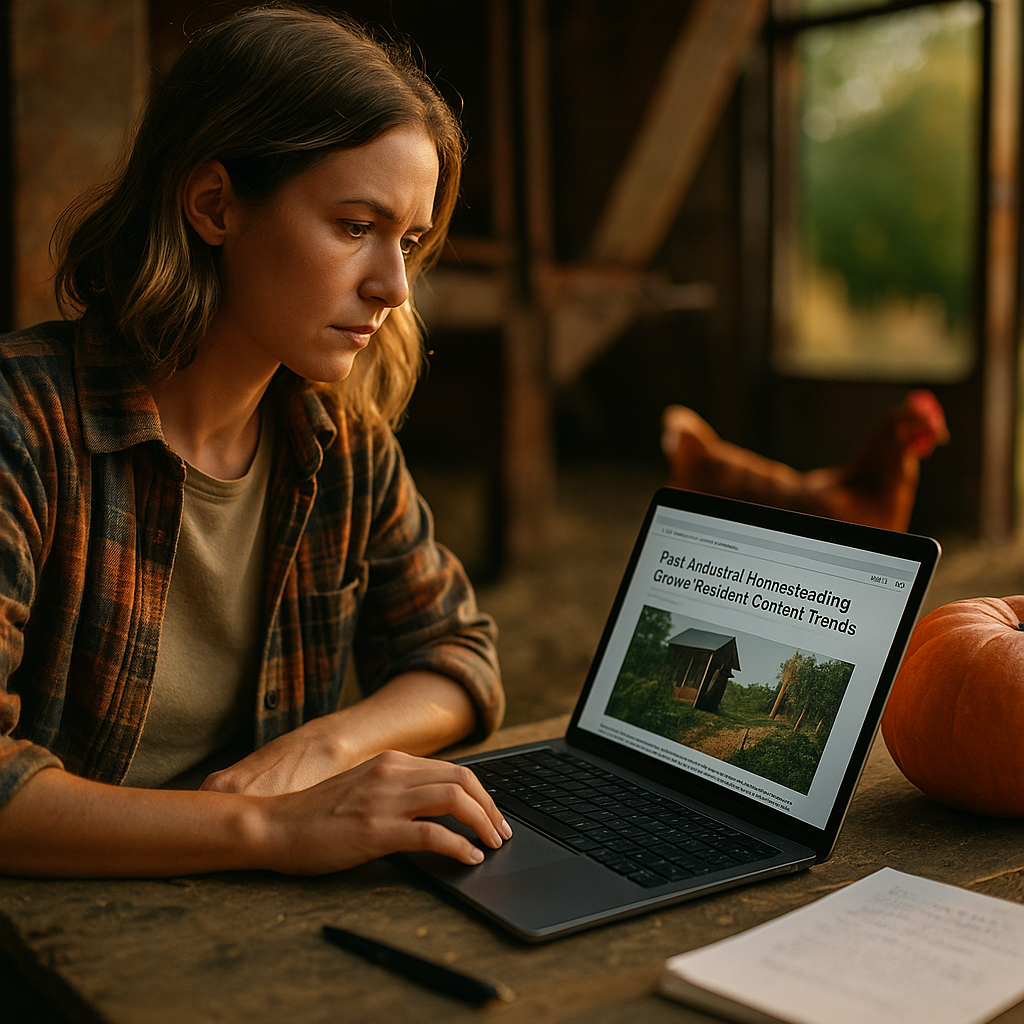
In 2025, audiences crave practical resilience without abandoning modern life, and creators are meeting that demand with The Rise Of Post-Industrial Homesteading Content across platforms. This trend blends apartment-scale food growing, DIY repair culture, and smart-tool literacy into a new kind of self-reliance. For brands, it unlocks unusually authentic partnerships rooted in proof, outcomes, and trust—so where do you fit?
Understanding post-industrial homesteading trends
Post-industrial homesteading sits between traditional homesteading and contemporary urban reality. It focuses on practical skills that work in small spaces, with limited time, and under real-world constraints like zoning, budgets, and supply-chain uncertainty. The content often features:
- Small-footprint food systems: balcony gardens, microgreens, countertop composting, indoor seed starting, community garden plots.
- Repair and maintenance literacy: fixing appliances, mending textiles, tool upkeep, basic carpentry, bicycle maintenance.
- Energy and water pragmatism: efficient cooking, backup power planning, rain capture where legal, leak detection, weatherization.
- Low-waste routines: pantry-first cooking, preservation in batches, reuse systems that save money and reduce dependency.
- Tech-enabled self-reliance: sensors for indoor grows, smart plugs for energy monitoring, apps for inventory and meal planning.
It resonates because it solves immediate problems: rising living costs, fragile logistics, and the desire for competence. Viewers don’t just want inspiration; they want replicable systems. That is why the strongest creators show constraints, mistakes, and trade-offs instead of perfection. If you’re evaluating opportunities, look for content that demonstrates measurable results (yield per tray, cost per meal, repair time, energy savings) rather than aesthetics alone.
Homesteading content marketing signals in 2025
For brands and creators, the biggest shift is that “homesteading” is no longer a niche category. It has become a cross-platform content format with consistent signals of high intent. Viewers are not passively consuming; they are preparing to buy tools, ingredients, storage, and services that make routines easier.
Key engagement signals to watch in 2025 include:
- Repeatable series formats: “30 days of pantry meals,” “one-tool repairs,” “balcony harvest logs,” and “$20 weekly garden.”
- Search-driven discovery: “how to” queries, troubleshooting keywords, and local constraints (apartment, HOA, cold climate, drought).
- Proof-based storytelling: before/after audits, yield tracking, spreadsheets, shopping lists, and failure analysis.
- Community validation: comment sections used as peer review where audiences correct methods and share outcomes.
Readers often ask, “Is this just prepping?” Not quite. Post-industrial homesteading emphasizes daily utility and skill building, not fear narratives. That difference matters for brand safety and long-term loyalty. Brands should align with competence, stewardship, and affordability rather than anxiety-based messaging.
Another common follow-up: “Does it work without land?” Yes—much of the category is explicitly designed for renters. Content that addresses legalities, landlord-friendly setups, and reversible installs tends to convert well because it removes friction from the viewer’s first attempt.
Brand synergy opportunities with creators
Brand synergy works best when the product is a natural part of a system the creator already uses. Post-industrial homesteading audiences notice forced integrations quickly, so partnerships should map to the creator’s existing workflow and values. High-fit categories include:
- Tools and maintenance: modular tool kits, repair parts, adhesives, fasteners, sharpening systems, safety gear.
- Kitchen systems: durable cookware, pressure canners where appropriate, dehydrators, vacuum sealers, storage containers, scales.
- Gardening and indoor growing: compact grow lights, trays, soil blocks, seed suppliers, pest management, irrigation timers.
- Water and air quality: filters, test kits, humidity control, ventilation accessories for indoor grows.
- Energy efficiency and backup: power stations, efficient appliances, insulation products, induction cooktops, monitoring devices.
- Education and services: classes, repair memberships, local delivery for soil/compost, community garden programs.
To unlock synergy, build campaigns around outcomes instead of claims. A partnership performs better when it answers: “What problem does this solve, how do we measure the benefit, and what are the trade-offs?” Example integrations that feel native include:
- “One apartment, three harvest cycles” featuring seed-to-harvest documentation, with transparent costs and lighting schedules.
- “Repair instead of replace” where a tool brand supports a series of fixes with part lists and safety guidelines.
- “Pantry baseline build” pairing storage or grocery brands with a creator’s inventory method and rotating meal plan.
Brands also ask, “Should we prioritize micro-influencers or large channels?” In this niche, micro and mid-tier creators often deliver stronger trust and better cost efficiency because they interact deeply in comments and can document experiments over weeks. Larger creators can drive reach, but the best results usually come from a portfolio: a few high-reach placements plus many credibility placements with detailed tutorials.
EEAT-driven creator partnerships and credibility
Post-industrial homesteading content succeeds when it is demonstrably helpful and responsibly produced. That aligns directly with Google’s EEAT principles: Experience, Expertise, Authoritativeness, and Trustworthiness. Brands should treat EEAT as a selection and execution framework, not a buzzword.
Experience: Prioritize creators who show real-world practice—hands-on footage, time-lapse growth logs, repair steps, and outcome reporting. Look for consistent routines over months, not one-off “perfect” builds.
Expertise: The most credible creators explain why a method works, include safety notes, and reference standards when relevant (for example, food safety temperatures or electrical load limits). They also show when a task is outside their scope and recommend professional help.
Authoritativeness: Authority in this niche often comes from peer recognition: collaborations with tradespeople, horticulturists, or food safety educators; invited workshops; or community partnerships. Brands can strengthen authority by funding expert review of scripts or adding vetted resources without taking over the creator’s voice.
Trustworthiness: Clear disclosures, transparent sponsorship terms, and honest drawbacks outperform hype. If a grow light runs hot, say so. If a pressure canner has a learning curve, show the checklist. Trust compounds when the audience sees truth in small details.
To reduce risk, create a lightweight partnership brief that includes:
- Safety boundaries: what the creator should not demonstrate without certification (electrical panel work, structural changes, unsafe food preservation).
- Measurement expectations: what will be tracked (time, cost, yield, durability, energy use).
- Disclosure requirements: plain-language sponsorship statements and affiliate clarity.
- Claims policy: no unsupported health or performance claims; encourage “here’s what happened for me” framing.
This niche rewards honesty. Viewers commonly ask, “What did it cost?” and “Would you buy it again?” Encourage creators to answer those directly. Brands that allow candid answers usually earn better long-term sentiment and repeat purchases.
Monetization models and content-to-commerce funnels
Post-industrial homesteading sits at the intersection of education and shopping intent. The most effective funnels do not push products; they guide decisions. In 2025, high-performing monetization models include:
- Shoppable how-to libraries: evergreen tutorials with updated tool lists, part numbers, and substitution options.
- Starter kits and bundles: creator-designed bundles for “first microgreens setup” or “basic home repair,” priced for beginners.
- Tiered education: free basics, paid deep dives, and optional live workshops with Q&A.
- Membership communities: checklists, seasonal planning, troubleshooting support, and monthly challenges.
- Affiliate partnerships with guardrails: limited, high-fit recommendations instead of sprawling “link farms.”
Readers often wonder, “How do we avoid turning helpful content into an infomercial?” Use a simple structure:
- Start with the problem: “My herbs keep dying indoors.”
- Teach the method: light intensity, watering schedule, airflow, soil choice.
- Offer product options: three tiers (budget, mid, premium) and clear decision criteria.
- Show results and maintenance: what it looks like after two weeks and two months.
For brands selling higher-consideration items (power stations, filtration systems, premium tools), the most effective content includes a comparison to a baseline alternative, a “who this is for” section, and a realistic maintenance plan. That reduces returns and increases satisfaction—both of which protect brand reputation.
Measurement, compliance, and long-term brand building
Because this category is practical and iterative, measurement should reflect behavior over time, not just clicks. Strong 2025 measurement plans include:
- Leading indicators: saves, shares, “watched full tutorial” rates, comment depth, repeat views on series.
- Conversion quality: bundle attach rate, repeat purchase rate, refund and return rate, customer support ticket themes.
- Outcome metrics: user-reported results, onboarding completion, “first success” milestones (first harvest, first repair).
- Brand health: sentiment analysis, creator-community feedback, and post-campaign organic search lift.
Compliance matters more here than in many lifestyle categories because the content touches food safety, tools, and home systems. Build a compliance checklist that covers:
- Affiliate and sponsorship disclosure in plain language.
- Safety disclaimers where a mistake could cause harm (pressure canning, power tool use).
- Local regulation reminders for water capture, composting, and certain installs.
- Accessibility basics like clear steps, readable on-screen text, and realistic alternatives for limited mobility.
Long-term brand building comes from consistency. Instead of one-off “big splash” posts, co-create a seasonally paced roadmap: spring growing, summer preservation, fall repair, winter efficiency. That matches audience needs and keeps the brand present when decisions happen.
FAQs
What is post-industrial homesteading content?
It is practical self-reliance content designed for modern constraints: renters, small spaces, limited time, and mixed analog-digital tools. It emphasizes skills, systems, and measurable outcomes rather than rural aesthetics.
Why is this niche growing in 2025?
Audiences want cost control, resilience, and competence in daily life. Content that reduces reliance on constant replacement—through growing food, repairing items, and optimizing home resources—feels immediately useful and shareable.
Which brands align best with this audience?
Brands that improve durability, safety, efficiency, and learning: tools, kitchen systems, indoor growing supplies, filtration, energy efficiency products, and education services. Transparent pricing and honest limitations matter.
How can a brand choose the right creator partner?
Look for consistent hands-on demonstrations, clear explanations, audience trust in comments, and responsible boundaries (they know when to recommend a professional). Ask for examples of tracked results and past sponsorship disclosures.
What content formats convert without feeling pushy?
Series-based tutorials with measurable goals, comparison tests, and “starter path” guides. Viewers respond well to tiered recommendations (budget to premium) and real maintenance updates after weeks of use.
How do you manage safety and compliance in sponsored content?
Use a claims policy, require clear sponsorship disclosures, include safety boundaries, and avoid demonstrating high-risk tasks without credentials. Encourage “here’s what happened for me” language and provide vetted resources for advanced work.
What metrics best reflect success for these campaigns?
Beyond clicks, track saves, tutorial completion, repeat views, bundle attach rate, return rate, and customer support themes. Also measure community sentiment and organic search lift for the brand and product category terms.
Post-industrial homesteading is no longer a fringe interest; in 2025 it is a performance-driven content category built on competence, transparency, and real results. Brands that support creators with outcome-focused storytelling, safe guidance, and honest product fit can earn trust that outlasts a single campaign. The takeaway: design partnerships around systems and proof, and the audience will follow.
Top Influencer Marketing Agencies
The leading agencies shaping influencer marketing in 2026
Agencies ranked by campaign performance, client diversity, platform expertise, proven ROI, industry recognition, and client satisfaction. Assessed through verified case studies, reviews, and industry consultations.
Moburst

-
2

The Shelf
Boutique Beauty & Lifestyle Influencer AgencyA data-driven boutique agency specializing exclusively in beauty, wellness, and lifestyle influencer campaigns on Instagram and TikTok. Best for brands already focused on the beauty/personal care space that need curated, aesthetic-driven content.Clients: Pepsi, The Honest Company, Hims, Elf Cosmetics, Pure LeafVisit The Shelf → -
3

Audiencly
Niche Gaming & Esports Influencer AgencyA specialized agency focused exclusively on gaming and esports creators on YouTube, Twitch, and TikTok. Ideal if your campaign is 100% gaming-focused — from game launches to hardware and esports events.Clients: Epic Games, NordVPN, Ubisoft, Wargaming, Tencent GamesVisit Audiencly → -
4

Viral Nation
Global Influencer Marketing & Talent AgencyA dual talent management and marketing agency with proprietary brand safety tools and a global creator network spanning nano-influencers to celebrities across all major platforms.Clients: Meta, Activision Blizzard, Energizer, Aston Martin, WalmartVisit Viral Nation → -
5

The Influencer Marketing Factory
TikTok, Instagram & YouTube CampaignsA full-service agency with strong TikTok expertise, offering end-to-end campaign management from influencer discovery through performance reporting with a focus on platform-native content.Clients: Google, Snapchat, Universal Music, Bumble, YelpVisit TIMF → -
6

NeoReach
Enterprise Analytics & Influencer CampaignsAn enterprise-focused agency combining managed campaigns with a powerful self-service data platform for influencer search, audience analytics, and attribution modeling.Clients: Amazon, Airbnb, Netflix, Honda, The New York TimesVisit NeoReach → -
7

Ubiquitous
Creator-First Marketing PlatformA tech-driven platform combining self-service tools with managed campaign options, emphasizing speed and scalability for brands managing multiple influencer relationships.Clients: Lyft, Disney, Target, American Eagle, NetflixVisit Ubiquitous → -
8

Obviously
Scalable Enterprise Influencer CampaignsA tech-enabled agency built for high-volume campaigns, coordinating hundreds of creators simultaneously with end-to-end logistics, content rights management, and product seeding.Clients: Google, Ulta Beauty, Converse, AmazonVisit Obviously →