


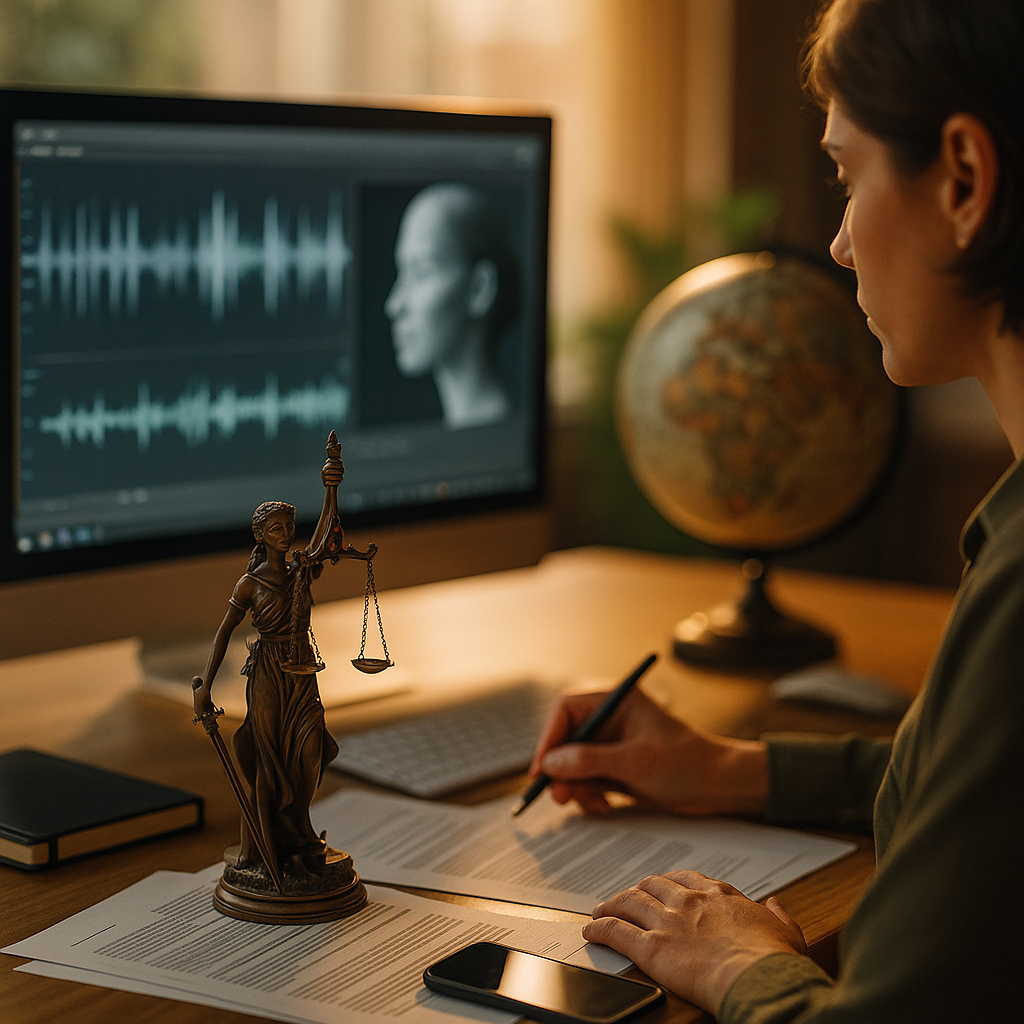
In 2025, synthetic voiceovers are no longer a novelty—they’re a production default for many global brands. Yet the legal terrain is uneven: rights of publicity, copyright, consumer protection, and data rules collide across borders. Navigating The Legalities Of Synthetic Voiceovers In Global Advertising demands more than a template release; it requires a jurisdiction-aware compliance playbook. Are your campaigns protected—or exposed?
Secondary keyword: global advertising compliance
Global advertising compliance for synthetic voiceovers starts with a clear understanding that “voice” is regulated through multiple legal lenses, and the governing lens changes by country, platform, and use case. One campaign can trigger several regimes at once: intellectual property, privacy, consumer protection, and sector-specific marketing rules.
Key reality: there is no single worldwide rulebook for synthetic voiceovers. Instead, brands should treat each voice asset as a bundle of rights and risks that must be cleared for (1) the source data, (2) the generated output, and (3) the way the voice is used in advertising.
Common legal touchpoints you should map before production:
- Personality and publicity rights: whether a person can control commercial use of their voice, likeness, or identity signals (including “sound-alike” voice traits).
- Copyright and related rights: ownership of scripts, performances, recordings, and in some markets, performer protections tied to voice performances.
- Privacy and data protection: voice as biometric or personal data, consent requirements, cross-border transfers, and vendor processing obligations.
- Consumer protection and advertising standards: misleading claims, endorsements, and disclosure duties—especially if a synthetic voice implies a real person’s involvement.
- Platform and broadcaster rules: ad policies may ban impersonation or require disclosure even when law is silent.
To keep campaigns moving, align stakeholders early: legal, brand, media, procurement, and the creative team. Build a single intake form that captures jurisdiction, media channels, language, audience (especially minors), whether the voice resembles a real person, and whether the script includes endorsements or health/financial claims. This prevents late-stage rework and helps you decide when to use a fully synthetic “house voice,” a licensed professional voice, or a controlled clone of a specific talent.
Secondary keyword: voice cloning consent
Voice cloning consent is the highest-stakes decision point in synthetic audio advertising. If your synthetic voice is derived from a real individual’s recordings—or is intended to imitate a recognisable person—you should treat consent and licensing as mandatory, not optional.
Best-practice consent for cloning a specific voice should be:
- Express and written: not implied from a generic voiceover booking or a broad “work-for-hire” clause.
- Purpose-limited: specify advertising use, territories, languages, and product categories (and exclude sensitive categories if needed).
- Time-bounded: define term length, renewal options, and post-term takedown obligations for voice models and outputs.
- Revocation-aware: address whether and how consent can be withdrawn, and what happens to already-distributed ads.
- Model-governed: clarify whether you are licensing a model, the outputs, or both, and who can access the model.
Sound-alikes require special care. Even when you do not clone a named person, a synthetic voice can still create liability if it evokes a distinctive, recognisable voice associated with an individual—especially if the ad suggests endorsement. The safest route is to document creative intent, run internal similarity checks, and maintain a “do-not-imitate” list for public figures and contracted talent.
Practical safeguards that reduce disputes:
- Talent-side audit trail: keep the original signed consent, session logs, and the exact source recordings used to train or condition the model.
- Usage reporting: provide the talent (or their agent) a clear record of where the synthetic voice runs.
- Category exclusivity: if a talent is associated with one brand, prevent the same cloned voice from appearing in a competitor’s campaign.
When you use a fully synthetic “from-scratch” voice, you still need contractual clarity with the vendor: confirm the voice is not derived from unlicensed recordings and that the provider will indemnify you if it is.
Secondary keyword: AI voiceover copyright
AI voiceover copyright questions often derail global ad launches because the answer depends on what exactly you are protecting: the script, the audio file, the underlying voice model, or the performance-like qualities of the output. Brands should plan for ownership and usage rights across all of these layers.
Separate the components:
- Script: typically copyrighted; secure rights via work-made-for-hire or assignment from copywriters and agencies.
- Source recordings: if you used human voice data, those recordings may have performer and producer rights; license them properly.
- Generated audio output: ownership can be governed by contract, but some jurisdictions may limit protection if no human authorship exists. Your practical priority is enforceable contractual rights to use, modify, and distribute the file worldwide.
- Voice model: often treated as software or a service output; negotiate who controls it, who can prompt it, and whether it can be reused for others.
Contract terms to insist on with vendors and agencies:
- Worldwide, multi-channel usage rights: paid media, organic social, broadcast, streaming, in-store, out-of-home, and IVR.
- Derivative works: permission to cut-down, localise, retime, and re-render audio without re-approvals.
- Exclusivity and non-reuse: if you need brand distinctiveness, prevent the provider from offering the same voice to competitors.
- Training-data warranties: the vendor warrants that training data was obtained lawfully and does not infringe third-party rights.
- Indemnities with teeth: include defense obligations, caps that reflect actual exposure, and clear notice-and-control procedures.
Answer to the question marketers ask next: “Do we need to disclose the voice is synthetic?” Not always by law everywhere, but disclosure can reduce deception risk when the voice could be interpreted as a real person’s endorsement. Where you use a voice that resembles a public figure or a known spokesperson, disclosure and explicit licensing are prudent. In regulated categories (health, finance), prioritize clarity over cleverness.
Secondary keyword: biometric data privacy
Biometric data privacy issues can arise the moment voice data is collected, stored, or processed—especially if a voiceprint or other identifying features can be derived. Even when your intent is only “audio generation,” regulators may treat voice as personal data, and in some jurisdictions as biometric data, which often triggers heightened obligations.
Privacy questions to resolve before collecting any recordings:
- What data is being processed? raw audio, transcripts, metadata, voice embeddings, and prompt logs can all be sensitive.
- What is the legal basis or consent model? if consent is required, ensure it is informed, specific, and recorded.
- Where is the data stored and processed? cross-border transfers may require additional safeguards and contractual terms.
- How long is it retained? retention limits and secure deletion matter, especially for voice models derived from individuals.
- Who are the subprocessors? vendors often rely on third-party infrastructure; you need visibility and approval rights.
Operational controls that satisfy most enterprise privacy reviews:
- Data minimisation: capture only what you need for the campaign; avoid collecting unnecessary identifiers.
- Security-by-design: encryption at rest and in transit, strict access controls, and separate environments for training vs. production.
- Deletion workflow: documented deletion of source recordings, embeddings, and model versions upon contract end or revocation events.
- Vendor assessments: due diligence on incident response, audit rights, and model governance.
Consumer-facing privacy considerations: if ads are personalised using voice interactions (for example, conversational ads or voice assistants), evaluate whether you are collecting end-user voice data. If you are, you may need consumer disclosures, consent flows, and opt-out mechanisms—plus special protections for children if minors could be involved.
Secondary keyword: advertising disclosure rules
Advertising disclosure rules come into play when a synthetic voice can mislead consumers about who is speaking, whether an endorsement is real, or whether claims are substantiated. Even in markets without explicit “AI voice” labeling requirements, deception standards still apply.
High-risk scenarios where disclosure and careful scripting matter most:
- Implied celebrity or influencer endorsement: a familiar-sounding voice, cadence, or catchphrase can create a false association.
- “Expert” or “doctor” tones in regulated categories: health, supplements, insurance, and financial products often face stricter substantiation expectations.
- Customer testimonial formats: synthetic “real customer” narratives can be viewed as fabricated testimonials if not clearly presented as dramatizations.
- Political or civic messaging: many jurisdictions and platforms restrict synthetic media that could mislead voters.
How to reduce deception risk without killing creative:
- Make the speaker role unambiguous: “brand narrator” language is safer than “I’m [famous person].”
- Avoid identity cues: do not mimic a known person’s signature phrases, accent, or delivery.
- Use plain disclosures when needed: brief audio or on-screen text such as “voice generated using AI” can be effective where format permits.
- Substantiate claims: treat synthetic narration like any other ad—every claim must be supported.
Likely follow-up: “Does disclosure eliminate liability if we imitate someone?” No. Disclosure may help with consumer deception, but it does not replace the need for permission when publicity, personality, or contractual voice rights are implicated.
Secondary keyword: cross-border licensing strategy
Cross-border licensing strategy turns synthetic voiceovers from a legal risk into a scalable asset. Instead of clearing rights one market at a time, design a single master rights framework that anticipates localisation, re-use, and future channels.
A workable global strategy has four layers:
- 1) Voice asset classification: label each voice as fully synthetic, licensed human performance, or cloned/derived from a specific person. Apply stricter controls as you move toward cloning.
- 2) Rights matrix by territory: map where publicity rights, biometric restrictions, and advertising rules are strictest, then adopt that “high-water mark” for global campaigns unless a local exception is essential.
- 3) Model governance: decide who can generate new lines, how prompts are approved, and how you prevent off-brand or non-compliant outputs.
- 4) Localisation protocol: ensure translations do not introduce prohibited claims, regulated terms, or unintended endorsements. Local legal review should cover both text and audio tone.
Include these clauses in your master agreements to avoid repeated renegotiation:
- Territory and media expansion: pre-approved rights for new platforms and emerging ad formats.
- Compliance cooperation: the vendor supports audits, provides training-data provenance summaries, and assists with takedowns.
- Similarity and impersonation guardrails: commitment not to generate outputs that imitate prohibited individuals or breach platform policies.
- Incident response: clear steps if a deepfake allegation arises, including rapid removal, investigation, and public-facing messaging support.
Internal workflow tip: route synthetic voice ads through the same approvals as endorsements. Require a “voice rights clearance” checkbox before media booking, and store all consents and licenses in a searchable repository so local teams do not recreate work or miss limitations.
FAQs
Do we own a synthetic voiceover created by an AI tool?
Often you can contract for broad usage rights to the audio output, but ownership and enforceability vary by jurisdiction and by how much human authorship exists. The practical priority is to secure an explicit license (or assignment where possible), plus warranties that the tool’s training data and outputs do not infringe third-party rights.
Is it legal to use a “sound-alike” synthetic voice in ads?
It can be lawful in some contexts, but it is high-risk if the voice is recognisably associated with a real person or implies endorsement. The safest approach is to avoid intentional imitation, document creative intent, and obtain permission when a voice could reasonably be linked to an individual.
Do we need consent to clone a voice if we paid the talent for a recording session?
Yes in most responsible compliance models. Payment for a session rarely equals consent to create a reusable voice model. You should obtain express written permission covering cloning, scope of use, term, territories, and whether the model can be reused for other scripts and campaigns.
Are synthetic voiceovers considered biometric data?
The generated audio itself may not always be biometric, but the source voice recordings and derived embeddings can be treated as personal or biometric data in many regimes. If your process creates or uses voiceprints or uniquely identifying voice features, apply heightened privacy safeguards and obtain appropriate consent or legal basis.
Should we disclose that an ad uses an AI-generated voice?
Not universally required, but disclosure is advisable when a listener could be misled about who is speaking or whether an endorsement is real. In regulated categories and testimonial-style ads, disclosure and clear framing reduce deception risk and platform enforcement issues.
What contract terms matter most when hiring an AI voice vendor?
Insist on worldwide usage rights, clear permission for derivatives and localisation, training-data provenance warranties, strong indemnities, model access controls, retention/deletion obligations, and rules preventing the vendor from reusing the same voice for competitors if brand distinctiveness matters.
In 2025, synthetic voiceovers let brands scale storytelling across markets, but speed without governance invites legal and reputational damage. Treat voice as a rights-managed asset: secure explicit consent for cloning, contract for worldwide usage rights, and apply privacy and disclosure controls where consumers could be misled. Build a cross-border review workflow and vendor standards now, and your ads can expand globally with confidence.
Top Influencer Marketing Agencies
The leading agencies shaping influencer marketing in 2026
Agencies ranked by campaign performance, client diversity, platform expertise, proven ROI, industry recognition, and client satisfaction. Assessed through verified case studies, reviews, and industry consultations.
Moburst

-
2

The Shelf
Boutique Beauty & Lifestyle Influencer AgencyA data-driven boutique agency specializing exclusively in beauty, wellness, and lifestyle influencer campaigns on Instagram and TikTok. Best for brands already focused on the beauty/personal care space that need curated, aesthetic-driven content.Clients: Pepsi, The Honest Company, Hims, Elf Cosmetics, Pure LeafVisit The Shelf → -
3

Audiencly
Niche Gaming & Esports Influencer AgencyA specialized agency focused exclusively on gaming and esports creators on YouTube, Twitch, and TikTok. Ideal if your campaign is 100% gaming-focused — from game launches to hardware and esports events.Clients: Epic Games, NordVPN, Ubisoft, Wargaming, Tencent GamesVisit Audiencly → -
4

Viral Nation
Global Influencer Marketing & Talent AgencyA dual talent management and marketing agency with proprietary brand safety tools and a global creator network spanning nano-influencers to celebrities across all major platforms.Clients: Meta, Activision Blizzard, Energizer, Aston Martin, WalmartVisit Viral Nation → -
5

The Influencer Marketing Factory
TikTok, Instagram & YouTube CampaignsA full-service agency with strong TikTok expertise, offering end-to-end campaign management from influencer discovery through performance reporting with a focus on platform-native content.Clients: Google, Snapchat, Universal Music, Bumble, YelpVisit TIMF → -
6

NeoReach
Enterprise Analytics & Influencer CampaignsAn enterprise-focused agency combining managed campaigns with a powerful self-service data platform for influencer search, audience analytics, and attribution modeling.Clients: Amazon, Airbnb, Netflix, Honda, The New York TimesVisit NeoReach → -
7

Ubiquitous
Creator-First Marketing PlatformA tech-driven platform combining self-service tools with managed campaign options, emphasizing speed and scalability for brands managing multiple influencer relationships.Clients: Lyft, Disney, Target, American Eagle, NetflixVisit Ubiquitous → -
8

Obviously
Scalable Enterprise Influencer CampaignsA tech-enabled agency built for high-volume campaigns, coordinating hundreds of creators simultaneously with end-to-end logistics, content rights management, and product seeding.Clients: Google, Ulta Beauty, Converse, AmazonVisit Obviously →