


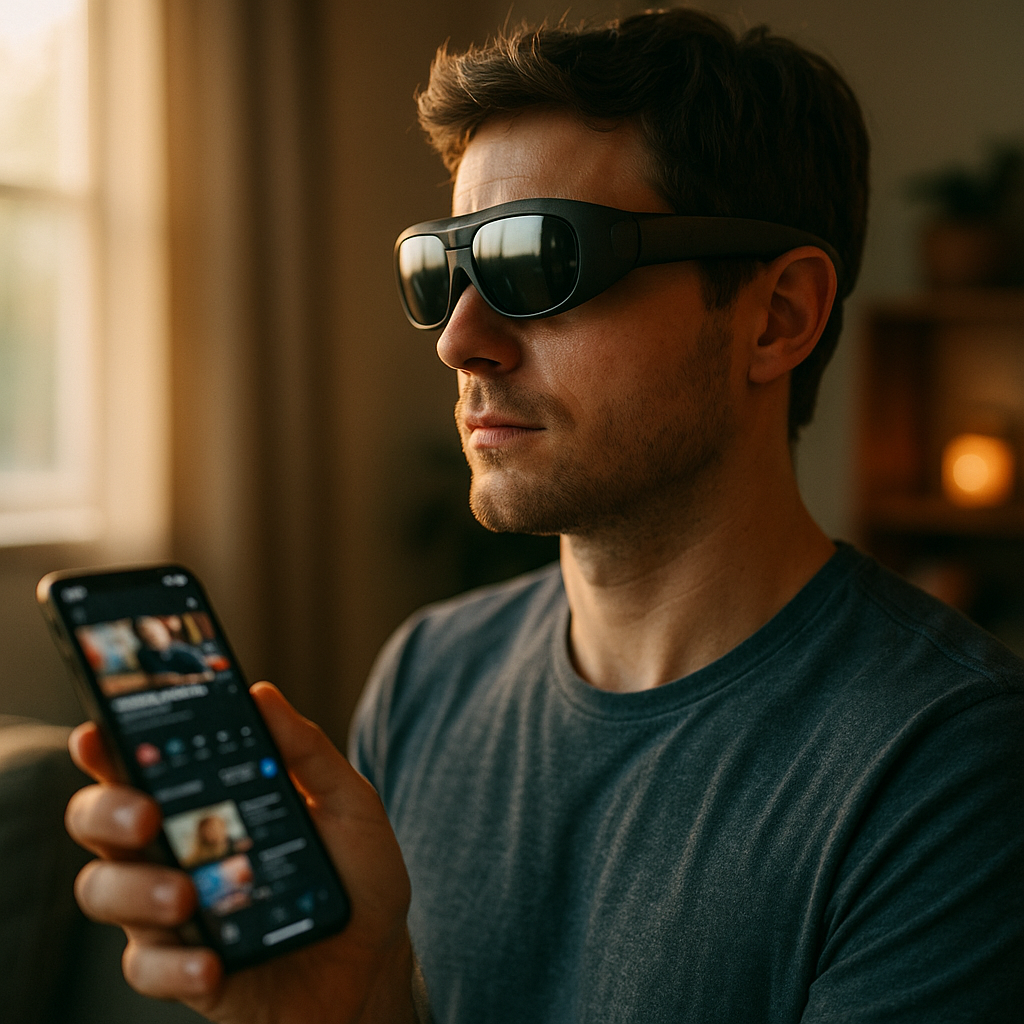
The impact of wearable AI devices on future content consumption habits is already visible in 2025: content is moving from screens to ears, eyes, and even subtle haptics. Always-on assistants summarize, translate, and personalize media in real time, changing what we watch, read, and trust. The next shift won’t be more content—it will be less friction. What happens when content finds you first?
Wearable AI devices and content consumption: from screens to ambient media
Wearable AI is pushing content into “ambient” modes—information delivered when and where it’s useful, not when a user opens an app. Smart glasses, AI earbuds, rings, and lightweight pendants can capture context (location, calendar, activity, noise level) and adjust content delivery to fit the moment. This changes the default consumption pattern from deliberate browsing to continuous, low-friction listening and viewing.
In practice, that means:
- Audio-first becomes normal: news, newsletters, long-form essays, and even work documents arrive as spoken summaries with optional deep dives.
- Micro-moments replace sessions: instead of a 30-minute “reading time,” people consume content in short, context-triggered bursts—walking, commuting, cooking, or between meetings.
- Content becomes layered: a wearable can deliver a one-sentence gist, a 30-second overview, then expand to full context on demand.
For creators and brands, the critical follow-up question is: Will my content still be discovered if people don’t scroll feeds? Discovery shifts toward AI-mediated recommendations and proactive delivery. Winning formats become modular: clean structure, clear claims, and easy extraction into summaries without losing accuracy.
Personalized content feeds via AI assistants: the rise of the “content concierge”
Wearables put an AI assistant closer than a phone—often literally in your ear. That assistant becomes a “content concierge” that curates, compresses, and sequences what you consume. Personalization goes beyond interests and starts using situational context: time available, cognitive load, current task, and even whether the environment is noisy or quiet.
This will reshape habits in three concrete ways:
- Intent-based consumption: users ask for “what I need right now” (brief me for a client call, summarize a debate, teach me a concept in five minutes) rather than selecting a specific publisher first.
- Adaptive depth: the assistant adjusts complexity—simple explanations during a workout, detailed analysis during focused time.
- Fewer open tabs, more dialogue: instead of reading ten sources, users interrogate the assistant: “What’s the evidence? Who disagrees? What did I miss?”
That raises a natural concern: Does personalization create filter bubbles? It can, but the outcome depends on product design and user controls. The best wearable assistants will make it easy to toggle “challenge me” modes, display why a source was chosen, and provide side-by-side viewpoints. For publishers, offering clearly labeled perspectives and transparent methodology helps the assistant represent your work accurately.
AI summarization and multimodal experiences: shorter attention, smarter depth
Wearables accelerate AI summarization. Users will expect instant highlights, key quotes, and action items—delivered as audio, heads-up visuals, or haptic cues. This does not automatically mean shallow consumption. It means the entry point is shorter, while the path to depth becomes more efficient.
Expect new “multimodal” consumption patterns:
- Listen + glance: earbuds narrate a summary while smart glasses show names, dates, or charts as overlays.
- Real-time translation: global content becomes more accessible as wearables translate speech and text on the fly, expanding what people consider “their” media ecosystem.
- Interactive learning: micro-quizzes, spaced repetition prompts, and quick explanations appear when a user has spare attention—turning idle time into skill building.
Creators should anticipate a follow-up question from audiences: Where’s the proof? Summaries can flatten nuance, so content that embeds verifiable anchors travels better through AI layers. Use explicit citations, define terms, and separate facts from interpretation. When the assistant extracts your claims, it should be able to preserve your intent without distortion.
From a strategy standpoint, structure becomes a competitive advantage. If your article has clear sections, labeled takeaways, and consistent terminology, a wearable assistant can produce accurate, respectful summaries—and users are more likely to request the full version when they trust the preview.
Trust, privacy, and data governance in wearable AI: what audiences will demand
Wearable AI devices can be intimate: microphones, cameras, biometric sensors, and location signals. This creates a trust threshold that will directly influence consumption habits. If users fear passive surveillance or unclear data use, they will restrict permissions, disable features, or avoid certain platforms altogether.
In 2025, audiences increasingly expect:
- Permission clarity: simple explanations of what data is collected, when, and for what purpose.
- On-device processing options: more tasks handled locally to reduce cloud exposure, especially for voice snippets and biometric signals.
- Granular controls: separate toggles for listening, recording, camera use, and data retention—plus easy deletion.
- Content provenance: visible source attribution, with the ability to audit what the assistant used to generate a summary.
Readers often ask: How can I tell if a wearable assistant is hallucinating or biased? The most practical answer is to prefer systems that show citations, provide direct links to originals, and label uncertainty. On the publisher side, adopting trustworthy publishing practices—author bios, editorial standards, transparent corrections, and conflict disclosures—makes your content safer to “route” through AI.
From an EEAT standpoint, trust signals must survive extraction. Wearable interfaces are small; they won’t show long disclaimers. Build trust into the content itself: state your methods, cite primary sources, and avoid sensational framing that an assistant might amplify.
Content creation and SEO in the era of wearables: optimize for voice, intent, and extraction
Wearable-driven consumption changes SEO priorities. Traditional rankings still matter, but “being the best answer” increasingly means being the best source for an AI assistant to quote, summarize, and recommend. Wearables emphasize voice interaction, quick comprehension, and reliable attribution.
Practical optimization for creators and marketing teams:
- Write for spoken delivery: shorter sentences, clear subject-verb structure, minimal jargon, and definitions when needed.
- Front-load value: each section should answer a specific question quickly, then offer optional depth.
- Use scannable structure: strong subtopics, consistent terminology, and clear transitions help assistants segment and summarize.
- Strengthen entity signals: name the technologies, standards, organizations, and concepts precisely so AI can attribute correctly.
- Publish expertise markers: show who wrote it, why they’re qualified, and how claims were verified.
A likely follow-up: Will long-form content still matter? Yes, but its role shifts. Long-form becomes the authoritative “source of truth” that assistants compress into tailored versions. The long piece earns trust; the wearable experience delivers convenience. If your content is original, evidence-based, and clearly structured, it can power many downstream formats without losing integrity.
Another practical shift is actionability. Wearables thrive on “next step” content: checklists, decision trees, quick comparisons, and “what to do now” guidance that can be delivered in 10–30 seconds. Convert insights into small, high-utility units that don’t require a screen.
Digital well-being and the attention economy: healthier habits or nonstop prompts?
Wearables can either reduce distraction or amplify it. The difference is whether the device behaves like a respectful assistant or an aggressive notification engine. Because wearables are always present, the cost of interruption is higher—one more audio prompt can derail a conversation or a focused task.
Expect consumer habits to move toward “intentional automation”:
- Batching: users will schedule briefings at set times rather than receiving constant updates.
- Priority filters: only high-importance alerts break through; everything else becomes a digest.
- Context boundaries: do-not-disturb modes tied to meetings, driving, workouts, or family time.
- Mindful consumption goals: users will ask assistants to limit doomscrolling equivalents, diversify sources, or reduce sensational content.
Readers often wonder: Will wearables replace phones for content? For some categories—news briefings, messaging, navigation, learning snippets—wearables will handle a large share. Phones and larger screens will remain important for deep reading, creation, complex visuals, and social experiences. The bigger change is that wearables become the “remote control” for your media life, deciding what deserves your full attention.
For creators, this is a quality test. If your work provides clear value quickly and respects attention, wearable assistants will recommend it more often. If your content relies on clickbait pacing or buried ledes, it will lose to sources that deliver clean, verifiable takeaways.
FAQs: Wearable AI and future content consumption habits
Will wearable AI devices reduce the need to read full articles?
They will reduce how often people start with the full article. Many users will begin with a summary, then open the full piece only when they need detail, confirmation, or nuance. Publishers that make depth easy to access—without hiding key context—will benefit.
How will wearable AI change video consumption?
Wearables will increase “audio-mode video” through narrated highlights, chapter summaries, and key clips. Smart glasses can add captions, translations, and visual callouts, making video more searchable and easier to consume in short bursts.
What types of content will perform best on AI wearables?
Content with clear structure, strong factual grounding, and immediate utility performs best: explainers, how-to guides, briefings, comparisons, and expert analysis with transparent sourcing. Pieces that separate facts from opinion are easier to summarize accurately.
How can consumers protect privacy while using wearable AI?
Use granular permissions, disable always-on recording if not needed, prefer on-device processing where available, and review data retention settings regularly. Choose services that provide source citations and clear policies on how voice, video, and biometric data are handled.
Will AI assistants replace publishers and creators?
No. Assistants need high-quality sources to summarize and recommend. Creators who produce original reporting, domain expertise, and credible analysis become more valuable because they supply the trusted inputs that AI interfaces depend on.
How should brands adapt their content strategy for wearable AI discovery?
Focus on being the most reliable answer for specific intents. Publish expert-led content, cite reputable sources, use clear sections and definitions, and provide concise takeaways that can be spoken aloud. Make it easy for assistants to attribute your brand and link back to the original.
Wearable AI in 2025 is rewriting content habits by making media more conversational, context-aware, and summary-driven. People will consume more through briefings, overlays, and voice dialogue, while reserving screens for depth and creation. The winners will be sources that earn trust, structure ideas clearly, and respect attention. Optimize for accuracy, attribution, and usefulness—and your content will travel farther.
Top Influencer Marketing Agencies
The leading agencies shaping influencer marketing in 2026
Agencies ranked by campaign performance, client diversity, platform expertise, proven ROI, industry recognition, and client satisfaction. Assessed through verified case studies, reviews, and industry consultations.
Moburst

-
2

The Shelf
Boutique Beauty & Lifestyle Influencer AgencyA data-driven boutique agency specializing exclusively in beauty, wellness, and lifestyle influencer campaigns on Instagram and TikTok. Best for brands already focused on the beauty/personal care space that need curated, aesthetic-driven content.Clients: Pepsi, The Honest Company, Hims, Elf Cosmetics, Pure LeafVisit The Shelf → -
3

Audiencly
Niche Gaming & Esports Influencer AgencyA specialized agency focused exclusively on gaming and esports creators on YouTube, Twitch, and TikTok. Ideal if your campaign is 100% gaming-focused — from game launches to hardware and esports events.Clients: Epic Games, NordVPN, Ubisoft, Wargaming, Tencent GamesVisit Audiencly → -
4

Viral Nation
Global Influencer Marketing & Talent AgencyA dual talent management and marketing agency with proprietary brand safety tools and a global creator network spanning nano-influencers to celebrities across all major platforms.Clients: Meta, Activision Blizzard, Energizer, Aston Martin, WalmartVisit Viral Nation → -
5

The Influencer Marketing Factory
TikTok, Instagram & YouTube CampaignsA full-service agency with strong TikTok expertise, offering end-to-end campaign management from influencer discovery through performance reporting with a focus on platform-native content.Clients: Google, Snapchat, Universal Music, Bumble, YelpVisit TIMF → -
6

NeoReach
Enterprise Analytics & Influencer CampaignsAn enterprise-focused agency combining managed campaigns with a powerful self-service data platform for influencer search, audience analytics, and attribution modeling.Clients: Amazon, Airbnb, Netflix, Honda, The New York TimesVisit NeoReach → -
7

Ubiquitous
Creator-First Marketing PlatformA tech-driven platform combining self-service tools with managed campaign options, emphasizing speed and scalability for brands managing multiple influencer relationships.Clients: Lyft, Disney, Target, American Eagle, NetflixVisit Ubiquitous → -
8

Obviously
Scalable Enterprise Influencer CampaignsA tech-enabled agency built for high-volume campaigns, coordinating hundreds of creators simultaneously with end-to-end logistics, content rights management, and product seeding.Clients: Google, Ulta Beauty, Converse, AmazonVisit Obviously →