


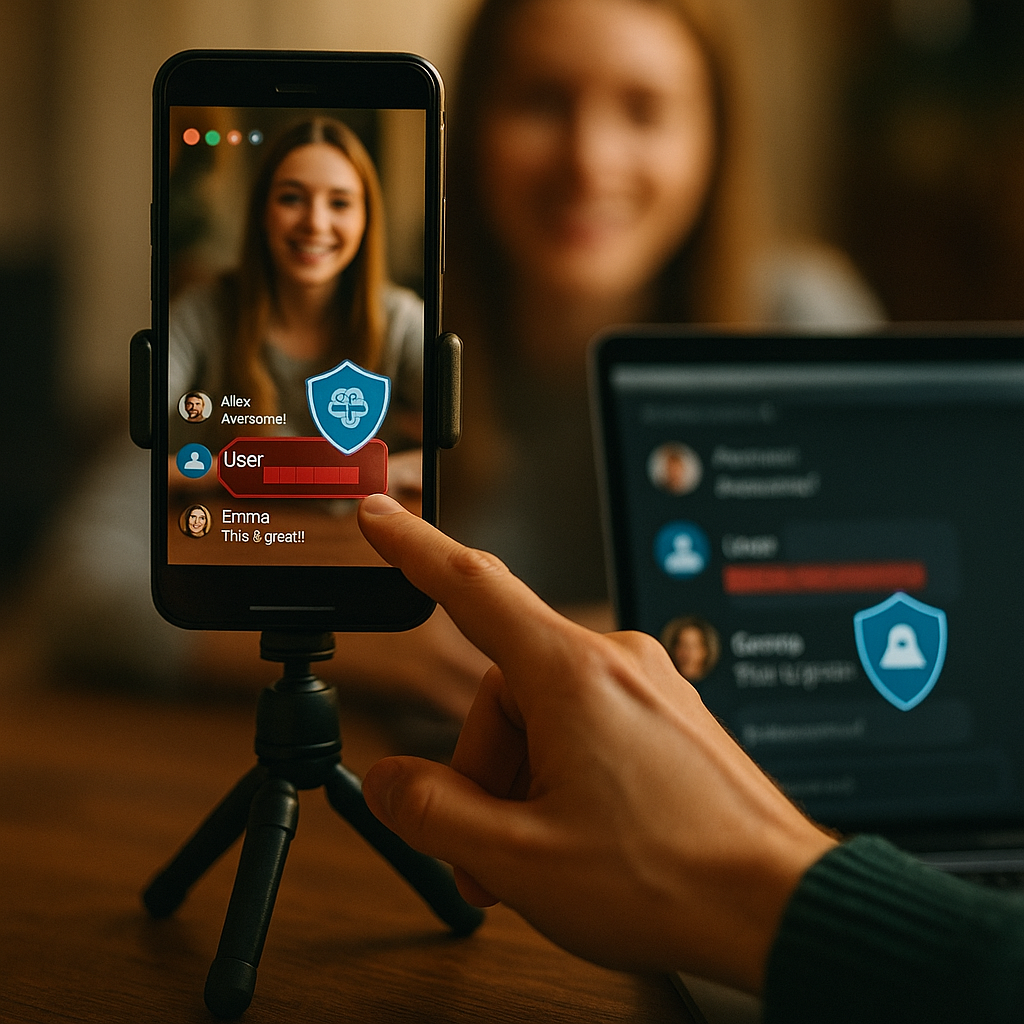
Using AI To Detect Brand Safety Risks In Real-Time Livestream Comments is now a practical necessity as live commerce, gaming, and creator streams scale. Comment feeds move faster than human moderators can reliably review, and one viral moment can harm trust, revenue, and partnerships. This article shows how modern AI moderation works, what to measure, and how to deploy it without alienating audiences—so your next stream stays on-brand. Ready to see it in action?
Why brand safety in livestreams is uniquely difficult
Livestream comment sections combine speed, anonymity, and high emotion. That mix creates a risk profile that looks different from traditional social posts or pre-recorded video. In 2025, streams frequently attract thousands of concurrent viewers who can generate hundreds of messages per second during peak moments. Even well-staffed moderation teams struggle with three structural challenges:
- Velocity and volume: Harmful content can appear and be screenshotted within seconds. By the time a human sees it, the reputational damage may already be done.
- Context collapse: Viewers use inside jokes, sarcasm, slang, and coded language. A phrase that is harmless in one community can be hateful or threatening in another.
- Adjacency risk: Brands are judged not only by what the streamer says, but also by what appears around their message. A toxic chat can undermine sponsorships even if the creator behaves responsibly.
Brand safety risks in livestreams typically include hate speech, harassment, sexual content, violent threats, illegal activity promotion, doxxing, spam/scams, and coordinated brigading. The most costly incidents often involve targeted harassment and identity-based hate because they trigger rapid audience backlash and platform enforcement. The practical goal is not “perfect” moderation; it is real-time risk reduction aligned with your brand values, legal obligations, and audience expectations.
How AI comment moderation works in real time
Real-time AI moderation systems typically combine machine learning classifiers, large language models, and rules-based safeguards. The best implementations treat AI as a decision support system with clear thresholds, not an unaccountable black box. A high-performing pipeline often includes:
- Ingestion and normalization: The system captures comments via platform APIs or chat relays, then normalizes text (handling emojis, leetspeak, repeated characters, and multilingual content).
- Fast “first-pass” scoring: Lightweight classifiers score each message for categories such as hate, harassment, sexual content, self-harm, violence, spam, and personal data. This step is optimized for latency.
- Context enrichment: The system adds signals like user history (where allowed), message similarity bursts (brigading detection), streamer topic cues, and conversation threads.
- LLM-based interpretation: When the first-pass score is uncertain or context-heavy, an LLM can evaluate nuance (sarcasm, coded insults, indirect threats) using your policy definitions.
- Policy engine and actions: The platform or moderation tool applies actions such as allow, mask/hold for review, delete, timeout, ban, or restrict links. It also routes high-severity events to humans.
- Audit logging: Every decision is stored with the category, confidence, and rationale fields needed for review and continuous improvement.
Latency matters. In livestreams, “real time” usually means acting within a second or two. That is why many teams use a tiered approach: fast classifiers for obvious violations and LLM reasoning for edge cases. The system should degrade gracefully during spikes by prioritizing severe categories (doxxing, threats, slurs) and applying temporary friction (slow mode, link blocking) until human moderators catch up.
To reduce false positives, advanced systems rely on custom taxonomies and examples drawn from your domain. A sports brand sponsoring a heated rivalry match needs different thresholds than an educational nonprofit running a Q&A. The most effective AI moderation is policy-specific and community-aware.
Building a brand safety taxonomy that matches your risk tolerance
AI can only enforce what you define. A brand safety taxonomy translates values and legal requirements into clear, testable categories. In 2025, the strongest taxonomies do three things well: they specify what is prohibited, define borderline behavior, and map each category to an action and escalation path.
Start with a simple structure and expand based on real chat data:
- Tier 1 (Immediate removal): Doxxing and personal data, credible threats, explicit hate slurs, child sexual content, instructions for wrongdoing, and explicit sexual content where disallowed.
- Tier 2 (Hold for review or mask): Harassment without slurs, graphic violence references, adult sexual innuendo, discriminatory “coded” language, and misinformation claims that could cause harm.
- Tier 3 (Friction/quality controls): Spam, repetitive messages, unsolicited promotions, link drops, and low-grade toxicity that derails conversation.
Then document edge-case guidance that AI and human reviewers can both follow. For example:
- Reclaimed slurs: If your community uses reclaimed language, define when it is permitted (speaker identity is rarely knowable) and whether you allow it at all.
- Quotes and reporting: Viewers may quote hateful language to criticize it. Decide whether to allow quoting, and if allowed, under what conditions.
- Satire and sarcasm: Define how you treat “jokes” that target protected characteristics or encourage self-harm.
- Political content: For some brands, partisan debate is acceptable; for others, it is a sponsor risk. State your boundaries clearly.
Map taxonomy to actions with consistency. A practical approach is: delete and timeout for Tier 1, hold-and-review for Tier 2, and rate-limit plus spam filtering for Tier 3. Also define streamer and moderator overrides so trusted staff can reverse mistakes quickly. This helps protect community trust while keeping risk low.
Key real-time risk detection signals and metrics to track
You cannot improve what you do not measure. AI moderation programs should track safety outcomes, operational efficiency, and audience impact. The most useful metrics connect directly to brand risk and moderation quality:
- Time to action (TTA): Median time from message posted to action applied. For high-severity categories, aim for seconds, not minutes.
- Precision and recall by category: Precision indicates how often removals are correct; recall indicates how much harmful content is caught. Track separately for hate, harassment, doxxing, and spam because error costs differ.
- False positive appeal rate: Percentage of moderated users who appeal successfully or are reinstated after review. This is a strong indicator of over-moderation.
- Exposure rate: How many viewers likely saw a harmful comment before removal. Combine TTA with concurrency to estimate exposure.
- Brigading indicators: Sudden spikes in new accounts, repeated phrases, and synchronized link drops. These often precede harassment waves.
- Moderator load: Queue size, review time, and the share of messages held for review. If AI is sending too many borderline items, tune thresholds or add context features.
Real-time detection improves when you incorporate behavioral signals rather than judging text alone. Examples include repeated near-duplicates, rapid posting cadence, link frequency, and account age (where available). These features are especially effective against spam and scam attempts, including phishing links and fake giveaways.
Set up incident playbooks tied to metrics. If Tier 1 detections spike, the system can automatically trigger slow mode, restrict first-time chatters, or require verified accounts. If exposure rate rises above a threshold, escalate to a human lead and consider pausing chat temporarily. This connects AI outputs to concrete brand safety actions instead of passive reporting.
Deploying livestream chat monitoring with human oversight and governance
AI is strongest when paired with trained humans and clear governance. In 2025, brand safety leadership expects an approach that is effective, explainable, and respectful of users. That means designing for accountability from the start.
Recommended operating model:
- Pre-stream prep: Align the streamer, brand, and moderation team on rules, hot-button topics, and escalation contacts. Load campaign keywords (product names, competitor names, sensitive topics) into monitoring dashboards.
- During stream: Use AI for rapid removal and queue triage, with humans handling nuanced decisions, creator safety issues, and coordinated attacks. Ensure moderators can add temporary rules (for example, block a newly emerging slur variant).
- Post-stream review: Sample moderated and unmoderated comments, review appeals, and retrain or refine prompts/models using anonymized data. Record lessons learned in a playbook.
Governance essentials:
- Transparent policies: Publish chat rules in plain language. Viewers accept moderation more readily when rules are predictable and visible.
- Auditability: Keep logs of what was removed, why, and by which system version. This supports internal reviews and partner questions.
- Privacy and data minimization: Store only what is necessary for enforcement and improvement. If you analyze user history, document lawful basis and retention limits.
- Bias testing: Evaluate model performance across dialects, languages, and identity terms. Over-blocking certain communities can become a brand risk itself.
Address the reader’s practical question: “Will this annoy my audience?” It can, if you over-filter. The solution is to focus strictness on high-severity harms, apply softer interventions for borderline behavior (masking, warnings), and provide an appeals path. This keeps conversation lively while still protecting brand partners and community members.
Choosing tools and integrating AI brand safety solutions into your stack
Tool selection should start with your platform footprint and risk profile, not vendor marketing. The right solution depends on whether you stream on a single platform, run simulcasts, or operate a branded channel with commerce features.
Capabilities to require:
- Multi-language and code-switching support: Livestream audiences are global, and risk content often mixes languages.
- Custom categories and thresholds: You need adjustable policies per campaign, region, and sponsor requirements.
- Low-latency APIs and webhooks: Real-time action depends on fast decisions and reliable delivery during traffic spikes.
- Context windows: The system should analyze conversation threads and not only single messages.
- Human-in-the-loop workflows: Queues, priority routing, reviewer notes, and escalation tools reduce mistakes.
- Reporting aligned to brand outcomes: Dashboards should show exposure reduction, incident summaries, and category trends, not only raw deletions.
Integration checklist:
- Define success criteria: For example, reduce exposure to Tier 1 content by a target percentage while keeping false positive appeal rate below a threshold.
- Run a shadow test: Score comments without taking action for a short period to benchmark precision/recall and tune thresholds safely.
- Launch in phases: Start with spam/scams and doxxing, then expand to harassment and nuanced hate categories as confidence grows.
- Prepare failure modes: If the AI service degrades, default to slow mode, stricter link controls, and manual review for high-severity terms.
If you sponsor creators, include moderation expectations in contracts and provide shared tooling when possible. Brands often ask, “Who is responsible if something slips through?” Clarify responsibility with a joint incident process: the creator moderates community norms; the brand defines sponsor-sensitive categories; the platform provides enforcement primitives; and your AI layer reduces exposure in real time.
FAQs about using AI to detect brand safety risks in livestream comments
Can AI moderation handle sarcasm and coded language in livestream chats?
Yes, but only when it uses context and is tuned to your community. Combine fast classifiers with an LLM step for ambiguous content, and continuously update examples based on real incidents and appeals.
What is the biggest brand safety risk in livestream comments?
Doxxing and targeted harassment typically create the most immediate harm because they can endanger individuals and trigger rapid backlash. Prioritize detection and instant action for personal data, threats, and identity-based hate.
How do we avoid over-moderation that drives viewers away?
Use tiered enforcement. Automatically remove only high-severity categories, while masking or holding borderline messages for review. Publish clear rules, offer warnings, and provide an appeals path to maintain trust.
Do we need human moderators if we have AI?
Yes. Humans are essential for nuanced decisions, handling coordinated attacks, updating rules mid-stream, and reviewing appeals. AI should reduce volume and improve speed, not replace accountability.
What metrics prove the system is working?
Track time to action, exposure rate, precision/recall by category, false positive appeal rate, and brigading indicators. Tie these to incident outcomes, sponsor satisfaction, and community health signals.
How quickly can we deploy AI chat moderation for a livestream program?
Many teams can launch a basic version in weeks by starting with spam, link scams, and doxxing detection, running a shadow test, then expanding categories and tuning thresholds as you gather stream-specific data.
AI-based brand safety in livestream comments works best when you combine fast automation with clear policies, strong metrics, and human oversight. Define a practical taxonomy, prioritize high-severity harms, and measure exposure reduction rather than raw deletions. In 2025, the winning approach is transparent and adaptable: tune models to community context, prepare playbooks for spikes, and keep an audit trail. Protect your brand while keeping chat genuinely engaging.
Top Influencer Marketing Agencies
The leading agencies shaping influencer marketing in 2026
Agencies ranked by campaign performance, client diversity, platform expertise, proven ROI, industry recognition, and client satisfaction. Assessed through verified case studies, reviews, and industry consultations.
Moburst

-
2

The Shelf
Boutique Beauty & Lifestyle Influencer AgencyA data-driven boutique agency specializing exclusively in beauty, wellness, and lifestyle influencer campaigns on Instagram and TikTok. Best for brands already focused on the beauty/personal care space that need curated, aesthetic-driven content.Clients: Pepsi, The Honest Company, Hims, Elf Cosmetics, Pure LeafVisit The Shelf → -
3

Audiencly
Niche Gaming & Esports Influencer AgencyA specialized agency focused exclusively on gaming and esports creators on YouTube, Twitch, and TikTok. Ideal if your campaign is 100% gaming-focused — from game launches to hardware and esports events.Clients: Epic Games, NordVPN, Ubisoft, Wargaming, Tencent GamesVisit Audiencly → -
4

Viral Nation
Global Influencer Marketing & Talent AgencyA dual talent management and marketing agency with proprietary brand safety tools and a global creator network spanning nano-influencers to celebrities across all major platforms.Clients: Meta, Activision Blizzard, Energizer, Aston Martin, WalmartVisit Viral Nation → -
5

The Influencer Marketing Factory
TikTok, Instagram & YouTube CampaignsA full-service agency with strong TikTok expertise, offering end-to-end campaign management from influencer discovery through performance reporting with a focus on platform-native content.Clients: Google, Snapchat, Universal Music, Bumble, YelpVisit TIMF → -
6

NeoReach
Enterprise Analytics & Influencer CampaignsAn enterprise-focused agency combining managed campaigns with a powerful self-service data platform for influencer search, audience analytics, and attribution modeling.Clients: Amazon, Airbnb, Netflix, Honda, The New York TimesVisit NeoReach → -
7

Ubiquitous
Creator-First Marketing PlatformA tech-driven platform combining self-service tools with managed campaign options, emphasizing speed and scalability for brands managing multiple influencer relationships.Clients: Lyft, Disney, Target, American Eagle, NetflixVisit Ubiquitous → -
8

Obviously
Scalable Enterprise Influencer CampaignsA tech-enabled agency built for high-volume campaigns, coordinating hundreds of creators simultaneously with end-to-end logistics, content rights management, and product seeding.Clients: Google, Ulta Beauty, Converse, AmazonVisit Obviously →