


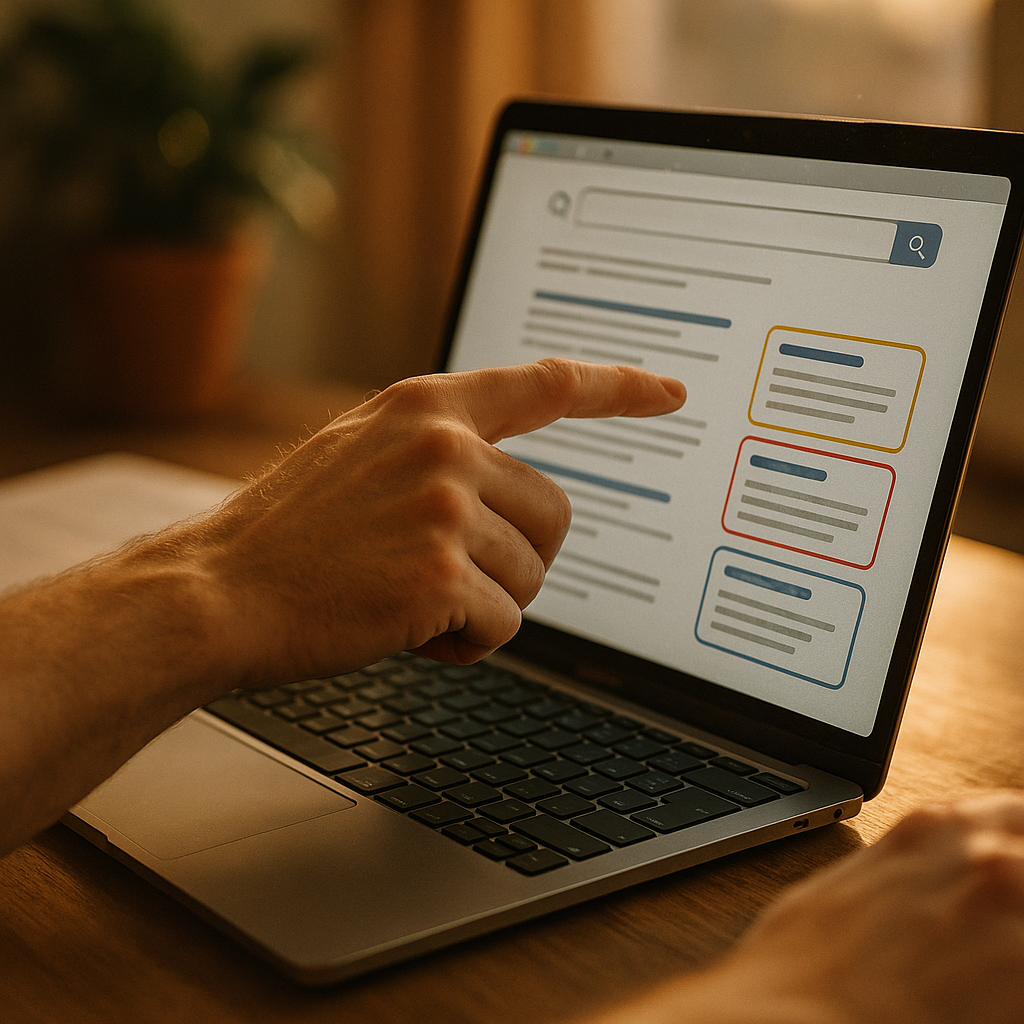
Designing Scannable Content For The Zero-Click Search Environment is now a core skill for marketers, editors, and product teams in 2025. Search results increasingly answer queries on the page through featured snippets, AI overviews, knowledge panels, and rich results. Your job is to win attention fast, communicate value instantly, and still earn clicks when they matter. Ready to redesign for skimmers?
Zero-click search optimization: understand intent, layouts, and where answers appear
Zero-click results happen when users complete their task directly on the results page. In 2025, that can include AI-generated summaries, featured snippets, “People also ask” expansions, local packs, product grids, knowledge panels, and event modules. Scannable content is how you compete inside those layouts.
Start by mapping query intent to likely SERP features. Informational questions often trigger featured snippets or AI overviews. Comparisons and “best” queries commonly surface lists, tables, and review snippets. Local intent triggers map packs and business profiles. When you know the SERP destination, you can design your content so that search engines can extract clean, accurate answers from your page.
Practical checklist to align with zero-click behavior:
- Classify the query intent: informational, navigational, transactional, local.
- Predict the SERP feature you’re likely to compete for: snippet, PAA, knowledge panel, local pack, product rich result.
- Define the “borrowable” answer: a 1–2 sentence definition, a short step list, or a compact set of criteria.
- Decide your click goal: brand recall (no click needed), lead capture (click needed), or conversion (click needed).
This mindset reduces wasted writing. You design the page so it can satisfy the quick-answer moment while still offering depth that rewards a click.
Featured snippet formatting: write answers that are easy to extract and hard to misunderstand
When Google selects a featured snippet, it prefers content that looks like an answer key: clear question framing, short definitions, and structured steps. Scannability is not just visual; it is semantic. The content must communicate the “what” and “how” without forcing context hunting.
Use “answer-first” paragraphs. For every major subtopic, open with a compact statement that could stand alone on the SERP. Keep it precise, avoid hype, and define terms as if the reader is arriving cold. Then expand with supporting details.
Use lists to encode process and criteria. If a query implies steps (“how to”) or evaluation (“what to look for”), present a short list early. Keep each item parallel in grammar and specific in meaning. Avoid mixed levels of detail, which makes extraction messy.
Limit ambiguity. Snippets can amplify mistakes. Use exact nouns, quantify where helpful, and include constraints. For example, instead of “optimize your headings,” state “use one topic per section and make the heading describe the user task.”
Build a snippet-ready pattern for each page type:
- Definition queries: 1–2 sentence definition + 3–5 key attributes.
- How-to queries: 5–8 steps in an ordered list + brief notes on prerequisites.
- Comparison queries: a short “best for” breakdown + a criteria list.
- Troubleshooting queries: symptom → likely causes → fixes → when to escalate.
Follow-up question readers usually have: “If Google shows the answer, why would they click?” Because you can design the snippet to satisfy the immediate question while positioning the click as the path to implementation: templates, checklists, examples, tools, downloadable assets, or deeper decision support.
Information architecture for skimmers: structure pages for fast scanning and deep reading
Scannable pages respect how people actually read online: they skim first, then commit. Strong information architecture gives both modes a good experience. That means predictable sectioning, clear progression, and no buried ledes.
Design a “two-layer” page:
- Layer 1 (skim layer): short introductory paragraphs, direct statements, and lists that communicate the core points quickly.
- Layer 2 (depth layer): detailed explanation, examples, edge cases, and decision guidance for readers who need to act.
Within each section, lead with the takeaway, then justify it. This reduces pogo-sticking and increases confidence. It also helps search engines identify what your page is “about” without guessing.
Make sections task-oriented. Instead of headings that sound like internal labels, use headings that mirror user intent. For example, “How to format answers for snippets” beats “Formatting.” This improves scannability and aligns with queries that trigger rich results.
Prevent cognitive overload. Keep paragraphs short and singular in purpose. Avoid stacking multiple claims in one long paragraph. If you need to present multiple benefits, list them. If you need to justify one claim, keep the evidence close to it.
Follow-up question: “Should I shorten everything?” No. You should front-load clarity. Long content can still be scannable when it is well segmented, logically ordered, and written with a clean skim layer.
SERP feature targeting: win People Also Ask, AI overviews, and rich results with precise micro-answers
Zero-click surfaces are increasingly multi-slot: one query can trigger an AI overview, a featured snippet, and a People Also Ask box. Your goal is to supply trustworthy, extractable micro-answers across your page.
Use question-and-answer blocks inside core sections. You do not need to turn the entire article into an FAQ, but adding a few explicit questions where confusion commonly occurs helps. Each should have a short, direct answer followed by practical detail.
Cover adjacent intents. People Also Ask tends to expand into related questions. If your page answers only the primary question, you may lose visibility to competitors who cover the “next questions.” Common adjacent intents for this topic include:
- How to write for featured snippets without losing clicks
- How to structure headings for scanning
- How to measure performance when clicks decline
- How to demonstrate EEAT on informational pages
Use consistent terminology. AI summarization and snippet extraction work better when you use stable terms. If you switch labels (e.g., “skim layer,” “scan layer,” “glance layer”) without defining them, you increase the chance of muddled summaries.
Answer with constraints and context. Generic advice is easy to summarize and easy to ignore. Add specifics: recommended step counts, common mistakes, decision criteria, and “when this won’t work.” That improves helpfulness and reduces misinterpretation in SERP extracts.
Follow-up question: “Do I need schema for this?” Schema can help for certain rich results, but scannability starts with content structure. If the writing is unclear, markup will not fix it.
EEAT content signals: build trust with transparent expertise and editorial rigor
Google’s helpful content priorities reward pages that show real expertise, practical experience, authoritativeness, and trustworthiness. In a zero-click environment, trust matters twice: users must trust the excerpt they see on the SERP, and search engines must trust your page enough to quote it.
Demonstrate experience with concrete details. Instead of saying “we tested,” specify what you did: what you analyzed, what pages you updated, what changed, and what you learned. Avoid vague claims. When you reference best practices, tie them to how teams actually implement them (content templates, editorial checks, analytics reviews).
Strengthen expertise with clear definitions and decision rules. Explain terms like “zero-click,” “snippet-ready,” and “skim layer” in plain language. Provide rules of thumb (for example, answer-first paragraphs and structured steps) and explain why they work.
Improve trust with accuracy, restraint, and maintenance.
- Be precise: avoid absolute promises such as “guaranteed snippet.”
- Separate facts from recommendations: signal opinion with “recommend” or “in most cases.”
- Update content: refresh examples, remove outdated tactics, and correct broken workflows.
- Make claims verifiable: cite credible sources when using statistics, and avoid unsupported numbers.
Address risks openly. Zero-click can reduce traffic even when visibility grows. Say that clearly, then guide the reader toward metrics and goals that fit reality: brand impressions, assisted conversions, lead quality, and engagement depth on clicks you do earn.
Follow-up question: “How do I show EEAT without a big author bio section?” By writing like a careful expert: define terms, show your work, include constraints, and prioritize the reader’s task over keyword stuffing.
Measurement and iteration: track visibility, engagement, and outcomes beyond clicks
In 2025, success can’t be judged only by sessions. Zero-click visibility can be a win if it improves brand recall or reduces support load, but it can also be a problem if it starves your funnel. Measure what you intend to achieve, then iterate your content to match.
Track performance in three layers:
- SERP visibility: impressions, average position, and query coverage in Search Console.
- Click quality: engagement time, scroll depth proxies (where available), conversions, and lead quality.
- Outcome metrics: assisted conversions, demo requests, sign-ups, or support deflection for help content.
Look for “visibility without value.” If impressions rise and clicks fall, check whether the page is supplying complete answers that eliminate the need to click. That might be fine for awareness content, but for revenue content you may need a clearer reason to click: tools, templates, calculators, comparison matrices, or implementation steps that cannot fit in a snippet.
Iterate with controlled changes. Adjust one element at a time: answer-first paragraph wording, list formatting, section order, or the presence of a concise “best next step” paragraph. Monitor effects for a reasonable period, then decide whether to keep, refine, or revert.
Common fixes when performance stalls:
- Too much preamble: move the direct answer to the first paragraph of the section.
- Unscannable blocks: convert multi-idea paragraphs into lists.
- Weak click incentive: add a practical asset or a deeper decision framework after the skim layer.
- Misaligned intent: rewrite to match the dominant query intent and SERP feature.
FAQs: scannable SEO content questions
-
What is a zero-click search environment?
It is a search results experience where users often get answers directly on the results page through features like AI summaries, featured snippets, knowledge panels, and local packs, so they may not click through to websites.
-
How do I make content scannable without oversimplifying it?
Use a two-layer structure: a skim layer with answer-first paragraphs and lists, followed by depth that includes examples, edge cases, and decision criteria. You keep the detail, but you stop hiding it inside long blocks of text.
-
What formatting most improves featured snippet eligibility?
Clear question-to-answer wording, short definitions, ordered steps for processes, and tightly written bulleted criteria lists. Keep the most “extractable” answer near the top of the relevant section.
-
Will zero-click results hurt my traffic?
They can. Some pages will see fewer clicks even as impressions rise. Mitigate this by adding compelling next-step value on-page—tools, templates, deeper comparisons, or implementation guidance that can’t be fully satisfied on the SERP.
-
How can I show EEAT on informational content?
Define terms clearly, give accurate and constrained recommendations, explain trade-offs, add practical implementation details, keep content maintained, and avoid exaggerated claims. Write like a responsible practitioner, not like an ad.
-
What should I measure if clicks decline?
Track impressions and query coverage, then evaluate downstream outcomes: conversions per visit, assisted conversions, lead quality, and engagement among users who do click. Success may shift from volume to quality and brand visibility.
Scannable content wins in 2025 because it serves both humans and search systems: it answers quickly, structures meaning clearly, and builds trust through careful detail. Design every section with an extractable micro-answer, then reward the click with depth, tools, and decision support. Measure beyond sessions, iterate with intent, and treat clarity as your competitive edge.
Top Influencer Marketing Agencies
The leading agencies shaping influencer marketing in 2026
Agencies ranked by campaign performance, client diversity, platform expertise, proven ROI, industry recognition, and client satisfaction. Assessed through verified case studies, reviews, and industry consultations.
Moburst

-
2

The Shelf
Boutique Beauty & Lifestyle Influencer AgencyA data-driven boutique agency specializing exclusively in beauty, wellness, and lifestyle influencer campaigns on Instagram and TikTok. Best for brands already focused on the beauty/personal care space that need curated, aesthetic-driven content.Clients: Pepsi, The Honest Company, Hims, Elf Cosmetics, Pure LeafVisit The Shelf → -
3

Audiencly
Niche Gaming & Esports Influencer AgencyA specialized agency focused exclusively on gaming and esports creators on YouTube, Twitch, and TikTok. Ideal if your campaign is 100% gaming-focused — from game launches to hardware and esports events.Clients: Epic Games, NordVPN, Ubisoft, Wargaming, Tencent GamesVisit Audiencly → -
4

Viral Nation
Global Influencer Marketing & Talent AgencyA dual talent management and marketing agency with proprietary brand safety tools and a global creator network spanning nano-influencers to celebrities across all major platforms.Clients: Meta, Activision Blizzard, Energizer, Aston Martin, WalmartVisit Viral Nation → -
5

The Influencer Marketing Factory
TikTok, Instagram & YouTube CampaignsA full-service agency with strong TikTok expertise, offering end-to-end campaign management from influencer discovery through performance reporting with a focus on platform-native content.Clients: Google, Snapchat, Universal Music, Bumble, YelpVisit TIMF → -
6

NeoReach
Enterprise Analytics & Influencer CampaignsAn enterprise-focused agency combining managed campaigns with a powerful self-service data platform for influencer search, audience analytics, and attribution modeling.Clients: Amazon, Airbnb, Netflix, Honda, The New York TimesVisit NeoReach → -
7

Ubiquitous
Creator-First Marketing PlatformA tech-driven platform combining self-service tools with managed campaign options, emphasizing speed and scalability for brands managing multiple influencer relationships.Clients: Lyft, Disney, Target, American Eagle, NetflixVisit Ubiquitous → -
8

Obviously
Scalable Enterprise Influencer CampaignsA tech-enabled agency built for high-volume campaigns, coordinating hundreds of creators simultaneously with end-to-end logistics, content rights management, and product seeding.Clients: Google, Ulta Beauty, Converse, AmazonVisit Obviously →