


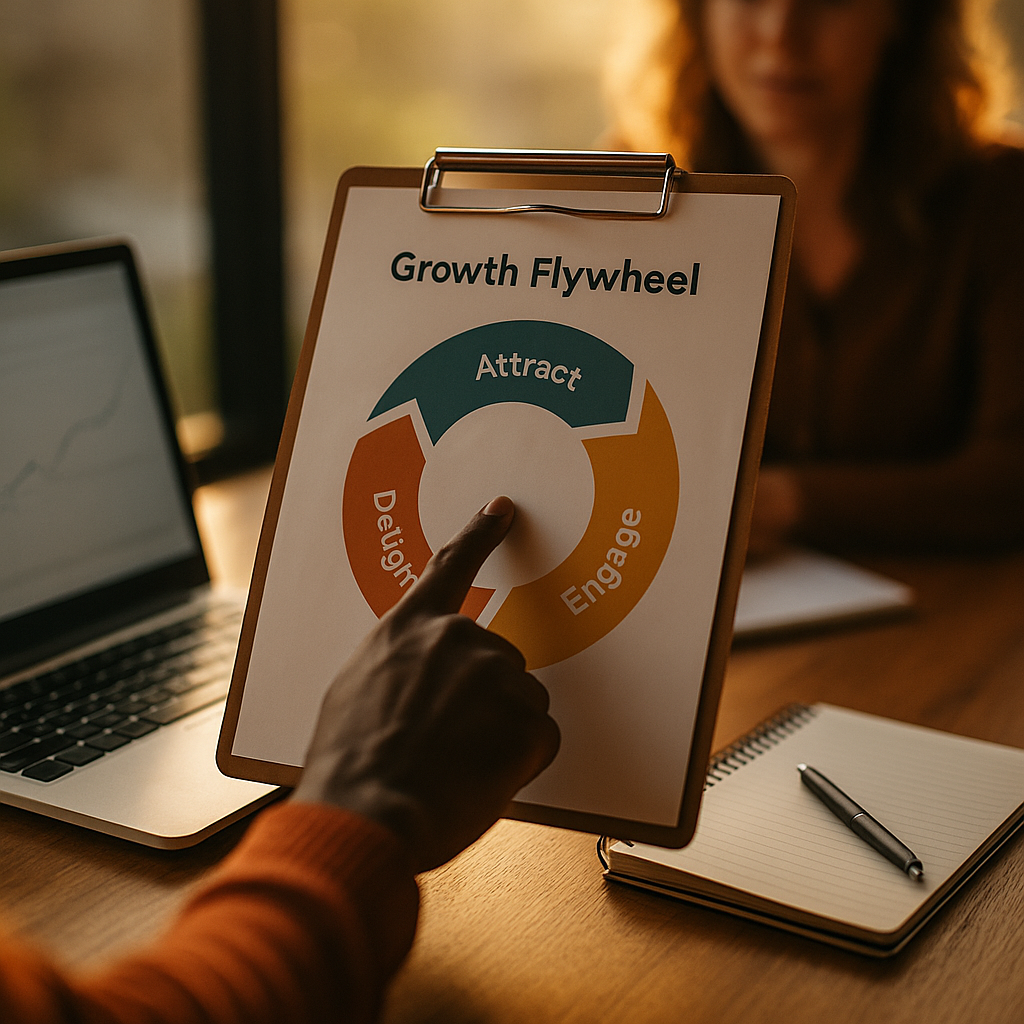
Transitioning From Traditional Funnels To A Customer-Centric Flywheel is now a practical requirement for growth teams facing higher acquisition costs and faster switching behavior. Funnels can still describe journeys, but they rarely capture what happens after purchase: retention, referrals, and repeat revenue. A flywheel model turns those outcomes into a system you can design, measure, and improve—starting today. Ready to rethink growth?
Why “customer-centric flywheel” beats funnel thinking in 2025
A traditional funnel frames growth as a one-way process: attract leads, convert them, then move on to the next batch. That mindset often creates internal incentives to optimize for short-term conversion at the expense of long-term value. A customer-centric flywheel treats the customer relationship as an asset that compounds. Instead of “handing off” buyers after they convert, teams continuously reduce friction and add value so customers stay longer, expand, and advocate.
In 2025, this shift matters because buyers have more choice, more information, and less patience for fragmented experiences. When marketing, sales, onboarding, and support operate as separate silos, customers feel the seams. The flywheel model forces alignment around a shared outcome: customer momentum. When customers succeed, they create energy for your business through renewals, upgrades, reviews, referrals, and lower support load over time.
Follow-up question you might have: Does this mean funnels are obsolete? No. Funnels remain useful for diagnosing stage-by-stage conversion. The flywheel changes what you optimize for: not just “getting to purchase,” but “getting to value and back again.”
Flywheel marketing strategy: map momentum, friction, and value
A flywheel is not a diagram you paste into a deck. It is a management system. The fastest way to build a flywheel marketing strategy is to identify three elements and make them measurable:
- Value: what outcomes customers achieve (time saved, risk reduced, revenue increased, confidence gained).
- Momentum: behaviors that indicate progress (activation events, repeated usage, feature adoption, community participation, referrals).
- Friction: anything that slows customers down (confusing onboarding, hidden pricing, slow handoffs, unclear documentation, billing surprises).
Start by mapping your customer lifecycle into a few clear phases. Avoid over-complication; 4–6 phases usually work:
- Discover: prospects learn what you do and whether it fits.
- Decide: evaluation, proof, pricing clarity, stakeholder buy-in.
- Start: onboarding, setup, first success, adoption of core features.
- Succeed: sustained use, measurable outcomes, ongoing education.
- Expand & Advocate: upgrades, cross-sell, referrals, reviews, case studies.
Then assign one “north-star” metric per phase (for example, activation rate in Start, product-qualified leads in Decide, renewal rate in Succeed). Keep the list short enough that teams can act, not just report.
Follow-up question: What if we sell services, not software? The same structure applies. Replace “usage” with “milestones achieved,” “time-to-value,” and “successful delivery outcomes.”
Customer experience optimization: redesign handoffs into one continuous journey
Flywheels fail when teams keep the same internal handoffs and simply rename stages. True customer experience optimization focuses on continuity: customers should feel one coordinated journey, not multiple departments. That requires operational changes:
- One shared customer record: ensure marketing, sales, and service see the same history, commitments, and success criteria.
- Consistent messaging: what’s promised before purchase must match what’s delivered after purchase.
- Friction audits: review support tickets, churn reasons, sales call notes, and onboarding drop-offs monthly.
- Closed-loop feedback: every major complaint should lead to a fix, a follow-up, and a measured improvement.
Practical places to remove friction quickly:
- Pricing and packaging clarity: reduce surprises that create distrust and churn.
- Sales-to-success transition: capture “definition of success,” stakeholders, timelines, and risks in a standard handoff template.
- Onboarding paths: build role-based or use-case onboarding so customers reach value faster.
- Self-serve help: keep documentation and training current and searchable; reduce repetitive tickets.
Follow-up question: How do we know which friction matters most? Prioritize issues that affect time-to-value, renewal likelihood, and support volume. If a problem delays first success, it slows the entire flywheel.
Retention and loyalty: convert “customers” into compounding growth
In a flywheel, retention and loyalty are not outcomes; they are growth inputs. When retention improves, you gain more time to create value, expand accounts, and earn advocacy. A disciplined approach includes three layers:
1) Proactive success management
- Define the customer’s success metrics during the sales process and confirm them in onboarding.
- Track health indicators (adoption, engagement, milestone completion, satisfaction signals).
- Intervene early with playbooks when health drops (training, configuration help, executive check-ins).
2) Value reinforcement
- Send regular “proof of value” updates: outcomes achieved, time saved, benchmarks hit.
- Offer structured education: webinars, short courses, templates, and best-practice guides.
- Build community touchpoints: office hours, user groups, peer learning.
3) Loyalty loops
- Create referral pathways that feel earned: ask after success milestones, not randomly.
- Turn advocates into co-creators: advisory boards, beta access, feature input.
- Reward contributions with recognition, exclusive learning, or tailored support—not gimmicks.
Follow-up question: What if our retention is already strong? Then focus on expansion and advocacy. A flywheel accelerates when satisfied customers become your most credible marketing channel.
Revenue growth model: align teams around lifetime value and time-to-value
Funnels often optimize for lead volume and close rate. A flywheel-based revenue growth model optimizes for durable revenue: lifetime value, retention, expansion, and efficiency. That shift changes how you plan, forecast, and compensate.
Key metrics to adopt (choose a focused set, not all at once):
- Time-to-value (TTV): how long it takes a customer to achieve the first meaningful outcome.
- Activation rate: percentage reaching a defined “aha” milestone.
- Net revenue retention: whether existing customers grow or shrink over time.
- Churn and downgrade drivers: categorized reasons tied to fixable issues.
- Customer acquisition cost payback: how quickly revenue covers acquisition spend.
- Referral and review rate: advocacy signals with measurable volume and conversion.
Alignment tactics that work in real organizations:
- Shared goals across functions: marketing, sales, product, and success share at least one retention- or activation-based KPI.
- Compensation that rewards quality: avoid incentives that push poor-fit customers into the pipeline.
- Revenue meetings that include post-sale leaders: pipeline reviews should include onboarding capacity, product constraints, and churn risk insights.
Follow-up question: Will this slow down new sales? It typically improves sales quality. When your messaging, qualification, and onboarding align, fewer deals stall, fewer customers churn early, and expansion becomes easier.
Flywheel implementation roadmap: a 90-day plan to shift from funnel to system
Successful change needs a clear starting point and fast proof. Use this flywheel implementation roadmap to build momentum in 90 days without replatforming everything.
Days 1–15: Define value and pick the first loop
- Choose one primary customer segment and one core use case.
- Define a measurable first-success milestone (your activation event).
- List the top five friction points slowing customers before and after purchase.
Days 16–45: Fix the biggest friction and tighten handoffs
- Create a standardized success handoff from sales to onboarding (outcomes, stakeholders, timelines, risks).
- Rewrite or reorganize onboarding around the activation milestone.
- Update marketing and sales assets so promises match onboarding reality.
- Set up a weekly “friction review” using tickets, churn notes, and drop-off data.
Days 46–75: Build value reinforcement and advocacy triggers
- Launch a simple value report (monthly email or dashboard) showing outcomes and usage progress.
- Implement milestone-based referral asks (after activation, after a renewal, after a measurable win).
- Identify 5–10 customers for case studies or testimonials tied to specific results.
Days 76–90: Operationalize and measure flywheel energy
- Track three metrics consistently: activation rate, TTV, and churn drivers.
- Create one cross-functional playbook for a common churn risk (low adoption, low usage, stakeholder change).
- Hold a monthly flywheel review: what increased momentum, what reduced friction, what added value.
Follow-up question: What tools do we need? Start with what you have. A CRM, a support platform, and a basic analytics layer are enough to begin—provided the data is shared and acted on.
FAQs: Transitioning From Traditional Funnels To A Customer-Centric Flywheel
What is the main difference between a funnel and a flywheel?
A funnel measures progress toward a conversion. A flywheel measures how value delivery creates ongoing momentum through retention, expansion, and advocacy. Funnels end at purchase; flywheels treat purchase as the start of compounding growth.
Can we use funnels and flywheels at the same time?
Yes. Use funnels to diagnose stage conversion and demand efficiency. Use the flywheel to govern cross-functional priorities, reduce friction, and improve customer outcomes after purchase. The flywheel becomes the operating model; funnels become diagnostic views.
Which teams own the flywheel?
Leadership must sponsor it, but ownership is shared. Marketing owns expectation-setting and demand quality, sales owns qualification and success definition, product owns usability and outcomes, and customer success/support owns onboarding, adoption, and renewal health.
What metrics should we track first?
Start with time-to-value, activation rate, and the top churn drivers. These reveal whether customers reach outcomes quickly and where friction slows the system. Add expansion and advocacy metrics once activation and retention improve.
How do we reduce friction without a major rebrand or rebuild?
Focus on operational fixes: clearer packaging, cleaner handoffs, role-based onboarding, better documentation, and proactive success playbooks. These changes often deliver measurable gains faster than a full website or product redesign.
How long does it take to see results?
Many teams see early indicators (faster onboarding, higher activation, fewer support tickets) within 30–90 days. Revenue impacts such as lower churn and higher expansion typically follow as customers complete success milestones.
A customer-centric flywheel turns growth into a repeatable system: create value, remove friction, and build momentum through retention and advocacy. Keep funnels as diagnostic tools, but stop treating purchase as the finish line. In 2025, sustainable revenue comes from customers who succeed and share that success. Choose one segment, measure time-to-value, and start improving the loop.
Top Influencer Marketing Agencies
The leading agencies shaping influencer marketing in 2026
Agencies ranked by campaign performance, client diversity, platform expertise, proven ROI, industry recognition, and client satisfaction. Assessed through verified case studies, reviews, and industry consultations.
Moburst

-
2

The Shelf
Boutique Beauty & Lifestyle Influencer AgencyA data-driven boutique agency specializing exclusively in beauty, wellness, and lifestyle influencer campaigns on Instagram and TikTok. Best for brands already focused on the beauty/personal care space that need curated, aesthetic-driven content.Clients: Pepsi, The Honest Company, Hims, Elf Cosmetics, Pure LeafVisit The Shelf → -
3

Audiencly
Niche Gaming & Esports Influencer AgencyA specialized agency focused exclusively on gaming and esports creators on YouTube, Twitch, and TikTok. Ideal if your campaign is 100% gaming-focused — from game launches to hardware and esports events.Clients: Epic Games, NordVPN, Ubisoft, Wargaming, Tencent GamesVisit Audiencly → -
4

Viral Nation
Global Influencer Marketing & Talent AgencyA dual talent management and marketing agency with proprietary brand safety tools and a global creator network spanning nano-influencers to celebrities across all major platforms.Clients: Meta, Activision Blizzard, Energizer, Aston Martin, WalmartVisit Viral Nation → -
5

The Influencer Marketing Factory
TikTok, Instagram & YouTube CampaignsA full-service agency with strong TikTok expertise, offering end-to-end campaign management from influencer discovery through performance reporting with a focus on platform-native content.Clients: Google, Snapchat, Universal Music, Bumble, YelpVisit TIMF → -
6

NeoReach
Enterprise Analytics & Influencer CampaignsAn enterprise-focused agency combining managed campaigns with a powerful self-service data platform for influencer search, audience analytics, and attribution modeling.Clients: Amazon, Airbnb, Netflix, Honda, The New York TimesVisit NeoReach → -
7

Ubiquitous
Creator-First Marketing PlatformA tech-driven platform combining self-service tools with managed campaign options, emphasizing speed and scalability for brands managing multiple influencer relationships.Clients: Lyft, Disney, Target, American Eagle, NetflixVisit Ubiquitous → -
8

Obviously
Scalable Enterprise Influencer CampaignsA tech-enabled agency built for high-volume campaigns, coordinating hundreds of creators simultaneously with end-to-end logistics, content rights management, and product seeding.Clients: Google, Ulta Beauty, Converse, AmazonVisit Obviously →