


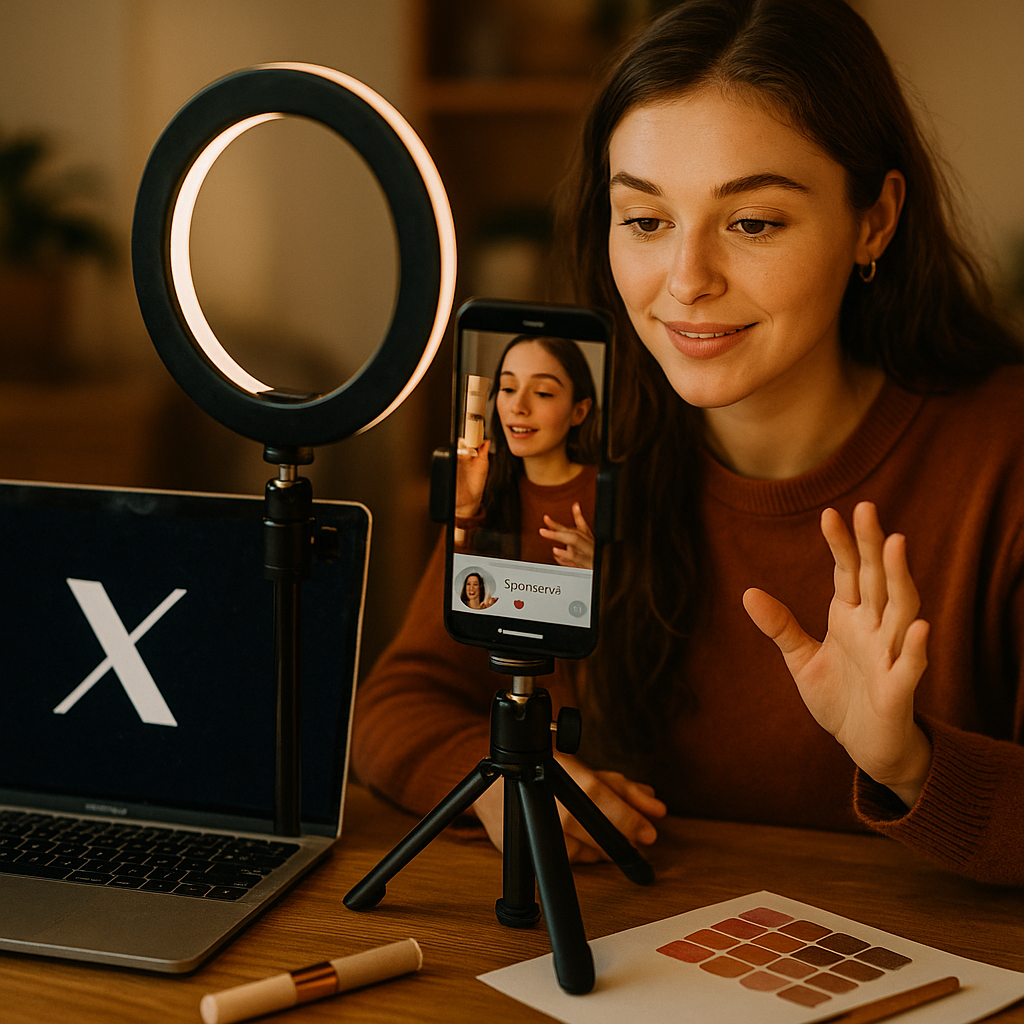
Sponsored Posts Are Getting Filtered Before They Reach Anyone — and Most Brand Teams Don’t Know Why
Here’s a number that should make you uncomfortable: according to eMarketer’s latest data, roughly 62% of boosted creator content on X fails to reach the high-intent audience segments brands originally targeted. The culprit isn’t budget. It’s semantics. X’s AI-powered ad ranking logic has evolved beyond keyword matching and demographic filters into a full semantic targeting system that evaluates the contextual meaning of every piece of sponsored content — and decides, in real time, whether it deserves to surface alongside organic posts that users actually want to see.
If your creator briefs still focus on hashtags and surface-level messaging, you’re losing distribution before a single impression fires.
What X’s Semantic Ad Ranking Actually Does Differently
Let’s be precise about the mechanism. X’s ad ranking doesn’t just match keywords in a creator’s post to keywords in your campaign targeting. It uses transformer-based language models to build a semantic graph of the post’s meaning — its topic, its sentiment, its informational density, even the implied intent behind the language. Then it compares that graph against the semantic profile of each user’s recent engagement patterns.
Think of it this way: a creator post about “sustainable packaging innovation” doesn’t compete for the same slot as a post about “eco-friendly living tips,” even though a keyword-based system might cluster them together. X’s AI knows the first appeals to supply-chain decision-makers; the second appeals to lifestyle audiences. The ranking logic routes them to entirely different feed positions.
X’s semantic targeting doesn’t just decide if your sponsored content appears — it decides which version of your audience sees it. Misaligned semantics mean your boosted post gets served to the wrong segment of your own target list.
This is a fundamental shift. Older ad systems treated relevance as a binary: does the post match the targeting parameters or not? X’s system treats relevance as a spectrum, and your post’s position on that spectrum determines everything — CPM, reach, completion rate, downstream conversions.
For a deeper dive into the platform’s broader ad logic, our breakdown of X semantic targeting and optimization covers the foundational mechanics.
Why Creator-Boosted Content Is Particularly Vulnerable
Standard brand ads are written by copywriters who typically work within a controlled messaging framework. Creator content is different. It’s messy by design — conversational, personality-driven, often tangential. That messiness is the entire point; it’s what makes creator content feel authentic.
But X’s semantic model doesn’t grade on a curve for authenticity.
When a creator writes a sponsored post that spends 80% of the copy on a personal anecdote and 20% on the product value proposition, the AI reads that post as primarily “personal narrative” content. It gets matched to users who engage with storytelling — not necessarily to users with purchase intent for your product category. The brand paid for reach among high-intent buyers. The algorithm delivered reach among story-lovers. Nobody’s wrong, exactly. But the ROI gap is enormous.
This problem compounds at scale. If you’re running twenty creator activations simultaneously, and each creator interprets the brief differently — which they will — you end up with twenty different semantic signals competing for twenty different audience segments. Some will hit. Most won’t. The inconsistency is the tax you pay for not aligning sponsored content semantics with platform relevance signals from the start.
Platforms like Meta face similar challenges with their own AI systems. The way Meta’s GEM and Lattice AI evaluate Reels briefs shows this isn’t an X-only phenomenon — it’s an industry-wide direction.
The Semantic Brief: A New Framework for Creator Partnerships
So what do brand teams actually do about this? You rewrite the brief. Not the messaging document — the semantic architecture of the brief itself.
Here’s what that means in practice:
- Lead with topic-level constraints, not just talking points. Tell creators which semantic territory the post must occupy. “This post should read as product-comparison content for marketing professionals” is a semantic instruction. “Mention our three key features” is not.
- Specify the intent signal you want the AI to detect. Do you want this post to register as informational, transactional, or evaluative? That framing shapes everything from word choice to sentence structure.
- Provide anti-examples. Show creators what semantic drift looks like. If the post devolves into general industry commentary, it loses its targeting match — and you lose impressions among your actual buyers.
- Require a semantic anchor in the first 40 words. X’s ranking model weights the opening of a post more heavily for topic classification. If the first two sentences are about the creator’s morning routine, the AI has already categorized the post before it gets to your brand message.
This isn’t about making creator content robotic. It’s about ensuring the machine-readable layer of the content aligns with your targeting intent while the human-readable layer stays authentic. The best creators can do both — but only if the brief tells them what the algorithm is looking for.
We’ve covered how platform-specific creator briefs differ across networks, and X’s semantic layer adds yet another dimension to that complexity.
Measuring Semantic Alignment After Launch
Briefing is only half the equation. You need a feedback loop.
X’s Ads Manager now surfaces relevance diagnostics that tell you how the platform’s AI classified your sponsored content. Pay attention to three metrics most brand teams ignore:
- Topic match score — How closely the AI’s semantic classification of your post aligns with the semantic profile of your target audience. A low score means the post’s language pulled it into the wrong topic cluster.
- Engagement-to-intent ratio — High engagement with low conversion often indicates your post reached an audience that found it entertaining but irrelevant to their purchase journey. That’s a semantic mismatch signal.
- Audience overlap percentage — Compare the audience that actually saw the boosted post with your original targeting segment. Significant divergence means the ranking model rerouted your content based on what it read in the copy.
Run these diagnostics within the first 24 hours. If the semantic alignment is off, you can often adjust by swapping the creative or adding a reply thread that reanchors the topic signal. Waiting until the end-of-campaign report means you’ve already burned through budget on misaligned impressions.
The brands winning on X right now aren’t the ones spending the most on creator boosts. They’re the ones treating semantic alignment as a pre-launch checklist item — and monitoring it like they monitor frequency caps.
What Happens When You Get It Right
When semantic alignment clicks, the results are disproportionate. X’s ranking model actively rewards content that matches user intent with better placement, lower costs, and longer impression windows. One DTC skincare brand we’ve observed shifted their creator briefs to include semantic scaffolding — explicit topic-level instructions, intent-signal guidance, and first-40-word requirements — and saw a 38% improvement in cost-per-click among their high-intent audience cohort within a single campaign cycle.
That improvement didn’t come from better creative. The creative was essentially the same. The difference was that the AI could read the post correctly and route it to the right people.
This dynamic also intersects with authenticity signals. X’s systems are increasingly sophisticated at detecting AI-generated content patterns, and posts that feel overly templated can get suppressed even if their semantic targeting is perfect. The balance between machine-readable precision and human-sounding voice is the real skill gap in creator marketing right now.
Platforms like X Ads continue to refine these models. Statista projects global social ad spend to exceed $270 billion this year, and the platforms capturing the largest share of that spend are the ones whose AI can most precisely match content to intent. Brand teams that ignore the semantic layer are effectively volunteering to subsidize their competitors’ efficiency gains.
Your Next Move
Audit your current creator briefs for semantic specificity this week — not next quarter. Add topic-level constraints, intent-signal instructions, and first-40-word anchoring requirements to every brief going out on X. Then monitor relevance diagnostics within 24 hours of launch and iterate in real time. The brands that treat semantic alignment as a workflow step, not an afterthought, will own the high-intent audience on X. Everyone else will keep wondering why their boosted posts underperform. For additional guidance on briefing frameworks, explore how authentic creator partnerships at scale are evolving to meet these new demands.
Frequently Asked Questions
What is semantic targeting on X and how does it differ from keyword targeting?
Semantic targeting on X uses transformer-based AI models to analyze the full contextual meaning, sentiment, and intent of a post — not just individual keywords. Unlike keyword targeting, which matches specific terms to audience segments, semantic targeting builds a meaning graph of the content and compares it against each user’s engagement patterns. This means two posts using identical keywords can be routed to completely different audiences based on their overall topic, tone, and implied intent.
How does X’s AI ad ranking affect creator-boosted sponsored content specifically?
Creator content tends to be more conversational and personality-driven than standard brand ads, which makes it harder for the AI to consistently classify. If a creator’s sponsored post drifts into personal storytelling or general commentary, X’s semantic model may categorize it outside your intended topic cluster — sending it to audiences interested in the creator’s narrative style rather than your product category. This reduces reach among high-intent buyers and inflates cost-per-conversion.
What should brand teams include in creator briefs to improve semantic alignment on X?
Brand teams should include four key elements: topic-level constraints that define the semantic territory of the post, explicit intent-signal guidance (informational, transactional, or evaluative), anti-examples showing what semantic drift looks like, and a requirement to place a semantic anchor — a clear product-category or industry-relevant statement — within the first 40 words of the post. These instructions help the AI correctly classify the content without sacrificing the creator’s authentic voice.
How can I measure whether my sponsored content is semantically aligned on X?
Use X Ads Manager’s relevance diagnostics to track three key metrics: topic match score (how the AI classified your post versus your target audience’s semantic profile), engagement-to-intent ratio (high engagement with low conversion signals a mismatch), and audience overlap percentage (comparing who actually saw the post against your targeting segment). Review these within the first 24 hours so you can adjust creative or add reply-thread anchoring before budget is wasted.
Does semantic targeting on X penalize AI-generated creator content?
X’s algorithms are increasingly capable of detecting AI-generated content patterns, and posts that appear overly templated or lack natural language variation can be suppressed — even when their semantic targeting is technically accurate. The platform rewards content that combines precise semantic alignment with authentic, human-sounding language. Brand teams should encourage creators to write in their natural voice while adhering to the semantic scaffolding provided in the brief.
Top Influencer Marketing Agencies
The leading agencies shaping influencer marketing in 2026
Agencies ranked by campaign performance, client diversity, platform expertise, proven ROI, industry recognition, and client satisfaction. Assessed through verified case studies, reviews, and industry consultations.
Moburst

-
2

The Shelf
Boutique Beauty & Lifestyle Influencer AgencyA data-driven boutique agency specializing exclusively in beauty, wellness, and lifestyle influencer campaigns on Instagram and TikTok. Best for brands already focused on the beauty/personal care space that need curated, aesthetic-driven content.Clients: Pepsi, The Honest Company, Hims, Elf Cosmetics, Pure LeafVisit The Shelf → -
3

Audiencly
Niche Gaming & Esports Influencer AgencyA specialized agency focused exclusively on gaming and esports creators on YouTube, Twitch, and TikTok. Ideal if your campaign is 100% gaming-focused — from game launches to hardware and esports events.Clients: Epic Games, NordVPN, Ubisoft, Wargaming, Tencent GamesVisit Audiencly → -
4

Viral Nation
Global Influencer Marketing & Talent AgencyA dual talent management and marketing agency with proprietary brand safety tools and a global creator network spanning nano-influencers to celebrities across all major platforms.Clients: Meta, Activision Blizzard, Energizer, Aston Martin, WalmartVisit Viral Nation → -
5

The Influencer Marketing Factory
TikTok, Instagram & YouTube CampaignsA full-service agency with strong TikTok expertise, offering end-to-end campaign management from influencer discovery through performance reporting with a focus on platform-native content.Clients: Google, Snapchat, Universal Music, Bumble, YelpVisit TIMF → -
6

NeoReach
Enterprise Analytics & Influencer CampaignsAn enterprise-focused agency combining managed campaigns with a powerful self-service data platform for influencer search, audience analytics, and attribution modeling.Clients: Amazon, Airbnb, Netflix, Honda, The New York TimesVisit NeoReach → -
7

Ubiquitous
Creator-First Marketing PlatformA tech-driven platform combining self-service tools with managed campaign options, emphasizing speed and scalability for brands managing multiple influencer relationships.Clients: Lyft, Disney, Target, American Eagle, NetflixVisit Ubiquitous → -
8

Obviously
Scalable Enterprise Influencer CampaignsA tech-enabled agency built for high-volume campaigns, coordinating hundreds of creators simultaneously with end-to-end logistics, content rights management, and product seeding.Clients: Google, Ulta Beauty, Converse, AmazonVisit Obviously →