


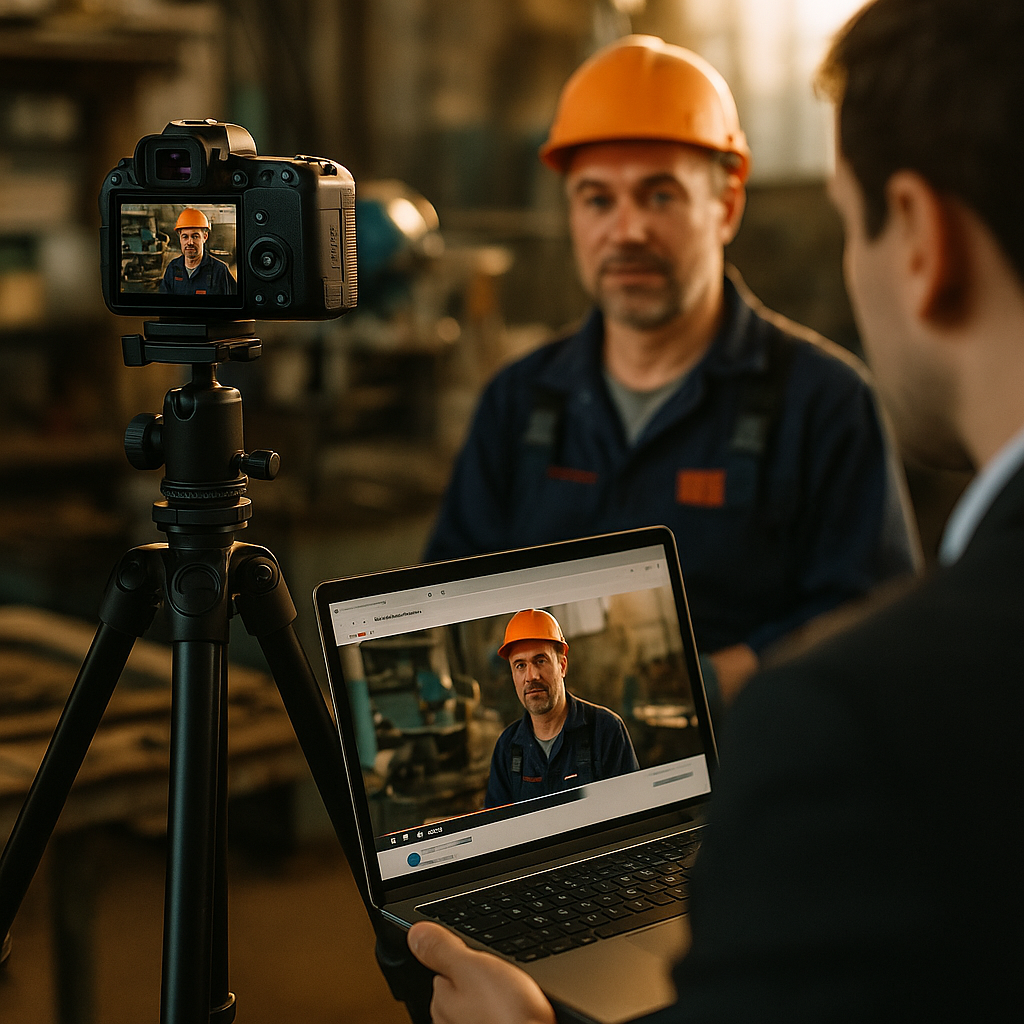
Case Study: A Traditional Manufacturer Using Social Video To Win Talent is no longer a novelty in 2025—it’s a practical playbook for filling hard-to-staff roles and reshaping employer perception at scale. This article breaks down how one traditional manufacturer used short-form, employee-led videos to improve applicant quality, speed hiring, and build trust with candidates. The results surprised even leadership—keep reading to see what changed.
Employer branding strategy: the business challenge and the hiring reality
A mid-sized, family-owned manufacturer in the industrial equipment space (about 900 employees across three sites) faced a familiar problem: demand was strong, but hiring was not. Open roles included CNC machinists, maintenance technicians, quality inspectors, and front-line supervisors. The company offered competitive pay and steady hours, yet applications were low and the best candidates often chose employers with stronger visibility and modern culture signals.
Leadership initially assumed the issue was purely compensation. HR data contradicted that. Exit interviews and candidate drop-off notes pointed to:
- Perception gaps: candidates pictured outdated facilities, limited growth, and rigid management.
- Information gaps: job posts described requirements but didn’t show day-to-day work or team dynamics.
- Trust gaps: candidates didn’t believe “great culture” claims without proof.
Meanwhile, competitors had begun using short-form video to show modern equipment, training pathways, and real employees. Candidates compared options the same way they compare products: quickly, visually, and on mobile.
The company’s employer branding strategy needed to solve two problems at once: increase qualified applicant volume and reduce drop-off from curiosity to interview. Social video offered a direct way to do both by replacing abstract claims with observable evidence.
Social video recruitment: why short-form won attention and credibility
The HR team explored three channels: job boards, community partnerships, and social video. Job boards were already saturated and expensive. Partnerships helped but didn’t scale fast enough. Social video recruitment stood out because it could:
- Show, not tell: equipment, safety standards, cleanliness, and teamwork are visible within seconds.
- Lower the barrier to understanding: candidates could see what “shift rotation” or “preventive maintenance” really looks like.
- Reach passive talent: technicians and operators often aren’t actively searching, but they scroll.
- Build familiarity: seeing future peers reduces anxiety and increases interview show rates.
To align with EEAT expectations, the team insisted on content grounded in real operations. They avoided stock footage and scripted “brand voice” messaging. Instead, the plan centered on employee experiences—what the work is, what the training is, what the schedule is, and what a new hire can expect in the first 30 days.
They also defined what social video would not do: it would not exaggerate career progression, hide physical demands, or oversimplify safety requirements. The goal was a better match, not just more clicks.
Manufacturing hiring marketing: the content blueprint and channel plan
The manufacturer built a repeatable content system designed for consistency rather than viral spikes. HR partnered with plant leadership, safety, and two “creator leads” (one machinist and one maintenance tech) who volunteered to appear on camera and help recruit peers.
Content pillars anchored every video:
- Work reality: tools used, noise level, PPE, lifting expectations, and pace.
- Training and growth: onboarding steps, mentoring, certifications paid for, and internal mobility examples.
- Pay transparency signals: pay ranges were discussed in plain language where policy allowed, plus shift differentials and overtime norms.
- Culture proof: problem-solving meetings, continuous improvement boards, and cross-team collaboration.
- Community and purpose: what the equipment enables for customers, and how quality matters.
Formats were kept simple to scale:
- 15–30 second vertical “day-in-the-life” clips shot on-site.
- 45–60 second “role explainers” answering: what you do, what you need, what you learn in month one.
- FAQ videos responding to real candidate questions (schedule, overtime, training, safety).
- Manager mini-interviews focused on coaching style and expectations.
Distribution prioritized where talent already spends time. The company used a mix of organic posts (employer account and employee reposts) plus targeted paid boosts to reach technicians within a commuting radius. Each video had one clear next step: “see open roles” or “text to apply,” never multiple competing calls-to-action.
Candidate experience integration prevented drop-off. The landing page matched the video tone, listed shifts clearly, and offered three application paths: quick form, resume upload, or a recruiter text line. HR also updated job descriptions to reflect what the videos showed, creating consistency from first impression to offer.
Employee-generated content: governance, safety, and authenticity without chaos
Leadership’s biggest concern was risk: confidentiality, safety optics, and brand control. The solution was not heavy-handed approvals that slow everything down, but a tight governance framework that protected operations while preserving authenticity.
Guardrails included:
- Safety-first filming rules: no recording in restricted zones; no filming while operating machinery; PPE must be worn correctly; designated safe filming spots were marked.
- Confidentiality checklist: no customer names, proprietary specs, or whiteboards with sensitive data.
- Respect and inclusion standards: no hazing humor; avoid filming anyone who hasn’t opted in.
- Simple release process: employees signed opt-in media releases; visitors were excluded from shots.
Content credibility improved when employees spoke in their own words. HR gave prompts, not scripts. Examples:
- “What surprised you about this job after your first week?”
- “What would you tell someone switching careers into manufacturing?”
- “What does ‘good performance’ look like here?”
This approach supported EEAT by making expertise visible. A maintenance technician explaining preventive maintenance steps demonstrates real competence. A quality inspector showing how parts are checked demonstrates standards, not slogans.
Internal trust mattered too. HR held monthly listening sessions with shift reps to ensure videos didn’t paint an unrealistic picture. When employees flagged issues—like unclear overtime expectations—HR corrected the messaging and updated job postings. That feedback loop prevented “recruiting the wrong people” and helped retention.
Talent acquisition metrics: results, attribution, and what changed in interviews
The manufacturer defined success metrics before launching. They tracked performance at three levels: attention, conversion, and quality.
Attention metrics (weekly): views, three-second hold rate, average watch time, comments, and shares. Watch time mattered more than views because it indicated true interest from the right audience.
Conversion metrics (biweekly): click-through to careers page, completed applications, recruiter text conversations started, and interview scheduling rate.
Quality metrics (monthly): interview-to-offer ratio, offer acceptance rate, time-to-fill, and 90-day retention signals (attendance and early performance check-ins).
To improve attribution, every video and paid campaign used unique tracking links, and recruiter text lines included “How did you find us?” as a required dropdown in the CRM. This reduced guesswork and made budget discussions easier.
What changed in interviews was as important as the funnel metrics. Recruiters reported that candidates arrived with better baseline understanding, asking sharper questions about training plans and shift structure rather than basic “what do you make?” questions. Hiring managers noted fewer mismatches related to physical demands and schedule expectations because candidates had seen the environment beforehand.
Operational outcomes included:
- Faster hiring cycles because fewer candidates dropped after the first screening.
- Higher show rates for onsite tours and second interviews, attributed to reduced uncertainty.
- Improved offer acceptance as candidates felt they “knew” the workplace and team.
HR also saw a benefit they didn’t predict: employee referrals increased. Team members shared videos with friends because the content was accurate and made them proud. That created a compounding effect—more qualified leads, lower cost per applicant, and stronger culture alignment.
Recruitment video best practices: lessons for traditional manufacturers
This case offers a repeatable approach for any traditional manufacturer that wants to compete for talent without overhauling the entire brand overnight.
1) Start with roles that are hardest to fill
Build video around the roles that drive overtime, bottlenecks, or quality risk. When you relieve pressure on those roles, you create internal momentum for continued investment.
2) Show specifics candidates care about
Answer follow-up questions before they’re asked: shift times, overtime expectations, training length, who mentors new hires, and what success looks like in week one. Clear expectations reduce churn.
3) Make safety visible
In manufacturing, safety is a credibility marker. PPE, signage, and clean processes reassure experienced candidates and help career-switchers feel confident.
4) Use employees as experts, not actors
Employee-led content signals authenticity and operational competence. Keep editing light, keep statements honest, and let real voices come through.
5) Build a frictionless application path
If a candidate watches a video and can’t apply in under five minutes on mobile, you lose them. Offer a text-to-apply option and respond quickly.
6) Measure quality, not just clicks
Track interview-to-offer and early retention indicators. If volume rises but quality drops, adjust targeting and improve “work reality” content.
7) Create a cadence, not a campaign
Talent needs don’t end after a hiring push. A steady rhythm—several posts per week—keeps the pipeline warm and reduces panic hiring.
FAQs
What types of social videos work best for manufacturing recruitment?
Short “day-in-the-life” clips, role explainers, and candidate FAQ videos perform consistently because they reduce uncertainty. Add occasional manager videos focused on coaching expectations to help candidates assess fit.
How do you keep employee-generated recruiting videos compliant and safe?
Use clear filming zones, ban recording while operating equipment, require correct PPE in every shot, and add a confidentiality checklist. Keep approvals lightweight but consistent, and store signed opt-ins.
Should manufacturers post pay ranges in recruitment videos?
If policy and local regulations allow, yes. Even when you can’t state exact ranges, you can still clarify shift differentials, overtime norms, and which certifications increase pay. Transparency improves applicant quality.
Which metrics matter most for social video recruitment?
Track watch time and saves/shares for audience fit, then click-to-apply and completed applications for conversion. For business impact, prioritize interview-to-offer, offer acceptance, time-to-fill, and early retention signals.
Do you need professional production to succeed?
No. Candidates often trust clear, well-lit phone video more than polished corporate content. Prioritize good audio, stable framing, and truthful messaging. Professional support helps when scaling, but it isn’t required to start.
How often should a manufacturer post recruitment videos?
Consistency beats volume spikes. Aim for multiple posts per week and rotate topics across roles, training, safety, and culture proof. Repost top performers and refresh them when shifts, pay, or processes change.
Social video can turn a traditional manufacturer into a credible, visible employer in 2025 by replacing vague promises with proof from the shop floor. This case showed that employee-led content, clear guardrails, and fast mobile applications improve candidate fit and speed hiring. The takeaway: build a steady video cadence that answers real questions, then measure quality outcomes—not just views.
Top Influencer Marketing Agencies
The leading agencies shaping influencer marketing in 2026
Agencies ranked by campaign performance, client diversity, platform expertise, proven ROI, industry recognition, and client satisfaction. Assessed through verified case studies, reviews, and industry consultations.
Moburst

-
2

The Shelf
Boutique Beauty & Lifestyle Influencer AgencyA data-driven boutique agency specializing exclusively in beauty, wellness, and lifestyle influencer campaigns on Instagram and TikTok. Best for brands already focused on the beauty/personal care space that need curated, aesthetic-driven content.Clients: Pepsi, The Honest Company, Hims, Elf Cosmetics, Pure LeafVisit The Shelf → -
3

Audiencly
Niche Gaming & Esports Influencer AgencyA specialized agency focused exclusively on gaming and esports creators on YouTube, Twitch, and TikTok. Ideal if your campaign is 100% gaming-focused — from game launches to hardware and esports events.Clients: Epic Games, NordVPN, Ubisoft, Wargaming, Tencent GamesVisit Audiencly → -
4

Viral Nation
Global Influencer Marketing & Talent AgencyA dual talent management and marketing agency with proprietary brand safety tools and a global creator network spanning nano-influencers to celebrities across all major platforms.Clients: Meta, Activision Blizzard, Energizer, Aston Martin, WalmartVisit Viral Nation → -
5

The Influencer Marketing Factory
TikTok, Instagram & YouTube CampaignsA full-service agency with strong TikTok expertise, offering end-to-end campaign management from influencer discovery through performance reporting with a focus on platform-native content.Clients: Google, Snapchat, Universal Music, Bumble, YelpVisit TIMF → -
6

NeoReach
Enterprise Analytics & Influencer CampaignsAn enterprise-focused agency combining managed campaigns with a powerful self-service data platform for influencer search, audience analytics, and attribution modeling.Clients: Amazon, Airbnb, Netflix, Honda, The New York TimesVisit NeoReach → -
7

Ubiquitous
Creator-First Marketing PlatformA tech-driven platform combining self-service tools with managed campaign options, emphasizing speed and scalability for brands managing multiple influencer relationships.Clients: Lyft, Disney, Target, American Eagle, NetflixVisit Ubiquitous → -
8

Obviously
Scalable Enterprise Influencer CampaignsA tech-enabled agency built for high-volume campaigns, coordinating hundreds of creators simultaneously with end-to-end logistics, content rights management, and product seeding.Clients: Google, Ulta Beauty, Converse, AmazonVisit Obviously →