


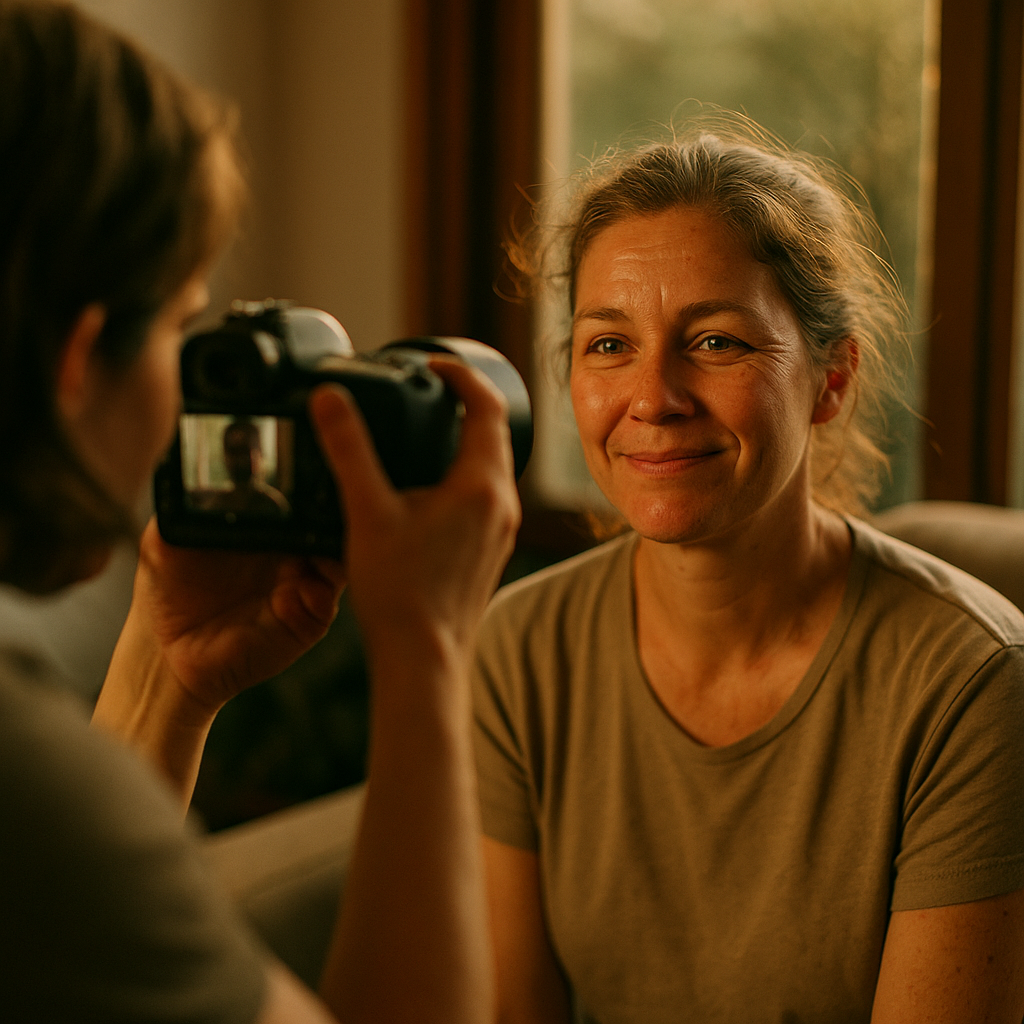
In 2025, audiences can spot synthetic perfection faster than ever. That’s why the post-AI value of human flaws is rising in brand photography and creative: imperfect gestures, uneven light, real skin texture, and unplanned moments signal truth. Brands that embrace this shift earn attention and trust while everyone else blends in. So what does “flawed” look like—without looking careless?
Human flaws in brand photography: why imperfection builds trust
When visuals become easy to generate, meaning becomes harder to earn. Human flaws in brand photography function as “proof of life”—small, hard-to-fake details that imply a real moment happened in front of a real camera. That matters because brand decisions are emotional first and rational second; people want to feel safe choosing you.
In practical terms, “flaws” are not mistakes for their own sake. They’re signals of presence: a slight motion blur from laughter, a smudge on a workbench, wrinkled linen on a bed in a hospitality shoot, or a shadow that shows the time of day. These details reduce the sense of manipulation and increase believability.
From an EEAT perspective, authenticity supports perceived experience (this happened), expertise (you know what to show), authoritativeness (your look is distinct), and trust (you’re not hiding behind generic polish). If you sell premium products, imperfection can still fit—premium is not “sterile,” it’s “considered.”
Reader follow-up: Will imperfect images reduce perceived quality? Not if you anchor them with clear product cues: accurate color, legible design details, consistent art direction, and intentional composition. The goal is “human,” not “sloppy.”
Authentic brand imagery: what “real” means after generative AI
In 2025, “authentic brand imagery” doesn’t mean unedited or amateur. It means the audience can understand what’s real, what’s staged, and why. With AI-generated content everywhere, authenticity is increasingly about transparency and coherence.
Authenticity now comes from three places:
- Provenance: showing or implying a real environment, team, or process—back-of-house, studio floor, a real customer setting, or a founder’s actual workspace.
- Continuity: repeating recognizable elements across time—consistent people, locations, and product context—so your visuals form a believable “world.”
- Specificity: details that look lived-in and hard to mass-produce—local textures, real weather, imperfect materials, genuine body variety, and culturally accurate styling.
Many brands ask whether they should disclose AI use. If you use AI for ideation or minor cleanup, the safer approach is to avoid misleading representations of people, places, or results. For example, don’t generate “staff” who don’t exist, or imply product performance that isn’t real. Authentic imagery is a trust contract, and breaking it is expensive.
Reader follow-up: Does authenticity mean only documentary-style photos? No. A high-concept campaign can still be authentic if it’s honest about being constructed and still reflects your brand’s real values, materials, and audience.
Imperfect photography aesthetic: the flaws that perform (and the ones that don’t)
The imperfect photography aesthetic works when flaws enhance story, not when they obscure meaning. The best “imperfections” are subtle enough to feel unforced and consistent enough to feel like a choice.
High-performing human flaws commonly include:
- Texture and skin: natural pores, freckles, fine lines, and real hair texture; minimal smoothing that keeps the subject recognizable.
- Micro-movement: slight blur in hands, hair, or fabric that suggests motion and life.
- Natural light variance: imperfect shadows, flare, and gradients that indicate time and place.
- Environmental truth: scuffs, fingerprints on tools, uneven frosting on a pastry, a real desk with real clutter (curated, not chaotic).
- Emotion that interrupts pose: mid-laugh expressions, awkward-but-real stances, and unguarded eye contact.
Low-performing “imperfections” usually share one problem: they reduce clarity. Examples include inaccurate product color, unreadable packaging, confusing composition, or sloppy styling that makes the brand look unprepared. If the viewer can’t quickly identify what you sell, a “human” look becomes a conversion problem.
Practical rule: preserve truth and recognition. Keep the product and the promise clear. Let the “flaw” live in the supporting details, not in the fundamentals.
Reader follow-up: What about luxury brands? Luxury can embrace imperfection through craft: visible stitching, hand-finished surfaces, film grain, and intimate portraits. The flaw becomes evidence of labor and artistry.
Brand storytelling with real people: casting, consent, and representation
Using real people is one of the strongest differentiators in a post-AI environment, but it requires care. Brand storytelling with real people works when subjects feel respected, accurately represented, and aligned with the brand’s reality.
Start with casting choices that support credibility:
- Proximity to the product: real employees, founders, makers, customers, or community partners create instant plausibility.
- Relevant diversity: represent the people who actually use or are affected by your product, not a tokenized mix that doesn’t match your market or values.
- Comfort on set: real people aren’t trained models; plan wardrobe options, clear direction, breaks, and a calm pace to avoid stiff, forced images.
Then lock in ethical basics that strengthen EEAT:
- Informed consent: clear usage terms, platforms, and duration. If you plan to adapt assets for paid ads, say so.
- Respectful retouching: correct distractions (lint, temporary blemishes if requested) while avoiding identity-erasing edits.
- Context accuracy: don’t fabricate roles, credentials, or outcomes. If someone is a customer, don’t present them as a clinician or expert.
Reader follow-up: Should we avoid AI entirely when photographing people? Not necessarily. You can still use AI tools for workflow—culling, caption suggestions, background cleanup—while keeping the person’s identity and the scene’s truth intact.
Creative direction after AI: building a signature that machines can’t copy
AI can imitate styles, but it struggles to replicate a brand’s lived specificity and consistent decision-making. Creative direction after AI should focus on building a signature grounded in real constraints: your spaces, your people, your process, your materials, your community.
Use these levers to create defensible distinctiveness:
- Repeatable real-world settings: choose 2–3 recognizable locations (store, studio corner, kitchen, workshop) and return to them across campaigns.
- Document the process: behind-the-scenes moments, assembly, testing, packing, fittings—proof that the product exists and is cared for.
- Controlled imperfection: define what stays “raw” (grain, shadows, skin texture) and what stays “precise” (color, typography, product edges).
- Consistent human prompts: direct subjects with actions, not poses: “show how you open it,” “teach someone,” “pack the order,” “compare two options.”
- Editorial discipline: create a short visual style guide: lens choices, lighting preferences, composition rules, and retouching boundaries.
If you work with multiple photographers or content creators, consistency becomes your moat. A machine can replicate a look; it can’t easily replicate a culture of taste reinforced by a clear brief, repeat locations, and recurring faces.
Reader follow-up: How do we balance speed and authenticity? Build a content system: quarterly flagship shoots for hero assets, then lightweight monthly “real moments” captured with a repeatable setup and clear do/don’t rules.
Conversion-focused authenticity: using human imperfections without hurting performance
Authenticity should earn outcomes, not just admiration. Conversion-focused authenticity means your images feel human while still doing the job: stopping scroll, communicating value, and reducing uncertainty.
Apply imperfection strategically across the funnel:
- Top of funnel (attention): use surprising real moments—movement, candid expressions, imperfect environments—to stand out in feeds saturated with AI polish.
- Mid funnel (consideration): show proof: real scale, real usage, real comparisons, real packaging, real team. Pair with clear captions and product naming.
- Bottom of funnel (decision): prioritize clarity: accurate color, multiple angles, close-ups of materials, and honest details like texture, seams, and finish.
To protect performance, keep these non-negotiables:
- Color accuracy: calibrate monitors, use color targets when needed, and confirm product tones match reality.
- Legibility: ensure logos, packaging, and key product features are readable where it matters.
- Claim integrity: avoid visual exaggerations that imply results the customer won’t get.
Finally, treat authenticity as testable. Run A/B tests on ad creative: one “clean studio” version and one “real moment” version, keeping copy and targeting constant. You’ll learn where human flaws lift engagement and where precision lifts conversion.
FAQs
What are “human flaws” in brand photography?
They are natural imperfections that signal real life: texture, micro-movement, uneven lighting, genuine expressions, and lived-in environments. The best ones support the story without reducing product clarity.
Is AI-generated photography bad for brands?
Not inherently. AI is useful for ideation and production efficiency. Problems start when AI visuals mislead viewers about people, places, product performance, or the existence of a real brand experience.
How can we tell if an “authentic” image is still professionally made?
Look for intentional composition, consistent art direction, accurate product color, and clean delivery formats. Professional authenticity feels human but still communicates clearly.
What’s the safest way to combine AI tools with real photography?
Use AI for workflow improvements (culling, minor cleanup, background tidying) while keeping identity, context, and product truth intact. Avoid generating people who don’t exist or scenes that imply false claims.
Will imperfect photography work for B2B brands?
Yes, especially when it shows real environments and expertise: teams collaborating, prototypes, service delivery, on-site installs, and process documentation. Keep brand-critical details crisp and credible.
How do we brief a photographer to capture “controlled imperfection”?
Define what must be accurate (color, packaging, key features) and what can stay human (grain, shadows, skin texture, candid moments). Share example references, a shot list by funnel stage, and retouching boundaries.
Human imperfections are becoming a competitive advantage in 2025 because they provide what automated visuals can’t: proof of real people, real places, and real products. Treat flaws as intentional signals—texture, motion, and specificity—while protecting clarity and honesty. When your creative direction repeats these human cues consistently, you earn trust and stand out in crowded feeds. The takeaway: make reality your signature, then refine it.
Top Influencer Marketing Agencies
The leading agencies shaping influencer marketing in 2026
Agencies ranked by campaign performance, client diversity, platform expertise, proven ROI, industry recognition, and client satisfaction. Assessed through verified case studies, reviews, and industry consultations.
Moburst

-
2

The Shelf
Boutique Beauty & Lifestyle Influencer AgencyA data-driven boutique agency specializing exclusively in beauty, wellness, and lifestyle influencer campaigns on Instagram and TikTok. Best for brands already focused on the beauty/personal care space that need curated, aesthetic-driven content.Clients: Pepsi, The Honest Company, Hims, Elf Cosmetics, Pure LeafVisit The Shelf → -
3

Audiencly
Niche Gaming & Esports Influencer AgencyA specialized agency focused exclusively on gaming and esports creators on YouTube, Twitch, and TikTok. Ideal if your campaign is 100% gaming-focused — from game launches to hardware and esports events.Clients: Epic Games, NordVPN, Ubisoft, Wargaming, Tencent GamesVisit Audiencly → -
4

Viral Nation
Global Influencer Marketing & Talent AgencyA dual talent management and marketing agency with proprietary brand safety tools and a global creator network spanning nano-influencers to celebrities across all major platforms.Clients: Meta, Activision Blizzard, Energizer, Aston Martin, WalmartVisit Viral Nation → -
5

The Influencer Marketing Factory
TikTok, Instagram & YouTube CampaignsA full-service agency with strong TikTok expertise, offering end-to-end campaign management from influencer discovery through performance reporting with a focus on platform-native content.Clients: Google, Snapchat, Universal Music, Bumble, YelpVisit TIMF → -
6

NeoReach
Enterprise Analytics & Influencer CampaignsAn enterprise-focused agency combining managed campaigns with a powerful self-service data platform for influencer search, audience analytics, and attribution modeling.Clients: Amazon, Airbnb, Netflix, Honda, The New York TimesVisit NeoReach → -
7

Ubiquitous
Creator-First Marketing PlatformA tech-driven platform combining self-service tools with managed campaign options, emphasizing speed and scalability for brands managing multiple influencer relationships.Clients: Lyft, Disney, Target, American Eagle, NetflixVisit Ubiquitous → -
8

Obviously
Scalable Enterprise Influencer CampaignsA tech-enabled agency built for high-volume campaigns, coordinating hundreds of creators simultaneously with end-to-end logistics, content rights management, and product seeding.Clients: Google, Ulta Beauty, Converse, AmazonVisit Obviously →