


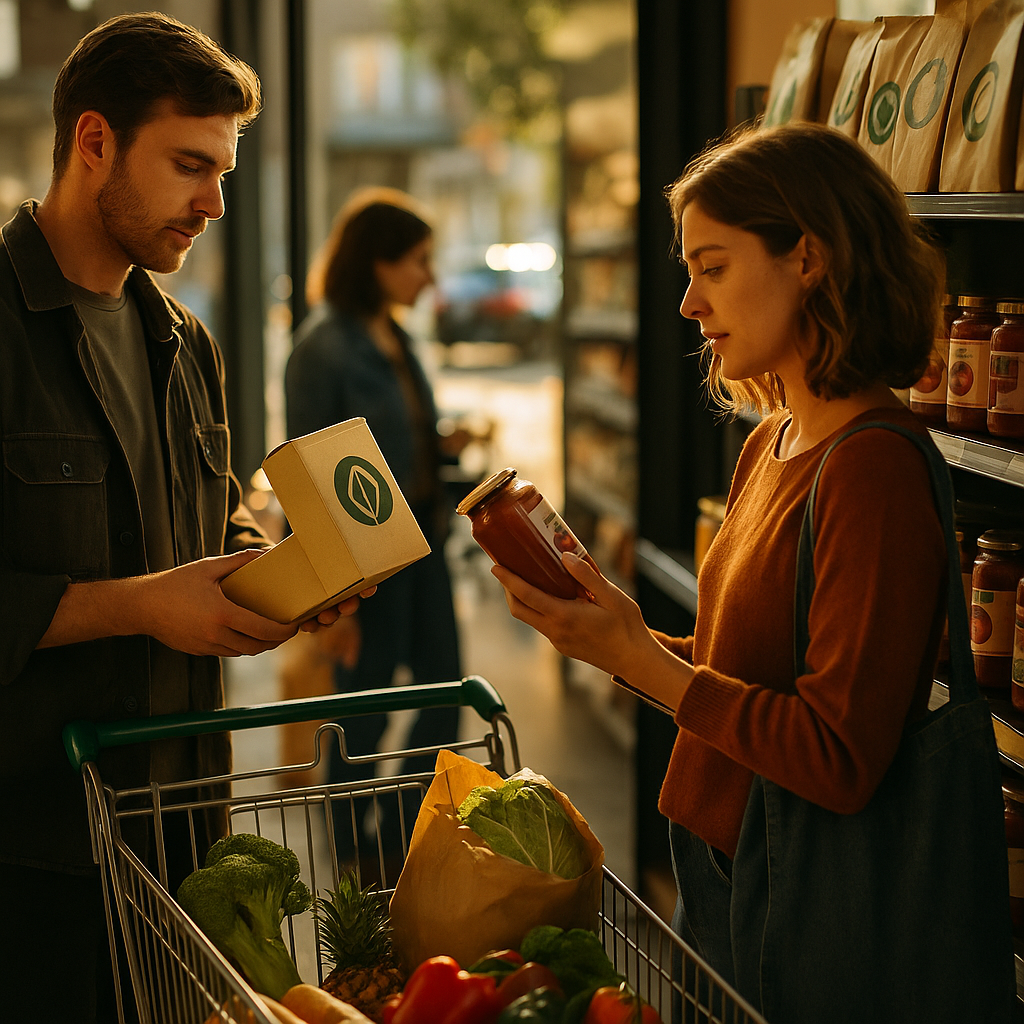
In 2025, buyers want more than low prices and fast delivery; they want brands to reflect their beliefs, habits, and hopes. The Future Of “Meaning-First” Consumerism And Value-Based Branding is shaped by skepticism, algorithmic discovery, and a demand for proof. Companies that earn trust will win attention, loyalty, and margins. The next wave belongs to brands that can show their work—will yours?
Meaning-first consumerism: what it is and why it’s accelerating
Meaning-first consumerism describes purchasing decisions guided primarily by a customer’s identity, ethics, community ties, and long-term impact—then by product features and price. It isn’t a feel-good add-on to marketing; it is a filter that determines which brands even make it onto the shortlist.
Several forces accelerate this shift in 2025:
- Information abundance: Customers can verify claims quickly through reviews, creator breakdowns, watchdog reports, and public filings.
- Trust scarcity: People have learned to discount polished messaging. They reward brands that provide verifiable evidence and consistent behavior.
- Values as “decision shortcuts”: In crowded categories, values help buyers decide faster—especially when functional differences are small.
- Work and life blending: Purchases increasingly signal personal standards at home and at work, from food and apparel to software and services.
To act on this reality, brands need to answer a buyer’s unspoken follow-up questions: What do you stand for? What do you do when it costs you something? How do you treat people in your supply chain? What happens when you make a mistake?
Value-based branding: how trust and transparency become your growth engine
Value-based branding means building strategy, operations, and communication around clearly defined principles—and making those principles measurable. In 2025, brand value grows less from clever positioning and more from proof of consistency.
Done well, value-based branding delivers three durable advantages:
- Lower acquisition friction: When customers recognize shared values, they need fewer touches to trust you.
- Higher retention: Shared meaning creates “stickiness” that discounts can’t match.
- Resilience under scrutiny: Brands with documented practices can respond faster when challenged.
Transparency is the operating system. That doesn’t mean oversharing or publishing a 70-page report no one reads. It means providing the right evidence at the right moment: sourcing details on product pages, wage and labor standards in hiring content, security and privacy documentation for digital products, and plain-language explanations for trade-offs.
Customers also want clarity on boundaries. If your brand supports a cause, state what you do and what you don’t do. Ambiguity reads as opportunism, especially when social conversations move quickly.
Brand purpose authenticity: moving from slogans to verifiable impact
Brand purpose authenticity is the difference between “we care” and “here’s what changed because we acted.” In 2025, audiences expect brands to quantify effort, show governance, and admit constraints. Purpose becomes credible when it is operational, not performative.
To build authenticity, focus on four practices:
- Define non-negotiables: Choose 2–3 principles that guide decisions even when it hurts short-term revenue (e.g., refusing certain suppliers, materials, or targeting tactics).
- Set measurable commitments: Publish specific targets and time horizons. Avoid vague promises like “more sustainable” without a baseline.
- Show evidence in public: Use audits, third-party certifications where appropriate, and documented methodologies. If you run your own assessments, explain the process and limitations.
- Close the loop: Report progress and setbacks. Customers forgive imperfection faster than they forgive evasion.
Purpose also needs internal alignment. If your customer-facing story says “people first” while your employee experience shows high churn, inconsistent pay practices, or poor safety culture, the market will find out. In a meaning-first era, employer brand and consumer brand reinforce—or undermine—each other.
When you make mistakes (and you will), respond with a pattern customers can recognize: acknowledge, explain what happened, state what changes, and provide a checkpoint date. This approach doesn’t just reduce reputational damage; it can strengthen loyalty because it demonstrates competence under pressure.
Ethical marketing strategy: aligning product, pricing, and messaging with values
Ethical marketing strategy in 2025 means you market in ways that match the customer’s welfare and autonomy. It includes what you claim, how you target, what you omit, and how your product behaves after purchase.
Key components buyers now evaluate (often silently):
- Claim integrity: Are sustainability, health, security, or “fair” claims precise and supported by evidence?
- Dark-pattern avoidance: Are checkout flows, subscriptions, and cancellation policies straightforward?
- Data ethics: Do you minimize data collection, explain why you collect it, and make opting out workable?
- Inclusive accessibility: Do your product and content serve people with different needs, languages, and contexts?
Ethical strategy also addresses pricing. Meaning-first shoppers aren’t always willing to pay more; many simply want to know why it costs what it costs. Break down value drivers in plain language: local production, safer materials, better labor standards, repairability, warranty length, or higher security costs. Provide options when possible—like a lower-cost version that still respects your core principles.
Messaging should be specific and testable. Replace broad virtue statements with concrete actions:
- Instead of: “Sustainably made.”
- Use: “Made with X% recycled material, verified by Y method; packaging is curbside recyclable in most regions; repair parts available for Z years.”
That level of specificity supports EEAT because it shows real experience with the product and accountability for claims.
Sustainable brand storytelling: evidence-led narratives that resonate across channels
Sustainable brand storytelling is not a campaign theme; it’s an ongoing narrative supported by receipts. In 2025, stories spread through creators, communities, and search results, which means your story must survive being paraphrased, clipped, and compared.
Build stories from three layers:
- Origin: The real problem you set out to solve and what you learned from customers.
- Method: How you make decisions, including trade-offs (materials, manufacturing, privacy, customer support).
- Proof: Outcomes, metrics, third-party validation, and customer results.
Operationalize the story so it’s consistent everywhere customers look:
- Product pages: Add sourcing, care, repair, safety, and performance evidence.
- FAQ and help center: Answer hard questions plainly (returns, defects, data use, labor standards).
- Creator partnerships: Encourage honest reviews; provide documentation and samples without controlling conclusions.
- Customer community: Highlight real use cases, repair stories, and second-hand circulation where relevant.
Expect follow-up questions and answer them before they’re asked. If you claim lower carbon impact, specify boundaries: does it include shipping, customer use, and end-of-life? If you say “ethical sourcing,” define what “ethical” means in your context and how you verify it.
Consumer trust trends 2025: what buyers expect next and how to prepare
Consumer trust trends 2025 point to a marketplace where credibility is dynamic and continuously checked. Customers trust brands that make verification easy and reduce the cost of doubt. They are also increasingly sensitive to inconsistency: a strong stance in one area doesn’t excuse negligence in another.
What to prepare for now:
- Radical comparability: Shoppers will compare not just price and quality, but return policies, repairability, data practices, and labor standards.
- Proof-on-demand: Expect customers to request documentation quickly. Build a “claims library” with sources, methodology, and update dates.
- AI-mediated discovery: Summaries and recommendations will reward brands with clear, structured information—policies, specs, and measurable commitments.
- Community validation: Trust will flow through niche communities. Earn it by showing up consistently, not by dropping ads and leaving.
To align with Google’s EEAT expectations for helpful content, brands should publish material that demonstrates:
- Experience: Real product testing, behind-the-scenes processes, and customer outcomes.
- Expertise: Named specialists, documented standards, and clear explanations of complex topics (materials, safety, privacy).
- Authoritativeness: Credible citations, partnerships, certifications, and consistent public records.
- Trust: Accurate claims, easy-to-find policies, secure transactions, and transparent corrections.
In practice, that means building a brand that reads like a well-run organization: clear ownership of decisions, a track record of updates, and a willingness to be assessed.
FAQs
What is meaning-first consumerism in simple terms?
It’s when people choose products and services primarily based on alignment with their values—such as fairness, sustainability, privacy, or community impact—before considering secondary factors like status or minor feature differences.
How do I prove my brand’s values without sounding defensive?
Lead with specifics and make verification easy: publish standards, show measurable commitments, share audit or methodology notes, and keep updates current. Calm confidence comes from evidence, not volume.
Is value-based branding only for “mission-driven” industries?
No. Any category can compete on meaning: a bank can emphasize ethical lending and data protection, a cleaning brand can focus on safer ingredients, and a software company can lead with privacy-by-design and accessible UX.
What’s the difference between purpose and positioning?
Positioning is how you want to be perceived in the market. Purpose is the principle that guides what you do, what you refuse to do, and how you behave when there’s pressure. In 2025, positioning without operational purpose tends to collapse under scrutiny.
How can smaller brands compete with larger brands on trust?
Smaller brands can win with speed and clarity: publish your sourcing and policies, respond quickly to questions, build a tight claims library, and show your decision process. Transparency can scale down better than big-budget advertising.
What metrics matter most for value-based branding?
Choose metrics tied to your core commitments: return rate and durability, repair rate, customer satisfaction, supplier compliance, worker safety, data minimization, and verified sustainability measures. Publish baselines and update schedules so progress is comparable over time.
Meaning-first consumerism will keep reshaping markets in 2025 because trust is now a product feature. Brands that connect values to operations—clear standards, measurable commitments, and honest trade-offs—will earn loyalty that outlasts ads and discounts. The takeaway is practical: define your non-negotiables, document your proof, and communicate it plainly. When customers can verify your meaning, they will choose you.
Top Influencer Marketing Agencies
The leading agencies shaping influencer marketing in 2026
Agencies ranked by campaign performance, client diversity, platform expertise, proven ROI, industry recognition, and client satisfaction. Assessed through verified case studies, reviews, and industry consultations.
Moburst

-
2

The Shelf
Boutique Beauty & Lifestyle Influencer AgencyA data-driven boutique agency specializing exclusively in beauty, wellness, and lifestyle influencer campaigns on Instagram and TikTok. Best for brands already focused on the beauty/personal care space that need curated, aesthetic-driven content.Clients: Pepsi, The Honest Company, Hims, Elf Cosmetics, Pure LeafVisit The Shelf → -
3

Audiencly
Niche Gaming & Esports Influencer AgencyA specialized agency focused exclusively on gaming and esports creators on YouTube, Twitch, and TikTok. Ideal if your campaign is 100% gaming-focused — from game launches to hardware and esports events.Clients: Epic Games, NordVPN, Ubisoft, Wargaming, Tencent GamesVisit Audiencly → -
4

Viral Nation
Global Influencer Marketing & Talent AgencyA dual talent management and marketing agency with proprietary brand safety tools and a global creator network spanning nano-influencers to celebrities across all major platforms.Clients: Meta, Activision Blizzard, Energizer, Aston Martin, WalmartVisit Viral Nation → -
5

The Influencer Marketing Factory
TikTok, Instagram & YouTube CampaignsA full-service agency with strong TikTok expertise, offering end-to-end campaign management from influencer discovery through performance reporting with a focus on platform-native content.Clients: Google, Snapchat, Universal Music, Bumble, YelpVisit TIMF → -
6

NeoReach
Enterprise Analytics & Influencer CampaignsAn enterprise-focused agency combining managed campaigns with a powerful self-service data platform for influencer search, audience analytics, and attribution modeling.Clients: Amazon, Airbnb, Netflix, Honda, The New York TimesVisit NeoReach → -
7

Ubiquitous
Creator-First Marketing PlatformA tech-driven platform combining self-service tools with managed campaign options, emphasizing speed and scalability for brands managing multiple influencer relationships.Clients: Lyft, Disney, Target, American Eagle, NetflixVisit Ubiquitous → -
8

Obviously
Scalable Enterprise Influencer CampaignsA tech-enabled agency built for high-volume campaigns, coordinating hundreds of creators simultaneously with end-to-end logistics, content rights management, and product seeding.Clients: Google, Ulta Beauty, Converse, AmazonVisit Obviously →